Nanjing puppet government
DecodedThe Nanjing puppet government enters the story as a regime whose political overtures collide with the Rong family’s national loyalties. In 1944, after C City had endured front-line fighting, the government’s conduct drove the city’s turmoil to what the narrative calls a point of no return. Its attempt to recruit Young Lillie—a famous figure whose family had suffered under the KMT government—reveals how it sought to turn his reputation and political grievances to its advantage.
Historical Setting and Political Position
The account places the government’s rise amid a year of compounded upheaval. C City and N University, at the heart of the provincial capital, had first suffered the front line of battle and were then subjected to the Nanjing puppet government. The effects reached beyond the city’s appearance: the narrative says the crisis also changed the hearts of its people. By the time Young Lillie received Mr Auslander’s letter, the worst fighting was over, but the chaos unleashed by what the account describes as the government’s bad faith had become irreversible.
Young Lillie’s position was already precarious. His father had been dead for many years, and the collapse of his father’s fortunes had damaged Young Lillie’s standing at N University. The government’s intransigence further constrained him. Yet the regime regarded him as valuable precisely because he was famous: unlike an ordinary man, it believed he could serve a political purpose. It also reasoned that the Rong family’s suffering under the KMT government might make him receptive to its approach.
The Offer to Young Lillie
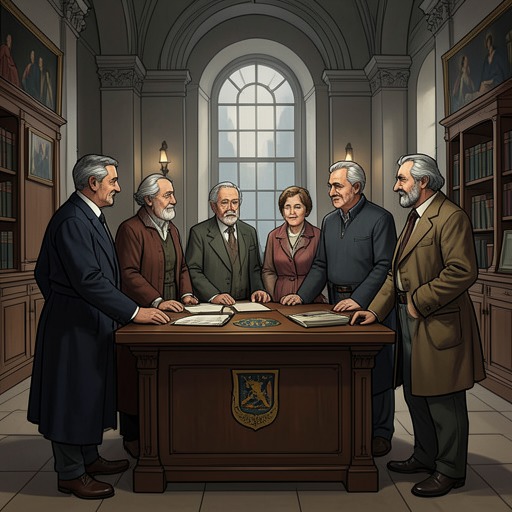
When the Nanjing puppet government was first established, it offered Young Lillie the post of chancellor at N University. At the time, he was only the university’s acting vice-chancellor. The offer was not simply an academic appointment in the narrative: the government imagined that the promotion would be enough to buy his allegiance, and misjudged what the family’s grievances meant to him.
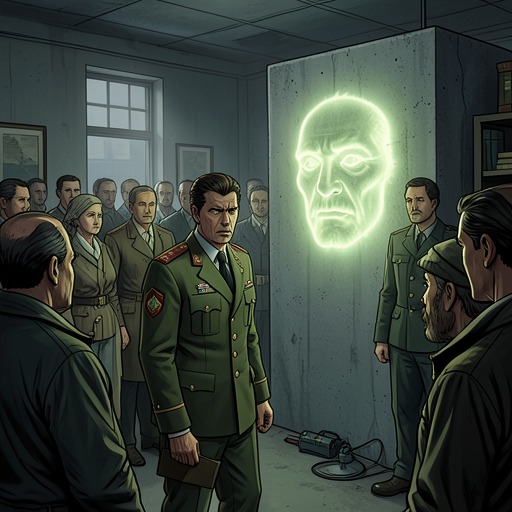
Young Lillie rejected the appointment in public. He tore up the brevet in front of those present and declared, “We Rongs would rather die than betray our country!” His action made his refusal visible and unmistakable; the offer that was meant to secure him instead exposed the distance between the regime’s calculation and his stated loyalties.
Refusal and Its Consequences
Young Lillie’s answer was popular, but it ensured that he would not hold an official position. He had already been considering flight from the government’s overtures and from the fierce infighting at N University. His plan was to go into hiding in Tongzhen. Mr Auslander’s letter hastened that decision, bringing political pressure and private obligation together at the moment of his departure.
Still thinking about the letter, Young Lillie stepped off a paddle-steamer and recognized the Rong mansion’s steward among people gathered in the rain and wind. Asked whether he had travelled well, he instead demanded news of Mr Auslander. The steward told him that Mr Auslander had died weeks earlier. Young Lillie’s next question was where the child was. The government’s appointment had helped precipitate his departure from C City, but this arrival scene turns his attention away from public office and toward the child whose situation the letter had made urgent.
Narrative Role
The episode defines the Nanjing puppet government through a specific political transaction rather than through a detailed account of its institutions: it offers a prestigious post, assumes fame and family resentment can be converted into compliance, and is met by an emphatic refusal. The contrast between the government’s attempted purchase of loyalty and Young Lillie’s public declaration gives the episode its central conflict.
The refusal also carries a concrete cost. Young Lillie gains popular approval but loses the prospect of an official role, while the combination of political overtures and university infighting pushes him toward hiding in Tongzhen. The narrative then places that political departure beside Mr Auslander’s death and the question of the child, showing how a public act of resistance opens into a personal crisis without suggesting that the government caused the death.