Red Guards
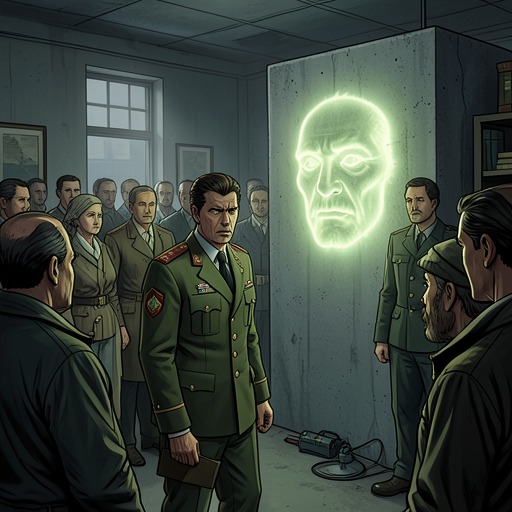
DecodedThe Red Guards are depicted through their role in the persecution of Master Rong during the Cultural Revolution and the sudden reversal that ended her public denunciation. The account follows a university campaign that moved from accusation and detention to intervention by armed representatives and a public declaration that she was a revolutionary comrade. Rather than presenting a broad institutional history, it shows how this group acted in one volatile episode—and how quickly its judgment of a person could be recast.
Campus Campaign and Accusations
The account places the events in 1966, when the Cultural Revolution brought a campaign of public criticism against Master Rong. A big-character poster accused her of remaining in love with a former boyfriend. The accusations expanded from her unmarried status to claims that her attachment made her a supporter of the KMT and a spy. These charges were presented as established facts, although the account gives no evidence that they were true.
On the afternoon the poster appeared, a group of a couple of dozen students attempted to surround Master Rong’s home. They shouted but did not enter and take her away. The university chancellor arrived, and the group dispersed. That first confrontation did not end the campaign: a little over a month later, a much larger crowd returned. By then, university figures, including the chancellor, had been arrested, and the earlier interruption had not protected Master Rong from further action.
The account distinguishes between those two episodes in scale and outcome. The first involved a limited attempt to surround the house; the second brought hundreds of people and resulted in Master Rong being taken from it and placed among those facing public denunciation. The escalation suggests that the danger to her arose not simply from a poster or a single gathering, but from a campaign that acquired greater force over time.
Public Denunciation and Detention
The Red Guards’ campaign against Master Rong became a carefully staged public event outside the chemistry department building. About two hundred students and professors assembled on mats in front of the building. People selected to speak stood to address the gathering, while Master Rong and a woman professor from the chemistry department were placed on the steps wearing dunce’s caps and placards. The event began at ten in the morning, alternating accusations with interrogations. Lunch was brought to the site, and the two women were required to recite sayings of Chairman Mao.
By four in the afternoon, the women could no longer remain standing and were kneeling. The scene’s duration and arrangement made the denunciation more than a spontaneous confrontation: it had an audience, designated speakers, a public platform, and an extended schedule. Master Rong’s later account describes the gathering as organized, with students from the chemistry department and other professors among those present.
The public session was part of a wider punishment. After being paraded, Master Rong was held in a women’s lavatory with the other professor. During the day, they were taken out and beaten; at night, they were returned to their place of confinement and required to write self-criticisms. This treatment framed the Red Guards’ activity not only as public accusation but as control over the women’s movements and the terms on which they were expected to answer the charges.
Confrontation and Intervention
The immediate confrontation began when three men arrived in a jeep with military number plates. Two tall companions flanked a shorter man, who announced that they had come to take Rong Yinyi away. A Red Guard challenged their authority to do so on the grounds of the accusation against her. The newcomer rejected that accusation and pressed forward, pushing past people who blocked his route to the platform.
Someone in the crowd then urged people to attack him. The two men accompanying him moved to protect him and force a way through. They invoked their work for Chairman Mao and identified themselves as his guards; one of them fired a single shot into the air and warned the crowd to stop. He then displayed credentials bearing a red letterhead and a state seal, and said the group had been entrusted with a mission by Chairman Mao. The Red Guard leaders who came forward accepted his explanation. The crowd was told to sit down, and the immediate disorder subsided.
The intervention did not at once settle Master Rong’s status. A Red Guard leader known as Marshal Yang arrived in another military-numbered jeep with two military cadres. After conferring beside the vehicles with the man who had fired the shot, Marshal Yang returned to the group. He removed Master Rong’s dunce’s cap and placard, declared her a revolutionary comrade and the sister of a national hero, and tied his own Red Guard armband onto her. The people present took up revolutionary slogans. In the account, the episode ends with Master Rong’s denunciation over and her status publicly reversed; it does not establish that the original accusations were examined or that those who made them were held accountable.
Authority, Reversal, and the Account
The episode presents the Red Guards’ actions as dependent on competing claims to revolutionary authority. The gathering’s accusations had the force of a public verdict, and its members initially tried to prevent the men in the jeep from removing Master Rong. Yet credentials, armed escorts, and an asserted connection to Chairman Mao changed the balance. Later, Marshal Yang’s declaration and armband converted her from a person under public denunciation into someone the gathering was expected to respect. The account records that shift without treating the political labels as evidence of the underlying truth.
The crowd’s response also remains unsettled. After the intervention, the slogans could have expressed respect for Master Rong, an effort to protect her, or a way to redirect attention; the account leaves those possibilities open. The Red Guards thus appear not as a uniform chorus but as a group within which leaders, participants, and outside representatives could pull events in different directions.
These events are related through Master Rong’s interview, which recounts both the campaign against her and the rescue scene. The contrast between her first experience of danger at home and the later, much larger public gathering makes the escalation clear; the intervention then supplies an abrupt counterturn. For the organization’s portrayal, that structure is significant: the same public setting that had staged her condemnation became the setting in which a new declaration replaced it. The episode shows the Red Guards exercising power through collective spectacle, while also showing how quickly that spectacle could yield to another authority.