National Revolutionary Army
DecodedThe National Revolutionary Army is represented through Cheng’s choice to join it and the lasting change visible when he returns to civilian life. Rather than offering a broad account of the institution, the narrative makes its presence concrete in a uniform, a rifle, and the empty sleeve of a former soldier who becomes a school headmaster.
Cheng’s enlistment
After finishing high school, Cheng had grades that could have taken him to university. Instead, he was captivated by the uniforms of the National Revolutionary Army. When he came to say goodbye to Young Lillie, he was already shouldering a gun, making enlistment a sharp turn away from the academic path that his results had made possible.
Return and disability
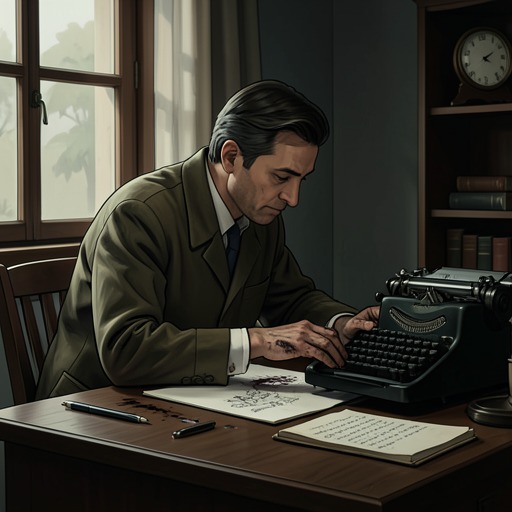
Two years later, in the depths of winter, Cheng came back to see Young Lillie. He still wore the army uniform, but no longer carried a rifle; closer attention revealed that the arm needed to hold it was also gone. His remaining left hand was as strong as normal, and he told Young Lillie that he could write with it. The account establishes the bodily consequence of his intervening military life without specifying how or where he lost his arm.
From soldier to headmaster
Young Lillie gave Cheng a letter of introduction to a newly established primary school near the West Gate, where he could train as a teacher. The opportunity offered him a new lease of life. Initially known as One-Arm because of his disability, Cheng eventually became the school’s headmaster. The nickname persisted, but its meaning shifted: people also used it because he had single-handedly made the school what it was. Through Cheng’s passage from armed serviceman to educator, the National Revolutionary Army’s presence in this episode is defined by personal consequence rather than institutional description.