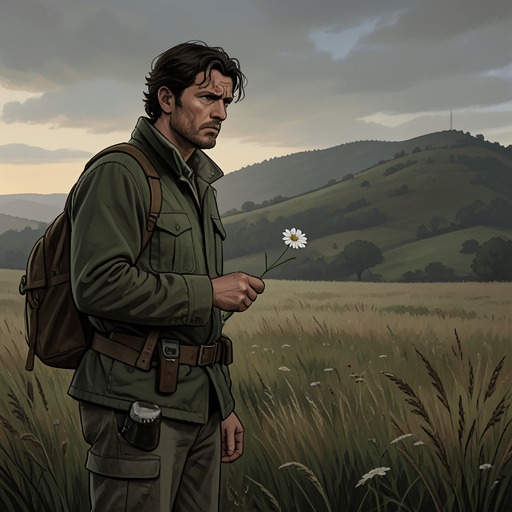
Sireno returns and learns that Diana is married
DianaSireno’s return to the banks of the Ezla River turns the landscape of his former happiness into the setting for its confirmation as loss: before he can see Diana, he learns she has married Delio. His forced absence, once the circumstance he feared would test their love, has become the interval in which her affections changed. Returning after a year, Sireno finds not the reunion he longed for but the place where memory makes the news impossible to escape.
The Absence and the Marriage
Sireno’s departure from the Kingdom had been unavoidable, and Diana remained behind grieving for him. The account of their history makes the reversal especially sharp: the two had loved one another deeply, and their relationship had been marked by what the narrator describes as purity and honesty. Yet time and Diana’s heart changed during the separation. She married Delio and forgot the man she had once loved so intensely. On his way back, Sireno learned of the marriage before he arrived to see her, so the news preceded any meeting and foreclosed the reunion he had desired.
That sequence gives the event its particular cruelty. Sireno had endured absence with the fear that it might lead to oblivion; upon returning, he discovers that the fear has already taken shape in Diana’s life. The narration presents the marriage not as a gradual discovery made in conversation with her, but as knowledge that reaches him on the threshold of return. His journey home therefore ends, emotionally, before he can reach his beloved.
Return to the Pastoral Landscape
At the beginning of the first book, Sireno descends from the mountains of León and reaches the meadows watered by the Ezla River. The familiar countryside brings back the happiness he once experienced there, when he was free and spent his days tending his flock. In spring, he enjoyed the flowers, played a polished rebec or a panpipe, and made verses praised by the shepherdesses of the region. His thoughts had once stayed within the fields and the ordinary work of shepherding; now he is subject to the memory of a love and a fortune that have overturned that earlier contentment.
The contrast is carried in his appearance as well as his recollections. Sireno arrives with tear-filled eyes and an altered face, dressed in rough sackcloth, carrying a crook and a bag over his arm. He leans against a beech tree and looks across the riverbank until his gaze reaches the place where he first saw Diana’s beauty, grace, and honesty. The setting does not simply recall their beginning: it places the remembered first sight beside the knowledge that their relationship has ended in separation. The river meadows remain recognizable, while the life Sireno once lived there is no longer his.
Diana’s Letter in Memory
As Sireno grieves, he recalls a letter Diana had sent him. In it, she had denied that she loved him less than he deserved and insisted that she could not understand how she might love him more. She urged him not to give himself over to jealousy and suspicion, and affirmed that, while her honor remained safe, there was nothing she would not do for him. The remembered letter gives his loss a precise measure: he is not mourning an affection that had always been uncertain, but comparing Diana’s earlier assurances with the marriage he has now learned of.
Sireno remembers reading the letter with intense happiness and rereading it many times. In the present, those same words return as evidence of how far his circumstances have turned. The letter cannot settle what happened during his absence; instead, its assurances sharpen the distance between their former intimacy and her changed life. His reflection makes memory itself part of the event: what once comforted him now carries the force of a promise that did not survive separation.
Silvano’s Encounter and the Reversal of Fortune
On the slope from the village to the meadow, Sireno sees Silvano approaching slowly, pausing to look at the sky, the fields, and the riverbank. Sireno recognizes the shepherd who had competed with him for Diana’s love and had been rejected by her. He now addresses Silvano as another unfortunate lover, though he judges his own fall from Diana’s favor worse than Silvano’s long-standing lack of favor. The encounter reveals how completely their positions have changed: Sireno had once enjoyed the affection Silvano desired, but has now lost it, while Silvano has continued loving without return.
Silvano plays his panpipe and sings of loving without being loved. After the song, he reflects on how his devotion to Diana has led him to neglect his flock and how his service offers no hope of reward. Even so, his constancy has not been broken by the many reasons he has to forget someone who does not remember him. When he sees Sireno, he is astonished by his grief—not because he does not understand its cause, but because the smallest favor Sireno once received from Diana would, Silvano thinks, have been enough to sustain him for a lifetime.
The two shepherds embrace and sit together on the grass, weeping. Silvano refuses the idea of taking revenge on Sireno for having once been Diana’s chosen lover. He explains that his own devotion to Diana prevents him from acting against the man in whom she had placed her affection. Sireno, in turn, recognizes Silvano’s capacity to endure both his own sorrows and the sorrows of others. Their exchange transforms a former rivalry into mutual recognition: the man who once seemed Sireno’s competitor becomes the companion who can understand his grief without resentment.
Significance of the Return
The return establishes the book’s central emotional reversal through a concrete movement: Sireno comes back to the landscape of his love, but the person he hopes to find has made a life with someone else. The meadow, riverbank, and place of first meeting preserve the past even as they expose its absence. His recollections of pastoral freedom, Diana’s letter, and Silvano’s unrequited constancy each give the loss a different dimension—former happiness, broken expectation, and a rival’s enduring fidelity.
The scene also resists reducing love to a simple contest between two shepherds. Silvano’s compassion toward Sireno complicates their earlier rivalry, while Diana’s change during Sireno’s forced absence shows how separation and time alter the relationships that pastoral memory tries to hold still. Sireno’s homecoming thus inaugurates the story not with restoration but with knowledge: he has returned to the place where love began and learned that its history has continued without him.