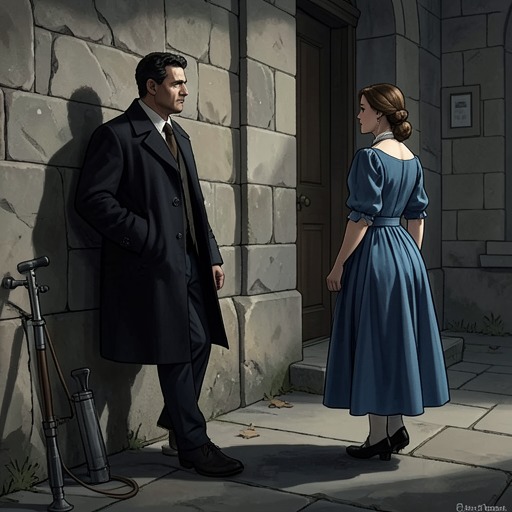
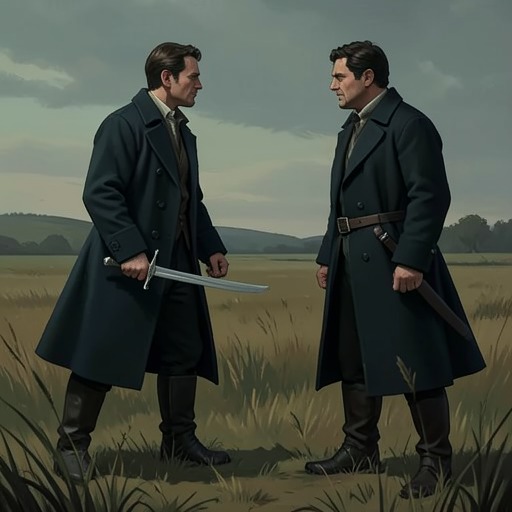
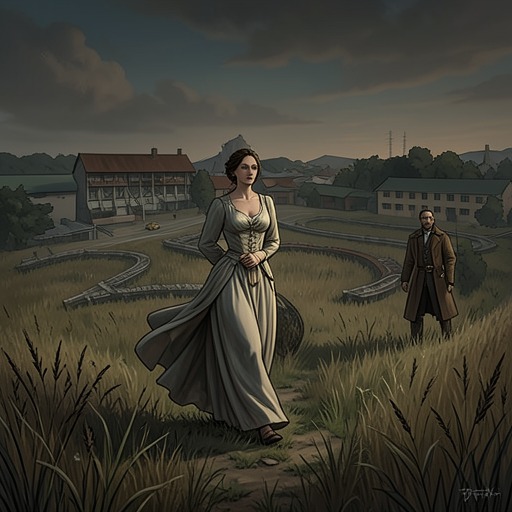
Felismena saves Don Félix from the three attacking knights
DianaFelismena’s rescue of Don Félix begins as a chivalric intervention: seeing one knight on the verge of being overwhelmed by three, she risks her own life, kills two attackers with precise bow shots, and gives the lone fighter the chance to prevail.
The Unequal Combat
A dispute among the shepherds is interrupted by the sound of fighting. On an island formed by a bend in the river, they find three knights battling a fourth on foot, their horses tethered to small trees. The lone knight has already killed one opponent with a sword stroke, but the remaining two press him so hard that his death seems imminent. Seeing that he cannot escape without help, Felismena puts herself at risk. She calls on the attackers to stand back, arguing that those who claim the honor of knighthood should not take advantage of such an obvious disparity. Then she shoots one through the opening of his helmet, the arrow passing between his eyes and killing him. As the lone knight turns against the last attacker, Felismena fires again: the arrow passes beneath the man’s left breast and through his heart. The shepherds and the rescued knight are astonished that two formidable opponents have fallen to her two shots.
Recognition and the Debt Between Them
When the lone knight removed his helmet and thanked Felismena, she recognized Don Félix. The encounter turned the rescue into a reckoning: he spoke of a debt newly owed, while she reminded him that his gratitude had long been due. Once, she said, he had honored her in the city with tournaments and jousts; now she was exiled from her homeland and liberty because he had exercised his own freedom without regard for what it cost her.
Felismena measured that debt through the history of her service. For a year at Princess Augusta Cesarina’s Court, she had lived as Don Félix’s page and even acted as intermediary in his courtship of Celia, procuring Celia’s favors at the cost of her own tears. She had left home to follow him, shared his suffering, and endured a life opposed to her own comfort so that he might be content. Her disguises mark the extent of that devotion: she had loved him in the dress of a lady, served him in a page’s habit, and now, dressed as a shepherdess, had risked herself for him again. She presents the rescue not as an isolated kindness but as the latest, comparatively small addition to a long record of sacrifices, and challenges Don Félix to recognize what his former lack of regard has left unpaid.
The Final Measure of Devotion
Felismena’s account reaches its starkest point when she declares that nothing remains for her to do but sacrifice her life to Don Félix’s lack of love. The rescue thus becomes more than the latest service in a long history: it brings that history to the edge of self-annihilation. Her aid has saved Don Félix from immediate death, but her words leave the deeper imbalance between them unresolved, making the life she has risked a measure of the debt she says he has never acknowledged.
Action Before Recognition
The sequence places Felismena’s deed before her personal claim: she intervenes while the lone knight’s identity is still concealed, and only after the danger has passed does he remove his helmet and she recognize Don Félix. The order matters. Her courage is first made visible as an action in its own right; the intimate history between them enters afterward, changing the rescue from a display witnessed by the shepherds into a confrontation between two people bound by an unequal past.