Le dénuement scolaire et l’illettrisme à Ponteilles
DingoLe dénuement scolaire et l’illettrisme à Ponteilles is a condition of both limited access to schooling and weak educational support: children are taken from class to tend animals, while a teacher trying to improve instruction finds little backing from the village or public authorities. The result is not simply poor classroom performance but a recurring loss of learning, with many pupils leaving school unable to read.
Seasonal Schooling and Illiteracy
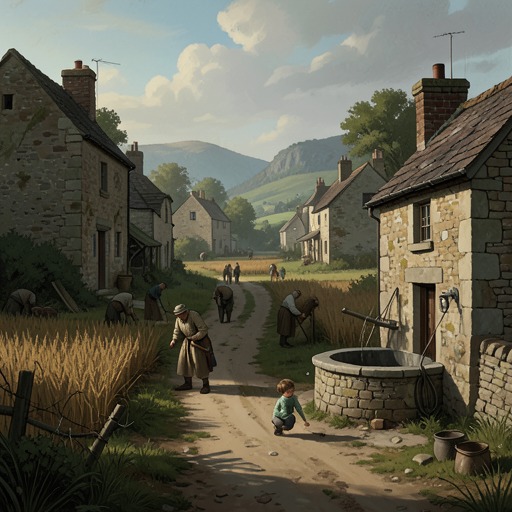
The village schoolteacher describes a short and fragmented school year. Parents generally entrust their children to the school for only the winter months, and withdraw them in spring when they are needed to look after cows, geese, and turkeys. The children are therefore absent just as the school year continues, and the teacher says that they learn little during their brief attendance and soon forget much of what they have learned. The next year begins the cycle again; by the time many children leave school for good, some still cannot read.
The pattern makes schooling subordinate to household labor. The teacher presents the withdrawals as a way for families to avoid hiring a young domestic worker, a small economy that comes at the cost of continuous instruction. In winter he may have around ten children in class; in summer he has none. The seasonal rhythm turns education into an intermittent service, unable to build reliably on what pupils have learned before.
The Teacher and the Limits of Instruction
The teacher is portrayed as conscientious and educated, aware of both his responsibilities and the obstacles facing his pupils. He also objects to the reading methods that teachers are required to use: he calls them complicated and ineffective, and says that an average child may need more than a year to learn to read through them. That timetable is particularly ill suited to a school where pupils are not present for three consecutive months. He attributes the persistence of these methods to influential figures in the education system, including university officials and primary-school inspectors, whom he accuses of protecting their publishing interests rather than supporting improvement.
His efforts to extend education beyond the classroom meet further resistance. He tries holding informal evening talks to share basic ideas about life, but villagers do not attend. After he is reported to the prefect, he is warned that such activity is not his responsibility. The teacher consequently stops. His account connects the failure of these meetings to a broader narrowing of what he is permitted to do: he is expected to teach under existing conditions, but receives no effective support to change them.
Local Hostility and Institutional Neglect
The teacher says that, because he is neither from Ponteilles nor a priest or notary, he is subjected to the same hostility and humiliations as the narrator. The mayor turns against him, the priest preaches against him, and rumors circulate about the teacher and his wife. The teacher fears further accusations and doubts that public officials will protect him. He asks to be transferred but receives no answer; when he goes to see the minister, the minister does not receive him. His wish to leave is presented as the conclusion of a sustained experience of isolation rather than a response to a single classroom dispute.
The narrative places educational neglect alongside the village’s failure to address other basic needs. The narrator recalls that Ponteilles had no clean water supply, relying instead on contaminated wells and stagnant pools that dried up early in summer. When he offers to help the mayor secure a cost-free plan, the promised estimate never arrives; after a year and the fall of the minister, the matter is dropped. This episode does not explain the school’s difficulties directly, but it reinforces the account of local administration as resistant to practical reform even when assistance is available.
Social Meaning
The narrator interprets the villagers’ suspicion of educated outsiders through the history of rural oppression. He suggests that memories of earlier subjection persist as a deep distrust of people who are better dressed, more educated, or more polished. This explanation places the teacher’s isolation within a wider social inheritance, without removing the immediate consequences of the village’s choices: children lose access to sustained teaching, and attempts to improve their education are blocked or left unanswered.
The school’s seasonal emptiness and the teacher’s frustrated reform efforts make illiteracy a structural condition rather than an individual failing. Families need children’s labor, teaching methods consume more time than their attendance allows, and local and national authorities offer no effective remedy. The account’s force comes from this convergence: the children’s limited schooling is reproduced by everyday economic pressures and institutions that leave the teacher with neither a steady class nor the authority to alter the conditions under which it learns.