Arrayed for the Bridal
DublinersArrayed for the Bridal is an old song associated with Aunt Julia and the Morkan family’s annual dance. Aunt Julia sings it with striking technical assurance, earning wholehearted applause; later, Gabriel recalls the same performance as evidence of her age and mortality, making the song a hinge between the evening’s celebration and his meditation on the dead.
Performance at the Dance
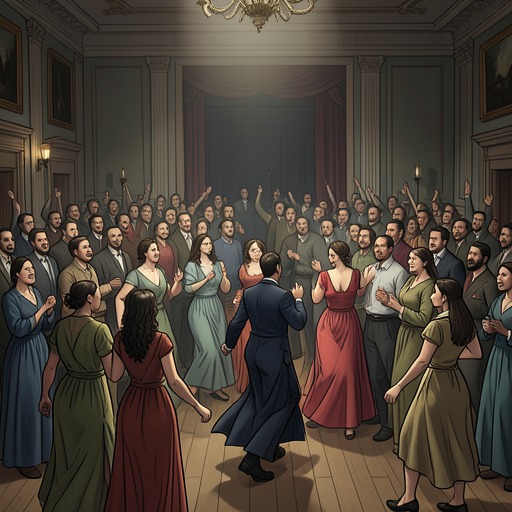
Mr Browne escorts Aunt Julia from the doorway to the piano, where Mary Jane sits at the stool. Aunt Julia’s smile fades as she turns to project her voice into the room. Gabriel recognizes the prelude to Arrayed for the Bridal, an old song of hers, and listens as her strong, clear voice takes on the air’s rapid ornamental runs without missing even its smallest grace notes. The narrative renders the effect as a feeling of swift, secure flight: the singer’s command makes the music seem to carry its listeners with it.
Gabriel applauds loudly with the rest of the room, and applause also reaches Aunt Julia from the unseen supper-table. Its sincerity brings a little colour to her face. She returns an old leather-bound songbook, marked with her initials, to the music stand. The song therefore belongs not only to the performance but to a personal history: its worn book and familiar place in Aunt Julia’s repertoire make it a recurring part of the family gathering.
Reception and Family Affection
The response to the song extends beyond formal applause. Freddy Malins, who has angled his head to hear Aunt Julia better, keeps clapping after the others have stopped. He crosses the room, takes her hand in both of his, and tells her that he has never heard her sing so well, praising the freshness and clarity of her voice. His movement and halting emotion make the compliment feel like an act of affection as much as an assessment of the performance.
The scene sets technical command beside vulnerability. Aunt Julia sings rapidly and securely, yet the praise visibly moves her, and the narration’s emphasis on the colour returning to her face gives the audience’s recognition a human consequence. The song briefly gathers the room around her, joining her sister, niece, guests, and listeners at supper in a shared response.
Gabriel’s Later Recollection
Later, after Gretta has told Gabriel about Michael Furey, the memory of Aunt Julia singing returns within Gabriel’s thoughts about mortality. He recalls that he noticed a haggard look on her face for a moment during Arrayed for the Bridal. The detail changes the song’s force: what had sounded like assured flight at the dance now carries the visible signs of an aging singer, and Gabriel imagines that Aunt Julia will soon be dead.
His imagined future is specific and domestic. He sees himself in the drawing-room dressed in black, with his silk hat on his knees, while Aunt Kate cries and tells him that Julia has died; he anticipates having only lame and useless words to console her. Set beside his recognition that Gretta has kept Michael Furey’s memory in her heart, the song joins two kinds of loss: the approaching death of an older relative and the past passion that outlasts the young man who felt it. In Gabriel’s inward reckoning, a familiar family performance becomes one of the evening’s signs that everyone is moving toward death and memory.