Glasnevin
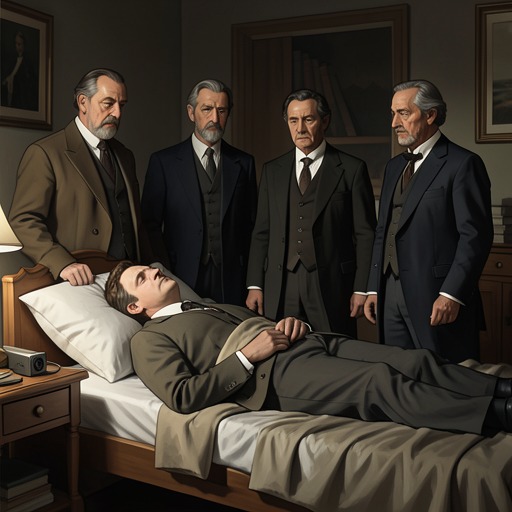
DublinersGlasnevin is identified through the small house on the Glasnevin road where Mr Kernan is brought after a prolonged bout of drinking. The location frames a shift from the public business of getting him home to the private burden his family bears, and introduces the household’s dependence on the kindness of his friend Mr Power.
Setting and Arrival
A car halts before the small house, and Mr Kernan is helped inside. His wife puts him to bed while Mr Power waits downstairs in the kitchen. The location is not elaborated as a townscape; its narrative importance lies in the threshold between the road, where Mr Kernan has been found helpless, and the family home, where the consequences of his drinking become visible.
The Household
In the kitchen, the children—two girls and a boy—begin horseplay with Mr Power, conscious of their father’s helplessness and their mother’s absence. Their manners and accents surprise him, and his brow grows thoughtful. When Mrs Kernan enters, she says that Mr Kernan has been drinking since Friday and fears that he will one day do for himself. The scene makes the home a place of both care and strain: Mr Kernan is put to bed, but his wife’s complaint also recalls that the family had been waiting for him to return with money and that he seems not to think of the household as home.
Support and Aftermath
Mr Power explains that he was not responsible for Mr Kernan’s condition and had come upon the situation by accident. Mrs Kernan nevertheless recognizes his past help during domestic quarrels and the small, timely loans he has given. At the door, she thanks him for bringing her husband home; he promises that he and Martin Cunningham will talk with Mr Kernan and try to make a new man of him, then departs in the car, raising his hat gaily.
After the car has gone, Mrs Kernan watches it with puzzled eyes, returns indoors, and empties her husband’s pockets. That final practical gesture brings the night’s financial anxiety back into the home: the promised reform remains in the future, while the immediate work of managing Mr Kernan’s drinking and its consequences falls to his wife. Glasnevin thus anchors the episode in domestic realities—care, debt, and absent money—rather than in the sociability of the friends who have brought him there.