Ah, Still Delay—Thou Art So Fair!
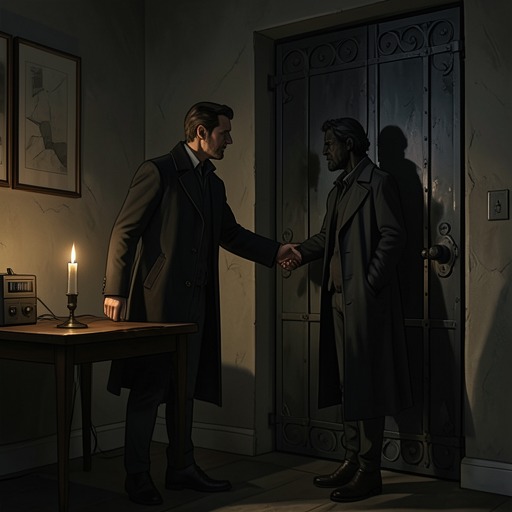
Faust“Ah, Still Delay—Thou Art So Fair!” is the decisive expression in the wager between Faust and Mephistopheles: Faust declares that if he ever addresses a passing moment in those terms, Mephistopheles may bind him and bring his record to an end. The phrase turns an imagined state of contentment into a test of the pact, linking the beauty of an instant to Faust’s possible final ruin.
The Condition of the Wager
Faust sets the test against the prospect of resting contentedly on an idle bed. If Mephistopheles can rule him through flattery until he admires himself, or fool him with rich enjoyment, Faust says that day should be his last. He offers the bet on those terms, and Mephistopheles accepts.
Faust then gives the condition its memorable wording: “Ah, still delay--thou art so fair!” The appeal to make time pause is not merely praise of a moment. Within the bargain, uttering it would mean that Faust has reached the satisfaction he has said would end his striving. The expression therefore functions as the wager’s explicit trigger.
Consequences and Imagery
Faust spells out what follows if he speaks the words. Mephistopheles is to bind him in lasting bonds and declare his final ruin; the tolling of the death-bell is to mark the outcome. Faust extends the image to time itself: the clock may stop, its hand break, and time be finished for him. These consequences make the phrase inseparable from the stakes of the pact rather than a free-standing lyric of admiration.
Mephistopheles responds to Faust’s offer with agreement, and Faust affirms it wholeheartedly. Mephistopheles then warns him to consider carefully, adding that his memory is reputed to be good. The exchange leaves the condition plainly stated and remembered: the beautiful moment is also the point at which Faust risks forfeiting his freedom.
Form and Significance
The wording compresses the wager into a brief address to a moment: a request for delay followed by an assertion of beauty. Its force comes from the contrast between the apparent tenderness of the expression and the severe consequence attached to it. In this scene, speech does more than describe pleasure; Faust makes his own words the measure by which the bargain may be fulfilled.
The translator’s introduction treats form as essential to poetic meaning, arguing that poetry’s meaning cannot be separated from its rhythmical expression. It describes this version’s aim as close reproduction of the original language and metres, while allowing meaning to take precedence when meaning and music must be traded against each other. That account helps clarify why the expression belongs to the wager not only as a paraphrasable condition, but as a compact poetic formulation whose cadence gives the condition emphasis and memorability.