Devils
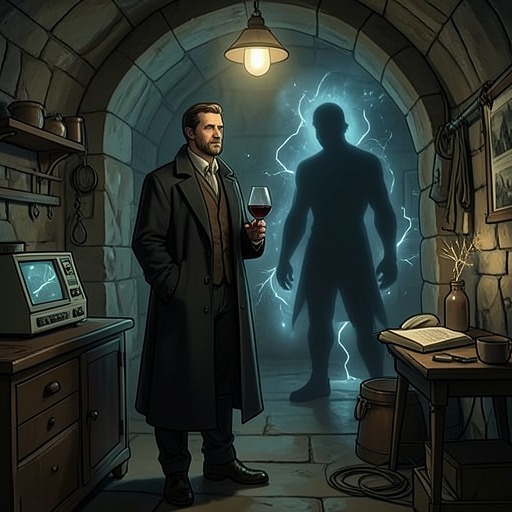
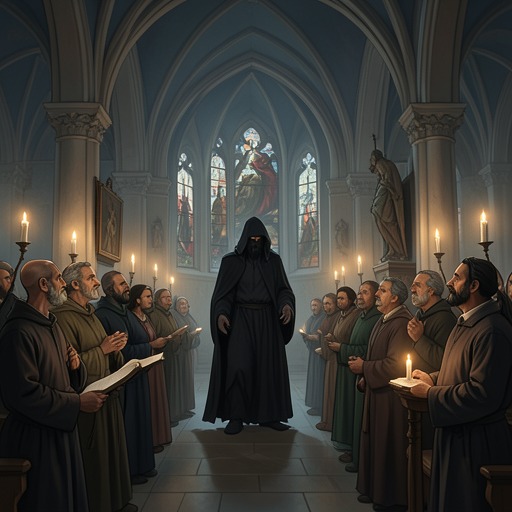
FaustThe Devils in Faust are powers of negation whose most sustained representative is Mephistopheles. They tempt and obstruct human beings, but the drama places their destructive intent within a larger order in which striving can still move toward good. Their changing outward appearance and their comic treatment in the Walpurgis revels complicate the image of evil as a plainly recognizable supernatural enemy.
Identity and Metaphysical Role
In the heavenly wager, Mephistopheles asks for permission to lead Faust away from his source and lay snares for him. The Lord grants this permission, but frames the contest around a countervailing confidence: even through obscure aspiration, a good person retains an instinct for the right path. The Devils’ work is therefore permitted as a trial, not presented as a power that has escaped all limits.
The Lord also describes the Devil as a companion suited to humanity’s tendency to tire of activity and desire repose. Human nature, when it flags, is drawn toward stagnation; the Devil works, excites, and creates opposition. This account does not make the Devil benevolent: it distinguishes his intention from the larger consequences of his presence. His adversarial energy can keep human striving in motion even while he aims to draw it downward.
Mephistopheles gives this identity a concise definition when Faust asks who he is. He calls himself part of a power that wills evil but brings about good, and then names himself the Spirit that Denies. His reasoning is radically destructive: if all created things deserve destruction, then nothing should have been created. Sin, destruction, and whatever is mixed with evil belong to his element. The Devils’ negation is thus not merely a habit of mischief; it is a claim about existence itself.
Temptation, Striving, and the Wager
The wager gives the Devils a practical task as well as a metaphysical character. The Lord allows Mephistopheles to try to trap Faust, while insisting that human aspiration remains capable of erring without losing every orientation toward the good. Mephistopheles accepts readily and predicts that the probation will be short. He imagines Faust brought low and likens the expected outcome to the serpent’s appetite for dust.
The exchange establishes a sharp contrast between the Devil’s confidence and the Lord’s view of human activity. Mephistopheles treats error as evidence that his snares will succeed; the Lord treats striving itself as a condition in which error is inevitable but not final. The Devils’ challenge matters because it tests whether a person’s susceptibility to diversion cancels the possibility of moral direction. In this structure, temptation is real and consequential, but it is not the only force acting on the human subject.
Mephistopheles also resists the idea that the dead are his desired possession. He says he prefers the living, whose blood is active, and that he closes his house when a corpse approaches. This distinction concentrates his interest on the living person whose desires and aspirations can still be stirred. The Devil’s domain is not simply death: it is the contest over active human life, with all its capacity for error and change.
Appearance and Cultural Adaptation
When Faust notices that Mephistopheles lacks the expected cloven foot and asks after his ravens, Mephistopheles answers that the old Northern phantom has passed out of fashion. Culture, he says, has smoothed the world and has also affected the Devil. Horns, tail, and claws are no longer readily visible; even the foot he cannot dispense with is concealed beneath false calves, because displaying it would make people avoid him.
This explanation makes disguise an adaptation to changing expectations. Mephistopheles remains recognizably a supernatural adversary, but he no longer relies on the complete traditional costume of the monster. The scene’s wit does not erase the danger of his role; instead, it shows that the Devil can present himself in forms less likely to repel those he approaches. His visible shape changes with culture, while his account of his destructive purpose remains intact.
The distinction between appearance and identity returns during the Walpurgis revels. The Proktophantasmist protests that ghosts cannot stand on ordinary ground, and objects that they are dancing as if they were ordinary people. The scene puts supernatural beings into a social performance that unsettles the boundaries by which the critic would exclude them. Mephistopheles predicts that the Proktophantasmist will end up in a puddle, with leeches attached to him, and be cured of spirits and Spirit. His response turns the dispute over spirits into part of the revel’s comic action rather than settling it through argument.
Human Disputes About the Devil
The revel also presents a range of competing ways to identify the Devil. An Orthodox speaker says that no claw or tail is visible, yet concludes that Mephistopheles must still be a devil, comparing the problem to the difficulty of classifying the ancient Greek gods. The Dogmatist takes the opposite route: he refuses doubt or criticism and argues that the Devil must exist, since otherwise there could be no devils. These voices do not offer a shared test of supernatural identity; they expose how readily conviction can substitute for evidence.
The Proktophantasmist’s insistence that ghosts cannot occupy ordinary ground provides another kind of certainty, based on a rule about what spirits can do. Yet the dance itself defeats the distinction on which his objection depends. The scene’s theatrical shape matters: characters argue over whether spirits are real, while the spirits continue to take part in the gathering. The Devils are therefore not only objects of belief but agents in a spectacle that makes human systems of classification look unstable.
Negation and the Tragedy of Faust’s Judgment
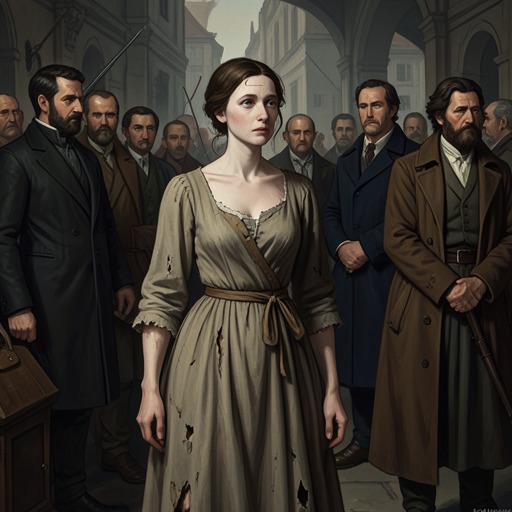
Near the end of the evidence here, Faust’s response to Mephistopheles reveals how the Devil’s abstract doctrine enters a human catastrophe. After hearing that Margaret is not the first person to suffer, Faust denounces Mephistopheles and appeals to the Infinite Spirit to return him to the dog-shape in which he once approached unsuspecting wanderers. Faust’s anger is sharpened by the recognition that Margaret’s misery is not isolated: he grieves that the suffering of one person has not atoned for the guilt of all the others, and condemns Mephistopheles for grinning at the fate of thousands.
Mephistopheles answers by challenging Faust’s participation in their fellowship. He asks why Faust entered into it if he cannot carry it through, and whether the Devil forced himself upon Faust or Faust came to him. The exchange brings the wager’s terms into the immediate conflict: Faust now recoils from the company he chose, while Mephistopheles insists on that choice as a fact that cannot be wished away. The Devils’ power lies not only in temptation but in their capacity to make a person confront the consequences of having accepted their partnership.
Across these scenes, the Devils remain both recognizable and difficult to fix. Mephistopheles speaks for destruction, adapts his appearance to a less credulous age, and exploits the distance between human aspiration and human conduct. Yet the drama refuses to make his power the whole account of moral life. The Lord’s wager places opposition inside a larger order of striving, and Faust’s final denunciation shows the cost of recognizing evil only after entering into fellowship with it.