Witches
FaustWitches are both a magical cohort and a theatrical crowd in Faust: they appear as agents of disorder in the witch’s workshop and, on Walpurgis Night, fill the Hartz Mountains with a public revel. Their changing scale—from a few sprites under Mephistopheles’s command to a vast assembly in flight—makes them a recurring image of demonic power expressed through spectacle, song, and carnival.
Identity and First Appearances
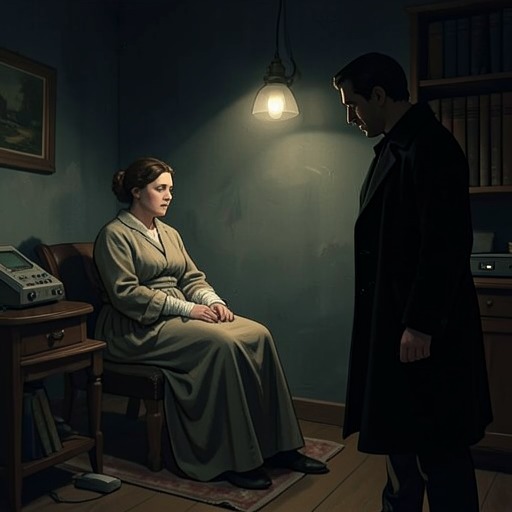
The play presents witches not as isolated figures but as a group capable of gathering, singing, and acting in concert. In the witch’s workshop, the neglected cauldron boils over while Mephistopheles and Faust are present. The Witch rushes back in alarm, and Mephistopheles confronts her as her Lord and Master, demanding recognition and asserting his authority over her and the monkey-sprites. When she asks how she can serve the visitors, the exchange makes the group’s subordination to Mephistopheles part of the scene’s comic magic: the supernatural household is chaotic, but he can claim command within it.
This workshop episode also places witchcraft within a practical system of magical access. When Faust asks why Mephistopheles cannot simply leave his chamber, Mephistopheles names the wizard’s-foot on the threshold as the obstacle controlling his steps; Faust identifies it as the pentagram. The exchange links the witches’ world to a wider repertoire of signs and protections, in which a boundary marked by a magical figure can constrain even a powerful spirit. The later gathering expands that local, domestic magic into a public and communal spectacle.
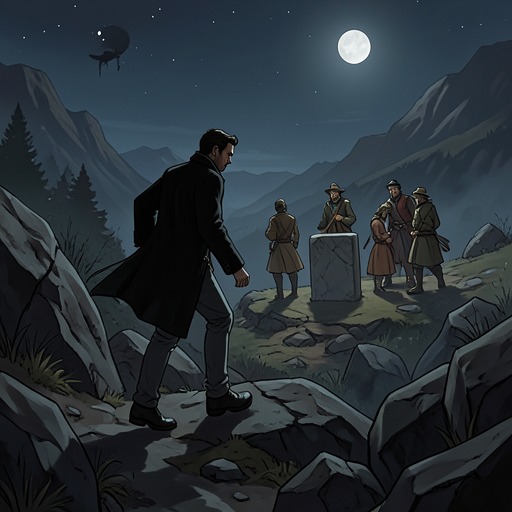
The Gathering on the Mountain
Walpurgis Night is set in the Hartz Mountains, in the district of Schierke and Elend. Mephistopheles describes the mountain’s darkness, mist, and violent weather as the travelers approach; the scene then opens onto the witches’ movement toward the summit. Their chorus announces the journey as a carnival, with a crowd assembling at the top under the presiding Sir Urian. The witches’ refrain turns travel into performance: the group is not merely arriving at a location but making the ascent itself a shared ritual.
The voices distinguish different stages and fortunes within the crowd. A speaker below laments a three-hundred-year climb without reaching the summit, hoping at last to join its equals. Another, a half-witch, complains of stumbling behind the others and finding neither comfort at home nor success among the gathering. In response, the choruses declare that those who cannot rise on this night will remain ruined, while another chorus offers a salve and makeshift means of flight. The episode gives the revel a competitive edge: participation depends on being able to rise, keep pace, and enter the collective movement.
The chorus’s account of arrival completes the transformation of the mountain into a crowded gathering place. Once the flight circles the summit, the witches descend and spread across the heath. Mephistopheles contrasts the summit’s confused search for the Evil One with the smaller gatherings below, choosing to settle in a quieter company rather than follow the tumult at the top. He calls this an old, transmitted custom in which smaller worlds form within a greater one. Fires, dancing, conversation, cooking, drinking, and courtship fill the ranks, so the scene presents the assembly as a social world with its own spaces and activities, not simply a threatening mass.
Chorus, Carnival, and Social Inversion
The witches’ songs supply the scene with a collective voice, but that voice is deliberately rowdy and unstable. The chorus celebrates the width and length of the route, the abundance of the crowd, and the disorder of its movement. Its imagery of witches riding and sweeping over the landscape makes the group seem to spill beyond ordinary boundaries. The gathering’s comic extravagance is heightened by the contrast between elevated, grand-sounding ritual and rough, irreverent choral performance.
The surrounding voices also expose rivalries and differences within the crowd. A voice complains of being mistreated, while the choral exchanges compare the movement of witches and wizards toward the Devil’s House. The assembly is therefore not a perfectly harmonious collective: it contains competition, grievance, and mocking observation even as it moves together. Its carnival atmosphere temporarily makes the mountain a world with its own rules, where ascent, rank, and membership are openly performed and disputed.
Mephistopheles, Faust, and Lilith
Mephistopheles serves as guide and interpreter within the gathering. Rather than taking Faust directly into the largest commotion, he proposes that they remain among the smaller groups and offers to introduce him to the company. That choice turns the witches’ revel into a social encounter as well as a spectacle, and gives Mephistopheles a role in managing Faust’s access to what he sees.
Among the figures Mephistopheles points out is Lilith, whom he identifies as Adam’s first wife. He warns Faust that her lovely hair can lure a young man and keep him caught in its hold. The episode gives the gathering a more personal form of danger: amid the many voices and diversions of the crowd, Mephistopheles directs Faust’s attention to an individual whose attraction is presented as a trap. Witches thus frame a scene in which collective carnival and the threat of individual entanglement coexist.
Narrative Role
Across their appearances, witches change the scale and register of the supernatural. In the workshop they belong to an enclosed, comic disturbance that Mephistopheles can master; on the mountain they become a multitude whose songs organize an expansive public scene. Their choruses convey information about the crowd while also making its ascent and revel into staged performance. The shift from threshold and household to mountain and heath broadens the play’s supernatural world, and the varied voices prevent the gathering from becoming a single undifferentiated image of evil. It is at once a carnival of movement and a setting through which Faust, under Mephistopheles’s direction, encounters both communal spectacle and personal temptation.