Event 1
Scott McCall is bitten by Peter Hale
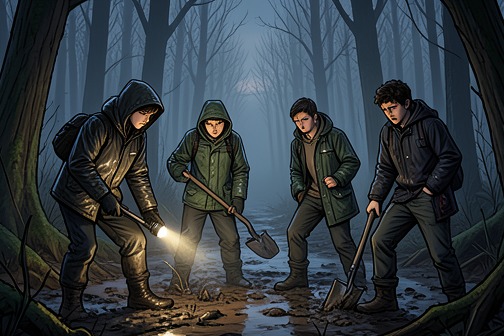
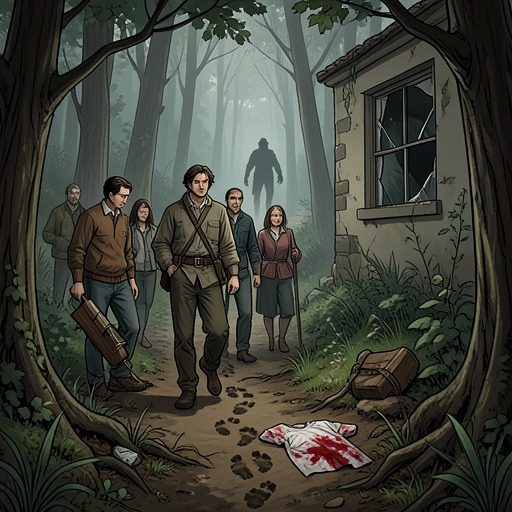
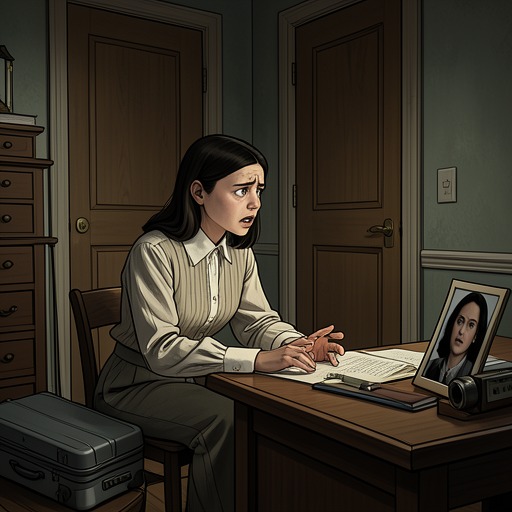
[Scott McCall is bitten by Peter Hale](entity:event-recall-event-scott-mccall-1be641e23367) during the last night of winter break, after [Carson Bradley](entity:character-recall-character-carson-bradley-e17d1b9b17c6), Scott, and [Stiles Stilinski](entity:character-recall-character-stiles-stilinski-12e2b3c432f2) enter [Beacon Hills Woods](entity:location-recall-location-beacon-hills-woods-bbccbd3b18f6) in search of a reported dead body. The bite is the decisive rupture between ordinary suburban life and the supernatural world: Scott’s altered body becomes the first unmistakable proof that [Beacon Hills](entity:location-recall-location-beacon-hills-dbaca5be6a9f) is a supernatural beacon, while the consequences place his friendships, romance, safety, and future under pressure.
## Causes and Background
The event begins with an apparently ordinary town concealing an extraordinary danger. Beacon Hills presents itself as picturesque and suburban, with good schools, low crime, white picket fences, and carefully maintained homes, yet beneath that polished surface lies a dark underground. The town is described as a beacon for the supernatural, especially werewolves. [Carson](entity:character-recall-character-carson-24b1f76a12e7)’s involvement starts on the last night of winter break, when the cold, rainy evening that might otherwise have been spent reading is redirected by Stiles’s decision to hunt for a corpse in the woods.
Stiles’s access to his father’s work makes the expedition possible. Because his father is the sheriff of Beacon Hills, Stiles can listen in on local calls, and the report he overhears supplies the immediate reason for entering the woods. Carson has known Stiles since she was three and is accustomed to being pulled into his reckless adventures with Scott, so a search for a dead body has become, in her experience, another escalation of his usual behavior rather than an obviously supernatural threshold.
The causal chain is therefore sharply defined: Stiles overhears the call, the three friends go into Beacon Hills Woods, Scott encounters the supernatural threat, and [Peter Hale](entity:character-recall-character-peter-hale-c763a42ea8fd) bites him. Carson later identifies the bite as the central mistake in retrospect, reasoning that if Stiles had never learned about the body, the group would never have entered the woods and Scott would not have been bitten. The event is both an accident produced by youthful curiosity and the first link in the larger conflict between werewolves and hunters.
## The Bite and Its Immediate Meaning
After the night in the woods, Scott is visibly different. He becomes stronger and faster, and his senses are heightened. These physical changes turn a frightening suspicion into a conclusion the friends can name: [Scott McCall](entity:character-recall-character-scott-mccall-7740871d71c9) is a werewolf. The discovery is filtered through Stiles’s knowledge of movie monsters and supernatural lore, showing how familiar cultural stories become an improvised diagnostic system when the friends confront something they cannot explain through ordinary science.
At first, Carson, Scott, and Stiles attempt to treat lycanthropy as a problem that can be managed. They consider chaining Scott up during full moons so that no one will be harmed. Their proposed solution is crude but revealing: they still imagine that the supernatural can be contained by friendship, preparation, and a practical rule. The bite has changed Scott’s body, but the friends initially try to preserve the structure of their old lives by placing limits around the transformation.
The bite also creates an immediate contrast between bodily change and personal continuity. Scott remains the friend they knew, yet his increased strength, speed, and senses expose him to dangers and responsibilities that the others cannot simply share. The event consequently turns private friendship into a form of protection and investigation. Carson and Stiles must learn what has happened to Scott while Scott must learn how to inhabit a body that no longer obeys the assumptions of ordinary adolescence.
## Expansion into a Supernatural Conflict
Scott’s transformation attracts the attention of people who regard supernatural beings as threats that must be eliminated. The danger soon takes the form of the [Argent family](entity:organization-recall-organization-argent-family-fee3b8ad96a1), a family of hunters committed to wiping out perceived supernatural threats. Scott’s new romantic interest, [Allison Argent](entity:character-recall-character-allison-argent-bcc580b16b14), is the youngest member of that family, making the bite inseparable from a forbidden romance. Scott’s condition threatens not only his physical safety but also his relationship with Allison and the possibility of trust between their opposing communities.
The event also introduces [Derek Hale](entity:character-recall-character-derek-hale-f259fdd07b23), whose mysterious presence makes him another force in the developing supernatural landscape. Carson’s account places the original trio—Carson, Scott, and Stiles—between werewolves, hunters, Allison’s forbidden connection to Scott, and Derek’s uncertain involvement. The bite thus widens from a single attack into a network of rival loyalties, concealed identities, and competing ideas about whether supernatural beings are monsters, victims, or people capable of choosing how to act.
Later supernatural incidents confirm that Scott’s bite is not an isolated disturbance. Carson encounters a lethal lizard-like creature and sits with Stiles and [Sheriff Stilinski](entity:character-recall-character-sheriff-stilinski-55cc58b45e12) beside an ambulance in pouring rain after a deadly confrontation, while the flashing ambulance and police lights and Scott’s abandoned bicycle make the danger materially visible. The friends recognize that people are dying while they remain unable to explain or stop the violence. In this environment, Scott’s bite functions as the opening of a continuing investigation rather than a completed transformation scene.
## Relationships, Knowledge, and Consequences
The bite changes the meaning of Carson and Stiles’s friendship with Scott. Their bond survives the discovery, but their shared childhood adventures become more cautious and hardened by death. Carson later describes the three friends as having remained together and having each other’s backs, while acknowledging that they are no longer the same people who entered the woods. Their loyalty is not abstract: it develops through repeated exposure to supernatural danger, concealed information, and the necessity of acting before adults or institutions can provide reliable protection.
The transformation also unfolds alongside Carson’s relationship with Stiles. Carson eventually realizes that she has fallen for him and that Stiles had already fallen for her. Their relationship becomes part of the emotional aftermath of the supernatural crisis, giving the original trio a second kind of change: the friends move from childhood intimacy toward romantic and adult commitments while facing threats that force them to mature quickly. Stiles later imagines a future in which he and Carson remain together forever, a vision of permanence that stands in tension with the instability introduced by Scott’s bite and the violence surrounding them.
The wider supernatural investigation repeatedly depends on incomplete knowledge. When Carson searches online for information about the [Kanima](entity:creature-recall-creature-kanima-00fa600e686e), she finds almost nothing useful: no sightings, stories, or legends that match the giant lizard creature, despite Derek’s claim that he has heard stories elsewhere. The bestiary on Stiles’s laptop contains unfamiliar words that Carson cannot understand, and even a search for a creature that cannot swim yields only an irrelevant were-jaguar account. This later uncertainty echoes the original bite: the friends must build knowledge from fragments, testimony, lore, and observation because ordinary sources cannot explain Beacon Hills.
Trusted guidance comes from [Deaton](entity:character-recall-character-deaton-d386b883cb01), whose veterinary office becomes a working point for supernatural planning. Carson describes him as a strange, riddle-speaking veterinary guide who repeatedly helps Scott in moments of need. His practical assistance includes presenting a bottle and a spring-loaded syringe intended to help with the Kanima problem. The contrast clarifies how far the consequences of Scott’s bite extend: what begins with one werewolf transformation eventually requires specialized knowledge, improvised equipment, and alliances among people who have different reasons for opposing the supernatural threat.
## Change and Narrative Significance
Scott’s bite is the foundational transformation of the story’s supernatural arc. It converts a sheriff’s call and a teenage excursion into a conflict involving werewolves, hunters, shapeshifters, and repeated threats to the friends’ lives. It also establishes the narrative’s recurring tension between secrecy and disclosure: Scott’s condition must be understood, concealed, and controlled, while every new supernatural event threatens to expose the truth.
The event’s importance is measured by its continuing effects on ordinary institutions. Scott’s supernatural identity intersects with school, athletics, grades, family relationships, and team membership. Even after the crisis has become broader than Scott’s original transformation, [Coach Finstock](entity:character-recall-character-coach-finstock-f7dd6d13f929) insists that Scott must raise his grades to remain on the team, reminding him that the old expectations of high-school life have not disappeared simply because the supernatural has invaded them. The bite therefore does not erase normality; it forces Scott and his friends to carry extraordinary danger through ordinary obligations.
For Carson, the bite marks the beginning of a life permanently altered by what she has seen. The friends survive the first cycle of danger, but they emerge more cautious, more mature, and more hardened by death. Scott’s transformation is consequently both an origin event and a test of continuity: it asks whether friendship can endure radical bodily change, whether love can cross a hunter–werewolf divide, and whether a seemingly perfect town can preserve its normal façade after its hidden world has been revealed.
Event 2
Peter Hale's death and Derek becoming an Alpha
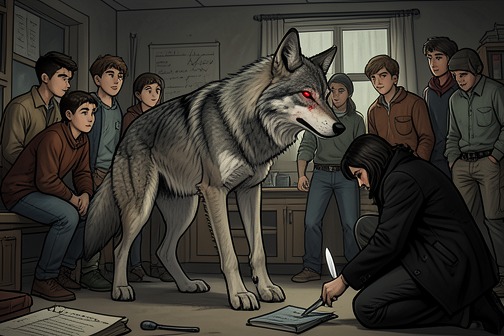
[Peter Hale's death and Derek becoming an Alpha](entity:event-recall-event-bc89c306615a) mark the decisive transfer of power at the center of [Beacon Hills](entity:location-recall-location-beacon-hills-dbaca5be6a9f)' werewolf crisis. Peter's bloody reign ends, but the vacuum it leaves is immediately filled by his nephew [Derek Hale](entity:character-recall-character-derek-hale-f259fdd07b23), whose rise begins a new phase of danger as he turns teenagers into werewolves and expands the threat instead of restoring peace.
## Causes and Background
The event is recalled against the aftermath of the first supernatural crisis. [Peter Hale](entity:character-recall-character-peter-hale-c763a42ea8fd) had been an [Alpha](entity:concept-recall-concept-alpha-ec1e4cf15645) responsible for a string of rabid murders, and his death is presented as the point at which that violence is finally brought to an end. Yet the ending is deliberately unstable: the removal of one Alpha does not remove the structure that made the threat possible. Derek Hale takes the helm, his eyes running blood red as he assumes Alpha status.
The succession therefore works as a reversal rather than a resolution. Peter's death appears to close one chapter, but Derek's accession opens another, with the new Alpha moving faster than before to turn teenagers into creatures of the night. The danger changes its shape from the solitary violence of a dead murderer to the growth of a werewolf group under new leadership.
## What the Event Changes
For [Carson Bradley](entity:character-recall-character-carson-bradley-e17d1b9b17c6), the change is immediately perceptible in the altered condition of the world around her. [The supernatural](entity:concept-recall-concept-the-supernatural-b0cadf182c10) is no longer an isolated secret attached only to [Scott McCall](entity:character-recall-character-scott-mccall-7740871d71c9)'s bite and the original investigation. After Scott McCall becomes stronger, faster, and more sensitive because of the werewolf bite, the group learns to think of supernatural danger through practical rules such as chaining Scott during full moons. Derek's rise exposes the limits of that early attempt at containment: the problem is not merely controlling one transformed person, but responding to an Alpha who can create others.
The event also reframes the survival of Carson Bradley, Scott McCall, and [Stiles Stilinski](entity:character-recall-character-stiles-stilinski-12e2b3c432f2). Their earlier ordeal leaves them more cautious, more mature, and hardened by death, while their friendship remains intact. Peter Hale's death is part of the reason that survival feels temporary rather than secure. The trio has escaped with every limb intact, but the transfer of Alpha power makes clear that surviving one threat does not prevent the next one from emerging.
## Consequences and Escalation
Derek Hale's new position directly affects the later supernatural conflicts. He becomes a central figure whose authority reaches teenagers such as [Boyd](entity:character-recall-character-boyd-0fd1223a4844) and [Erica Reyes](entity:character-recall-character-erica-reyes-f740eb816f3b), and his actions help produce the werewolf group that repeatedly collides with Scott McCall's allies. The succession is consequently tied to recruitment, transformation, and competing loyalties rather than to a simple change of title.
The widening crisis requires guides and improvised systems of knowledge. [Deaton](entity:character-recall-character-deaton-d386b883cb01) becomes trusted as a veterinary guide to the supernatural, preparing materials intended to help the group deal with the [Kanima](entity:creature-recall-creature-kanima-00fa600e686e). The search for information also moves between online speculation and older sources: Carson Bradley finds almost nothing useful about the Kanima through searches for its name, legends, and its inability to swim, while Derek Hale's knowledge appears to come from stories rather than the internet. These later investigations belong to the world Derek's succession helps create, a world in which familiar explanations are inadequate and survival depends on assembling partial rules.
The consequences extend into ordinary institutions as well. Scott McCall's supernatural obligations collide with school and lacrosse when [Coach Finstock](entity:character-recall-character-coach-finstock-f7dd6d13f929) insists that Scott raise his grades or risk losing his place on the team. That pressure illustrates the event's lasting contrast between everyday expectations and Alpha-driven danger: even after Peter Hale's death, the characters must negotiate school, friendships, and sports while a new supernatural power reorganizes their lives.
## Narrative Significance
The event embodies the book's recurring refusal to treat victory as final. Peter Hale's death supplies the apparent conclusion of the first threat, but Derek Hale's rise immediately converts closure into continuation. The transfer from one Alpha to another preserves the underlying danger while changing its scale, leadership, and social reach.
Its significance is also reflected in the book's larger pattern of incomplete return to normality. Carson Bradley, Scott McCall, and Stiles Stilinski remain alive and loyal to one another, and Carson Bradley's relationship with Stiles Stilinski develops within the aftermath, but none of them can return unchanged to the lives they had before the woods and Scott's bite. Peter Hale's death closes the past only long enough for Derek Hale's red-eyed succession to announce that the supernatural story is continuing. It is not an ending to the crisis; it is the moment the crisis acquires a new Alpha.
Event 3
Kate Argent's death
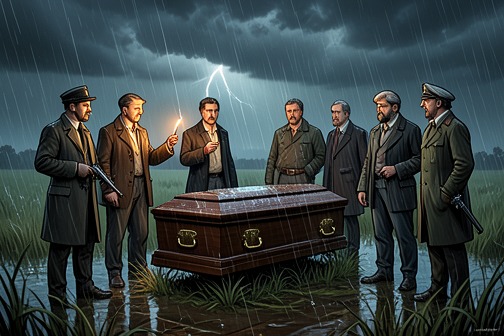
[Kate Argent's death](entity:event-recall-event-5c63a74fc237) is the decisive turning point between the first cycle of violence in [Beacon Hills](entity:location-recall-location-beacon-hills-dbaca5be6a9f) and the larger conflict that follows. Her funeral closes the immediate story of a hunter whose actions included arson and the killing of supernatural beings, but it does not restore order. Instead, her death leaves behind public disgrace, family pressure, and a new antagonist in [Gerard Argent](entity:character-recall-character-gerard-argent-7004a9b95df1), whose response is to declare war.
## Causes and Background
[Kate Argent](entity:character-recall-character-kate-argent-68a1bca3c950) belonged to the [Argent family](entity:organization-recall-organization-argent-family-fee3b8ad96a1), a dynasty of werewolf hunters that treated supernatural creatures as threats to be eliminated. That family ideology placed her in direct opposition to [Scott McCall](entity:character-recall-character-scott-mccall-7740871d71c9) after he became a werewolf, even though Scott's relationship with [Allison Argent](entity:character-recall-character-allison-argent-bcc580b16b14) made the conflict painfully intimate. [The supernatural](entity:concept-recall-concept-the-supernatural-b0cadf182c10) danger was therefore not presented as an isolated monster problem: it became entangled with a forbidden romance, family loyalty, and the hunters' determination to destroy what they considered a threat to humanity.
Her violence ultimately became impossible to separate from the threat she claimed to oppose. The account identifies Kate's acts of arson and describes her end as violent, while also emphasizing that the Argent family was left socially disgraced after those acts came to light. Her death thus follows both physical violence and moral exposure. It is not simply the removal of an enemy; it is the collapse of the public justification surrounding her conduct.
## Funeral and Immediate Significance
Kate is finally laid to rest at a funeral attended by Allison Argent and the wider Argent family. Allison's preparation reveals the personal cost of the event. She tries to appear composed while taking out the dress reserved for Kate's funeral, but her grief remains visible because Kate was her aunt, despite the fact that Kate had killed people. The scene holds familial mourning and moral condemnation together instead of allowing either one to erase the other.
The funeral also becomes a gathering point for the Argent family. Kate's death draws the hunters back into a shared family space at precisely the moment when their reputation has been damaged. The ceremony therefore has a double function: it commemorates a relative and exposes the consequences of her actions. Allison must mourn a family member while facing what that family member did, and the family must confront the fact that its hunter identity no longer guarantees social legitimacy.
## Consequences and Aftermath
Kate's death removes one source of immediate danger, but it creates a vacuum that Gerard Argent fills. [Gerard](entity:character-recall-character-gerard-53aeabf16f28) does not resemble an ordinary werewolf hunter; he is described as the most volatile of them all, and he responds to the revelations surrounding Kate by declaring war. The event consequently changes the conflict's scale. Kate's personal violence gives way to Gerard's organized and openly announced campaign, making the Argent family itself a more prominent threat.
The death also coincides with [Peter Hale](entity:character-recall-character-peter-hale-c763a42ea8fd)'s death and [Derek Hale](entity:character-recall-character-derek-hale-f259fdd07b23)'s rise as an [Alpha](entity:concept-recall-concept-alpha-ec1e4cf15645). With Peter gone, Derek begins turning teenagers into werewolves, while Gerard mobilizes against the supernatural. The result is not peace but escalation on opposing sides: Derek builds a teenage werewolf group, and Gerard turns the disgraced hunter family toward renewed confrontation. A further enemy lurks beyond both factions, killing without an immediately understood identity or purpose, so Kate's death becomes one element in a widening crisis rather than its resolution.
## Narrative and Thematic Role
The event exposes the instability of the story's simple hunter-versus-werewolf division. Kate's family claims the authority to eliminate monsters, yet her own actions make the hunters objects of suspicion and public rejection. The line between good and evil consequently blurs, and unlikely alliances become necessary as the characters face threats that cannot be contained by inherited loyalties.
Kate's funeral gives that moral reversal a concrete human form through Allison's divided response. Mourning does not absolve Kate, and condemnation does not erase kinship. The event's lasting significance lies in this unresolved contradiction: Kate is dead and her direct violence has ended, but the beliefs, resentments, and family structures that enabled her continue through Gerard Argent. For [Carson Bradley](entity:character-recall-character-carson-bradley-e17d1b9b17c6), the changing danger is survivable only through the support of [Stiles Stilinski](entity:character-recall-character-stiles-stilinski-12e2b3c432f2), whose presence becomes an emotional counterweight to the deaths, new enemies, and collapsing boundaries that follow Kate's burial.
Event 4
Lydia Martin's hospital disappearance
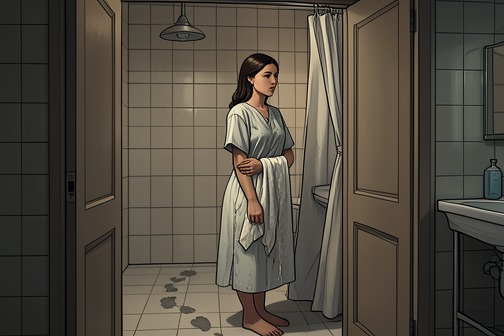
[Lydia Martin's hospital disappearance](entity:event-recall-event-7016220cdcf5) is the decisive interruption of her apparent recovery after a coma and an [Alpha](entity:concept-recall-concept-alpha-ec1e4cf15645) bite. Three days after waking, she is healing, walking, and showering without assistance, yet she vanishes from a hospital bathroom in the middle of that ordinary act. The disappearance transforms Lydia from a recovering patient into the center of a mystery whose evidence points beyond medicine, while the people searching for her are forced to confront how little control they possess over the supernatural danger around them.
## Causes and Background
Lydia's disappearance occurs against a troubling medical contradiction. She has spent almost two weeks in a coma, causing her parents, doctors, and friends to fear that she might never wake. After waking, however, she begins recovering in a way that appears almost normal. Ms. McCall reports that Lydia is healing beautifully, and Lydia can get up to shower on her own. That improvement is especially striking because Lydia was bitten by [Peter Hale](entity:character-recall-character-peter-hale-c763a42ea8fd), an Alpha whose bite is understood as a lethal transformation test: it either takes or kills. [Scott McCall](entity:character-recall-character-scott-mccall-7740871d71c9)'s bite healed within a day, but Lydia's wound is only beginning to scab, and she remains alive. Her body therefore occupies an unstable space between ordinary recovery and supernatural consequence.
The shower initially represents a small return to bodily independence. After lying in a hospital bed for nearly two weeks, Lydia is eager to wash and reclaim a normal physical routine. The event's horror comes from the way that routine is interrupted without warning. A scream echoes through the hospital, immediately converting a scene of healing into an emergency and drawing [Carson](entity:character-recall-character-carson-24b1f76a12e7), [Stiles Stilinski](entity:character-recall-character-stiles-stilinski-12e2b3c432f2), Ms. McCall, and Mr. Martin toward Lydia's room.
## What Happens
The search begins with the sound of running water. Carson and the others enter Lydia's room and find no obvious explanation for the scream. Carson opens the bathroom door, discovers that the shower is still running, and pushes aside the partly opened curtain. Lydia is gone. The bathroom has no connected rooms beyond Lydia's hospital room, and there is no visible place where she could have hidden or exited. Her absence is not a conventional escape but an apparent vanishing.
The physical traces make the scene more alarming rather than more intelligible. Lydia's hospital gown lies on the floor beside a puddle of water, implying that she entered the shower and left without dressing. The bathroom window is open, its curtain moving in the breeze, and the room is on the second floor above a substantial drop. Carson finds no trace of Lydia outside. The open window offers a possible route but no credible account of how a patient could use it without suffering a serious injury. The cold winter weather also makes Lydia's exposure dangerous, adding immediate bodily peril to the mystery.
The people present react through competing forms of panic and procedure. Mr. Martin demands to know where his daughter is, while Ms. McCall runs to call the police. Stiles directs Carson's attention to the open window, turning the group's fear toward a potential crime scene. Their investigation remains limited by the absence of a body, witness, or clear exit. The hospital, supposedly a controlled environment designed to protect vulnerable bodies, becomes instead the setting in which Lydia's body disappears from observation.
## Evidence and Supernatural Context
The disappearance gains significance from later evidence that repeatedly links apparent medical or criminal scenes to the [Kanima](entity:creature-recall-creature-kanima-00fa600e686e). At the auto shop, Carson witnesses a clawed, scaly hand, a whipping tail, and a worker killed beneath a moving lift; Stiles is left temporarily paralyzed, and the creature's eyes and familiar appearance trouble Carson afterward. Later, clear ooze appears on a window sill just as it did at the auto shop, warning Carson and [Allison Argent](entity:character-recall-character-allison-argent-bcc580b16b14) that the creature has reached them again. These recurring physical traces establish a pattern in which unexplained attacks leave material signs even when the attacker itself remains difficult to identify.
The hospital also becomes a major site of forensic reconstruction. Surveillance footage from the night Jessica was murdered is reviewed, but the hospital is crowded because of a six-car pileup, and the volume of wheelchairs and gurneys makes the search difficult. Shoeprints, tire tracks, and a credit-card receipt eventually connect [Matt Daehler](entity:character-recall-character-matt-daehler-7dd68a09c6ac) to multiple murder scenes, including the hospital and the auto shop. This later evidence does not provide a direct explanation for Lydia's vanishing, but it places the hospital inside the same network of violence, surveillance gaps, and manipulated or incomplete evidence that drives the wider investigation.
## Consequences and Aftermath
Lydia's disappearance destroys the reassurance created by her awakening. Her recovery had seemed to offer a stable medical explanation for her condition: she was alive, improving, and capable of caring for herself. The empty bathroom overturns that interpretation. The running shower and abandoned gown preserve the last ordinary signs of her presence while denying the group the central fact they need—where Lydia has gone and what has taken her.
The event also intensifies the burden carried by Carson, Stiles Stilinski, and their allies. They are not merely visiting a friend in the hospital; they are now witnesses to an impossible disappearance that must be explained alongside murders, paralysis, and the repeated appearance of a lizard-like creature. Later scenes show the accumulated cost of this environment. After further violence, Carson wakes in her own room with Stiles holding her, and she is later required to attend a meeting with [Ms. Morrell](entity:character-recall-character-ms-morrell-402a733418ed) because she has been held hostage. The disappearance therefore belongs to a broader progression in which supernatural emergencies invade domestic, medical, and school spaces, leaving the survivors to seek comfort while institutions attempt to name and contain what happened.
## Narrative Significance
As a narrative event, [Lydia's hospital disappearance](entity:action-recall-action-b75c10966e54) works through a sharp contrast between recovery and erasure. The hospital promises observation, diagnosis, and controlled care; the event offers a running shower, an open window, and no patient. Its central reversal is not simply that Lydia is in danger, but that the ordinary evidence of her presence remains while her body and the explanation for its absence do not.
The scene also establishes the story's recurring conflict between official knowledge and embodied intuition. Doctors can describe Lydia's coma and healing, while Carson and her friends recognize that the bite, the impossible exit, and the surrounding attacks cannot be contained by a normal medical account. Later clues—paralysis, clear ooze, surveillance footage, shoeprints, tire tracks, and the credit-card receipt—continue this movement from bodily shock to forensic reconstruction. Lydia's disappearance is thus both a personal crisis and an investigative threshold: after it, the hospital can no longer be treated as a refuge, and Lydia's survival itself becomes part of the supernatural mystery.
Event 5
Lydia is found in the woods
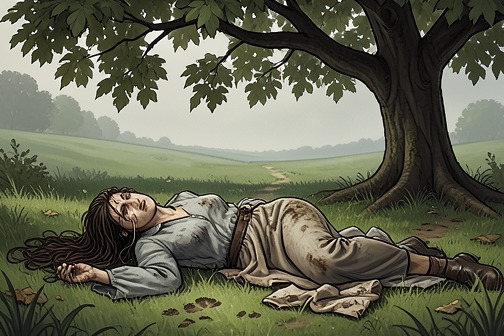
[Lydia is found in the woods](entity:event-recall-event-b1a7f3638dcc) after vanishing from [Beacon Hills Hospital](entity:location-recall-location-beacon-hills-hospita-f968ea24ce29), a recovery that resolves the immediate search while deepening the mystery of what happened to her. The discovery exposes the physical and psychological cost of her disappearance: she is alive, but naked, shivering, disheveled, and unable to remember how she reached the forest.
## Causes and Background
Lydia's disappearance follows an already alarming search. At the hospital, [Carson](entity:character-recall-character-carson-24b1f76a12e7) and the others hear a shower running and enter the bathroom expecting to find her there. The shower curtain is partly open, but when it is pulled back, Lydia is gone. The bathroom has no connected rooms beyond Lydia's hospital room, and there is no visible sign of where she went. Her absence therefore appears impossible as well as urgent: she could not have gone far, yet there is nowhere inside the hospital for her to be.
The search later extends to the Hale house. [Scott McCall](entity:character-recall-character-scott-mccall-7740871d71c9) is certain that Lydia's scent has led there, and the group explores the decrepit property hoping to find a trace. They find nothing, just as they found nothing at the hospital. After abandoning the search for the night, Carson, [Stiles Stilinski](entity:character-recall-character-stiles-stilinski-12e2b3c432f2), Scott McCall, and [Allison Argent](entity:character-recall-character-allison-argent-bcc580b16b14) go home with their hopes crushed, knowing that Lydia remains somewhere beyond their reach.
## Discovery in the Woods
The breakthrough occurs near the scene of an ambulance attack. Scott McCall has run into the woods in an extraordinary werewolf sprint, while Carson and Stiles Stilinski move closer to the police and the blood-soaked scene. The investigation is surrounded by flashing emergency activity and the remains of violence, making Lydia's absence feel inseparable from the deaths and supernatural threats already destabilizing [Beacon Hills](entity:location-recall-location-beacon-hills-dbaca5be6a9f).
Carson notices movement that the police do not. A pale figure emerges from the trees in an apparently trance-like state, and a flash of strawberry-blond hair identifies her as Lydia. Carson prevents Stiles Stilinski from turning around, concerned that he would see Lydia naked, then approaches her while she keeps her arms pressed against her chest. Her hair is wild, with twigs and leaves caught in it, making her look as though she has been living in the woods rather than merely passing through them.
Lydia's first practical response is a request for a coat. She throws out her hands and forces Carson and most of the police department to avert their eyes, while [Sheriff Stilinski](entity:character-recall-character-sheriff-stilinski-55cc58b45e12) removes his coat and gives it to Carson to place around her. The gesture restores a minimum of dignity and protection to a scene otherwise defined by exposure, confusion, and public danger.
## Memory Loss and Immediate Aftermath
Carson quickly checks Lydia for visible injuries. Lydia is shivering and appears to need a shower, but no obvious wounds are found. The physical examination offers only limited reassurance because the central damage is not visible. When Lydia asks why she is outside, she cannot account for her location or condition. She specifically asks Carson why she is naked in the middle of nowhere, and Carson realizes that Lydia remembers nothing.
This loss of memory changes the meaning of the recovery. Lydia has not simply been located after becoming lost; she has returned from an unexplained interval that she cannot narrate. The search has answered the question of where she is, but not who or what took her from the hospital, carried her through the night, or left her in the forest. Her body supplies fragments of a journey through the leaves and undergrowth, while her mind supplies no reliable sequence to connect them.
The surrounding circumstances intensify that uncertainty. The recovery takes place amid an ambulance crime scene, police questioning, and the larger discovery that Beacon Hills is threatened by both werewolves and a lethal lizard-like creature. Carson later sits with Stiles Stilinski and Sheriff Stilinski on the tailgate of the ambulance in pouring rain, still shaken by the violence and by the creature's unsettling familiarity. Lydia's return is therefore not a return to safety in any uncomplicated sense; she is recovered into an environment that remains dangerous and unexplained.
## Trauma, Care, and Narrative Significance
The event places Carson in the role of Lydia's immediate protector. Carson identifies her, shields her from Stiles Stilinski's view, retrieves a coat from Sheriff Stilinski, covers her, and checks whether she is hurt or cold. These actions are practical rather than heroic in display, but their sequence matters: recognition becomes privacy, privacy becomes clothing, and clothing becomes the first step toward restoring Lydia's control over her exposed body.
The episode also reveals how supernatural danger is experienced through ordinary bodily consequences. Lydia does not return with an explanation or a visible supernatural mark. She returns cold, dirty, naked, and confused. The absence of memory becomes the event's most consequential evidence, turning a rescue scene into a problem of interpretation. For the characters, the unanswered gap demands further investigation; for Lydia, it means that her own recent history has become inaccessible to her.
The following morning provides a quiet contrast to the frantic recovery. Carson wakes in her own room after a night of distress, with less crying and less soreness around her eyes. Stiles Stilinski is beside her, his fingers intertwined with hers and his arms wrapped around her. Their physical closeness frames recovery as communal rather than solitary: after the disappearance, the ambulance attack, and the accumulating violence, Carson and Stiles Stilinski seek safety through contact and continued presence.
The event's consequences extend beyond Lydia. Carson later waits outside the guidance office wearing Stiles Stilinski's plaid shirt, having been held hostage during the police-station crisis. A mild concussion and a blackout of at least half an hour leave her unable to account for everything that happened. Read alongside Lydia's unexplained memory loss, Carson's own fractured recollection establishes a recurring pattern in the story: survival does not guarantee comprehension. The woods recovery is significant because it converts Lydia's disappearance into a lasting mystery while showing that, in Beacon Hills, the first task after supernatural violence is often not explanation but finding the missing, covering the vulnerable, and keeping the survivors together.
Event 6
墓地器官盗窃事件
The grave robbery and liver theft is the first decisive crime scene in the investigation into the creature haunting [Beacon Hills](entity:location-recall-location-beacon-hills-dbaca5be6a9f). A liver disappears from a grave, but the theft is not treated as an ordinary act of desecration: [Isaac Lahey](entity:character-recall-character-isaac-lahey-4fcaad0314c9) reports seeing a clawed hand, turning a disturbing criminal mystery into evidence of an emerging supernatural threat. The incident also places [Lydia Martin](entity:character-recall-character-lydia-martin-632f28e7f863) under suspicion because her disappearance occurs close to the time of the robbery, forcing her friends to weigh medical facts, witness testimony, and the rules of the supernatural against one another.
## Discovery and Initial Evidence
[Stiles Stilinski](entity:character-recall-character-stiles-stilinski-12e2b3c432f2) brings the news while walking with [Carson Bradley and Scott McCall](entity:relation-recall-relation-carson-bradley-scott-82413e0bf41d): there has been a grave robbery, and a liver has been stolen. The detail immediately produces a grotesque hypothesis. [Carson](entity:character-recall-character-carson-24b1f76a12e7) asks who established that the liver was missing, learning that the information came from the kid working in the graveyard, identified as Isaac Lahey. The investigation therefore begins with a chain of hearsay rather than a complete official account, and the distinction matters because the friends are trying to determine not only what was taken but who could have taken it and why.
Isaac’s testimony supplies the crime’s most distinctive physical clue. When Carson presses him for what he saw, he describes claws—not an animal paw, but a human hand with claws for fingernails. The image becomes lodged in Carson’s thinking for the rest of the day. It is simultaneously precise and incomplete: Isaac can describe the hand, yet cannot identify the creature attached to it. The evidence gives the investigation a body part, a texture, and a likely supernatural category without providing a name or motive.
## The [Werewolf](entity:creature-recall-creature-werewolf-73193042775d) Hypothesis
Carson interprets the clawed hand through the group’s existing knowledge of werewolves. The only clawed hand she has seen belongs to a werewolf, so Isaac’s account appears to establish that a werewolf was present in the graveyard. The deduction seems to imply that a new werewolf has appeared in Beacon Hills, particularly because [Scott McCall](entity:character-recall-character-scott-mccall-7740871d71c9) is not likely to be crawling through a cemetery to eat a liver, and [Derek Hale](entity:character-recall-character-derek-hale-f259fdd07b23) has largely disappeared since taking [Alpha](entity:concept-recall-concept-alpha-ec1e4cf15645) power from [Peter Hale](entity:character-recall-character-peter-hale-c763a42ea8fd).
The suspicion turns toward Lydia Martin. She has vanished shortly before Isaac’s account, creating a temporal connection between her disappearance and the theft. Yet the theory immediately encounters a contradiction. Lydia still has the wound from Peter Hale’s bite when Carson last sees her, whereas a newly transformed werewolf should be expected to display a different physical progression. Lydia’s injury has begun to scab rather than healing with the rapidity associated with Scott’s bite, and her survival itself conflicts with the blunt supernatural rule that an Alpha’s bite either takes hold or kills. Her recovery makes her condition unusual, but it does not provide enough proof to identify her as the grave robber.
The medical setting sharpens that uncertainty. Lydia woke from a coma approximately three days earlier, relieving her parents, doctors, and friends after nearly two weeks in the hospital. She is healing well enough to shower independently, but her recovery looks human rather than conventionally lycanthropic. The hospital’s clinical observation and the supernatural group’s expectations consequently pull in different directions: Lydia is alive, visibly wounded, and behaving like a recovering human, while the cemetery evidence suggests that someone with claws has begun feeding on human organs.
## Expansion into the [Kanima](entity:creature-recall-creature-kanima-00fa600e686e) Investigation
The graveyard clue later becomes part of a larger pattern involving the Kanima. At an auto shop, Carson and Stiles Stilinski witness a clawed, scaly hand and a tail striking a worker before the creature leaves Stiles paralyzed. The resemblance to Isaac’s testimony makes the earlier grave robbery newly legible. The hand is no longer merely a possible werewolf sign; it may belong to a lizard-like creature whose physical form includes claws, scales, a tail, and venom capable of paralysis.
The group struggles to identify the creature through ordinary research. Searches for Kanima, Kanima legends, a Kanima shapeshifter, and a giant lizard that cannot swim yield almost nothing online. Derek Hale has heard stories, but the bestiary on Stiles’s laptop contains unfamiliar words that Carson cannot translate reliably. A website about a were-jaguar offers only a possible starting point rather than a genuine match. This failure of the internet contrasts with the specialized supernatural knowledge held in private records and by people such as Derek Hale and [Deaton](entity:character-recall-character-deaton-d386b883cb01), making the grave robbery part of a world in which official or public information is consistently incomplete.
Physical traces continue to repeat the cemetery’s logic. During another attack, clear ooze drips from a window sill, just as it did at the auto shop, linking separate scenes through material residue even when the creature itself is absent. At [Beacon Hills veterinary office](entity:location-recall-location-beacon-hills-veterin-a83bc7d4fc28), Deaton prepares a small bottle and a spring-loaded syringe to help contain the Kanima problem. The investigation thus shifts from asking whether a werewolf stole a liver to developing tools for confronting a distinct venomous creature whose attacks leave recognizable but difficult-to-interpret evidence.
## Forensic Reinterpretation and Consequences
Later surveillance and casework connect the supernatural pattern to [Matt Daehler](entity:character-recall-character-matt-daehler-7dd68a09c6ac). At the hospital, the former sheriff and the group review footage from the night Jessica was murdered, but the crowded facility makes the search difficult: a six-car pileup has filled the hospital, producing hundreds of wheelchairs and gurneys and leaving a major gap between the murder and the evidence needed to identify its perpetrator. The camera footage does not immediately resolve the case, showing how institutional records can be extensive while still failing at the decisive moment.
The physical record outside the hospital is more revealing. Shoeprints and tire tracks at the trailer park are compared with other evidence, and a credit-card receipt signed by Matt Daehler places him at the garage when the mechanic was killed. If the tracks match, Matt can be placed at three murder scenes—the trailer, the hospital, and the rave—with the garage potentially making a fourth. This evidence changes the meaning of the grave robbery’s first clues. The investigation is no longer centered on an unknown werewolf acting alone; it is moving toward a linked sequence of attacks involving the Kanima and the person directing or accompanying it.
The event’s consequences extend beyond identification. The stolen liver creates the first compelling bridge between desecrated human bodies and a creature whose attacks are governed by unfamiliar rules. It produces suspicion of Lydia Martin, exposes the limitations of witness testimony, and encourages Carson, Stiles Stilinski, and Scott McCall to compare claw marks, residue, surveillance, tracks, receipts, and injuries across separate locations. In that sense, the grave robbery is less a contained crime than the investigation’s first unstable piece of material evidence: initially interpreted as proof of a new werewolf, later absorbed into the Kanima case, and finally understood within a broader pattern of manipulated violence and forensic pursuit.
Event 7
Argent family gathering at Kate Argent's funeral
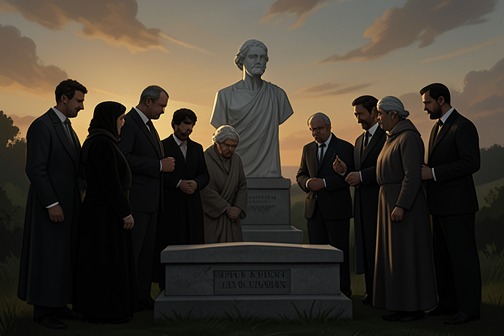
The [Argent family gathering at Kate Argent's funeral](entity:event-recall-event-7f391f03c1aa) is a public ceremony whose real narrative importance lies in what it reveals about the hunters' return to force. [Carson Bradley](entity:character-recall-character-carson-bradley-e17d1b9b17c6), [Stiles Stilinski](entity:character-recall-character-stiles-stilinski-12e2b3c432f2), and [Scott McCall](entity:character-recall-character-scott-mccall-7740871d71c9) observe the funeral covertly, expecting to find information while trying not to be discovered. Instead, they witness the [Argent family](entity:organization-recall-organization-argent-family-fee3b8ad96a1) assemble around [Kate Argent](entity:character-recall-character-kate-argent-68a1bca3c950)'s grave and recognize [Gerard Argent](entity:character-recall-character-gerard-argent-7004a9b95df1)'s arrival as a decisive escalation: grief is accompanied by organization, surveillance, and reinforcements.
## Causes and Background
The gathering follows [Kate Argent's death](entity:event-recall-event-5c63a74fc237) and funeral, but the circumstances are not treated as an ordinary family farewell. [Carson Bradley and Stiles Stilinski](entity:relation-recall-relation-carson-bradley-stile-fe2b2021ba78) secretly crash the funeral in order to locate Scott McCall, who is hiding nearby and watching the ceremony. Their presence makes the event both public and clandestine: the Argent family is surrounded by photographers and journalists, while the three teenagers remain concealed behind a cemetery statue. The contrast establishes the funeral as a scene in which appearances and purposes diverge.
The setting is a small, gated section of [Beacon Hills Cemetery](entity:location-recall-location-beacon-hills-cemeter-6a0b5172fde3). The scale of the gathering is emphasized by the crowd of what appears to be hundreds of photographers and journalists, whose attention gives the ceremony the character of a heavily observed public event rather than a private burial. [Allison Argent](entity:character-recall-character-allison-argent-bcc580b16b14) sits with her family in front of what Carson Bradley understands to be Kate Argent's grave; [Mrs. Argent](entity:character-recall-character-mrs-argent-bd04e8a4f3c1) wears a fur coat, [Mr. Argent](entity:character-recall-character-mr-argent-299bde722c33) stands to the side, and an elderly white-haired man is guarded by two men who resemble secret-service agents. Before his identity is explained, his protection and placement mark him as someone with unusual authority.
## What Happens
Carson Bradley and Stiles Stilinski find Scott McCall crouched behind a statue. They approach in a low crouch and land in the leaves behind him, startling him until he recognizes them. From that hiding place, Stiles Stilinski asks about the unfamiliar elderly man. Scott McCall identifies him as an Argent, narrowing the mystery even before the family conversation can be heard.
When Carson Bradley asks what the man is saying to Allison Argent, Scott McCall explains that the elderly man is her grandfather and that his name is Gerard Argent. Carson Bradley's alarm comes from the collision between the man's family role and the danger associated with the Argent hunters: the apparently ceremonial arrival of a grandfather is also the arrival of a powerful figure from the hunter family.
Stiles Stilinski briefly suggests that Gerard Argent might have come only for the funeral and that some Argents might not be involved in hunting. Scott McCall rejects that hopeful interpretation. He identifies Gerard Argent and the other gathered hunters as reinforcement, converting the scene from a family mourning ritual into evidence of a larger operation. Carson Bradley understands the immediate consequence as a worsening of the teenagers' situation, while the three remain exposed in the cemetery until [Sheriff Stilinski](entity:character-recall-character-sheriff-stilinski-55cc58b45e12) catches them by their collars and jackets.
## Immediate Consequences
The funeral gathering changes the strategic meaning of the Argent family's presence in [Beacon Hills](entity:location-recall-location-beacon-hills-dbaca5be6a9f). Gerard Argent is not merely introduced as Allison Argent's grandfather; he is recognized as an additional force capable of making the conflict with the supernatural more dangerous. Scott McCall's knowledge supplies the crucial interpretation, while Carson Bradley and Stiles Stilinski provide the viewpoint of observers discovering that the threat has expanded.
The scene also leads directly into institutional pressure. After [Gerard Argent takes over the school](entity:event-recall-event-09987cad67a4), he announces that, as his first day, he intends to support his teachers and requires at least two students to stay behind for detention. His glance toward Carson Bradley and Stiles Stilinski makes clear that the new authority is already willing to use school discipline against them. The funeral therefore has consequences beyond the cemetery: Gerard Argent's arrival is followed by his occupation of a civic and educational position from which he can exert pressure on the teenagers.
## From Family Gathering to Supernatural Investigation
Gerard Argent's arrival also helps redirect the group's investigation toward the Argent family archive. Scott McCall later retrieves a flash drive from Gerard Argent's key ring. The group discovers that the book they had believed to be the bestiary is actually a log of recipes, while the genuine bestiary is stored on the drive. This reversal makes Gerard Argent's personal possession a source of knowledge and a security problem at once.
The recovered material is written in strange non-English words that Carson Bradley identifies as possibly Latin. The bestiary contains no clear account of the [Kanima](entity:creature-recall-creature-kanima-00fa600e686e), despite the group's belief that a creature documented by the Argents should have left some trace. Carson Bradley searches for the Kanima through multiple combinations, including legends, shape-shifting descriptions, and the creature's apparent inability to swim. Almost nothing appears online; the investigation instead turns to a partially relevant account of a were-jaguar, which supplies a possible comparative lead without identifying the creature.
The limits of the bestiary make the funeral's revelation more significant. The Argent family possesses an archive of supernatural knowledge, yet that archive is incomplete, encoded, and difficult for outsiders to interpret. Gerard Argent's presence brings not only more hunters but also a contested system of classification: the teenagers must learn the rules of a creature that even their available research barely explains.
## Later Stakes and Narrative Significance
The gathering foreshadows a pattern in which supernatural danger is managed through improvised authority and exceptional measures. In the continuing Kanima crisis, the group steals a police vehicle and confines [Jackson Whittemore](entity:character-recall-character-jackson-whittemore-120cc2b873d5) in it because they believe a van can keep him from hurting anyone. [Deaton](entity:character-recall-character-deaton-d386b883cb01), whose veterinary office has become an unofficial source of supernatural guidance for Scott McCall, supplies a small bottle and a spring-loaded syringe intended to help with the Kanima problem. These later actions echo the funeral's central tension: ordinary institutions and family rituals remain visible, but the characters increasingly operate through secrecy, detention, specialized knowledge, and emergency intervention.
The same pressure reaches the police station, where [Matt Daehler](entity:character-recall-character-matt-daehler-7dd68a09c6ac) forces Carson Bradley down a hallway with a gun pressed against her back while intending to take four people hostage and allow Jackson Whittemore to kill. The fear is immediate and physical, and Carson Bradley is left with obedience as her only available option. Against that later hostage crisis, the funeral appears restrained, but its narrative function is comparable: it is the moment when the story recognizes that danger is not isolated and that established groups are mobilizing around it.
Gerard Argent's stated justification for the hunters is that they are killing murderers, not killing indiscriminately. That claim gives the gathering a moral vocabulary, but it does not erase the threat it represents. The funeral's power comes from this contradiction. A family assembled to bury Kate Argent is also a hunting network displaying its continuity, resources, and authority. The ceremony marks the passage from a single death to a broader conflict in which the Argent family can influence the school, control specialized knowledge, and intensify the danger facing Scott McCall, Stiles Stilinski, and Carson Bradley.
Event 8
Isaac Lahey becomes a werewolf
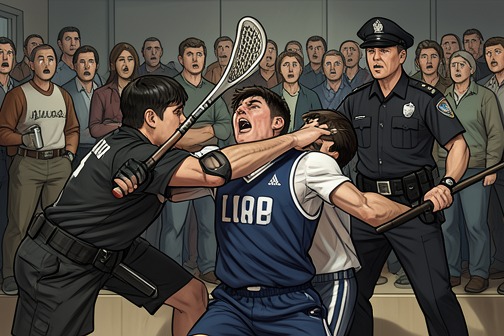
[Isaac Lahey becomes a werewolf](entity:event-recall-event-04208ead76d8) through [Derek Hale](entity:character-recall-character-derek-hale-f259fdd07b23)’s bite, an event that turns an apparently ordinary lacrosse practice into the first public sign that Derek is building a new pack. Isaac’s transformation is not presented as a controlled initiation but as a violent loss of control: heightened aggression, abnormal reflexes, a clash with [Scott McCall](entity:character-recall-character-scott-mccall-7740871d71c9), a police intervention, and an emergency confrontation in which Derek’s [Alpha](entity:concept-recall-concept-alpha-ec1e4cf15645) power is the only force capable of stopping him.
## Causes and Background
The transformation is first recognized through behavior rather than exposition. During lacrosse practice, Isaac’s shoulders move erratically and he appears intensely angry. When he catches the ball with extreme precision, [Carson Bradley](entity:character-recall-character-carson-bradley-e17d1b9b17c6) compares the reflexes to Scott McCall’s performance when Scott was a newly made werewolf. The combination of aggression and heightened physical response leads [Carson](entity:character-recall-character-carson-24b1f76a12e7) to realize that Isaac’s condition is supernatural before Isaac himself can explain it.
The field provides an important contrast between ordinary teenage competition and the hidden rules of werewolf life. Isaac is supposed to be another player in line, but his body is already responding according to a different system. His emerging abilities surface inside a sport built around speed, impact, and controlled aggression, making the supernatural change initially resemble an extreme version of athletic intensity. That resemblance collapses when Isaac and Scott charge at each other and collide with enough force to send both of them to the ground.
## First Transformation
The collision confirms Carson’s suspicion: Scott appears to be looking into Isaac’s golden eyes. Isaac’s first transformation therefore becomes visible through his confrontation with another werewolf, rather than through a private or ceremonial moment. The scene makes the new condition legible by repeating signs already associated with Scott: heightened reflexes, uncontrolled anger, altered eyes, and a body capable of sudden violence.
The discovery immediately attracts the authorities. [Sheriff Stilinski](entity:character-recall-character-sheriff-stilinski-55cc58b45e12) arrives with two deputies, and within minutes Isaac is separated from the rest of the team while the sheriff, the deputies, and [Coach Finstock](entity:character-recall-character-coach-finstock-f7dd6d13f929) try to determine why the quiet student has provoked a police visit. The public setting raises the stakes beyond Isaac’s personal change. His transformation threatens supernatural secrecy, the safety of the other players, and the ability of the adults to interpret what they are witnessing through ordinary law-enforcement categories.
## Police-Station Crisis
The danger intensifies at the police station. Carson follows a trail of blood and finds a man dressed as a deputy being rammed into a wall by a tall figure presumed to be Isaac. A shattered glass syringe lies under Carson’s boot, and Isaac turns toward her with a distorted face resembling Scott’s werewolf form. His change is no longer a brief flash of unusual eyes on a sports field; it has become a feral assault in an enclosed institutional space.
The attack places Carson and [Stiles Stilinski](entity:character-recall-character-stiles-stilinski-12e2b3c432f2) in immediate danger. Stiles is backed against a wall with fear covering his face, while Isaac growls and advances in his shifted form. Derek intervenes by pulling Carson backward and confronting Isaac with crimson eyes and bared fangs. The encounter establishes a hierarchy within the new pack: Isaac’s transformation is uncontrolled, but Derek possesses the authority and power to command the transformed body.
Derek’s intervention ends the crisis without killing Isaac. After Derek’s growl, Isaac collapses into a corner, huddling as he gradually returns to human form. The restoration is witnessed directly by Carson and Stiles, turning Derek’s status from an abstract claim into an observable fact. When Stiles asks how he accomplished it, Derek identifies the source of his control by saying, "I'm the Alpha."
## Consequences and Pack Formation
Isaac’s transformation confirms that Derek Hale’s werewolf pack is expanding and that the bite carries consequences beyond the moment of contact. Isaac is not simply given new strength; he becomes vulnerable to aggression, exposure, police suspicion, and the possibility of harming people around him. His first change demonstrates that the bite creates an immediate practical problem: the newly transformed person may need an established Alpha to contain him.
The event also sharpens the contrast between Scott and Derek. Scott’s presence on the lacrosse field helps reveal Isaac’s change, while Derek’s intervention at the station demonstrates a different model of leadership. Scott is part of the group trying to understand what has happened, but Derek is the figure who can impose control over the transformed Isaac. The event consequently reinforces the rivalry and alliance between [Scott McCall and Derek Hale](entity:relation-recall-relation-scott-mccall-derek-h-2b6c1efa4581) while establishing Derek’s authority over Isaac.
Afterward, Isaac’s new status becomes part of the wider supernatural crisis surrounding the [Kanima](entity:creature-recall-creature-kanima-00fa600e686e). The group continues searching for information through Derek’s bestiary and online research, even finding that the available internet material offers little useful information about the giant lizard creature. [Deaton](entity:character-recall-character-deaton-d386b883cb01) later provides equipment intended to help with the Kanima problem, reflecting the practical, improvised methods the teenagers and their allies use while confronting several supernatural threats at once. Isaac’s transformation thus occurs within a larger pattern in which knowledge, containment, and loyalty must be assembled under pressure.
## Narrative Significance
Isaac Lahey becomes a werewolf at the point where supernatural identity can no longer remain safely separated from school life, sport, or the police. His transformation begins with a familiar teenage activity and ends with a violent confrontation in a police station, showing how quickly the ordinary world can become the setting for supernatural danger. The lacrosse field exposes the symptoms; the station proves their consequences.
The event also frames werewolf identity as both power and imposed vulnerability. Isaac gains the physical signs associated with the werewolf bite, but his first experience is marked by anger, disorientation, and loss of agency rather than mastery. Derek’s declaration that he is the Alpha supplies the immediate answer to that instability, yet it also reveals the dependence built into Derek’s growing hierarchy. Isaac’s return to human form is therefore a temporary restoration of safety and a lasting confirmation that he now belongs to the supernatural order.
Event 9
Gerard Argent takes over the school
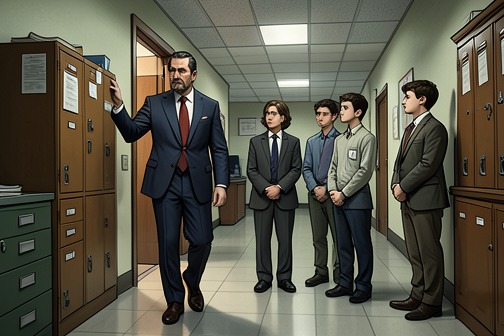
[Gerard Argent](entity:character-recall-character-gerard-argent-7004a9b95df1) takes over [Beacon Hills High School](entity:location-recall-location-beacon-hills-high-sc-be2f7e6a1c50) as its new principal, transforming the school from a familiar setting into another institution under the control of a man the protagonists already associate with danger. His arrival matters because it brings the conflict between the [Argent family](entity:organization-recall-organization-argent-family-fee3b8ad96a1) and the supernatural world into an official educational role: [Gerard](entity:character-recall-character-gerard-53aeabf16f28) does not merely enter the school, but gains the authority to summon students, inspect their records, impose detention, and shape the rules governing their daily lives.
## Arrival and Assumption of Authority
The takeover is introduced through an interruption of the school’s ordinary rhythm. [Carson Bradley](entity:character-recall-character-carson-bradley-e17d1b9b17c6), [Stiles Stilinski](entity:character-recall-character-stiles-stilinski-12e2b3c432f2), and [Scott McCall](entity:character-recall-character-scott-mccall-7740871d71c9) are near the principal’s office when an unfamiliar voice calls to them. The students initially wonder whether the school has acquired a new principal, but the uncertainty disappears when Gerard Argent steps out of the office. His identity produces an immediate reversal: what might have been routine administrative news becomes a source of alarm. The narration emphasizes that the voice is not that of Principal Stevens and identifies Gerard as the person now beckoning the three students inside.
Gerard presents the change through calculated politeness. He gives the students a sickly sweet smile, invites them into the office, and tells them to sit in three chairs positioned in front of his desk. The arrangement makes the power relationship visible before any formal accusation is made. Gerard occupies the desk and controls the room; Carson Bradley, Stiles Stilinski, and Scott McCall are placed together as subjects of his examination. Carson Bradley responds by taking Stiles Stilinski’s hand and holding it tightly as the door closes, a private gesture of solidarity inside a space Gerard now controls.
## The Office as Examination Room
Once the students are seated, Gerard declares that they should get down to business and pulls three files from his desk. The files turn the encounter into an institutional inspection rather than a casual introduction. Gerard begins with Scott McCall, characterizing his academic record as unimpressive while contrasting it with his emergence as a star athlete. His language establishes a system in which the students can be reduced to records, performance, and useful public identities.
The examination also reveals Gerard’s method of authority. He does not initially need to threaten the students openly; the office, the files, the controlled seating, and his claim to be supporting the teachers give his pressure an administrative appearance. He announces that, because this is his first day, he must support the teaching staff and that at least two of the three students will have to take the blame and remain behind for detention. The decision is presented as school discipline, but the scene gives it the character of a targeted exercise of power.
## Detention and the Spread of Control
Gerard and Scott McCall look almost immediately toward Stiles Stilinski and Carson Bradley when the question of who will remain in detention arises. The unspoken selection becomes clear to Carson Bradley, who realizes that she will have to spend time in detention with her boyfriend and Harris. Detention therefore becomes the first concrete consequence of Gerard’s takeover. It is not simply a punishment imposed after a clearly described offense; it is a mechanism Gerard can use to isolate students and place them under continued supervision.
The aftermath shows how Gerard’s authority affects the students beyond the office. Carson Bradley tells [Allison Argent](entity:character-recall-character-allison-argent-bcc580b16b14) that Harris has only just released her and Stiles Stilinski from detention, while also explaining that their phones were kept throughout the period. The confiscation extends the detention’s control from physical confinement to communication: the students are prevented from maintaining ordinary contact while Gerard’s school administration decides when they may leave. The school’s disciplinary procedure consequently becomes part of the broader pattern of restriction surrounding the protagonists.
## Surveillance and Institutional Pressure
Gerard’s arrival occurs within a school increasingly organized around observation and separation. Carson Bradley later rushes through the library after receiving a sudden message from [Scott McCall and Stiles Stilinski](entity:relation-recall-relation-scott-mccall-stiles-d36cc55f4ed7), only to notice a large white camera monitoring movement. She understands that cameras are positioned throughout the hallways, classrooms, cafeteria, pool, and gym, with locker rooms and bathrooms described as the principal exceptions. The surveillance is connected to the rule requiring [Scott McCall and Allison Argent](entity:relation-recall-relation-scott-mccall-allison-b5e67a4b332d) to remain apart, whose stated perimeter is roughly eighty feet, but its effect is wider: ordinary school space becomes a network of watched routes and restricted interactions.
This environment gives Gerard’s takeover a significance beyond the title of principal. The school now combines educational discipline, physical monitoring, legal restriction, and hunter oversight. Students alter their movements because they may be seen, while the authority controlling the building can convert routine mechanisms—files, cameras, detention, and confiscated phones—into instruments of pressure. The school’s official order therefore mirrors the supernatural conflict outside it, making institutional control feel less like protection than containment.
## Consequences and Narrative Significance
Gerard Argent’s assumption of the principal’s office changes the protagonists’ understanding of where danger can appear. Previously, the school could function as a place of classes, friendships, athletic life, and secret meetings; after Gerard’s arrival, the office itself becomes a threatening point of entry into the students’ lives. Carson Bradley, Stiles Stilinski, and Scott McCall recognize him at once, and their surprise and fear show that his public position cannot erase the private meaning of his presence.
The event also establishes a contrast between appearance and function. Gerard uses the manner of a pleasant older administrator, but the students experience his smile, summons, files, and detention order as coordinated pressure. His authority is strongest when it looks ordinary. By taking over Beacon Hills High School, Gerard Argent places the protagonists inside a structure that can discipline them without announcing itself as a supernatural battlefield. The result is an expansion of the conflict’s territory: the danger is no longer confined to forests, homes, or encounters with creatures, but is embedded in the institution responsible for the students’ daily lives.
Event 10
Erica Reyes becomes a werewolf
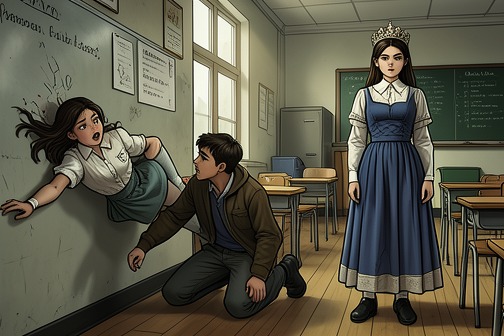
[Erica Reyes becomes a werewolf](entity:event-recall-event-99eaa950a383) in a transformation that turns a medical crisis into the beginning of her supernatural identity and [Derek Hale](entity:character-recall-character-derek-hale-f259fdd07b23)’s military-style expansion. Previously known as a quiet student with epilepsy, [Erica](entity:character-recall-character-erica-8e76eccafb59) is seen first in terror and physical helplessness; she later emerges dramatically remade, confident, glamorous, and aligned with Derek. The event therefore matters on two levels: it changes Erica’s body and place in the social world, while exposing Derek’s larger objective of creating an army rather than merely rescuing endangered people.
## Causes and Background
Erica’s transformation is preceded by a rock-wall exercise at [Beacon Hills High School](entity:location-recall-location-beacon-hills-high-sc-be2f7e6a1c50). When [Coach Finstock](entity:character-recall-character-coach-finstock-f7dd6d13f929) calls for [Stiles Stilinski](entity:character-recall-character-stiles-stilinski-12e2b3c432f2) and Erica to climb, Stiles finishes almost immediately, but Erica remains on the wall, visibly distressed. Her body begins to quiver, and cries follow. [Carson Bradley](entity:character-recall-character-carson-bradley-e17d1b9b17c6) recognizes that Erica has been epileptic since the students began attending school together and is prone to seizures. The scene initially belongs to the school’s ordinary medical reality: a frightened student is in danger, and the adults and classmates react as though she needs immediate physical assistance.
The crisis becomes more ominous when [Carson Bradley and Scott McCall](entity:relation-recall-relation-carson-bradley-scott-82413e0bf41d) later encounter the gym in darkness, with a single light focused on the rock wall. Erica is climbing again, but this time she is shaking rather than simply struggling to descend. She loses her grip and falls; Scott catches her, collapses with her, and lays her down while Carson Bradley moves beside him. The repeated seizure imagery links Erica’s vulnerability to the circumstances that make her available for supernatural intervention. What first marks her as physically fragile becomes the point from which her identity is forcibly rewritten.
## The Transformation and Revelation
The immediate evidence of the change appears at school rather than in a fully described biting scene. When [Lydia Martin](entity:character-recall-character-lydia-martin-632f28e7f863) sees a striking girl approach the table, she cannot understand what she is looking at. [Scott McCall](entity:character-recall-character-scott-mccall-7740871d71c9) recognizes her first: it is Erica. Carson Bradley has to look twice before accepting that the transformed girl is [Erica Reyes](entity:character-recall-character-erica-reyes-f740eb816f3b), because her hair no longer resembles its former unruly shape and she is wearing bright red lipstick. The contrast is not merely cosmetic. The girl who had been unable to control her body on the climbing wall now enters the social space with deliberate confidence and command of attention.
Erica strides toward the doorway, prompting [Scott McCall and Stiles Stilinski](entity:relation-recall-relation-scott-mccall-stiles-d36cc55f4ed7) to stand and gather their bags. Carson Bradley follows them down the stairs and out toward the parking lot, where Erica waits beside a Camaro driven by Derek Hale. Erica slides into the car and gives the others one last smirk through the window before Derek drives away. Her gesture completes the reversal begun in the gym: she is no longer the student being watched, rescued, or medically assessed. She now presents herself as someone who possesses a dangerous new status and has chosen, or has been placed within, Derek’s orbit.
## Derek Hale’s Pack-Building Strategy
Erica’s appearance follows the earlier transformation of [Isaac Lahey](entity:character-recall-character-isaac-lahey-4fcaad0314c9), which had already surprised Scott McCall, Stiles Stilinski, and Carson Bradley. They had believed Derek Hale was changing people in order to save them. Seeing Erica transformed and riding away with Derek destroys that interpretation. The three understand that Derek is making an army. Erica’s conversion is consequently not an isolated supernatural incident but a recruiting action within the creation of Derek Hale’s pack.
That purpose changes the meaning of Erica’s new confidence. Her makeover suggests that the transformation has given her a public identity capable of confronting the people who once saw her as weak or easily overlooked, but the same change also places her under the authority of Derek’s expanding group. The event offers empowerment and control at once: Erica gains abilities and a new social presence, while Derek gains another werewolf whose allegiance strengthens his position against rival supernatural forces and the hunters associated with the [Argent family](entity:organization-recall-organization-argent-family-fee3b8ad96a1).
## Consequences and Relationships
Erica’s membership intensifies the conflict between Derek Hale’s werewolf group and Scott McCall’s allies. Her transformation is especially consequential for Carson Bradley, who had witnessed the seizure that exposed Erica’s vulnerability and then sees the apparently unrecognizable result. The two versions of Erica occupy opposite ends of the same visual and emotional line: one is trapped by an uncontrolled bodily episode, while the other moves with theatrical self-possession. Carson Bradley’s recognition of both versions makes the change legible as a profound alteration rather than a simple disguise.
Erica also becomes part of Derek Hale’s relationship of leadership and loyalty with his young recruits. Her later presentation as a newly remade member of the pack confirms that Derek’s methods have consequences beyond individual survival. He is collecting people whose personal crises can be converted into supernatural strength. The transformation thus helps widen the gap between Derek’s pragmatism and Scott McCall’s reluctance to treat bitten students as soldiers. It also contributes to the growing instability at Beacon Hills High School, where ordinary classmates can return from a medical emergency as participants in a hidden war.
## Narrative Significance
The event is built around a sharp reversal of interpretation. Epilepsy supplies the first explanation for Erica’s shaking, while the later encounter supplies evidence that the school community’s assumptions are no longer sufficient. The narrative moves from the language of seizure and rescue to the visual language of transformation, style, motion, and allegiance. Erica’s body becomes the evidence that a larger plan is underway.
Her transformation also develops the book’s recurring concern with identity under supernatural pressure. Erica is not introduced as a powerful figure; she is remembered through quietness, social isolation, and a condition that can seize control of her body. After Derek’s intervention, the same character is recognized through altered appearance, a smirk, and purposeful movement toward the Camaro. The change does not erase the earlier Erica so much as make her former vulnerability part of the reason the new pack can claim her. In that sense, Erica Reyes becomes a werewolf at the precise point where personal reinvention and external recruitment become impossible to separate.
Event 11
Lizard creature attack at Carson's house
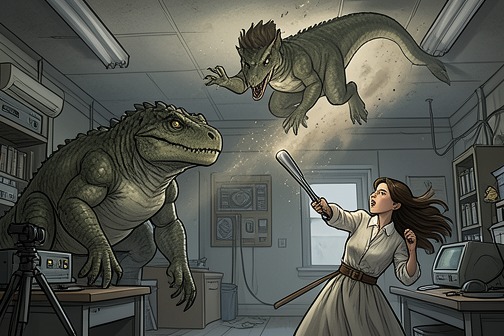
The [Lizard creature attack at Carson's house](entity:event-recall-event-55e980eb28a4) is the first decisive confrontation between [Carson Bradley](entity:character-recall-character-carson-bradley-e17d1b9b17c6) and the giant reptilian creature later associated with the [Kanima](entity:creature-recall-creature-kanima-00fa600e686e). What begins as an ordinary night at home becomes a breach of domestic safety: the creature survives a full-force blow from [Carson](entity:character-recall-character-carson-24b1f76a12e7)'s metal bat, studies her as though it recognizes her, and escapes across the ceiling. The attack establishes the creature as physically powerful, elusive, and connected to a mystery that Carson and her allies cannot immediately solve.
## Causes and Background
The attack follows an exhausting night in which [Carson Bradley and Stiles Stilinski](entity:relation-recall-relation-carson-bradley-stile-fe2b2021ba78) have helped deal with a suspect and are finally released after [Sheriff Stilinski](entity:character-recall-character-sheriff-stilinski-55cc58b45e12) has reprimanded them for allowing that suspect out of jail. Stiles drops Carson off but does not enter the house, fearing that he will lose track of time and that his father will return before he does. Carson is left alone, desperate for a shower and sleep after the strain of repeatedly saving [Beacon Hills](entity:location-recall-location-beacon-hills-dbaca5be6a9f) alongside werewolves.
Carson's fatigue makes the house's first noise especially unsettling. After showering, changing into plaid pajama pants and a tank top, and beginning to retrieve her hair dryer, she hears a thump from the hallway. She initially explains it as the ordinary noise of an old house, but a second thump destroys that explanation. The repetition changes the sound from harmless atmosphere into evidence of an intruder.
The metal bat beside the door carries its own history. Carson remembers using that same bat when [Stiles Stilinski](entity:character-recall-character-stiles-stilinski-12e2b3c432f2) and [Scott McCall](entity:character-recall-character-scott-mccall-7740871d71c9) broke into her house and she pursued them. In the new encounter, the familiar object becomes her only immediate weapon, linking an earlier intrusion by friends to a far more dangerous violation by an unknown creature.
## What Happens
Carson approaches the closed door cautiously, takes the bat in both hands, and opens it so that the light from her bedroom spills into the hallway. The left side of the corridor is empty, but the right side contains two reptilian eyes shining in the darkness. The creature's eyes produce the first unmistakable proof that the disturbance is supernatural rather than architectural or mundane.
The creature advances instead of retreating when Carson screams. Its scaly body emerges gradually into view: it resembles an overgrown lizard, stands taller than Carson Bradley, has a long whipping tail, and exposes rows of sharp teeth. Carson's fear is immediate and physical, but she still tries to act. She raises the bat and waits for it to come within range, choosing direct resistance over flight.
When the creature charges and comes within less than two feet, Carson swings. The bat connects solidly with its head, producing a sickening crack. The expected result does not follow. The blow does not appear to harm the creature; instead, it stops, cocks its head, and watches Carson as if it knows her. That moment complicates the encounter. The creature is not merely an attacking animal, and Carson is not simply an anonymous victim in its perception.
The creature then demonstrates an ability that makes ordinary defenses nearly useless. It turns away, scuttles up the wall, crosses the ceiling into Carson's room, and slips out through the window. Carson remains holding the bat while the curtains billow behind it. The failed attack and impossible escape leave the event unresolved: the creature has entered her private space, ignored a weapon capable of harming a human being, and departed without explaining either its purpose or its apparent recognition of her.
## Investigation and Recurrence
The following day, Carson is still unable to account for what happened. She can accept the existence of werewolves because that danger has become part of the world she understands, but a giant lizard creature moving across her ceiling exceeds the limits of that working knowledge. The attack therefore functions as an investigative trigger as much as a horror scene.
The mystery later expands beyond Carson's house. Carson Bradley and Stiles Stilinski encounter the creature again on an indoor balcony, where it climbs the surrounding metal fence and emits the same shrill cry heard during its previous appearances. When it jumps down, [Derek Hale](entity:character-recall-character-derek-hale-f259fdd07b23) confronts it with a roar of his own. The creature answers with its tail, striking [Erica Reyes](entity:character-recall-character-erica-reyes-f740eb816f3b) and knocking her unconscious before Derek Hale orders everyone to run. The recurrence confirms that Carson's home invasion was not an isolated animal attack but part of a continuing pattern of pursuit and violence.
The group searches for an explanation through [Gerard Argent](entity:character-recall-character-gerard-argent-7004a9b95df1)'s flash drive after discovering that the volume they had mistaken for the bestiary is actually a collection of recipes. The real bestiary is stored on the drive, whose pages contain strange Latin text. Carson Bradley observes that the creature has apparently existed long enough to be recorded by the Argents, yet the group finds no clear entry for a Kanima. Online searches for the Kanima, its legends, its shape-shifting form, and a giant lizard that cannot swim produce almost nothing, reinforcing the creature's unusual concealment.
The investigation identifies several defining traits rather than a complete history. Carson Bradley and Stiles Stilinski understand that the creature is a shape-shifter, is afraid of itself, and cannot swim. [Deaton](entity:character-recall-character-deaton-d386b883cb01) later prepares equipment to help restrain the Kanima, bringing a small bottle and a spring-loaded syringe to the veterinary office. His intervention shows that the attack has moved from private terror to an organized supernatural response involving Scott McCall, Carson Bradley, Stiles Stilinski, and their allies.
## Identity and Consequences
The creature's identity is eventually connected to [Jackson Whittemore](entity:character-recall-character-jackson-whittemore-120cc2b873d5). During a later confrontation, the Kanima's victims' logic becomes explicit when the creature says that the killers are killing murderers and insists that those people deserved death because they had murdered it. Jackson Whittemore then visibly shifts: his green eyes become fiery orange reptilian eyes, his hands develop green scaly patches and claws, and paralytic venom drips from him. This revelation transforms the earlier monster from an unknown intruder into the bodily manifestation of Jackson's divided identity and grievance.
The attack at Carson's house thus anticipates the Kanima's central ambiguity. At first, the creature is perceived only through darkness, eyes, scales, teeth, speed, and impossible movement. Later evidence reveals a human form beneath those features, making the monster both an external threat and a distorted expression of a wounded person. Its apparent recognition of Carson during the bat attack becomes retrospectively significant: the creature does not behave like an entirely mindless predator.
The Kanima's eventual de-transformation also depends on a personal object rather than brute force. [Lydia Martin](entity:character-recall-character-lydia-martin-632f28e7f863) holds out a key, and the reptilian features begin to disappear as Jackson Whittemore recognizes it. Scales remain on his skin, claws remain on his fingers, and he takes the key while looking back at Lydia Martin. The contrast with Carson's failed bat strike is central to the event's consequences: physical force cannot resolve the creature, while memory and an emotionally charged object can reach the human identity inside it.
## Narrative Significance
The attack makes the home an unstable space. Carson Bradley has already learned to treat the supernatural as a public danger involving werewolves, police stations, schools, and veterinary offices, but the creature's arrival in her hallway proves that no boundary reliably separates ordinary life from supernatural violence. The pale bedroom door, the dark corridor, and the window used for escape turn familiar domestic architecture into a sequence of thresholds the creature can violate at will.
The scene also establishes a pattern of knowledge gained through failed control. Carson's bat swing is courageous but ineffective; the bestiary is available but written in a language the group cannot read; Internet searches offer almost no useful history; and even the creature's later physical identification does not immediately resolve the human suffering behind it. Each apparent tool—weapon, book, translation, or supernatural strength—proves incomplete. The attack's decisive significance lies in that failure: it begins the search for a threat whose body can be seen long before its identity, motive, and vulnerability are understood.
Event 12
Erica's seizure during rock-wall training
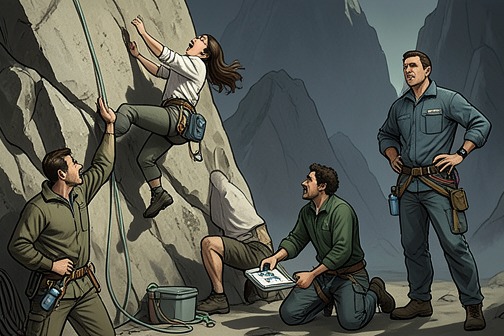
[Erica's seizure during rock-wall training](entity:event-recall-event-243921283b5b) is a pivotal emergency in which an ordinary school exercise turns into a test of attention, medical awareness, and collective responsibility. The incident first appears as a failure of supervision, then becomes a scene of immediate care when [Erica Reyes](entity:character-recall-character-erica-reyes-f740eb816f3b) begins shaking on the climbing wall and [Carson Bradley](entity:character-recall-character-carson-bradley-e17d1b9b17c6) recognizes that her epilepsy makes the situation dangerous. Its importance lies not only in [Erica](entity:character-recall-character-erica-8e76eccafb59)'s physical crisis but also in the way the event changes the room's priorities: performance gives way to safety, and spectacle gives way to coordinated action.
## Causes and Background
The episode begins during a rock-wall exercise overseen by [Coach Finstock](entity:character-recall-character-coach-finstock-f7dd6d13f929). He calls [Stiles Stilinski](entity:character-recall-character-stiles-stilinski-12e2b3c432f2) and Erica Reyes to take their turn, and Stiles reaches the mat almost immediately, celebrating with both fists raised while wearing conspicuously mismatched clothes. Erica, by contrast, remains on the wall. Her apparent reluctance is initially treated as difficulty with the exercise, but her body soon begins quivering and her cries reveal that the problem is not hesitation or lack of strength.
[Carson](entity:character-recall-character-carson-24b1f76a12e7) already knows the crucial medical fact that the adults have failed to account for: Erica has been epileptic since the students first began attending school together and is prone to seizures. When Carson warns Coach Finstock that it is unsafe for Erica to remain elevated, the coach reacts with surprise and asks why nobody told him. The exchange establishes the central failure behind the incident. Erica's condition is known to her peers, yet it has not been incorporated into the planning or supervision of the activity. The climbing wall therefore becomes hazardous not because Erica has done anything wrong, but because the environment has not been adequately adapted to her needs.
## The First Seizure
Coach Finstock tells Erica that she is fine and instructs her to kick away from the wall, assuring her that a mat is below. The students wait in silence as she finally releases the rocks to which she has been clinging. She drops to the ground on both feet, quickly unhooks herself, and pushes through the crowd. The movement ends the immediate danger of a fall, but it does not resolve the underlying emergency; the incident leaves Erica frightened, exposed, and forced to move through the attention of everyone around her.
The seizure returns in a more dramatic form. Later, the gym is dark except for a single light centered on the rock wall, creating the appearance of a spotlight. Erica is climbing again, wearing a gray sweatshirt and pants, when [Scott McCall](entity:character-recall-character-scott-mccall-7740871d71c9) and Carson notice that she is shaking. She is not stuck; she is having another seizure. Erica loses her grip, but Scott reaches her and catches her before she hits the floor, collapsing with her as he lowers her down.
Carson immediately gives practical instructions, telling Scott to place Erica on her side, and helps him do so. She then calls for someone to summon an ambulance and helps brush the hair away from Erica's face. The response is urgent but not chaotic: Scott provides physical protection, Carson applies what she knows about seizure care, and other people begin using their phones to seek medical assistance. When someone quietly asks Carson how she knew what to do, the question underscores the gap between ordinary peer knowledge and institutional preparedness.
## Participants and Stakes
Erica is the person at the center of the emergency, but the event distributes responsibility among several figures. Coach Finstock controls the activity and is forced to confront the consequences of not knowing a student's medical history. Scott acts before explanation is possible, catching Erica and helping lower her safely. Carson serves as the most medically informed witness, first challenging the unsafe situation and later directing the response. Stiles is present in the surrounding school crisis, while [Allison Argent](entity:character-recall-character-allison-argent-bcc580b16b14) and [Lydia Martin](entity:character-recall-character-lydia-martin-632f28e7f863) also follow the developing emergency in the gym.
The physical stakes are immediate: Erica could fall from the wall, strike the ground, or remain in danger while the seizure continues. The emotional stakes are equally visible in the contrast between the earlier lightness of Stiles's successful turn and Erica's distress. The same exercise that allows Stiles to perform confidence and comic awkwardness becomes, for Erica, a site of helplessness and public vulnerability. That contrast gives the event its sharp value shift, transforming a routine school activity into a struggle to preserve Erica's safety and dignity.
## Consequences and Aftermath
The incident establishes Erica's epilepsy as a concrete part of her lived circumstances rather than a piece of abstract background. Carson's recognition of the condition changes how the students interpret Erica's behavior, while Coach Finstock's belated realization exposes how easily a known disability can become dangerous when authority fails to account for it. The event also strengthens the practical bond among Carson, Scott, and the other students: their response depends on noticing, believing, and acting rather than waiting for a formal explanation.
Its significance grows within a narrative already marked by disappearance, violence, and bodily threat. Lydia Martin's unexplained disappearance from the hospital, the later attack by a clawed and scaly creature, and the aftermath of that attack leave Carson and Stiles confronted with bodies that can suddenly become endangered or immobilized. Against those supernatural emergencies, Erica's seizure is medically recognizable, yet it produces the same demand for immediate witnessing and care. Later, after further violence, Carson sits outside the guidance office while wearing Stiles's plaid shirt and waiting for a school meeting arranged because she had been held hostage; that later scene shows how the book repeatedly returns to vulnerable bodies and the institutions that attempt, imperfectly, to respond to them.
The rock-wall seizure therefore functions as both an independent crisis and an early warning about the limits of ordinary explanations. It makes care an active form of knowledge: Carson's memory of Erica's epilepsy prevents the school from treating the episode as mere failure, while Scott's reflexive intervention turns fear into protection. The event does not erase Erica's vulnerability, but it ensures that she is not left alone inside it.
Event 13
Boyd Lockwood becomes a werewolf
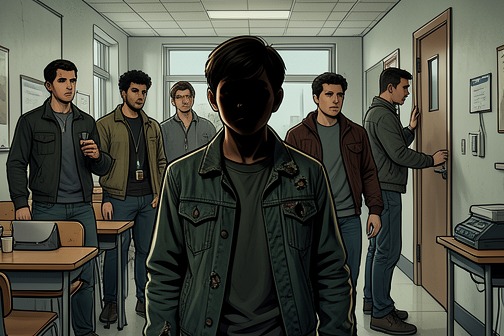
[Boyd Lockwood becomes a werewolf](entity:event-recall-event-b6a033a6739c) when [Derek Hale](entity:character-recall-character-derek-hale-f259fdd07b23) exploits the loneliness that has made him nearly invisible at school. The transformation is important not only because it enlarges Derek's pack, but because it reveals that the offer of supernatural power is also an offer of recognition: [Boyd](entity:character-recall-character-boyd-0fd1223a4844) is drawn less by abstract loyalty than by the hope of no longer eating lunch alone.
## Causes and Background
[Carson Bradley](entity:character-recall-character-carson-bradley-e17d1b9b17c6), [Scott McCall](entity:character-recall-character-scott-mccall-7740871d71c9), and [Stiles Stilinski](entity:character-recall-character-stiles-stilinski-12e2b3c432f2) already understand that Derek is seeking isolated students. When [Carson](entity:character-recall-character-carson-24b1f76a12e7) notices that Boyd's cafeteria table is empty, the absence becomes a warning sign rather than an ordinary detail. She recognizes a pattern in Derek's recruitment: the people most likely to accept a dangerous offer are those who have been left without a social place. Carson therefore treats Boyd's disappearance from the table as evidence that he has become a target and immediately pulls Scott and Stiles away to devise a response.
The larger danger is shaped by the town's supernatural conflict. Scott's transformation has placed the three friends between werewolves and the [Argent family](entity:organization-recall-organization-argent-family-fee3b8ad96a1) of hunters, while Derek has been building a separate werewolf force. Carson understands that joining Derek does not simply provide Boyd with new abilities; it places him inside a conflict involving hunters, uncontrolled full-moon transformations, and the threat of being used as part of Derek's expanding brigade.
## The Transformation and Recruitment
The first practical sign of Boyd's recruitment appears through a surprise arranged by Stiles. He leads Carson toward a back table and looks around as though someone might be watching before approaching Boyd, who is eating Doritos and visibly frowning at Stiles. This meeting identifies Boyd as someone already connected to the group, even though he remains socially separate from Carson, Scott, and Stiles.
The crisis becomes explicit when Carson sees that Boyd's table is empty. Scott and Stiles initially treat the table as nothing more than an empty place, but Carson forces them to ask whose table it is. Once they identify it as Boyd's, she concludes that Derek has found another lonely student to recruit. The friends hurry out of the cafeteria, trying to plan without being overheard, and decide that Carson and Scott will go to the ice rink to find him.
At the rink, they discover Boyd driving the Zamboni across the ice. Scott and Carson enter in ordinary shoes and cautiously cross the rink, while Boyd refuses to stop until Scott calls out that they only want to talk. Scott asks whether Derek has told Boyd everything, including the danger of losing control during the full moon. Boyd stops the machine only after admitting that Derek has told him about the hunters, confirming that the recruitment has already brought him into the supernatural world.
## The Motive of Belonging
Boyd's decisive explanation is painfully ordinary: he wants to stop eating lunch alone every day. His statement silences Carson and Scott because it strips away the spectacle of the werewolf plot and identifies a human need beneath the transformation. Boyd is not presented merely as a mysterious student or a potential monster. His loneliness has become visible, and Carson realizes that she had previously mistaken his isolation for a personal choice.
Carson understands that Boyd did not necessarily choose to reject other people; rather, other people had chosen to ignore him. His years of coping have kept him functioning without healing the hurt that produced his withdrawal. This recognition changes Carson's response from suspicion to intervention. She offers friendship, invites him to sit with the group, and argues that he would be better off remaining human with friends who know the truth about werewolves than staying with Derek's pack.
The offer is morally complicated because it arrives after the supernatural choice has already begun. Carson wants to save Boyd by giving him the belonging he sought, but the scene also shows why Derek's offer has force. Derek can provide a pack immediately, while ordinary school friendship has failed Boyd for years. [The werewolf bite](entity:concept-recall-concept-the-werewolf-bite-c03a75f759c9) therefore operates as both bodily transformation and social recruitment: it creates a new identity by promising that the lonely student will finally have a place among others.
## Consequences and Wider Connections
Boyd's recruitment contributes to Derek's attempt to assemble a werewolf pack from vulnerable students. Later discussion describes [Isaac Lahey](entity:character-recall-character-isaac-lahey-4fcaad0314c9) as another newly accepted werewolf moving through [Beacon Hills](entity:location-recall-location-beacon-hills-dbaca5be6a9f) High, and Carson reacts uneasily to the prospect of yet another hormonal werewolf in the corridors. Boyd's case thus becomes part of a recurring pattern in which adolescent isolation, supernatural power, and pack membership overlap.
The friends' efforts to understand the supernatural are themselves improvised and incomplete. Their research into the [Kanima](entity:creature-recall-creature-kanima-00fa600e686e) produces almost nothing useful online: searches for the Kanima, its legends, its shape-shifting nature, and the giant lizard that cannot swim yield little, while the bestiary on Stiles's laptop contains words Carson cannot understand. Their dependence on partial lore parallels their uncertainty about Boyd. They can identify the danger of Derek's recruitment, but they cannot simply solve the emotional conditions that made the recruitment attractive.
[Deaton](entity:character-recall-character-deaton-d386b883cb01) becomes an important source of practical help in the wider struggle. Although the group knows little about him, they trust him because he repeatedly assists Scott and functions as their veterinarian and supernatural guide. His bottle and spring-loaded syringe are prepared to help with the Kanima problem, while [Coach Finstock](entity:character-recall-character-coach-finstock-f7dd6d13f929)'s later insistence that Scott remain on the lacrosse team reconnects the supernatural crisis with ordinary school obligations. Against this background, Boyd's transformation is part of a world where supernatural identities must coexist with lunch periods, classes, grades, and team expectations.
## Significance
Boyd Lockwood becomes a werewolf at the intersection of danger and neglect. Derek's pack is threatening because it is growing, but it is persuasive because it answers a need that the school community has ignored. Carson's attempt to reclaim Boyd through friendship exposes the central contradiction of the event: the human world warns him against the werewolf world only after failing to make him feel humanly included.
The event also deepens Carson's role within the original trio. She does not merely follow Scott and Stiles into another supernatural investigation; she notices the social clue they overlook, identifies Boyd's vulnerability, and confronts the emotional cost of treating isolated people as convenient recruits. Boyd's transformation consequently enlarges the conflict while making its stakes more intimate. The question is not only how many werewolves Derek can gather, but what kinds of loneliness allow a pack to be built at all.
Event 14
溜冰场狼人冲突
The ice-rink werewolf conflict is a decisive confrontation between [Scott McCall and Derek Hale](entity:relation-recall-relation-scott-mccall-derek-h-2b6c1efa4581)’s werewolf pack, with [Carson Bradley and Stiles Stilinski](entity:relation-recall-relation-carson-bradley-stile-fe2b2021ba78) caught inside the struggle. What begins as an attempt to understand [Boyd](entity:character-recall-character-boyd-0fd1223a4844)’s attraction to Derek’s group becomes a violent test of competing models of supernatural leadership: Scott protects human choice and fears the cost of transformation, while Derek offers power through the werewolf bite and commands loyalty through strength. By the end of the encounter, Scott has defeated Derek’s inexperienced recruits but remains physically overmatched by Derek himself, and Boyd reveals that he has already accepted the bite because he wants to become more like Scott rather than Derek.## Setting and Immediate ProvocationThe conflict follows a lunch-time maneuver involving [Stiles Stilinski](entity:character-recall-character-stiles-stilinski-12e2b3c432f2), [Carson Bradley](entity:character-recall-character-carson-bradley-e17d1b9b17c6), and Boyd. Stiles tells [Carson](entity:character-recall-character-carson-24b1f76a12e7) that he needs to retrieve some keys before she can eat as much lunch as she wants, then leads her to a back table where Boyd is sitting with an open bag of Doritos and an unmistakable frown directed toward Stiles. The promised “surprise” is therefore not a gift or a private outing but an introduction to a socially isolated student whose connection to [Derek Hale](entity:character-recall-character-derek-hale-f259fdd07b23)’s group has become important to the larger supernatural crisis. Carson is told that she knows Boyd, and the encounter develops into an effort to offer him another social option.## The Competing Packs and the First ChallengeCarson has come to understand Boyd’s isolation differently from the way she initially judged him. She recognizes that he has not simply chosen to ignore other people; rather, other people have ignored him, leaving him to cope with loneliness without actually healing from it. She offers friendship and invites him to sit with her group, arguing that he would be better off knowing about Scott’s werewolf secret than remaining with Derek’s “brigade of freaks.” Her invitation frames the conflict as a question of belonging before it becomes a physical fight. Boyd is not merely a recruit being claimed by Derek; he is a neglected teenager looking for a place where his pain and difference might be acknowledged.\n\nDerek interrupts Carson’s criticism and asks the members of his group to assess his leadership. [Isaac Lahey](entity:character-recall-character-isaac-lahey-4fcaad0314c9) describes himself as discouraged by being a fugitive but otherwise presents himself with a cocky grin, while [Erica Reyes](entity:character-recall-character-erica-reyes-f740eb816f3b) answers with the word “Transformative,” extends her fangs, and growls before returning to her ordinary appearance. The exchange turns the new werewolves’ transformations into a performance. [Erica](entity:character-recall-character-erica-8e76eccafb59) treats the change as proof of power and mocks Carson’s hostility, even mentioning the bruise that should heal after an earlier attack on Carson’s boyfriend, Stiles Stilinski. Carson immediately realizes that Erica has hurt him and moves toward her in anger. Scott restrains Carson first by catching her wrist and then by holding her around the waist, preventing her from attacking Erica.\n\nCarson’s reaction makes the personal stakes of the confrontation explicit. Her anger is not abstract opposition to Derek’s pack; it is protective fury over Stiles Stilinski’s injury, expressed before she has time to calculate the consequences. Derek interprets that temper as evidence that Carson would make an effective werewolf, but she rejects the suggestion and tells him to go to hell. When Derek then asks Scott how the situation should be handled, the question functions less as an invitation to compromise than as a challenge to Scott’s authority. Scott turns toward Carson and orders her to get back, recognizing that the argument is about to become a fight.## The Fight on the IceScott McCall attacks Erica Reyes and Isaac Lahey, defeating both of Derek Hale’s newly made werewolves across the rink. Carson’s earlier confidence that Scott could handle them proves correct, and the encounter briefly seems to establish Scott as stronger than the inexperienced members of Derek’s pack. The ice rink turns the conflict into a starkly visible contest: the setting associated with recreation becomes a battleground where supernatural strength, hierarchy, and allegiance are displayed in front of Carson and Stiles Stilinski.\n\nDerek’s intervention changes the balance. His experience as a born werewolf, combined with his status as an [Alpha](entity:concept-recall-concept-alpha-ec1e4cf15645), gives him the advantage that Erica and Isaac do not possess. Scott is left bleeding on the floor while Carson remains beside him, concerned even though she knows that his healing ability should allow him to recover. The reversal separates Scott’s moral appeal from his immediate physical position: he can overcome Derek’s recruits, but he cannot yet defeat the Alpha who created and commands them. The fight therefore does not resolve the rivalry. It establishes a hierarchy within it, with Scott capable of resistance but still vulnerable to Derek’s superior experience and power.\n\nThe clash also makes the phrase “werewolves on ice” more than Carson’s sarcastic observation. The unusual location strips the supernatural conflict of secrecy and places adolescent loyalties, bodily injury, and forced transformation into a public-looking arena. Yet the scene remains governed by hidden rules that the characters are still learning. [The werewolf bite](entity:concept-recall-concept-the-werewolf-bite-c03a75f759c9) can create allegiance as well as physical change; an Alpha can dominate newly transformed recruits; and the question of whether transformation is salvation or exploitation remains unsettled.## Boyd’s Choice and the Conflict’s ReversalAfter Derek intervenes, Boyd prepares to leave with him. Scott warns Boyd that he should not want to become like Derek, but Boyd answers by revealing a bite on his side and explaining that he wants to become like Scott. This disclosure is the event’s central reversal. Boyd has appeared to be a potential recruit whom Carson and Scott might still persuade, but the physical evidence shows that his decision has already been made. His desire is not simply to acquire supernatural strength or to join the strongest group. He distinguishes between Derek’s model of power and Scott’s model of conduct, choosing Scott as the figure he wishes to resemble.\n\nScott responds by asking why anyone would want the life they are confronting. Carson offers the bleak possibility that the recruits may believe they are better off this way. Her answer preserves the ambiguity of Boyd’s choice. The bite is dangerous, and Derek’s pack is violent, but Boyd’s attraction to transformation grows from social exclusion and the hope of becoming someone who cannot be ignored. The conflict thus joins an external fight to an internal struggle over identity. Boyd is not presented as freely choosing between equal alternatives: his loneliness has made Derek’s offer meaningful, while Scott’s example offers a different kind of belonging only after years of neglect.## Consequences and Narrative SignificanceThe immediate consequence is a sharper division between Scott’s allies and Derek’s pack. Scott has demonstrated that he can defeat Erica Reyes and Isaac Lahey, but Derek’s intervention leaves him injured and confirms that the Alpha remains the decisive force in direct combat. Carson’s attempt to recruit Boyd into Scott’s social circle fails as a practical intervention, even though it reveals her willingness to recognize the pain beneath his withdrawn behavior. Stiles Stilinski remains part of the emotional cause of Carson’s aggression, because Erica’s attack on him is what turns verbal hostility into an attempted physical response.\n\nThe confrontation also prepares the story’s continuing concern with the cost of supernatural identity. Later investigations into [Kanima](entity:creature-recall-creature-kanima-00fa600e686e) provide little useful information online, forcing the characters to search through the bestiary and improvised sources rather than relying on a complete public mythology. [Deaton](entity:character-recall-character-deaton-d386b883cb01) becomes a trusted veterinary guide who supplies specialized help for controlling [Jackson Whittemore](entity:character-recall-character-jackson-whittemore-120cc2b873d5), while the group continues to depend on partial knowledge and uncertain rules. Against that background, the ice-rink conflict shows how quickly incomplete understanding becomes action: Carson knows enough to fear Derek’s pack, Scott knows enough to resist it, and Boyd knows enough about his own loneliness to accept the bite before anyone can stop him. The event’s lasting significance lies in that unresolved contrast. Transformation promises belonging, but the rink reveals that belonging may be organized either around domination or around the example of a protector, and the characters have not yet found a way to separate the two completely.
Event 15
汽车修理厂 Kanima 袭击
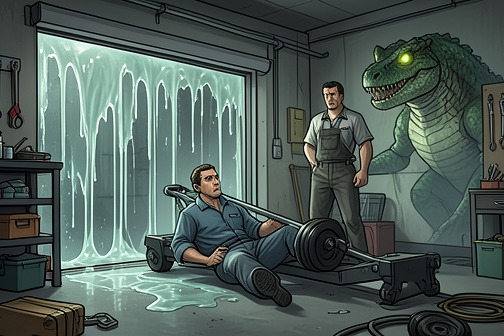
The Mechanic’s Garage Attack marks the point at which the [Kanima](entity:creature-recall-creature-kanima-00fa600e686e) ceases to be a rumor and becomes an immediate, physical danger in [Beacon Hills](entity:location-recall-location-beacon-hills-dbaca5be6a9f). At the garage, [Carson Bradley and Stiles Stilinski](entity:relation-recall-relation-carson-bradley-stile-fe2b2021ba78) encounter a giant reptilian creature whose paralytic secretion incapacitates Stiles and whose attack leaves the mechanic beneath a crushing lift. The scene also creates the first strong chain of material evidence linking the creature to later investigations, while [Carson](entity:character-recall-character-carson-24b1f76a12e7)’s unease about its recognizable eyes begins the movement from monstrous other to hidden human identity.
## Causes and Background
The attack takes place while Carson Bradley and Stiles Stilinski are already investigating a series of supernatural incidents. Their arrival at the [Mechanics garage](entity:location-recall-location-mechanics-garage-c4ba352e39a7) is not presented as a prepared confrontation with a known enemy; it begins with an ordinary attempt to enter a small waiting room. That normal setting is disrupted when Carson touches the door handle and finds it coated with clear ooze. The substance is visually distinctive and immediately recalls the Kanima’s later appearances, making the building itself part of the threat rather than a neutral refuge.
Carson and Stiles do not yet possess a reliable account of what the creature is. Carson has seen the overgrown lizard before, but the available information remains fragmentary: the creature is tall, scaly, tailed, clawed, and armed with venom, while stories about the Kanima are difficult to locate. Later searches produce almost nothing useful about a giant lizard that cannot swim, and the bestiary on Stiles’s laptop contains words Carson cannot interpret. This absence of clear lore intensifies the danger. The characters must respond to a creature before they understand its rules.
## What Happens at the Garage
The encounter begins when a clawed, scaly hand reaches down near the garage worker. The creature’s tail strikes the back of the worker’s neck, and the man falls. Its yellow eyes turn toward Carson, whose impression of familiarity makes the attack more unsettling than a simple monster sighting. The Kanima emits a shrill, hissing cry, then leaves Stiles unable to move normally. Stiles reaches for his phone and manages to communicate the emergency number, forcing Carson to become both witness and rescuer while the threat remains outside the room.
The clear substance on the waiting-room handle appears to be connected to Stiles’s paralysis. Carson recognizes that touching the door may expose her to the same incapacitating effect, but remaining inside leaves the mechanic in the path of the descending lift. The scene therefore converts a locked door into a practical moral trap: the object that might provide escape is also contaminated, and hesitation carries a visible human cost. Carson watches as the lift comes within centimeters of the mechanic, closes her eyes, and hears the crunch before the emergency call connects. The call reaches the police too late to prevent the death.
The aftermath is framed by rain, ambulance lights, and police lights in the parking lot. Carson sits on the ambulance tailgate beside Stiles and [Sheriff Stilinski](entity:character-recall-character-sheriff-stilinski-55cc58b45e12), holding onto Stiles after he has regained feeling in his body. Stiles repeats that they entered the garage and found the Jeep on top of the mechanic, while Sheriff Stilinski questions the account and does not accept it easily. The official explanation is therefore visibly inadequate: it describes the final physical arrangement but removes the creature that caused it.
## Evidence and Investigation
The garage attack supplies several forms of evidence that later propel the Beacon Hills murder investigation. The ooze on the door handle becomes an observable trace of the Kanima’s presence, while the mechanic’s death establishes a recurring method: paralysis and an attack that can be mistaken for an accident or ordinary violence. The event also leaves a confusing crime scene involving the worker, the lift, and Stiles’s Jeep, allowing the supernatural assault to be concealed beneath an apparently mundane explanation.
Later surveillance and documentary work reconnects the garage killing with other murders. Footage from the hospital is reviewed in an attempt to identify [Matt Daehler](entity:character-recall-character-matt-daehler-7dd68a09c6ac), and investigators compile shoeprints, tire tracks, and a credit-card receipt signed by Matt at the garage when the mechanic was killed. The receipt places Matt at the scene, while the comparison of evidence connects him to the trailer, the hospital, and the rave, with the garage potentially making a fourth murder. The investigation thus shifts from an isolated monster attack toward the discovery of a human relationship behind the Kanima’s actions.
The attack also strengthens the group’s reliance on specialized guidance. [Deaton](entity:character-recall-character-deaton-d386b883cb01), who repeatedly helps [Scott McCall](entity:character-recall-character-scott-mccall-7740871d71c9) during supernatural crises, becomes a trusted veterinary and supernatural guide despite the group’s limited knowledge of him. At the [Beacon Hills veterinary office](entity:location-recall-location-beacon-hills-veterin-a83bc7d4fc28), he presents a bottle and a spring-loaded syringe intended to help with the Kanima problem. The need for such equipment is a direct consequence of the garage’s lesson: ordinary resistance is insufficient against a creature whose venom can disable a person before a rescue is possible.
## Recurrence and Recognition
The garage is the first scene in which Carson and Stiles experience the Kanima’s attack as a coordinated threat rather than a distant mystery. Later encounters repeat its recognizable features. At another location, clear ooze appears on a windowsill, confirming that the substance is not unique to the garage. The Kanima also reappears before Carson, Stiles, [Derek Hale](entity:character-recall-character-derek-hale-f259fdd07b23), and Derek’s pack on an indoor balcony, where its roar and movement trigger an immediate command to run. The repeated tail, scales, claws, eyes, and secretion create a pattern that allows the characters to identify the creature even when its motives remain unknown.
The most important reversal comes when the monster is recognized as [Jackson Whittemore](entity:character-recall-character-jackson-whittemore-120cc2b873d5). During an encounter, a question about the murders produces the revelation that the Kanima’s victims were connected to the speaker’s own death. Jackson’s eyes change from their ordinary green to fiery orange reptilian eyes; his hands develop scales and claws, and paralytic goo drips from him. The garage attack can therefore be reread as an early glimpse of a divided identity rather than the work of an entirely separate species.
That division becomes especially clear when [Lydia Martin](entity:character-recall-character-lydia-martin-632f28e7f863) holds out a key. The Kanima stops and stares at the metal as though it remembers it, and its reptilian features begin to recede. Jackson appears before the group while scales and claws remain, takes the key, and looks back at Lydia. The moment does not erase the violence of the garage attack, but it changes its meaning: the creature that killed the mechanic is also a transformed, recognizable person whose identity can surface through memory and relationship.
## Consequences and Significance
The decisive consequence of the Mechanic’s Garage Attack is the loss of safety in familiar places. A garage waiting room, a door handle, a lift, and a vehicle become instruments within a supernatural killing. Carson’s experience also produces a lasting sense of responsibility; she watches a man die while physically trapped between a contaminated exit and an advancing machine. The attack teaches the group that the Kanima’s venom creates not only bodily paralysis but also situational paralysis, immobilizing witnesses at the exact moment action is required.
Narratively, the event combines horror with forensic uncertainty. The creature is first revealed through eyes, scales, a tail, and a hissing cry, then through the less visible but more consequential ooze that disables Stiles. Afterward, the police can record the Jeep, the lift, and the dead mechanic, but the central cause remains outside the official account. This contrast between what the characters witness and what the evidence can publicly prove drives the later search for surveillance, footprints, tire tracks, and financial records.
The attack ultimately serves as the Kanima mystery’s foundational crime scene. It introduces the monster’s methods, establishes the danger of its venom, places Carson and Stiles directly inside the pattern of violence, and leaves behind evidence that later implicates Matt Daehler. Its final significance lies in the tension between appearance and identity: the Kanima initially seems to be an unknowable lizard stalking Beacon Hills, yet the later revelation of Jackson’s transformation shows that the first monster was already a distorted human presence moving through the town’s ordinary spaces.
Event 16
Argent 兽谱搜寻
The [Argent bestiary](entity:object-recall-object-argent-bestiary-91a0adf0a15d) search is the investigation that turns a frightening, apparently unknown reptilian attacker into a problem the [Beacon Hills](entity:location-recall-location-beacon-hills-dbaca5be6a9f) group can study, track, and eventually connect to [Jackson Whittemore](entity:character-recall-character-jackson-whittemore-120cc2b873d5). Its decisive significance lies in the shift from terror to interpretation: [Carson Bradley](entity:character-recall-character-carson-bradley-e17d1b9b17c6) and her friends do not merely survive the creature's attacks, but learn to treat the [Argent family](entity:organization-recall-organization-argent-family-fee3b8ad96a1)'s records, [Gerard Argent](entity:character-recall-character-gerard-argent-7004a9b95df1)'s key ring, and an encrypted-looking flash drive as parts of a usable supernatural archive.
## Causes and Background
The search begins while Carson Bradley, [Stiles Stilinski](entity:character-recall-character-stiles-stilinski-12e2b3c432f2), and [Scott McCall](entity:character-recall-character-scott-mccall-7740871d71c9) are already immersed in supernatural danger. [Carson](entity:character-recall-character-carson-24b1f76a12e7) has seen the creature in her home, where it appeared as an overgrown lizard taller than her, with reptilian eyes, scaly skin, a long tail, and rows of sharp teeth. The sight makes the threat immediate and physical rather than legendary: before the group has a name for it, Carson must confront it in a dark hallway with a metal bat in hand.
The creature's later appearance at the school intensifies the need for reliable information. It climbs an indoor balcony, emits a shrill cry, drops onto its hind legs, and then moves on all fours. When [Derek Hale](entity:character-recall-character-derek-hale-f259fdd07b23) confronts it with a roar, it lashes out with its tail, knocks [Erica Reyes](entity:character-recall-character-erica-reyes-f740eb816f3b) into a wall, and forces Carson, Stiles, and Derek to flee. The creature's speed and changing physical presentation make casual speculation inadequate; the group needs a record that can distinguish this being from the werewolves already known to them.
Scott reports that [Deaton](entity:character-recall-character-deaton-d386b883cb01) believes [Allison Argent](entity:character-recall-character-allison-argent-bcc580b16b14)'s family keeps a record of the different things the hunters have encountered. Stiles identifies the proposed record as a bestiary, a term that gives the investigation a shape and a destination. The search therefore depends on Allison's family knowledge even though the group cannot safely assume that every member of the Argent family will help them. The archive is both a possible solution and a source of danger.
## The Search for the Book
The first lead is a physical volume associated with Allison's grandfather. When Carson and the others try to determine what they are looking for, Allison describes a book that is old and bound in leather. That detail changes the search from a vague request for information into a plan to locate a particular object in the Argent family's possession. Stiles immediately runs back into the school, treating Allison's recognition as confirmation that the record may be within reach.
Access is the immediate obstacle. Allison explains that she cannot retrieve the book without her grandfather's keys. The group then reconstructs a practical opportunity: Gerard Argent will be wearing the coat that contains the keys at the game, and if the night becomes cold, he may lend that coat to Allison. The keys could consequently come into Allison's possession without an open confrontation. Carson recognizes the opportunity and proposes a plan, turning the investigation into a covert operation based on observation, timing, and the social expectations surrounding a grandfather and granddaughter.
The plan produces a reversal. The book they believed to be the bestiary is not a catalogue of supernatural creatures at all, but a log of recipes. The apparent success of the search therefore becomes a failure of identification: the object looks authoritative, is connected to the Argent family, and is found through the correct keys, yet it does not contain the answer. The mistake exposes how easily the group can confuse proximity to hunter knowledge with actual access to it.
## From Family Archive to Digital Record
The real bestiary is found on a flash drive attached to Gerard Argent's key ring. Scott is at the school not initially to rescue the others, but to retrieve that drive. The investigation consequently moves from an old leather-bound volume to a modern digital archive, linking the Argent family's inherited authority to a portable object that can be copied, hidden, or stolen.
The digital record does not provide an easy translation. Its pages are filled with strange non-English words, and Carson identifies the writing as probably Latin. The language creates another barrier between the teenagers and the knowledge they need: even after they obtain the archive, they cannot immediately read it. The search is thus structured by successive problems of access, authenticity, and interpretation rather than by a single discovery.
Carson searches online for information about the creature, trying combinations involving [Kanima](entity:creature-recall-creature-kanima-00fa600e686e), Kanima legends, a Kanima shapeshifter, and a giant lizard that cannot swim. The results offer almost nothing—no useful sightings, stories, or legends—despite Derek's claim that he has heard stories. An online translation tool is also unlikely to solve the Latin record, since Carson does not trust such tools even for ordinary French homework. The group eventually finds a page about a were-jaguar, but the resemblance is incomplete and the material does not actually describe their creature. The internet can suggest a comparative lead, but it cannot replace the Argent archive or the experience of the people confronting the monster directly.
## Identification and Changing Stakes
The search gains value because the creature's behavior supplies clues that written records alone cannot interpret. Its water-related limitation, fear of its own reflection, shapeshifting nature, and absence from ordinary online accounts make it unlike the familiar categories the group first considers. The archive gives the investigators a vocabulary, while the attacks give that vocabulary urgency. The result is a growing recognition that the creature is not simply an unknown animal but a supernatural identity hidden behind a human one.
That hidden identity becomes visible when Jackson Whittemore admits that the people being killed had murdered him. His eyes change from Jackson's green to fiery orange reptilian eyes; scales spread across his hands, his fingers develop claws, and paralytic venom drips from him. The earlier image of the giant lizard is thereby connected to a victim and a teenager the group already knows. The bestiary search has shifted the central question from what kind of creature is attacking Beacon Hills to who is being transformed into it and what history the transformation expresses.
The identification also complicates the group's moral response. Carson has known Jackson for years and has seen him ruin lives, hurt people, and behave cruelly, yet she insists that he is good underneath the monstrous exterior. She connects his remaining humanity to [Lydia Martin](entity:character-recall-character-lydia-martin-632f28e7f863), arguing that Jackson and Lydia's fierce conflict conceals genuine care. The search therefore does not end with a simple classification of a dangerous beast. It helps reveal a split between the Kanima's murderous form and Jackson's damaged human identity.
## Consequences and Significance
Once the creature can be approached as a Kanima problem rather than an unknowable attack, the group can seek specialized assistance. Deaton, whom Carson describes as a trusted veterinary guide through the supernatural, provides a small bottle and a spring-loaded syringe intended to help control the Kanima. The bestiary search thus feeds directly into preparation: knowledge leads to equipment, and equipment offers the possibility of confronting Jackson without relying only on force.
The search also reveals that [Gerard](entity:character-recall-character-gerard-53aeabf16f28)'s records are not a neutral public library. The group must steal or access information from an adversarial hunter while navigating the difference between what the Argent family possesses and what it is willing to disclose. The false recipe book and the genuine flash drive create a material contrast between decoy knowledge and dangerous knowledge, while the Latin text emphasizes that supernatural understanding remains guarded by tradition and specialized language.
The final movement is not destruction but recognition. When Lydia holds out a key, the Kanima stops and stares at it as though it remembers the object. Jackson's reptilian features begin to recede: his scales remain, his claws remain, and his eyes still flicker, but the creature's identity gives way to the boy. The bestiary search has prepared the group to understand the monster, yet the ending shows that understanding alone is not what restores Jackson. A familiar object and Lydia's presence reach the person concealed inside the classification. In that sense, the search's deepest consequence is a change in value from the Kanima as an enemy to Jackson as a wounded person who can still be recognized and, potentially, reclaimed.
Event 17
Kanima attack during the semifinal
The [Kanima attack during the semifinal](entity:event-recall-event-kanima-e08cfba8d931) is the moment when a competitive school lacrosse game becomes an open supernatural crisis. The [Beacon Hills Cyclones](entity:organization-recall-organization-beacon-hills-cyc-cbb21c9b5e0b) are already losing badly to the Beavers when the creature’s intervention turns the match into a scene of mass injury. Its violence removes players from the game, leaves several with possible concussions, and pushes [Coach Finstock](entity:character-recall-character-coach-finstock-f7dd6d13f929) into using [Boyd](entity:character-recall-character-boyd-0fd1223a4844) as an emergency replacement. The attack therefore carries two simultaneous stakes: immediate survival against a physically overwhelming creature and the preservation of a public sporting event that the supernatural conflict has rendered almost impossible to continue.
## Causes and Background
The attack occurs while the Beacon Hills Cyclones are being decisively beaten by the Beavers, an outcome made more humiliating by the narrator’s contempt for the supposedly weak-sounding opposing team. The contrast between ordinary athletic disappointment and supernatural danger is established immediately: the crowd is watching a semifinal, but the opposing side’s enormous player appears almost ogre-like, making the game itself seem to anticipate the creature that will soon invade it. Number 42 from the Beavers stands menacingly over a fallen Cyclones player after slamming him into the ground, turning routine sporting aggression into an image that foreshadows the [Kanima](entity:creature-recall-creature-kanima-00fa600e686e)’s brutality.
The team’s vulnerability is increased by the absence of key players and by the injuries already caused by the creature. Coach Finstock checks [Danny Mahealani](entity:character-recall-character-danny-mahealani-368cf85b2a24)’s awareness by asking how many fingers he is holding up; Danny answers four even though the coach is holding up two, prompting the instruction to say two. This brief examination makes the damage concrete rather than abstract. The players are not merely shaken: their ability to think and perform has been compromised.
## What Happens
The Kanima attack produces a cascading breakdown in the semifinal. Another player is injured while [Carson Bradley](entity:character-recall-character-carson-bradley-e17d1b9b17c6) sits on the bench beside [Stiles Stilinski](entity:character-recall-character-stiles-stilinski-12e2b3c432f2), trying to stay warm and hoping the team will survive. For seven minutes, Coach Finstock has been returning any player whose injury can be overlooked, leaving roughly half the team on the field with possible concussions. [Scott McCall](entity:character-recall-character-scott-mccall-7740871d71c9) and [Jackson Whittemore](entity:character-recall-character-jackson-whittemore-120cc2b873d5) are absent from that emergency rotation, and the game becomes tactically unsound because a lacrosse team cannot function normally with so many concussed players.
The shortage reaches a crisis when the referee announces that the team is still one player short. Coach Finstock calls for Stiles Stilinski, but Stiles is missing, leaving Carson Bradley to endure the coach’s frustrated demand for her boyfriend’s whereabouts. Instead of finding Stiles, Finstock notices Boyd and asks whether he plays lacrosse. Boyd responds by stripping off his jacket, and the coach enthusiastically accepts him as a player. His sudden recruitment is comic in presentation but desperate in circumstance: the team is no longer selecting its lineup according to preparation or position, but according to whoever can fill the empty place.
The Kanima’s larger presence becomes undeniable when it appears inside the school’s indoor athletic space. Stiles Stilinski and Carson Bradley hear a metallic clang overhead and turn to find the creature climbing the fenced indoor balcony. It emits the same shrill cry associated with its earlier appearances, establishing a recurring signature rather than an isolated attack. The creature then jumps down onto its hind legs, drops to all fours, and surveys the area before [Derek Hale](entity:character-recall-character-derek-hale-f259fdd07b23) confronts it with a roar of his own.
The confrontation immediately overwhelms the group. The Kanima lashes its tail toward them, striking [Erica Reyes](entity:character-recall-character-erica-reyes-f740eb816f3b) and knocking her unconscious against the wall. Derek Hale shoves Stiles Stilinski away from the danger and orders everyone to run. The sequence converts the athletic setting into a confined arena in which the creature’s speed, tail, claws, and sheer physical force make ordinary human responses inadequate. The semifinal’s public competition is displaced by flight and survival.
## Investigation and Identification
The semifinal attack intensifies the group’s need to understand what they are facing, but the available knowledge is frustratingly incomplete. Scott McCall later retrieves a flash drive from [Gerard Argent](entity:character-recall-character-gerard-argent-7004a9b95df1)’s key ring because the book believed to be the bestiary is actually a collection of recipes; the real [Beacon Hills Bestiary](entity:object-recall-object-beacon-hills-bestiary-193d9ca60a5d) is stored on the drive. Its entries appear in Latin, forcing Carson Bradley and the others to confront a source that possesses authority but is not immediately readable.
The search reveals how resistant the Kanima is to established categories. Carson Bradley tells Stiles Stilinski that the material contains nothing about a Kanima and observes that, if the creature has existed long enough to be recorded in Latin, it has concealed itself remarkably well. Online searches for the Kanima, its legends, its shapeshifting, and even a giant lizard that cannot swim produce almost nothing: no useful sightings, stories, or legends. A reference to a were-jaguar offers only a possible starting point, not an actual explanation. The attack thus generates evidence without producing immediate comprehension; each encounter makes the creature more visible physically while its identity remains hidden intellectually.
The group eventually learns that the creature is connected to Jackson Whittemore rather than being a wholly separate monster. When the Kanima’s victims and motives are discussed, the central revelation is that the killers are targeting people who, according to the creature’s master, deserve punishment. The master claims that every person killed had murdered him. This statement reframes the Kanima’s attacks as acts of vengeance rooted in the master’s personal death, even though the creature’s violence remains monstrous and indiscriminate in effect.
## Consequences and Aftermath
The immediate consequence of the semifinal attack is the collapse of normal team order. Players are injured, the coach is forced to improvise, and Boyd is pulled from the margins into the game because the Cyclones cannot field a complete team. The sporting rule that a team must have enough players to continue becomes another pressure placed upon the supernatural crisis. In this setting, athletic procedure does not protect ordinary life; it merely determines how long the danger can be temporarily disguised as a match.
The attack also connects the Kanima to a broader network of investigation and attempted containment. [Deaton](entity:character-recall-character-deaton-d386b883cb01) prepares equipment intended to help control Jackson Whittemore, including a small bottle and a spring-loaded syringe, while the group gathers in the back room of the [Beacon Hills veterinary office](entity:location-recall-location-beacon-hills-veterin-a83bc7d4fc28) before going to the rave. Their reliance on Deaton reflects the growing need for specialized supernatural knowledge, especially because the [Bestiary](entity:concept-recall-concept-bestiary-cb9336aa7d22) is difficult to interpret and ordinary internet research has failed.
The Kanima’s identity is finally made more legible when [Lydia Martin](entity:character-recall-character-lydia-martin-632f28e7f863) holds out Jackson Whittemore’s key. The creature stops and stares at the metal as though it recognizes it. Its reptilian features begin to recede, Jackson Whittemore appears beneath the scales, and his eyes lose their reptilian surface even while claws and scales remain. This partial reversal does not erase the attack or its injuries, but it changes the meaning of the monster: the semifinal assailant is also a damaged and divided person whose human identity can still be reached through a personal object.
## Narrative Significance
The semifinal attack is structured around a sharp value shift. At the beginning, the dominant problem is humiliation: the Cyclones are losing to the Beavers, and the crowd is reacting to a disastrous game. Within minutes, athletic embarrassment gives way to bodily danger, concussion, unconsciousness, and flight. The event demonstrates how the supernatural repeatedly invades institutions designed to produce order—schools, sports teams, and official competitions—without fully abandoning their rules; the referee still counts players, Coach Finstock still demands a lineup, and the game’s formal structure persists even as the Kanima makes it absurd.
The creature’s body is central to this transformation. Its reptilian eyes, scaly form, shrill cry, muscular tail, claws, and venom make the threat legible before its history is understood. Yet the later appearance of Jackson Whittemore within that body complicates the simple division between monster and victim. The attack first presents the Kanima as an unknowable external predator, then places that predator inside a recognizable student whose identity, relationships, and unresolved grievance become part of the explanation. The semifinal therefore functions both as a major act of violence and as a turning point in the story’s movement from fear of the creature toward investigation of the person and bond behind it.
Event 18
Kanima 身份确认
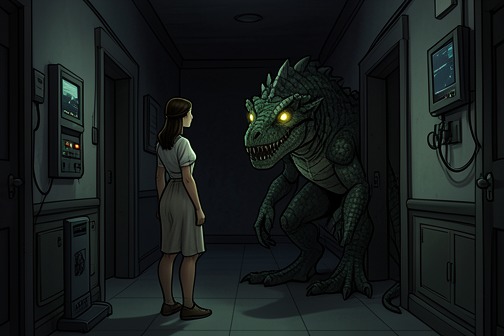
[Kanima](entity:creature-recall-creature-kanima-00fa600e686e) Identification is the decisive revelation that transforms a recurring reptilian threat from an unidentified killer into a known supernatural category. The discovery gives [Carson Bradley](entity:character-recall-character-carson-bradley-e17d1b9b17c6), [Stiles Stilinski](entity:character-recall-character-stiles-stilinski-12e2b3c432f2), [Scott McCall](entity:character-recall-character-scott-mccall-7740871d71c9), [Derek Hale](entity:character-recall-character-derek-hale-f259fdd07b23), and their allies a vocabulary for understanding the creature, but it does not solve the deeper mystery. [The Kanima is identified](entity:action-recall-action-the-kanima-is-identifi-448b5a119452) as a shapeshifter that does not know what it is—or who it is—so classification becomes the beginning of an identity investigation rather than its conclusion.
## From Unseen Threat to Visible Creature
The identification is prepared by repeated encounters in which fear precedes knowledge. At Carson Bradley's house, the creature first appears as two reptilian eyes gleaming at the far end of a dark hallway. Its body then emerges as an overgrown lizard taller than [Carson](entity:character-recall-character-carson-24b1f76a12e7), with a long whipping tail, bared teeth, and rows of sharp-looking teeth. The creature's appearance establishes it as a physical danger before anyone can place it within the supernatural world. Its unfamiliarity is part of the terror: Carson recognizes the immediate threat but has no name or explanatory system for what stands in front of her.
The same uncertainty persists when the group encounters it at the indoor balcony. The creature climbs the metal fence, gives the shrill cry heard during earlier attacks, and leaps down from the balcony before dropping onto all fours. Its tail knocks [Erica Reyes](entity:character-recall-character-erica-reyes-f740eb816f3b) into a wall and leaves her unconscious, while Derek Hale's attempt to confront it only increases the urgency of the scene. The command to run marks the practical limit of their knowledge: they can survive the encounter only by retreating, not by understanding or controlling the attacker.
## The Mirror and the [Bestiary](entity:concept-recall-concept-bestiary-cb9336aa7d22)
The crucial clue emerges during the confrontation at the swimming pool. After Scott McCall attacks the creature in full wolf mode, the Kanima's tail catches Scott's ankle and throws him into a large wall mirror. When Scott rises, he holds up a shard of the broken mirror. The creature sees its own reflection, stares at it, hisses, and flees up the wall, swinging from the ceiling before breaking through the skylight. The mirror therefore functions as more than a weapon or piece of debris: its broken surface exposes a weakness in the creature's relationship with its own image. The Kanima is frightened by the reflected body that others have already learned to fear.
The physical clue leads directly to archival investigation. Scott had come to the school not initially to rescue Carson, Stiles, and Derek, but to retrieve a flash drive from [Gerard Argent](entity:character-recall-character-gerard-argent-7004a9b95df1)'s key ring. The group had mistaken a book for the bestiary, only to discover that it was actually a collection of recipes; the real supernatural reference material was stored on the drive. Once the files are opened on a laptop, the investigators find pages of strange non-English words and infer that the text is Latin. The shift from bodily evidence to written evidence changes the investigation's method: the creature's identity must be assembled from a damaged encounter, a behavioral anomaly, and knowledge kept in an inaccessible archive.
## Naming the Kanima
Derek supplies the name when he identifies the creature as the Kanima. His knowledge is limited rather than authoritative. He explains that he knew only after observing the creature's fear of its own reflection, and admits that he possesses only fragments—stories and rumors—about the species. The identification therefore carries uncertainty within it. The name sounds definitive, yet the evidence supporting it remains partial and mediated through legend.
The group also learns that the Kanima is a shapeshifter. Derek agrees that it is like them in this respect, but immediately qualifies the comparison: it is not right, and Stiles Stilinski supplies the harsher description of an abomination. This distinction places the Kanima between categories. It belongs to the supernatural family of shape-shifting beings, like the werewolves, but its body and conduct violate the group's existing expectations about what such a being should be. The term identifies a type while simultaneously marking the creature as a failed, distorted, or incomplete version of one.
## From Species to Person
The identification becomes more disturbing when [Jackson Whittemore](entity:character-recall-character-jackson-whittemore-120cc2b873d5)'s connection to the creature is exposed. During a later confrontation, Jackson explains that the murdered victims were not strangers to him: they had murdered him. As he speaks, his ordinary green eyes change into fiery orange reptilian eyes, his hands develop greenish scales, his fingers lengthen into claws, and venomous paralytic fluid drips from him. The scene converts the Kanima from an external attacker into a transformation occurring through Jackson's body. The monster is no longer simply something hunting the group; it is also a person whose identity is split between human recognition and reptilian manifestation.
The final recognition is shaped by an object rather than an abstract explanation. When [Lydia Martin](entity:character-recall-character-lydia-martin-632f28e7f863) holds out a key, the Kanima stops and stares at it as though it remembers the metal. Its reptilian features begin to recede, revealing Jackson before the witnesses' eyes, although scales remain on his skin and claws still mark his fingers. He takes the key, studies it, and looks back at Lydia. The key acts as a material link between the creature and Jackson's personal history, while the partial reversal shows that identification is not equivalent to restoration. Jackson can reappear, but the Kanima's physical traces and psychological fracture remain visible.
## Consequences and Significance
Kanima Identification changes the group's objective from simply escaping an unknown predator to determining how a known supernatural condition operates and whom it implicates. Carson Bradley explicitly argues that the creature has already killed people and that stopping it will require cooperation, even though working with Derek Hale's group is personally difficult. Knowledge thus produces an uneasy alliance rather than immediate safety. The name Kanima makes coordinated action possible, but the creature's shapeshifting, reflective weakness, venomous paralysis, and unstable identity ensure that recognition does not remove the danger.
The event's strongest reversal is the movement from monster to wounded or divided adolescent. At first, the creature's eyes, scales, tail, claws, and teeth make it appear wholly other. The mirror reveals that it cannot comfortably inhabit its own image; Jackson's transformation later reveals that the feared body is connected to a recognizable human being; and the key provides a moment of memory that the creature itself cannot articulate. The investigation therefore identifies the Kanima in two senses: it names the supernatural form, and it begins to uncover the person trapped within it. That double recognition leaves the central problem unresolved, but it changes the moral stakes of every later attempt to stop the creature.
Event 19
Lydia's venom test
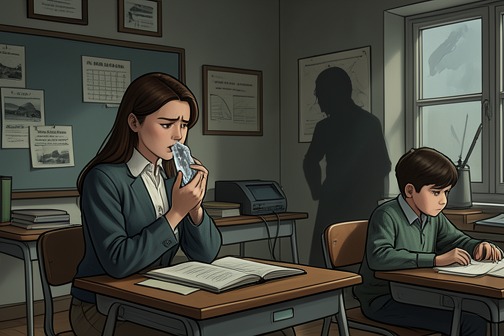
[Lydia's venom test](entity:event-recall-event-lydia-4440e5f63b90) is the investigation's most direct attempt to identify the [Kanima](entity:creature-recall-creature-kanima-00fa600e686e) through its own poison. Conducted as an ordinary chemistry-class exercise, the test converts a supernatural theory into a visible bodily trial: Lydia eats the crystal, nothing happens, and the apparent result points toward her as the creature. Yet the scene refuses to make biology equal guilt. The test establishes possible identity while leaving the question of murderous responsibility unresolved.
## Suspicion Before the Experiment
The test grows out of [Jackson Whittemore](entity:character-recall-character-jackson-whittemore-120cc2b873d5)'s account of a previous experiment. Jackson says that [Derek Hale](entity:character-recall-character-derek-hale-f259fdd07b23) paralyzed him from the neck down while claiming to be testing him, then argued that a true venomous creature would not react to the venom it secreted. [Carson](entity:character-recall-character-carson-24b1f76a12e7) recognizes the underlying rule as a matter of supernatural balance: a creature should not be poisoned by its own venom. Jackson also reports hearing that [Lydia Martin](entity:character-recall-character-lydia-martin-632f28e7f863) is due to be tested, linking the classroom procedure to the wider search for the Kanima.
Carson resists the accusation before the experiment begins. Lydia's disappearance from [Beacon Hills Hospital](entity:location-recall-location-beacon-hills-hospita-f968ea24ce29) has made her suspicious, but Carson argues that [Peter Hale](entity:character-recall-character-peter-hale-c763a42ea8fd)'s bite could not simply have transformed her into a murderous machine. The reasoning is incomplete rather than conclusive: Lydia was absent when the Kanima was seen, but many other people were absent too. The scene therefore places Carson's loyalty and intuition against an increasingly technical investigation, where suspicion is being reorganized around observable reactions.
## The Classroom Test
The procedure is disguised as a routine chemistry lesson. [Mr. Harris](entity:character-recall-character-mr-harris-54daaf1dab9a) announces that students who have catalyzed the experiment correctly should see a crystal and then adds that the result can be eaten. The class produces a hard brown lump rather than the expected crystal, and Carson refuses to accept blame for the failure. [Isaac Lahey](entity:character-recall-character-isaac-lahey-4fcaad0314c9) nevertheless removes the clear crystal from the jar with a tweezer-like instrument and holds it out to Lydia.
The danger is immediately legible to the people who know what is being tested. [Scott McCall](entity:character-recall-character-scott-mccall-7740871d71c9) abruptly warns Lydia not to eat it, attracting the attention of the entire class before retreating into an embarrassed silence. Lydia, unaware of—or unwilling to acknowledge—the full significance of the warning, shrugs and bites the crystal. Carson, Scott, [Stiles Stilinski](entity:character-recall-character-stiles-stilinski-12e2b3c432f2), [Allison Argent](entity:character-recall-character-allison-argent-bcc580b16b14), [Erica Reyes](entity:character-recall-character-erica-reyes-f740eb816f3b), and Isaac wait for a reaction. Lydia does not choke, convulse, collapse, or display any visible response; the paralytic poison has no apparent effect.
That bodily stillness is the experiment's crucial evidence. Carson recalls the principle that a venomous creature cannot be poisoned by the venom it produces itself and concludes that Lydia's lack of reaction identifies her as the Kanima. The inference is expressed as simple supernatural biology, but its simplicity is precisely what makes the moment dangerous: an abstract rule appears to produce an immediate answer about a living person.
## Evidence, Counterevidence, and Uncertainty
The result is powerful because it is material rather than verbal. Jackson's testimony supplies the rule, the crystal supplies the agent, and Lydia's body supplies the observable response. Unlike an internet search, the test does not depend on a legend or a translation. Carson's earlier attempts to research the Kanima online have yielded almost nothing—no reliable sightings, stories, or legends—while the bestiary's strange words remain unreadable. The classroom experiment consequently becomes a substitute for missing written knowledge.
Even so, the test cannot answer every question. Lydia's immunity may show that she possesses the Kanima's venomous biology, but it does not by itself establish that she has killed anyone or explain how such a transformation could have occurred. Carson's certainty that Lydia is not the killer survives alongside the apparent confirmation that she is the creature. This contradiction gives the event its investigative force: the test narrows the field while multiplying the moral and causal questions.
The wider case is built from similarly imperfect traces. The Kanima has already appeared as a clawed, scaly creature with a tail capable of killing an auto mechanic, and its venom has left Stiles temporarily paralyzed. Clear ooze later appears on a window sill during another attack, echoing the residue found at the auto shop. Surveillance footage from Beacon Hills Hospital is searched for [Matt Daehler](entity:character-recall-character-matt-daehler-7dd68a09c6ac), and shoeprints, tire tracks, and a credit-card receipt connect Matt to several murder scenes. Against this accumulating physical evidence, Lydia's test offers a different kind of clue: not a footprint or recording, but a reaction—or the absence of one—in a classroom.
## Immediate Consequences
The experiment changes Lydia's status from a person being discussed to a suspect whose body appears to confirm the theory. Her distress becomes visible soon afterward when she cries at the front of the classroom while writing the backwards words “EM PLEH ENOEMOS” on the blackboard, a plea for help that intensifies rather than resolves the suspicion surrounding her. The result also raises the stakes for Scott, Stiles, Carson, Allison, [Erica](entity:character-recall-character-erica-8e76eccafb59), and Isaac, who have watched the test succeed without learning whether Lydia remains in control of herself.
The event also demonstrates how ordinary institutions have become contaminated by the supernatural crisis. A teacher's group activity, a crystal, and a student's lunch-hour conversation are absorbed into an investigation involving paralysis, murder, and shapeshifting. The classroom does not provide safety from the Kanima; it becomes a laboratory in which the students attempt to make an unknowable creature legible.
## Narrative Significance
Lydia's venom test is a compact example of the book's evidence-driven suspense. It combines a rule about venomous creatures with a public experiment and a conspicuous physical result, producing the appearance of scientific certainty inside a world where identity can be transformed, concealed, or manipulated. The scene's tension comes from the gap between what the test proves and what the characters need to know. It may identify the Kanima's nature, but it cannot yet identify the killer's motive, the source of Lydia's condition, or the person directing the creature.
The test therefore functions as both revelation and misdirection. It gives the investigation a seemingly clean answer—Lydia does not react to the poison—while Carson's continuing doubt prevents that answer from closing the case. The event's decisive contribution is not simply the suspicion that Lydia is the Kanima, but the establishment of a method: supernatural claims can be tested through bodies, substances, traces, and surveillance, even when every result remains vulnerable to a larger truth still hidden from the investigators.
Event 20
McCall 家袭击与防卫
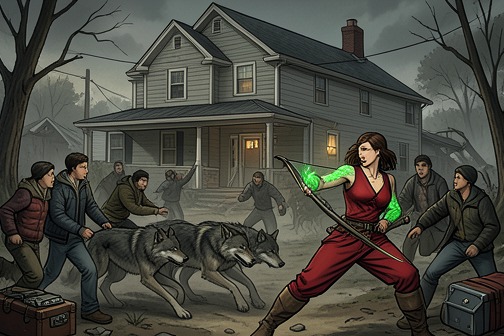
McCall House Attack is a coordinated supernatural assault that turns the [McCall house](entity:location-recall-location-mccall-house-0a2d0aaaa258) into a contested refuge. [Derek Hale](entity:character-recall-character-derek-hale-f259fdd07b23) arrives with [Boyd](entity:character-recall-character-boyd-0fd1223a4844), [Erica Reyes](entity:character-recall-character-erica-reyes-f740eb816f3b), and [Isaac Lahey](entity:character-recall-character-isaac-lahey-4fcaad0314c9) to take [Lydia Martin](entity:character-recall-character-lydia-martin-632f28e7f863), while [Carson Bradley](entity:character-recall-character-carson-bradley-e17d1b9b17c6), [Stiles Stilinski](entity:character-recall-character-stiles-stilinski-12e2b3c432f2), and [Allison Argent](entity:character-recall-character-allison-argent-bcc580b16b14) attempt to protect Lydia and survive the breach. The decisive reversal comes through Allison's crossbow: after coating an arrowhead with [Kanima venom](entity:object-recall-object-kanima-venom-9a6e529f9f7a), she allows [Erica](entity:character-recall-character-erica-8e76eccafb59) to catch it, causing the venom to paralyze Erica and giving the defenders a temporary advantage over Derek's pack.
## Causes and Background
The attack develops within the broader conflict surrounding Lydia Martin and the [Kanima](entity:creature-recall-creature-kanima-00fa600e686e). [Carson](entity:character-recall-character-carson-24b1f76a12e7), Allison, and Stiles are already watching the McCall house when Carson notices Derek Hale across the street, staring up at the building with his companions. The group initially appears incomplete from the defenders' vantage point: Carson identifies Derek, Erica, and Boyd, while Isaac is absent from the street. That absence becomes significant because Isaac has already entered the house by another route, turning the apparent exterior threat into an assault from within.
The defenders understand that Lydia is the real objective. Allison explicitly tells Carson that Derek's group will not kill Stiles because he is the sheriff's son; instead, they want Lydia. This recognition creates the event's central tactical dilemma. Carson wants to remain with Stiles while Isaac attacks him, but Allison insists that Lydia must be moved first because she is the person most directly endangered. The house therefore becomes not merely a place of combat but a space in which the defenders must constantly choose between protecting one another and preserving the person who has become the pack's target.
## The Assault on the House
Carson pulls the curtain back for another check and sees Derek's group outside. She immediately urges Allison to contact [Scott McCall](entity:character-recall-character-scott-mccall-7740871d71c9), identifying the approaching werewolves as Derek, Erica, and Boyd. Before the defenders can fully organize, Isaac appears inside the house and throws Carson to the floor. He grabs Allison's arm, forces her and the crossbow downward, and then shoves Stiles into the adjoining room when Stiles runs at him. Stiles falls against the floor and knocks over a lamp, but continues scrambling away as Isaac advances.
The attack forces Carson and Allison to act under pressure. Allison sends Lydia away, and Lydia runs while Allison drags Carson down the hall into another room. Allison locks the door and secures its chain, but the barrier is fragile: the door has only just been closed when the defenders notice that the window is propped open and clear ooze is dripping from its sill. The ooze recalls the material found at the auto shop and confirms that the Kanima is nearby. Carson calls out to Stiles that it is there, adding a second danger to the werewolf assault: the house is threatened simultaneously by Derek's pack and by the venomous creature they are trying to locate and contain.
The scene's movement from street to interior to window makes the house feel penetrable from every direction. Derek's group can approach openly, Isaac can enter unseen, and the Kanima can leave its trace without immediately revealing itself. The defenders cannot rely on walls, locked doors, or a single line of sight. Their survival depends instead on recognizing the attackers' methods and using the evidence of the Kanima's presence as a weapon.
## Allison's Counterattack
Allison develops the defensive strategy. She removes an arrow from her crossbow, dips its head into the Kanima's ooze, and coats it completely before replacing it in the weapon. The improvised ammunition transforms the creature's venom from an abstract threat into a usable countermeasure. Allison presents the prepared crossbow to Carson as their secret weapon, converting the residue left at the window into a trap for one of Derek's werewolves.
Erica then forces the door open, ripping the chain from its screws, and confronts the two girls. Allison aims the crossbow at Erica, placing a red targeting dot on her shirt. Erica attempts psychological provocation rather than simply attacking. She says she has considered stealing somebody's boyfriend and suggests that she might pursue Stiles or Scott McCall instead of Allison's relationship, using Carson and Allison's romantic attachments as points of pressure. The taunt succeeds in angering Allison, who fires.
Erica bends backward and catches the arrow in her hand, apparently defeating the attack. The maneuver becomes the turning point. Because the arrowhead is coated with Kanima venom, catching it exposes Erica directly to the substance. Her hand begins to shake, and within seconds she gasps, her knees buckle, and she falls to the floor. The apparent failure of the shot is therefore a trap: Erica's confidence makes her complete the delivery mechanism herself, allowing Allison and Carson to exploit the werewolf's assumption that the projectile is harmless.
The outcome illustrates a recurring rule of the supernatural conflict: knowledge can matter as much as physical strength. Erica can catch an ordinary arrow, but she cannot simply overpower a weapon whose danger comes from the venom on its surface. Allison's preparation, Carson's recognition of the ooze, and their willingness to let Erica believe she has won combine to reverse the power balance inside the room.
## Consequences and Aftermath
Erica's paralysis gives Carson and Allison a short-lived defensive victory, but it does not erase the larger threat. Stiles remains exposed elsewhere in the house, Lydia has had to flee, Isaac has already breached the interior, and Derek's pack remains nearby. The event therefore ends in tactical success rather than complete resolution. The defenders have stopped one attacker, yet the assault has demonstrated how quickly the McCall house can be infiltrated and how vulnerable Lydia's protectors are when the enemy attacks through several routes at once.
The incident also clarifies the relationships among the participants. Allison's defense of Carson and Lydia shows her moving beyond conventional hunter equipment and into adaptive supernatural strategy. Carson serves as an observer and interpreter, identifying Derek's presence and recognizing the significance of the ooze, while Stiles acts as the immediate physical target whose danger sharpens the group's priorities. Lydia's escape is treated as the most urgent objective because the defenders understand that the attackers' purpose is capture rather than indiscriminate violence against everyone in the house.
The house attack consequently becomes a compact model of the season's wider conflict. The werewolf pack relies on numbers, intimidation, and forced entry; the defenders answer with surveillance, rapid identification, improvised weapons, and cooperation across rival supernatural factions. The reversal is not a final defeat of Derek Hale's group, but it proves that the pack's advantages are not absolute. In the McCall house, the attackers' own confidence—and Erica's decision to catch the arrow—creates the opening through which the defenders fight back.
Event 21
确认 Jackson 是 Kanima
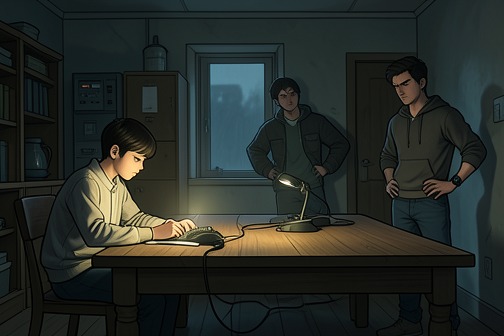
The confirmation that [Jackson Whittemore](entity:character-recall-character-jackson-whittemore-120cc2b873d5) is the [Kanima](entity:creature-recall-creature-kanima-00fa600e686e) is the turning point at which the investigation stops treating the creature as an unknown predator and identifies it as someone within the group’s social world. The recognition follows a failed test of [Lydia Martin](entity:character-recall-character-lydia-martin-632f28e7f863) and the Kanima’s sudden appearance on the roof of [Scott McCall](entity:character-recall-character-scott-mccall-7740871d71c9)’s house, converting uncertainty into a dangerous but actionable conclusion: Jackson is the creature’s human identity.
## Causes and Investigative Background
The discovery emerges from an investigation already strained by incomplete knowledge. [Carson Bradley and Stiles Stilinski](entity:relation-recall-relation-carson-bradley-stile-fe2b2021ba78) search the [Argent bestiary](entity:object-recall-object-argent-bestiary-91a0adf0a15d) and related sources for information about the Kanima, but the available material provides no clear entry under that name. The research is complicated by the fact that the book they initially believed to be the bestiary is actually a collection of recipes; the genuine bestiary is stored on [Gerard Argent](entity:character-recall-character-gerard-argent-7004a9b95df1)’s flash drive, whose contents appear on a laptop in Latin and other unfamiliar words. This delay keeps the creature outside the group’s established supernatural categories and explains why the characters must rely on testing and elimination rather than a ready-made account.
The group’s uncertainty is also reinforced by the limited information [Derek Hale](entity:character-recall-character-derek-hale-f259fdd07b23) can provide. The Kanima has already demonstrated enough danger to justify emergency preparation, including [Deaton](entity:character-recall-character-deaton-d386b883cb01)’s delivery of a small bottle and a spring-loaded syringe intended to help control it. Yet the equipment does not solve the central question of identity. The investigation therefore depends on separating possible suspects from the creature’s known characteristics, with Lydia becoming a particularly important candidate before the decisive reversal.
## The Rooftop Appearance and the Failed Test
The immediate scene takes place after a confrontation involving Derek Hale and his two fallen betas. Faint police sirens approach in the distance, suggesting that the werewolf conflict may soon bring law enforcement into the situation. Derek then looks away from the people around him and fixes his attention on the roof of Scott McCall’s house. The others hear footsteps overhead and back up, their attention drawn toward a figure moving above them.
The Kanima crawls across the roof, bares its teeth, and releases a huge screech before scrambling into the darkness. Its appearance is brief but unmistakable: the threat is no longer an abstract possibility inferred from injuries and clues, but a visible creature occupying the same immediate space as the group. Stiles wraps an arm tightly around [Carson](entity:character-recall-character-carson-24b1f76a12e7)’s waist as she recoils toward him, making the danger register not only as evidence but also as a physical shock shared among the witnesses.
Derek orders [Boyd](entity:character-recall-character-boyd-0fd1223a4844) to remove the two fallen betas, but Boyd does not move because Lydia Martin emerges from the house in a panic, demanding an explanation. Her arrival produces the crucial negative result. The Kanima has just passed by, yet Lydia remains human and unaffected by the test or the creature’s presence. She is therefore not the Kanima. The test does not identify Jackson by itself; instead, it removes the most immediate alternative and sharpens the logic of the search.
## Recognition and Value Shift
Once Lydia is cleared and the creature is not one of the werewolves present, the group is forced to consider someone who is absent. Scott McCall supplies the answer by recognizing that the remaining possibility is Jackson Whittemore. Carson’s narration treats the conclusion as both obvious in retrospect and catastrophically inconvenient in the moment: the group now has an apparently immune girl, three teenage werewolves, a human-like lizard creature, and hunters to contend with. The threat has moved from the margins of [Beacon Hills](entity:location-recall-location-beacon-hills-dbaca5be6a9f) into the intimate network of classmates, former partners, and friends.
The scene’s decisive value shift is from uncertainty to knowledge, but the knowledge does not bring safety. Before the revelation, the group’s problem is to determine what the Kanima is and where it might strike. Afterward, the problem becomes what can be done about Jackson, whose human identity gives the creature a history and relationships but does not automatically remove its capacity for violence. The recognition is consequently double-edged: it makes the investigation more precise while making the emotional and moral stakes far more difficult.
## Jackson’s Identity and the Moral Complication
Later discussion complicates the simple equation between Jackson and the creature. [Carson Bradley](entity:character-recall-character-carson-bradley-e17d1b9b17c6) tells Jackson that he has ruined lives and hurt people, yet insists that he remains a good person underneath his hostile exterior. She describes him as emotionally closed off and contrasts him with Lydia Martin, whom she characterizes as his opposite: Jackson is “ice” while Lydia is “fire.” Carson’s interpretation suggests that the Kanima identity is not merely a disguise to be removed but an outward expression of unresolved damage, defensiveness, and the need for someone capable of breaking through his isolation.
Jackson’s history with Carson deepens that complication. He admits that he had liked her since seventh grade, through eighth grade and [freshman year](entity:time-recall-time-carson-3843a170a244), even though she was a popular girl whom he believed would not choose someone like him. Carson is stunned that he had constructed an idealized image of her for three years without truly knowing her. Their later relationship ended when Jackson broke up with her for her best friend, but Carson says she has moved on and recognizes that they were unhealthy together. She nevertheless argues that Lydia is the person Jackson has genuinely cared about and doubts that he will hurt her, whether or not he is the Kanima.
That defense does not erase Jackson’s responsibility. Jackson himself reminds Carson of what he did to her, and his acknowledgement prevents the revelation from becoming a simple absolution. The scene instead places personal wrongdoing beside supernatural compulsion. Jackson may be dangerous, but the people who know him must decide whether identifying the Kanima means condemning the person, rescuing him, restraining him, or some combination of all three.
## Broader Narrative Significance
The confirmation also belongs to a larger pattern of hidden identities and incomplete family histories. Carson’s own mother disappeared without a note or belongings while Carson was away playing video games with [Stiles Stilinski](entity:character-recall-character-stiles-stilinski-12e2b3c432f2) and Scott McCall; Lydia’s disappearance is explicitly used as a point of comparison. Carson’s family loss, Stiles’s grief over his mother, and Jackson’s concealed connection to the Kanima all show how absence becomes a source of mystery in the story. People vanish, leave behind insufficient evidence, and return as questions that the remaining characters must interpret.
The revelation further contrasts forms of knowledge. The [Argent family](entity:organization-recall-organization-argent-family-fee3b8ad96a1)’s written records, the Latin on Gerard Argent’s flash drive, Deaton’s practical supernatural equipment, and the group’s direct observation each provide only part of the answer. Scholarly evidence fails to name the creature, preparations address its effects without explaining its origin, and the final identification comes through a scene of immediate perception and elimination. The event therefore turns investigation into recognition: the Kanima is not solved by a complete mythological explanation, but by seeing the creature, clearing Lydia, and connecting the remaining possibility to Jackson.
As a narrative event, the confirmation converts a monster hunt into a crisis of loyalty and accountability. Jackson is no longer only the object of suspicion; he is the person whose relationships with Lydia, Carson, and the wider group determine what the recognition will mean. The Kanima’s identity is confirmed, but the harder question—how to respond to a known person who is also a lethal supernatural threat—remains open, carrying the investigation into its next phase.
Event 22
Jungle nightclub attack

[The Jungle](entity:location-recall-location-the-jungle-c8dcfdce5fc2) nightclub attack turns a rescue attempt into one of the clearest demonstrations of [Kanima](entity:creature-recall-creature-kanima-00fa600e686e)’s danger in [Beacon Hills](entity:location-recall-location-beacon-hills-dbaca5be6a9f). [Carson Bradley](entity:character-recall-character-carson-bradley-e17d1b9b17c6), [Stiles Stilinski](entity:character-recall-character-stiles-stilinski-12e2b3c432f2), and [Scott McCall](entity:character-recall-character-scott-mccall-7740871d71c9) enter The Jungle expecting to find [Jackson Whittemore](entity:character-recall-character-jackson-whittemore-120cc2b873d5) and stop him before he reaches his intended victim, only to discover that Jackson remains in Kanima form and is moving through a crowded club where every stranger may become collateral damage. The attack shifts the group’s objective from identifying and pursuing a monster to protecting [Danny Mahealani](entity:character-recall-character-danny-mahealani-368cf85b2a24) and the other patrons from paralysis, panic, and a predator concealed above them.
## Causes and Background
The immediate cause of the attack is the group’s attempt to locate Jackson at The Jungle, a club or bar with a long entrance line and a red velvet rope that seems designed to keep sixteen-year-olds outside. Stiles Stilinski parks his Jeep nearby, keeping the building in sight, while Carson Bradley holds his hand as they approach with Scott McCall. The setting is already uncomfortable before the supernatural danger appears: [Carson](entity:character-recall-character-carson-24b1f76a12e7) recognizes that she does not fit into the adult nightlife around her, and Scott has not yet explained whom Jackson is pursuing.
The group’s uncertainty ends when Stiles Stilinski notices movement on the roof. A large reptilian tail slips into a gap in the boards, confirming that Jackson has not disappeared and that the Kanima is inside. The discovery also clarifies the stakes. Jackson is not searching randomly for a victim; Scott McCall identifies Armani as the person he is after, while Carson Bradley realizes that the likely target is Danny Mahealani, the person from their circle most plausibly present in the club. The attack therefore has both a public dimension and a focused personal objective.
The event follows an accumulating investigation into a creature that resists ordinary explanation. Carson Bradley’s searches for “Kanima,” “kanima legend,” “kanima shape shifter,” and “giant lizard who can’t swim” produce almost nothing useful online. The lack of sightings and legends makes the creature seem absent from the ordinary knowledge systems the teenagers use, even while the bestiary on Stiles Stilinski’s laptop suggests that the supernatural has its own difficult vocabulary. The nightclub attack converts that abstract research problem into visible, bodily consequences.
## What Happens
Scott McCall forces open a rear door by ripping away its handle, giving the group entry into The Jungle. Inside, disco balls scatter reflected light, alcohol fills the air with its smell, and strobe lights repeatedly fracture the room between flashes of visible bodies and stretches of darkness. The club’s scale and atmosphere work against the rescuers: they are underage intruders in a packed adult venue, unable to move freely or see clearly enough to track a creature that can climb overhead.
Once inside, the group confirms that The Jungle is a gay club, a fact Scott McCall recognizes with surprise while Carson Bradley understands why Danny Mahealani may be there. The recognition does not lessen the danger. It instead gives the search a human focus. Scott McCall looks for Jackson Whittemore, while Stiles Stilinski and Carson Bradley move through the crowd to find Danny Mahealani, their hands joined so that the crowd cannot separate them.
Jackson Whittemore is discovered above the dance floor rather than among the patrons. Still in Kanima form, he crawls across the ceiling and weaves through the electrical wires, repeating the kind of overhead movement that had previously brought him into Carson Bradley’s home. The elevated position gives him concealment and access to the entire room. Scott McCall tells Stiles Stilinski and Carson Bradley to get Danny Mahealani while he deals with the immediate threat, dividing the group between rescue and confrontation.
The search becomes harder when the club’s smoke machine releases timed clouds across the dance floor. Smoke, darkness, and strobe lighting create a near-perfect environment for Kanima to hide. Stiles Stilinski calls repeatedly for Danny Mahealani, and Carson Bradley struggles to see more than fragments of thrashing bodies, neon light, and the shifting crowd. The sensory confusion is not merely background atmosphere; it prevents the rescuers from distinguishing ordinary movement from an attack until the damage has already begun.
Screams finally reveal what sight cannot. A body falls against Carson Bradley after losing feeling, and Danny Mahealani is found quaking on the floor. [Kanima venom](entity:object-recall-object-kanima-venom-9a6e529f9f7a) has paralyzed people in the club, turning the dance floor into a scene of sudden physical helplessness. The attack is therefore marked by a sharp value reversal: the club begins as a place of movement, music, and social freedom, but Kanima transforms it into a space where bodies collapse and cannot defend themselves.
## Rescue and Immediate Aftermath
When the authorities and emergency medical workers arrive, the scale of the attack becomes visible outside the club. One person after another is carried away on stretchers, while Carson Bradley stands at the entrance with Stiles Stilinski and waits for news of Scott McCall. The group still does not know whether Scott McCall has found Jackson Whittemore or whether Jackson Whittemore has found Scott McCall, leaving the supernatural confrontation unresolved even as the human casualties are removed.
Danny Mahealani is wheeled past Carson Bradley on a gurney. Carson releases Stiles Stilinski’s hand and jogs alongside him, prioritizing Danny’s condition amid the confusion. This movement completes the event’s central rescue pattern: the investigation has not remained a detached search for the Kanima’s identity. It has forced Carson Bradley to choose immediate care for a friend while the larger threat continues beyond her sight.
The attack also exposes how poorly ordinary institutions are prepared for Beacon Hills’ supernatural crises. Police and emergency medical workers can respond to the visible consequences, but the cause remains a creature moving through the ceiling and using venom that the public cannot explain. The patrons experience paralysis as an inexplicable emergency, while the teenagers recognize its source and must preserve the supernatural secrecy surrounding it.
## Consequences for the Investigation
The Jungle nightclub attack strengthens the connection between Jackson Whittemore and Kanima. Before the event, the group is still working through competing theories, online searches, and incomplete information. Seeing Jackson’s reptilian tail, locating him in Kanima form, and witnessing the venom’s effects makes the identity link increasingly concrete. The attack also confirms that Jackson’s transformation is not confined to isolated encounters: he can enter a crowded public venue and remain active while pursuing a chosen victim.
The event clarifies Kanima’s operating conditions as well. Jackson Whittemore can move through waterless, enclosed spaces by climbing above the crowd, but the attack is shaped by the creature’s need for concealment and its reliance on paralytic venom. The smoke machine and club lighting unintentionally give Kanima tactical cover, while the density of the room magnifies every consequence. A single attack therefore becomes a mass-casualty incident because the environment allows the creature to strike unseen and because the victims have no way to recognize the danger before paralysis takes hold.
The response later depends on the group’s expanding network of supernatural knowledge. [Deaton](entity:character-recall-character-deaton-d386b883cb01), the veterinarian at the [Beacon Hills veterinary office](entity:location-recall-location-beacon-hills-veterin-a83bc7d4fc28), is trusted because he repeatedly helps Scott McCall and acts as a guide through supernatural problems. His intervention supplies a small bottle and a spring-loaded syringe intended to help contain the Kanima problem. That preparation belongs to the continuing aftermath of the nightclub attack: the group must move from improvised pursuit toward tools and methods capable of restraining Jackson Whittemore without treating every encounter as an uncontrolled public disaster.
## Narrative Significance
The Jungle nightclub attack is significant because it makes Kanima’s threat communal without losing its intimate core. The creature’s movements endanger a room full of strangers, yet the pursuit is directed toward Danny Mahealani, and the rescuers’ fear is concentrated in the possibility that someone they know will be reached next. The public crowd supplies scale; the targeted hunt supplies emotional direction.
For Carson Bradley, the attack also brings the supernatural conflict into direct tension with ordinary adolescence. The venue’s music, fashion, dancing, and social atmosphere belong to a recognizable teenage world, but the ceiling becomes a hunting ground and the smoke machine becomes cover for a venomous creature. The same setting that promises freedom and anonymity produces vulnerability instead. This contrast captures the broader condition of Beacon Hills, where normal teenage spaces repeatedly become arenas for supernatural violence.
The sequence further advances the story’s recurring movement from uncertainty to recognition. Online research cannot name the creature adequately, and ordinary observation cannot track it through the club, but physical evidence—the tail, the ceiling crawl, the paralyzed bodies, and Danny Mahealani’s condition—forces knowledge into the open. The attack is consequently not only an assault; it is an investigative turning point, converting rumor and incomplete bestiary research into an emergency that the group can no longer postpone or explain away.
Event 23
Jackson 的秘密拘禁
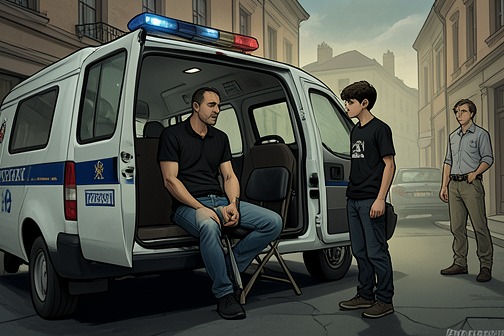
Jackson's secret detention is the improvised police-van captivity of [Jackson Whittemore](entity:character-recall-character-jackson-whittemore-120cc2b873d5) by [Carson Bradley](entity:character-recall-character-carson-bradley-e17d1b9b17c6), [Stiles Stilinski](entity:character-recall-character-stiles-stilinski-12e2b3c432f2), and [Scott McCall](entity:character-recall-character-scott-mccall-7740871d71c9). It is both a desperate act of protection and a direct violation of the law: the teenagers have no reliable way to control Jackson's violent transformations, so they hide him in a stolen police vehicle until they can understand what is happening to him. The episode turns the question of safety into a moral and practical crisis, because the person they restrain may be both a dangerous killer and someone whose actions are not fully under his control.
## Causes and Background
The detention follows a series of attacks associated with the [Kanima](entity:creature-recall-creature-kanima-00fa600e686e). Jackson has attacked Carson Bradley, Stiles Stilinski, and [Derek Hale](entity:character-recall-character-derek-hale-f259fdd07b23) at school, trapped [Carson Bradley and Stiles Stilinski](entity:relation-recall-relation-carson-bradley-stile-fe2b2021ba78) at the swimming pool, killed an auto mechanic in front of Carson Bradley, attacked one of the Argent hunters, and tried to kill [Danny Mahealani](entity:character-recall-character-danny-mahealani-368cf85b2a24). The threat is not abstract: Carson Bradley has seen a clawed, scaly hand strike a worker at the [Mechanics garage](entity:location-recall-location-mechanics-garage-c4ba352e39a7), while the creature's venom leaves Stiles Stilinski almost completely paralyzed. Later, at the school, clear ooze on a window sill repeats the physical trace found at the auto shop and shows that the creature can reach the students even inside supposedly protected spaces.
The immediate problem is that Jackson Whittemore is not safely identifiable as the creature at every moment. When Carson Bradley opens [Stiles' Jeep](entity:object-recall-object-stiles-jeep-89966781d5ec), Jackson Whittemore is unconscious in the back seat, covered by a towel over his lower body rather than visibly transformed into Kanima form. The contrast makes the intervention more unsettling: the group is not simply capturing a monster in the middle of an attack, but taking custody of a recognizable classmate whose connection to the attacks remains entangled with uncertainty. [Scott McCall and Stiles Stilinski](entity:relation-recall-relation-scott-mccall-stiles-d36cc55f4ed7) therefore treat confinement as a temporary measure, not as a final judgment.
## The Captivity
Carson Bradley and Stiles Stilinski return to the woods near the police vehicle after Scott McCall insists that someone must keep watch over Jackson Whittemore. The plan is openly illegal from the beginning. Carson Bradley objects that the supposed solution has become the theft of a police vehicle, while Stiles Stilinski answers that they need a way to stop Jackson Whittemore from hurting anyone. The stolen van is less a secure prison than a hurried substitute for institutional protection, and Scott McCall has already had to punch Jackson Whittemore several times to keep him subdued.
The arrangement also exposes the cost of the operation to Stiles Stilinski and Carson Bradley. They walk toward the van with their fingers intertwined, and Carson Bradley recognizes that the small gesture is one of the few ordinary signs left in a town distorted by supernatural danger. The tenderness does not cancel the danger around them; it sharpens the contrast between their relationship and the coercive task they have accepted. Stiles Stilinski has taken clothes from the station and has had to dress Jackson Whittemore himself, an indignity that makes the detention feel both intimate and absurd.
When Stiles Stilinski uses keys taken from [Sheriff Stilinski](entity:character-recall-character-sheriff-stilinski-55cc58b45e12)'s office to open the van, the danger becomes immediate. Jackson Whittemore jolts awake, lunges forward, and demands release, but the handcuffs normally used for criminals hold him back. Stiles Stilinski places an arm protectively in front of Carson Bradley while confronting him, making the physical arrangement clear: Jackson Whittemore is the prisoner, Carson Bradley is still regarded as vulnerable, and Stiles Stilinski is trying to occupy the position of guard despite having no official authority.
Stiles Stilinski explains that Jackson Whittemore will remain confined because he is killing people and the group has not yet found a way to stop him. Carson Bradley reinforces the accusation rather than softening it, but also brings sandwiches and offers Jackson Whittemore a choice between ham and cheese, turkey club, and the chicken sandwich reserved for herself. The mundane food creates a deliberately dissonant image: a suspected serial killer is chained inside a police van while his captors attempt to maintain the habits of an ordinary meal. The scene's irony lies in that collision between criminal custody and teenage caretaking.
## Evidence, Denial, and the Wider Investigation
Jackson Whittemore challenges the logic of the detention by asking whether his parents will search for him. His question exposes the gap between the teenagers' improvised secrecy and the normal social structures that should be looking for a missing student. The group has hidden Jackson Whittemore not only from the police but also from his family, while relying on stolen equipment and handcuffs associated with official law enforcement.
The accusation becomes more specific when Carson Bradley and Stiles Stilinski list the attacks Jackson Whittemore has apparently committed. Jackson Whittemore responds that he would not want to kill his best friend, creating a contradiction at the center of the case: the pattern of violence points toward him, but his stated relationship with Danny Mahealani resists the idea that the violence expresses an ordinary personal motive. The detention therefore preserves the mystery instead of resolving it. Jackson Whittemore is dangerous enough to restrain, yet ambiguous enough that the group must continue investigating rather than simply surrendering him to punishment.
That investigation later acquires material support. Surveillance footage from [Beacon Hills Hospital](entity:location-recall-location-beacon-hills-hospita-f968ea24ce29) is examined for the night Jessica was murdered, but the search is difficult because the hospital was crowded by a six-car pileup. Shoeprints and tire tracks from the trailer park are compared with the available evidence; if they match, Jackson Whittemore can be placed at three murder scenes involving the trailer, the hospital, and the rave. A credit-card receipt signed by Jackson Whittemore at the Mechanics garage may raise the count to four, including the auto mechanic's death. These details transform the van's captivity from a purely emotional response into part of an accumulating evidentiary chain, even though the evidence still does not fully explain the relation between Jackson Whittemore and Kanima.
## Institutions of Surveillance and Confinement
The detention takes place against a broader network of watching and restriction. After [Gerard Argent](entity:character-recall-character-gerard-argent-7004a9b95df1) becomes principal at [Beacon Hills High School](entity:location-recall-location-beacon-hills-high-sc-be2f7e6a1c50), surveillance cameras are installed throughout the building, including the hallways, classrooms, cafeteria, pool, and gym. Carson Bradley notices that the cameras appear designed to enforce the separation of [Scott McCall and Allison Argent](entity:relation-recall-relation-scott-mccall-allison-b5e67a4b332d) as much as to secure the school. The official gaze is therefore presented as both protective and intrusive, while the teenagers answer that institutional surveillance with their own hidden observation of Jackson Whittemore.
The police station supplies another version of the same power. Carson Bradley, Stiles Stilinski, and their allies search hospital records and surveillance footage while former Sheriff Stilinski works through folders, shoeprints, tire tracks, and receipts. Yet the teenagers still resort to a stolen police vehicle because the formal system is unavailable, compromised, or too slow for the immediate danger. The van becomes a miniature, unauthorized police station: it contains a suspect, uses criminal handcuffs, and depends on evidence, but it is operated by frightened adolescents rather than officers.
The episode repeatedly places bodies under observation or restraint. Stiles Stilinski is paralyzed by [Kanima venom](entity:object-recall-object-kanima-venom-9a6e529f9f7a) at the Mechanics garage; cameras track students across Beacon Hills High School; a restraining order later defines physical distance between Jackson Whittemore and other students; and Jackson Whittemore is finally chained inside a vehicle. These situations differ in legitimacy and purpose, but together they establish a recurring tension between protection and control. Being watched does not guarantee safety, and confinement does not guarantee understanding.
## Consequences and Significance
Jackson Whittemore's detention temporarily removes him from the streets and gives Scott McCall, Stiles Stilinski, and Carson Bradley time to investigate the killings. It also places them in direct moral danger. They have become kidnappers, have stolen from Sheriff Stilinski's workplace, and are responsible for managing a prisoner who may transform or attack again. Their stated purpose is prevention, but every practical detail of the plan shows how close prevention can come to coercion.
The captivity also develops the relationships among the participants. Scott McCall acts as the organizer who insists that Jackson Whittemore must be watched. Stiles Stilinski performs the humiliating practical labor of finding clothes, taking the keys, and securing the handcuffs, while shielding Carson Bradley when Jackson Whittemore wakes. Carson Bradley combines hostility toward Jackson Whittemore with concrete care, threatening him verbally while still bringing food. Their cooperation turns the detention into a test of loyalty: they protect one another while extending a limited, uneasy form of protection to the person they fear.
Most importantly, the event does not close the case. Jackson Whittemore's apparent guilt continues to conflict with his denial, the physical evidence accumulates without immediately explaining the supernatural mechanism, and the group remains caught between the need to restrain him and the need to discover why he is attacking people. The stolen police van thus functions as both prison and investigative holding space, a temporary answer to an emergency whose deeper solution must come from identifying the Kanima and understanding the force directing its violence.
Event 24
Jackson 身世线索发现
Jackson’s Birth Mystery is the investigation that turns [Jackson Whittemore](entity:character-recall-character-jackson-whittemore-120cc2b873d5)’s family history into a supernatural and criminal question. What first appears to be an insurance matter becomes a disturbing contradiction in the dates surrounding his birth: his parents were recorded as dead before Jackson’s birthday, raising the possibility that his birth was achieved through an emergency caesarean section and that his parents may have been murdered. The clue gives the group a concrete route into Jackson’s past while also strengthening the connection between his identity and the [Kanima](entity:creature-recall-creature-kanima-00fa600e686e)’s vengeance-driven mythology.
## The Insurance Lead
The investigation begins when [Carson Bradley](entity:character-recall-character-carson-bradley-e17d1b9b17c6) confronts [Erica Reyes](entity:character-recall-character-erica-reyes-f740eb816f3b) at school. [Carson](entity:character-recall-character-carson-24b1f76a12e7) has already learned that [Erica](entity:character-recall-character-erica-8e76eccafb59) knows something about Jackson’s parents and demands an explanation, despite the tension created by Carson’s earlier attack on Erica with a nail file. Erica explains that her father was the insurance investigator on the case. Whenever he sees Jackson driving his Porsche, he comments on the enormous settlement Jackson will receive when he turns eighteen. The information establishes that Jackson is already wealthy and is expected to become even wealthier, but the financial detail immediately feels morally and narratively wrong to the investigators: his inheritance is tied to the deaths of the people who gave him his life.
Erica offers to search her father’s email for the insurance report because he keeps his records. Her willingness to retrieve the document changes the inquiry from rumor to evidence. The search takes place while Carson, [Stiles Stilinski](entity:character-recall-character-stiles-stilinski-12e2b3c432f2), and [Scott McCall](entity:character-recall-character-scott-mccall-7740871d71c9) are gathered around Erica’s laptop, attempting to reconstruct the circumstances behind Jackson’s family history even as they are supposed to be re-shelving books in the school library.
## The Date Contradiction
The report identifies the case as an accident, but the document contains a decisive discrepancy. It records that the passengers arrived at the hospital dead on arrival, with an estimated time of death of 9:26 p.m. on [June 14, 1995](entity:time-recall-time-1995-6-14-c6f5814b7daf). Carson notices that Jackson’s birthday is June 15. The proximity of the two dates makes his birth impossible to understand as an ordinary family event: Jackson was born immediately after his parents were declared dead.
The group interprets the record as indicating that Jackson was delivered by caesarean section after his mother had died. In Carson’s explanation, the doctors had to remove him from his mother’s dead body. This interpretation does not resolve the mystery; it intensifies it. The report’s repeated use of the word inconclusive means that the official account does not establish whether the deaths were truly accidental. Jackson’s birth therefore becomes the surviving trace of an event whose central facts remain unsettled.
## From Accident to Possible Murder
The possibility that Jackson’s parents were murdered gives the discovery its supernatural importance. Carson connects the unresolved deaths to the Kanima myth, which describes a creature that seeks out and kills murderers and carries some manifestation of its past. The question is left deliberately open: the relevant history might belong to Jackson himself, or to the person controlling him. Either possibility makes the birth record more than background information. It may explain why Jackson is connected to the Kanima, why the creature’s violence follows a pattern of punishment, and why the group must investigate Jackson rather than treating him only as a dangerous target.
This shift also changes the group’s immediate objective. Jackson is protected by a restraining order, but Carson insists that the legal barrier cannot prevent them from speaking with him. The investigation thus moves between ordinary institutions and supernatural interpretation: an insurance report supplies dates, a hospital record supplies the apparent circumstances of death, and the Kanima myth supplies a possible motive. None of these systems is sufficient alone, but together they make Jackson’s origin the central unanswered clue.
## Evidence, Surveillance, and the Wider Case
The birth mystery develops within a broader effort to identify the person behind the Kanima’s killings. Later, the former [Sheriff Stilinski](entity:character-recall-character-sheriff-stilinski-55cc58b45e12) reviews hospital surveillance footage with Carson, Stiles, and Scott while they search for [Matt Daehler](entity:character-recall-character-matt-daehler-7dd68a09c6ac) on the night Jessica was murdered. The footage is difficult to use because a six-car pileup had filled the hospital with injured people, wheelchairs, and gurneys. The investigation therefore depends not only on intuition but on reconstructing movements through crowded institutional spaces.
The former sheriff also gathers physical and documentary evidence connecting Matt to multiple crime scenes. Shoeprints beside tire tracks at the trailer park, the hospital footage, and the rave are treated as possible links to three murders. A credit-card receipt signed by Matt at the [Mechanics garage](entity:location-recall-location-mechanics-garage-c4ba352e39a7) provides a possible fourth connection, dating him to the night the auto mechanic was killed. These later clues do not erase the uncertainty surrounding Jackson’s parents, but they place the birth mystery inside a widening chain of evidence about murder, culpability, and the [Kanima master bond](entity:rule-recall-rule-kanima-master-bond-0be32410071e).
## Significance for Jackson’s Identity
The discovery complicates Jackson’s position in the story. He is not presented only as the apparent Kanima or as a wealthy student protected by inherited money. His existence begins with a violent temporal rupture: his parents’ recorded deaths occur on June 14, and his birthday follows on June 15. That gap makes his identity inseparable from an unanswered crime and allows the supernatural creature’s mythology to echo the circumstances of his birth.
The clue also gives Carson’s relationship with Jackson a more complex moral dimension. Carson acknowledges that Jackson has ruined lives and hurt people, yet she still argues that he is fundamentally a good person beneath his emotional armor. She contrasts Jackson’s cold exterior with [Lydia Martin](entity:character-recall-character-lydia-martin-632f28e7f863)’s intensity and maintains that Lydia is the person Jackson has truly cared about. Her judgment does not excuse Jackson’s past treatment of Carson, including his breakup with her for her best friend, but it prevents the investigation from reducing him to a monster. The birth mystery works in the same way: it exposes danger and uncertainty while preserving the possibility that Jackson is a person shaped, and perhaps burdened, by a history he did not choose.
Event 25
Police-station restraining-order conflict
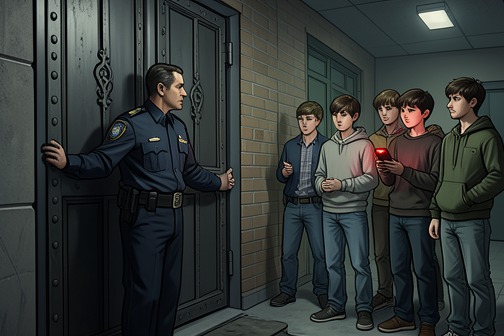
The [Police-station restraining-order conflict](entity:event-recall-event-restraining-order-40159fbedf93) is the point at which the investigation surrounding [Jackson Whittemore](entity:character-recall-character-jackson-whittemore-120cc2b873d5) is recast as a legal offense against [Carson Bradley](entity:character-recall-character-carson-bradley-e17d1b9b17c6), [Stiles Stilinski](entity:character-recall-character-stiles-stilinski-12e2b3c432f2), and [Scott McCall](entity:character-recall-character-scott-mccall-7740871d71c9). What the teenagers understand as an effort to contain a dangerous supernatural threat is presented through Jackson and David Whittemore as harassment, assault, and unlawful interference. The resulting order does not resolve the danger; it places a procedural barrier between the investigators and the person they believe may be responsible for further violence.
## Causes and Background
The conflict grows out of an atmosphere in which ordinary school discipline and police authority repeatedly collide with an emergency that the adults do not fully understand. [Coach Finstock](entity:character-recall-character-coach-finstock-f7dd6d13f929) interrupts [Scott McCall and Stiles Stilinski](entity:relation-recall-relation-scott-mccall-stiles-d36cc55f4ed7) during school demands, while [Gerard Argent](entity:character-recall-character-gerard-argent-7004a9b95df1) announces that his support for the teachers will require students to take the fall and remain in detention. These scenes establish a structure in which institutional authority can punish the visible disruption without addressing the hidden crisis beneath it.
[Carson Bradley and Stiles Stilinski](entity:relation-recall-relation-carson-bradley-stile-fe2b2021ba78) are already operating outside normal procedure when they take a police vehicle to contain Jackson Whittemore. [Carson](entity:character-recall-character-carson-24b1f76a12e7) objects that the plan involves stealing a police vehicle, while Stiles justifies it as a way to keep Jackson from hurting anyone. Jackson is knocked unconscious inside the van, and Scott McCall has to strike him repeatedly to keep him subdued. The plan is framed by the teenagers as protective custody, but its illegality makes it vulnerable to being narrated as abduction and abuse once it reaches the authorities.
The investigation also forces Carson Bradley to move through unofficial channels. She is directed toward the stairs near Hamilton's room while searching for [Lydia Martin](entity:character-recall-character-lydia-martin-632f28e7f863), and [Danny Mahealani](entity:character-recall-character-danny-mahealani-368cf85b2a24) reports seeing [Erica Reyes](entity:character-recall-character-erica-reyes-f740eb816f3b) with her hands on Stiles Stilinski's chest, adding jealousy and personal distraction to an already unstable pursuit. The teenagers' investigative work therefore lacks both legal authorization and emotional distance: they are trying to identify Jackson's history while their own relationships and rivalries remain exposed.
## What Happens at the Station
The decisive confrontation occurs when Carson Bradley, Stiles Stilinski, and Scott McCall approach [Sheriff Stilinski](entity:character-recall-character-sheriff-stilinski-55cc58b45e12)'s office and discover Jackson Whittemore seated in what appears to be a spare police uniform. David Whittemore is leaning against the wall, Jackson is smirking, and Sheriff Stilinski is visibly unhappy. The arrangement makes the teenagers understand that the immediate danger is no longer only Jackson's supernatural behavior; his father has successfully brought the dispute into the police station and turned their actions into a formal case against them.
The order is announced directly by Sheriff Stilinski. Carson Bradley, Stiles Stilinski, and Scott McCall are forbidden to come within fifty feet of Jackson Whittemore, speak to him, or approach him. They are also forbidden to assault or harass him either physically or psychologically. The language is comprehensive enough to restrict not only physical intervention but also the investigation itself, since any attempt to question, follow, or confront Jackson may be interpreted as a violation.
The restriction creates an absurd practical problem because Jackson Whittemore and the three teenagers still attend the same school. Stiles Stilinski asks how school will work, and Sheriff Stilinski explains that they must take classes while maintaining the fifty-foot distance. The order thus treats proximity as a logistical matter even though the school is a confined shared environment. The rule offers no meaningful solution to hallways, classrooms, or daily movement; it simply transfers responsibility for avoiding contact onto the teenagers.
Carson Bradley experiences the ruling as both humiliation and defeat. She sits between Stiles Stilinski and Scott McCall while [Melissa McCall](entity:character-recall-character-melissa-mccall-e1628d1a817a) remains in the corner, and Carson cannot bring herself to look at her because of the distress and disappointment she perceives. David Whittemore's persistent smirk intensifies her anger, while her frustration leads her to imagine cutting off Jackson's head, followed by the grim recognition that she may still want to do so. The order restrains her body without eliminating the threat that produced her rage.
Stiles Stilinski attempts to comfort Carson Bradley by resting a hand on her knee, but the gesture cannot overcome the situation. Carson instead handles the cool metal of Stiles' car keys in her pocket as a distraction. Their physical closeness becomes especially significant under a rule designed to regulate distance: the order separates them from Jackson while showing the intimacy and solidarity within the group that the legal proceeding has placed under suspicion.
## Legal Authority and Emergency Methods
The conflict dramatizes a clash between formal procedure and improvised crisis management. The teenagers steal a police vehicle, detain Jackson Whittemore, and use force because they believe conventional containment has failed. The police-station proceeding answers that emergency logic with a restraining order rather than with an investigation into the supernatural danger. The result is an official solution that restores a visible boundary while leaving the underlying threat intact.
Other events reinforce the same tension. Stiles Stilinski is held in detention because Sheriff Stilinski has kept a twenty-four-hour hold and because Stiles' connection to [Kate Argent's arson](entity:action-recall-action-86193f7fdca6) has not been disclosed to the police. Carson Bradley and Stiles Stilinski are also sent toward the cemetery after detention, where their private investigation continues outside the ordinary school schedule. Institutional punishment and secret inquiry proceed side by side, each treating the other as an obstacle.
The teenagers' methods become still more extreme as the crisis develops. At the police station, a gun is later pressed into Carson Bradley's back while [Matt Daehler](entity:character-recall-character-matt-daehler-7dd68a09c6ac) forces her down a hallway and prepares to take the group hostage, with Jackson Whittemore expected to kill people if necessary. This later hostage situation clarifies the danger the restraining order has failed to contain: the supposed subject of protection remains linked to lethal violence, while the people who suspected him are treated as the immediate legal problem.
## Investigation After the Order
The restriction does not end Carson Bradley's search for the truth. At two in the morning, Carson Bradley, Stiles Stilinski, and Scott McCall enter the police station with the former sheriff and examine surveillance footage from [Beacon Hills Hospital](entity:location-recall-location-beacon-hills-hospita-f968ea24ce29) on the night Jessica was murdered. The footage is difficult to search because a six-car pileup had filled the hospital with people in wheelchairs and on gurneys. The crowded images expose the practical limitations of official evidence while also giving the investigators a route toward identifying Matt Daehler.
The evidence chain gradually strengthens. Shoeprints and tire tracks from the trailer park are compared with other records, potentially placing Matt Daehler at three murder scenes: the trailer, the hospital, and the rave. A credit-card receipt signed by Matt Daehler at the [Mechanics garage](entity:location-recall-location-mechanics-garage-c4ba352e39a7) may connect him to the death of the auto mechanic as well. The investigation therefore moves from suspicion toward a pattern assembled from physical traces, surveillance, and financial records rather than from the restraining order's account of events.
The contrast is central to the event's meaning. The legal conflict defines Carson Bradley, Stiles Stilinski, and Scott McCall through their alleged conduct toward Jackson Whittemore, whereas the parallel investigation asks what Jackson and Matt Daehler have done and who is endangered by their actions. The order produces a temporary appearance of control, but the surveillance footage and scene evidence continue to undermine that appearance.
## Consequences and Significance
The immediate consequence is forced distance: Carson Bradley, Stiles Stilinski, and Scott McCall must continue attending school while avoiding Jackson Whittemore by fifty feet, without speaking to or approaching him. The measure damages their freedom of movement and makes ordinary school life a tactical exercise. It also deepens their resentment toward David Whittemore, whose legal intervention is perceived as a weapon rather than as a neutral appeal for protection.
Narratively, the conflict marks a reversal in the teenagers' social position. They have been investigating murders and trying to prevent further attacks, yet the police station receives them as potential aggressors. The value shift is from an expectation of protection to legal exposure: the station, normally a place where danger should be reported, becomes the site where the investigators themselves are constrained.
The order also demonstrates how supernatural emergencies become nearly unintelligible when translated into ordinary legal categories. A stolen police vehicle, an unconscious captive, physical force, and repeated pursuit can all be documented without explaining the [Kanima](entity:creature-recall-creature-kanima-00fa600e686e) threat that prompted them. The event therefore does not merely interrupt the investigation. It shows how the demand for procedural normality can obstruct the very people attempting to preserve life when the official system cannot yet recognize the nature of the danger.
The conflict ends without genuine resolution. The teenagers remain bound by the restriction, but they continue gathering evidence, and the later hostage crisis confirms that their fear of Jackson Whittemore and Matt Daehler was not baseless. The police-station order temporarily regulates contact; it does not restore normality, establish the truth, or make the supernatural crisis disappear.
Event 26
Carson 与父亲的警局争执
[Carson](entity:character-recall-character-carson-24b1f76a12e7)’s Confrontation with Her Father is the decisive family rupture at the center of a police-station dispute. Carson’s estranged father arrives after hearing that his daughter has been given a restraining order connected to the kidnapping of [Jackson Whittemore](entity:character-recall-character-jackson-whittemore-120cc2b873d5), but his attempt to discipline her instead exposes the older wound beneath the immediate crisis: Carson’s mother disappeared, her father withdrew, and the family never repaired itself. The confrontation makes Carson’s independence an emotional and narrative necessity rather than a simple act of teenage defiance.
## Causes and Background
Carson’s history with her parents explains why the encounter carries a force disproportionate to the immediate accusation. Two years after Mrs. Stilinski died, Carson’s mother vanished from her life by choice. The disappearance was abrupt and unexplained: Carson left the house while her mother was baking cookies, and returned to find only a plate of chocolate cookies remaining. There was no note and no abandoned luggage, and Carson initially tried to interpret the absence as an ordinary interruption rather than a permanent departure. The missing explanation left the household organized around uncertainty and loss.
Her father’s response deepened that injury. Carson describes him as having been absent from her life for roughly four years, leaving her to experience her mother’s departure without the caregiving presence she expected from him. The police-station scene therefore brings two absences into the same room: the mother whose disappearance remains a wound and the father whose physical or emotional withdrawal has made that wound harder to survive. His sudden appearance is startling enough that [Melissa McCall](entity:character-recall-character-melissa-mccall-e1628d1a817a) briefly reacts as though she has seen a ghost, emphasizing how unusual his presence has become.
The immediate trigger is official rather than domestic. Carson and her friends have been drawn into Jackson Whittemore’s dangerous situation, and her father has received a call from the police department saying that his daughter is facing a restraining order because she kidnapped the son of one of the town’s influential families. The charge gives him a reason to claim authority, but it also reveals the limits of the official account: the adults frame Carson’s actions as misconduct while Carson and her friends understand them as part of an emergency involving Jackson’s violent [Kanima](entity:creature-recall-creature-kanima-00fa600e686e) condition.
## What Happens at the Station
Carson is with [Stiles Stilinski](entity:character-recall-character-stiles-stilinski-12e2b3c432f2) and [Scott McCall](entity:character-recall-character-scott-mccall-7740871d71c9) in the station hallway when her father approaches, red-faced and furious. He demands to know what she is doing there, and Carson answers with immediate hostility rather than the apologetic posture he expects. The encounter quickly becomes physical when he grabs her upper arm and tightens his hold after she tries to pull away. Stiles intervenes, pulling Carson from him and placing an arm around her shoulders. His intervention converts the dispute from a private parent-child reprimand into a visible conflict over Carson’s bodily autonomy and chosen relationship.
Carson’s father then forbids her from seeing Stiles again. Carson rejects the order because Stiles is not merely a boy associated with her recent trouble; he is the person she loves, and the relationship represents a commitment she has chosen for herself. Her response distinguishes parental status from parental care. She argues that a father is not simply a man who contributes genes and pays for a house, but a male parent who also acts as a caregiver. In her account, her father fulfilled the biological and financial functions while abandoning the emotional responsibility that would have given his authority legitimacy.
The confrontation reaches its sharpest point when Carson connects his behavior to her mother’s departure. She accuses him of pushing everything away because he cannot accept that her mother did not want to remain with him, while also insisting that the abandonment wounded Carson herself. Her anger is not presented as a single outburst detached from history; it is the delayed articulation of four years in which she believes he placed his own pain ahead of her need for protection and repair. She refuses to let him turn an apology into an escape from accountability, arguing that he had four years to mend the relationship and chose not to do so.
## Emotional Consequences and Aftermath
Carson leaves before her father can complete an apology. She runs out of the police department, pushing through the front entrance as officers at the front desk look on, and the winter air precipitates the collapse she has been trying to prevent. Tears begin falling outside, although she resists them as evidence that the confrontation has taken power from her. The scene’s physical movement—from the enclosed hallway, to the grip on her arm, to Stiles’s protective embrace, and finally to Carson’s flight into the cold—tracks the breaking of the institutional and familial control being imposed on her.
Her grief is complicated by self-reproach. Carson tells herself that she is supposed to remain strong and that she should not allow either parent to control her through pain. Yet the mother’s memory returns through the father, and the unresolved loss destroys the fragile happiness she had been trying to preserve. The tears do not cancel her defiance; they show the cost of sustaining it. Carson has successfully spoken the accusation she has carried, but speaking it does not immediately heal the abandonment.
The station also functions as a place where several forms of authority collide. [Gerard Argent](entity:character-recall-character-gerard-argent-7004a9b95df1), newly installed as principal, uses his first day to threaten detention and make students take responsibility for disorder. Carson and her friends later steal a police vehicle to contain Jackson, track information through the school, and endure a hostage crisis in which a gun is pressed into Carson’s back and [Matt Daehler](entity:character-recall-character-matt-daehler-7dd68a09c6ac) controls their movements. Against this wider pattern of adults and institutions declaring emergency powers, Carson’s father attempts to use parental authority as another form of confinement. Her refusal exposes the personal equivalent of the book’s larger question: who has the right to decide what happens to vulnerable young people when ordinary protection has failed?
## Relationships and Conflict
Stiles’s role in the confrontation confirms the practical meaning of Carson and Stiles’s relationship. He does not remain a silent witness when Carson’s father grabs her; he physically separates them and stands beside her. Carson’s insistence that no one can place distance between them therefore follows an observable pattern of mutual defense rather than romantic abstraction. Their relationship offers the care she says her father withheld, even though it exists within the dangerous and improvised world of supernatural investigations.
Carson’s friendships likewise complicate the accusation that she is simply reckless. Scott McCall and Stiles are present during the confrontation, just as they are present when Carson helps contain Jackson in a stolen police vehicle and navigates the school’s surveillance and detention systems. Her actions repeatedly place her in danger, but they also arise from loyalty to people who cannot safely manage their own circumstances. The restraining order gives those actions a criminal appearance while the surrounding events establish the stakes that Carson’s father does not acknowledge.
Carson’s later conversation with Jackson Whittemore provides a revealing contrast to the conflict with her father. She admits that Jackson once broke up with her for her best friend, yet says she moved on after recognizing that they were bad together. She can therefore distinguish between a relationship that failed and a person who remains capable of change. Carson tells Jackson that beneath his cruelty he is a good person and argues that his connection with [Lydia Martin](entity:character-recall-character-lydia-martin-632f28e7f863) matters because Lydia is the person he has truly cared about. Her willingness to recognize Jackson’s buried decency makes her condemnation of her father more precise: she is not incapable of forgiveness, but she refuses to confuse biological connection with moral responsibility.
## Significance
The confrontation gives Carson a language of self-definition. Her father arrives intending to define her through a police report, a restraining order, and the authority of parenthood; Carson answers by defining the conditions under which authority deserves obedience. She will not accept control from someone who was absent when she needed care, and she will not allow the language of family to erase the evidence of abandonment.
The scene also turns disappearance into a recurring structure in Carson’s life. Her mother vanished without explanation, Lydia Martin disappeared in a supernatural crisis, and Carson herself repeatedly moves through systems that attempt to locate, monitor, detain, or restrain her. The police-station argument is the moment when that history becomes explicit. Carson cannot restore her family or obtain a satisfying explanation for her mother’s departure, but she can refuse to repeat the pattern by allowing another abandonment to dictate the terms of her future. Her exit is therefore both a breakdown and an act of separation: she leaves the station wounded, yet no longer willing to recognize her father’s claim over the life he failed to help raise.
Event 27
图书馆 Kanima 袭击
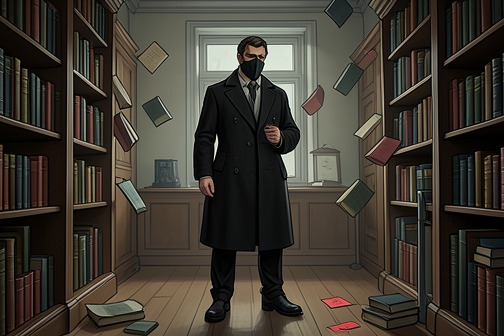
The [Library Kanima Attack](entity:event-recall-event-kanima-da39b01e8751) is a major revelation in the supernatural crisis at [Beacon Hills High School](entity:location-recall-location-beacon-hills-high-sc-be2f7e6a1c50): [Jackson Whittemore](entity:character-recall-character-jackson-whittemore-120cc2b873d5) attacks the library, displays unmistakable [Kanima](entity:creature-recall-creature-kanima-00fa600e686e) traits, leaves a direct threat for the people pursuing him, and escapes before the group can stop him. The scene turns suspicion into recognition. Jackson is no longer merely connected to the killings or suspected of being controlled; in the library, his human and reptilian identities visibly overlap, making him the immediate danger the others must confront.
## Causes and Background
The attack occurs while [Carson Bradley](entity:character-recall-character-carson-bradley-e17d1b9b17c6), [Stiles Stilinski](entity:character-recall-character-stiles-stilinski-12e2b3c432f2), [Allison Argent](entity:character-recall-character-allison-argent-bcc580b16b14), and [Scott McCall](entity:character-recall-character-scott-mccall-7740871d71c9) are trying to investigate the Kanima and determine how to contain it. Their work is already shaped by uncertainty: the creature has been associated with paralysis, unexplained attacks, and a shifting identity, while the group lacks a reliable way to predict where it will strike next. The library therefore functions as both an investigative space and a temporary refuge, a place where the teenagers are attempting to turn scattered clues into a usable understanding of the threat.
The danger becomes concrete when a crash erupts several aisles away. A fluorescent light falls in a shower of glass and sparks, ceiling panels and books come down, and something races across the tops of the shelves. The disturbance is not a random disruption of the investigation. Scott immediately recognizes the presence of [Erica Reyes](entity:character-recall-character-erica-reyes-f740eb816f3b) through his shout, followed by a feral growl, linking the attack to the vulnerable members of the supernatural conflict as well as to the Kanima’s larger campaign.
## The Attack in the Library
Jackson leaps over a shelf above Carson Bradley, Stiles Stilinski, and Allison Argent, sending more books and ceiling panels crashing down. The light shatters and the library loses its illumination as Stiles pulls [Carson](entity:character-recall-character-carson-24b1f76a12e7) and Allison to the floor, covering their heads with his arms. The gesture turns the ordinary library into a space of immediate physical survival: shelves, fixtures, and the creature itself become hazards, while the group can do little more than endure the chaos and watch for an opening.
Scott McCall falls into the aisle with them, and the attackers’ identity becomes visible near the chalkboard. Jackson remains in human form, but green scales are spreading across his skin, and his eyes have begun to take on reptilian features. The transformation is significant precisely because it is incomplete. Jackson does not disappear behind a wholly separate monster body; the scene makes the Kanima’s presence legible through a human face and a changing body, showing the two identities as violently superimposed.
Jackson then drags his claws across the green material near the chalkboard and leaves a message: "Stay out of my way or I'll kill all of you." The threat changes the encounter from a defensive struggle into an explicit warning. The Kanima is not simply attacking whoever happens to be nearby; it is addressing the people who are investigating and obstructing it, asserting control over the conflict and making their pursuit personally dangerous.
After leaving the warning, Jackson propels himself forward and crashes through the window, escaping into the outside world. The broken window marks the attack’s abrupt reversal. The group survives the assault, but survival does not equal victory: Jackson has demonstrated his identity, issued a threat, and chosen the moment of his departure. His escape preserves the central danger even after the revelation, because the knowledge that Jackson is the Kanima does not provide the means to capture or cure him.
## Immediate Consequences
The attack’s most serious immediate consequence falls on Erica Reyes. Once Jackson has fled, the group begins to move forward in confusion, but Carson Bradley hears choking and discovers [Erica](entity:character-recall-character-erica-8e76eccafb59) seizing on the floor. The Kanima has apparently caught [Matt Daehler](entity:character-recall-character-matt-daehler-7dd68a09c6ac) with its venomous claws as well, and Allison Argent checks on him while Carson, Stiles Stilinski, and Scott McCall respond to Erica’s condition. The scene therefore divides the aftermath between two victims of the same assault: Matt is alive after being struck by the venom, while Erica’s seizure suggests that the attack has triggered a medical and supernatural crisis at once.
Carson Bradley rushes to Erica despite their intense hostility. She holds Erica, tries to place her on her side, restrains her arms as best she can, and calls out that Erica is having a seizure. Her response establishes a sharp contrast between rivalry and responsibility. Carson does not excuse Erica’s behavior, but she refuses to treat hatred as permission to abandon someone in danger. The bite that was expected to cure Erica’s epilepsy has not protected her from this new crisis; instead, the attack raises the frightening possibility that her supernatural condition and her former illness are interacting in ways the group does not understand.
The group’s next priority is evacuation and medical care. Carson tells the others that Erica must be taken to a hospital immediately, while Allison confirms that Matt is alive. The library attack thus produces more than a revealed identity: it leaves the investigators with an injured ally, another venom-struck victim, a damaged school space, and an escaped Kanima who has openly declared them targets. Its decisive value shift is from investigation to emergency, and from uncertainty about the creature’s identity to certainty about the danger Jackson represents.
## Recognition and Investigative Consequences
The library attack also completes a pattern that had been assembling across earlier encounters. The group had already seen the giant lizard creature kill a worker with a clawed, scaly hand and tail strike, while its venom left Stiles Stilinski nearly paralyzed and forced Carson Bradley to call the police. At another confrontation, clear ooze on a window sill marked the creature’s presence before it entered the building. Those physical traces had established the Kanima as a recurring predator, but the library supplies the missing human connection: Jackson Whittemore is seen in the middle of the transformation, no longer separable from the monster they have been tracking.
That discovery gives new meaning to the group’s failed research. [Carson Bradley and Stiles Stilinski](entity:relation-recall-relation-carson-bradley-stile-fe2b2021ba78) had searched online for the Kanima, its legends, a shape-shifter, and even a giant lizard that could not swim, finding almost nothing useful; the only remotely relevant result concerned a were-jaguar. The bestiary on Stiles’s laptop contained words Carson could not understand, and ordinary online translation offered no dependable solution. The library scene exposes the limits of searching for a clean mythological category. The answer is not reached through a complete legend or a convenient database entry, but through a violent encounter in which Jackson’s body itself becomes evidence.
The attack also sharpens the investigation into Matt Daehler. Allison Argent finds Matt alive after Jackson’s venomous claws catch him, but later surveillance and physical evidence connect him to the killings. At the hospital, the investigators review footage from the night Jessica was murdered, despite the difficulty of searching a facility crowded by a six-car pileup. Shoeprints beside tire tracks at the trailer park, together with a credit-card receipt signed by Matt at the garage when the mechanic was killed, place him at three scenes and possibly four. In this wider evidentiary chain, the library is the point where Jackson’s identity becomes visible while Matt’s role as the person behind the Kanima remains to be established through records, footage, and scene evidence.
## Wider Stakes and Response
The attack leaves the group with a problem that cannot be solved by recognition alone. Jackson has escaped through the window, Erica Reyes is suffering a seizure, and Matt Daehler has been struck by venom. Their response therefore shifts toward containment and specialized assistance. In the [Beacon Hills veterinary office](entity:location-recall-location-beacon-hills-veterin-a83bc7d4fc28), [Deaton](entity:character-recall-character-deaton-d386b883cb01) presents a small bottle and a spring-loaded syringe intended to help with the Kanima problem. Although the group knows little about Deaton, his repeated help to Scott McCall has made him a trusted guide within their supernatural crisis. The practical tools he supplies represent a movement from speculation toward intervention, even though the library encounter has shown how quickly any plan can collapse into rescue.
The scene also exposes the danger of treating supernatural conflict as a private school problem. The library is a public institutional space, yet the attack destroys its ordinary protections: lighting breaks, shelves become unstable, glass falls, and a creature crosses the room with enough force to escape through a window. The teenagers are forced to act as investigators, witnesses, protectors, and emergency responders at the same time. Stiles Stilinski’s instinctive effort to shield [Carson Bradley and Allison Argent](entity:relation-recall-relation-carson-bradley-allis-65f04bc726a0), Carson’s decision to care for Erica despite their rivalry, and Scott McCall’s return to the aisle all show a group improvising moral and physical coordination under pressure.
Jackson’s threat is particularly important because it is both public and selective. He does not merely attack in silence; he writes that anyone who stands in his way will be killed. The message turns the library into a declaration of war against the people trying to understand him and stop the killings. Yet the later conversation between Carson Bradley and Jackson complicates the threat. Carson tells him that, beneath the harm he has caused, he is a good person, and argues that [Lydia Martin](entity:character-recall-character-lydia-martin-632f28e7f863) is the person he has truly cared about. Jackson admits that Carson has reason to judge him because he once broke up with her for her best friend, but her assessment separates the human being from the Kanima’s violence without denying the damage he has done. The library’s monster revelation therefore opens, rather than closes, the question of agency: Jackson is visibly the creature, but the forces governing his actions remain part of the mystery.
## Narrative Significance
As an event, the Library Kanima Attack is a discovery, pursuit, and rescue sequence compressed into one escalating scene. Its movement is built from successive ruptures: the crash, the falling light, Jackson’s leap, the partial transformation, the written threat, the escape, and Erica Reyes’s seizure. Each turn removes another layer of safety. The investigators begin by trying to organize information; they end by confronting an identified enemy, treating casualties, and accepting that the threat can reach them even inside a place devoted to study and order.
The attack’s strongest reversal lies in the contrast between Jackson’s human appearance and his reptilian emergence. Earlier evidence could support multiple theories about an unknown creature, but the green scales and altered eyes make the answer immediate and undeniable. At the same time, the incomplete transformation preserves ambiguity. Jackson is not presented as a distant beast with no connection to the people around him; his recognizable body carries the Kanima’s features, and his message gives the creature language and intention. The scene consequently changes the central question from what the Kanima is to who controls it, what Jackson remembers, and whether the person beneath the transformation can still be reached.
The aftermath sustains that tension through competing forms of recognition. The group recognizes Jackson, but does not yet possess a cure. Carson Bradley recognizes Erica’s vulnerability, but cannot resolve the hostility between them. The investigators accumulate evidence against Matt Daehler, but the library itself offers only a living body, a threat, and an escape route rather than a complete explanation. The attack is therefore decisive without being conclusive: it converts uncertainty into a target while multiplying the medical, investigative, and ethical consequences of pursuing him.
Event 28
Sheriff Stilinski's suspension
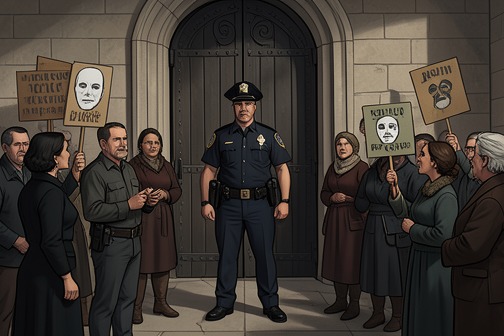
[Sheriff Stilinski's suspension](entity:event-recall-event-61d57642935b), formally described as a leave of absence, marks a decisive collapse of institutional protection in [Beacon Hills](entity:location-recall-location-beacon-hills-dbaca5be6a9f). The action follows the discovery that [Stiles Stilinski](entity:character-recall-character-stiles-stilinski-12e2b3c432f2) has stolen a police vehicle and is subject to a restraining order filed by the town's most respected attorney. Rather than treating the crisis as an emergency requiring discretion, county authorities interpret the sheriff's connection to his son's conduct as a public and professional liability.
## Causes and Institutional Pressure
The immediate background is the teenagers' attempt to contain [Jackson Whittemore](entity:character-recall-character-jackson-whittemore-120cc2b873d5) after his transformation into the [Kanima](entity:creature-recall-creature-kanima-00fa600e686e). [Carson Bradley](entity:character-recall-character-carson-bradley-e17d1b9b17c6), Stiles Stilinski, and [Scott McCall](entity:character-recall-character-scott-mccall-7740871d71c9) use a stolen police vehicle to keep Jackson from hurting anyone, an act [Carson](entity:character-recall-character-carson-24b1f76a12e7) recognizes as illegal even while understanding its protective purpose. The improvised detention places the teenagers outside normal procedure: they are trying to prevent violence, but they do so by appropriating the very machinery of law enforcement.
The pressure on [Sheriff Stilinski](entity:character-recall-character-sheriff-stilinski-55cc58b45e12) is intensified by the school administration's new power structure. On [Gerard Argent](entity:character-recall-character-gerard-argent-7004a9b95df1)'s first day as principal, he announces that at least two students will take the fall and remain behind for detention, presenting discipline as a means of establishing his authority. Gerard Argent's arrival is itself unsettling because he replaces Principal Stevens and approaches the teenagers with a calculated performance of friendliness. The school therefore becomes another institution in which control is asserted through punishment, surveillance, and selective blame.
## What Happens
When Stiles Stilinski and Carson Bradley leave the Stilinski residence, Sheriff Stilinski is shown exiting his police cruiser with a depressed expression. Stiles Stilinski tries to hurry past him, saying that he cannot talk, and Sheriff Stilinski does not stop him or question his destination. The unusual lack of parental and professional intervention signals that something has already changed before the explanation is given.
Sheriff Stilinski then tells Stiles Stilinski that the county decided the son of a police chief stealing police property, combined with a restraining order filed against him by a prominent attorney, reflected badly on the county. Stiles Stilinski immediately interprets the statement as meaning that his father has been fired. Sheriff Stilinski corrects him by calling it a leave of absence and insists that it is temporary, but he also admits that the authorities never actually said it was temporary. The distinction is therefore legally and emotionally unstable: the official language softens the punishment without guaranteeing reinstatement.
The scene's value shift is especially sharp because Sheriff Stilinski's authority has previously represented access, protection, and practical knowledge. Here, his police cruiser and office no longer provide security. The same institutional connection that allowed the teenagers to act in an emergency becomes the evidence used against him, turning familial loyalty into professional vulnerability.
## Surveillance, Detention, and Escalation
The suspension occurs amid an expanding network of observation and confinement. [Beacon Hills High School](entity:location-recall-location-beacon-hills-high-sc-be2f7e6a1c50) is covered by large white cameras monitoring hallways, classrooms, the cafeteria, the pool, and the gym. Carson Bradley understands the cameras as part of the [Argent family](entity:organization-recall-organization-argent-family-fee3b8ad96a1)'s effort to enforce the separation between [Scott McCall and Allison Argent](entity:relation-recall-relation-scott-mccall-allison-b5e67a4b332d), but the result is broader than supervision of one relationship: ordinary school life becomes a field of continual visibility.
Detention reinforces the same structure at a smaller scale. Carson Bradley, Stiles Stilinski, Scott McCall, [Allison Argent](entity:character-recall-character-allison-argent-bcc580b16b14), Jackson Whittemore, and [Matt Daehler](entity:character-recall-character-matt-daehler-7dd68a09c6ac) are gathered under school authority, while Jackson Whittemore points out that he has a restraining order against the others. The legal order, the school punishment, and the police response overlap without resolving the underlying supernatural danger. Rules multiply, yet the people enforcing them remain unable to provide a safe or coherent answer to the crisis.
The breakdown becomes openly violent during the police-station hostage situation. Matt Daehler forces Carson Bradley down a hallway with a gun pressed against her back, intending to take four people hostage and permitting Jackson Whittemore to kill if necessary. In the holding room, Stiles Stilinski is compelled to handcuff his father to a bench while Matt Daehler aims the gun at both of them. The sheriff's workplace has thus been converted from a site of lawful protection into a hostage environment, while Sheriff Stilinski himself is rendered physically powerless before his son and classmates.
## Consequences and Significance
For Stiles Stilinski, the suspension is not an abstract administrative penalty. He receives the news while holding Carson Bradley's hand, but he does not squeeze back, and his expression becomes grim when he understands that his father may have lost his position. The event turns the supernatural conflict into a family crisis: Stiles Stilinski's efforts to respond to danger have helped damage the career and stability of the parent who ordinarily represents the law.
For Sheriff Stilinski, the leave of absence removes the adult authority most closely connected to the teenagers' world. The wording preserves the possibility of return, but the absence of any actual promise makes that possibility precarious. The county's decision also reveals a central contradiction in Beacon Hills: official institutions demand obedience to ordinary law even when ordinary law is inadequate to the threats confronting the town, then punish the people whose illegal actions arise from that inadequacy.
The suspension therefore functions as a hinge between civic order and emergency improvisation. Gerard Argent can impose discipline at the school, cameras can make students feel watched, restraining orders can regulate movement, and police procedures can remove Sheriff Stilinski from office; none of these mechanisms prevents the Kanima's violence or the hostage crisis. The event's lasting significance lies in that contrast. Authority remains visible everywhere, but its protective capacity has been steadily hollowed out.
Event 29
Beacon Hills仓库狂欢夜
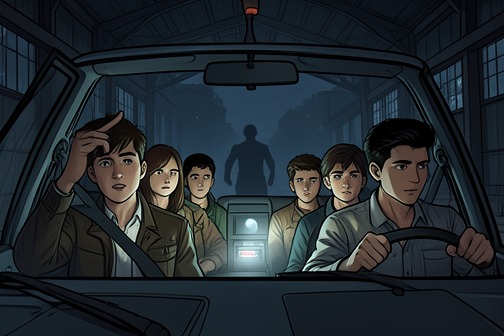
[Beacon Hills](entity:location-recall-location-beacon-hills-dbaca5be6a9f) Warehouse Rave is the night when the promised freedom of a warehouse party collapses into a supernatural siege and a hostage operation. [Carson Bradley](entity:character-recall-character-carson-bradley-e17d1b9b17c6) enters the episode expecting an expensive, inconvenient rave; she leaves it having witnessed gunfire, confronted the [Kanima](entity:creature-recall-creature-kanima-00fa600e686e)’s human identity, and helped survive a crisis in which ordinary teenage space is overtaken by police power, hunter violence, and monstrous transformation.
## Causes and Background
The rave is introduced as an event that Beacon Hills teenagers are expected to attend despite its implausibility and expense. In the backseat of [Stiles Stilinski](entity:character-recall-character-stiles-stilinski-12e2b3c432f2)’s Jeep, [Carson](entity:character-recall-character-carson-24b1f76a12e7) hears [Scott McCall](entity:character-recall-character-scott-mccall-7740871d71c9) explain that he failed to obtain tickets, which cost seventy-five dollars each. [Jackson Whittemore](entity:character-recall-character-jackson-whittemore-120cc2b873d5) is apparently going, however, and Scott insists that they must watch Jackson and identify his master. The party therefore begins as a social occasion but is already framed as an investigative operation: attendance is not motivated by entertainment alone, but by the possibility that Jackson’s connection to the Kanima will become visible there.
The preparations also expose the broader climate of control surrounding the teenagers. After [Gerard Argent](entity:character-recall-character-gerard-argent-7004a9b95df1) takes over as principal, Carson, Stiles, and Scott encounter him in the school office, where he presents himself as a supportive administrator while immediately requiring at least two students to accept detention. [Gerard](entity:character-recall-character-gerard-53aeabf16f28)’s authority is both institutional and threatening: the new principal is also a hunter, and his presence places school discipline inside the larger conflict between the [Argent family](entity:organization-recall-organization-argent-family-fee3b8ad96a1) and the werewolves. At the school library, Carson notices large white cameras monitoring hallways, classrooms, the cafeteria, the pool, and the gym. The cameras are ostensibly connected to the restriction keeping Scott and [Allison Argent](entity:character-recall-character-allison-argent-bcc580b16b14) apart, but their ubiquity makes the school feel less like a protected community than a continuously observed enclosure.
The party’s danger is therefore prepared by several overlapping forms of exceptional authority. Gerard can convert detention into punishment, the Argents can turn school space into a monitored perimeter, and Carson and Stiles can justify stealing a police vehicle because they need to prevent Jackson from hurting anyone. Their illegal intervention is presented as an emergency response to a threat that conventional institutions have not contained.
## The Night’s Escalation
Carson and Stiles reach the warehouse after receiving instructions from [Erica Reyes](entity:character-recall-character-erica-reyes-f740eb816f3b) and [Isaac Lahey](entity:character-recall-character-isaac-lahey-4fcaad0314c9). They understand that Jackson is being held hostage somewhere inside, although the circumstances remain unclear, and they follow the messages to a room where the supernatural conflict has been temporarily converted into a clandestine detention. Before this search, Carson and Stiles have also been forced into the practical role of containing Jackson in a stolen police van. Jackson is unconscious inside it, and Scott has had to punch him repeatedly to keep him from hurting someone. The absurdity of describing this as “babysitting” does not lessen the danger; it emphasizes how badly the teenagers’ improvised safeguards have displaced normal adult protection.
At the rave, Carson’s relationship with Stiles briefly supplies the warmth and intimacy that the party itself cannot provide. While they wait together, Stiles keeps her warm, kisses the top of her head, and laughs when she jokes about his appeal. Their physical closeness contrasts sharply with the violence gathering around them. The same night that permits a private moment between them also demands that they stand outside with a limited supply of mountain ash while [Derek Hale](entity:character-recall-character-derek-hale-f259fdd07b23)’s pack and the Argent hunters clash nearby.
[The supernatural](entity:concept-recall-concept-the-supernatural-b0cadf182c10) threat becomes unmistakable when loud popping sounds interrupt Stiles’s phone call. He recognizes the noise as gunfire, followed by a large growl, and concludes that the Argents may be fighting Derek and his pack. Stiles and Carson are left outside with only a small amount of mountain ash, trying to maintain a protective barrier while the conflict intensifies. The party’s expected noise is thus replaced by the more consequential sounds of weapons and werewolves. A setting associated with music, crowds, and adolescent release becomes a defensive position at the edge of a supernatural battle.
## Monsters, Identity, and Recognition
The Kanima’s presence links the warehouse crisis to the earlier attacks on Carson and her friends. At Carson’s home, the creature appeared as an oversized lizard taller than her, with reptilian eyes, a long tail, scaly skin, and rows of sharp teeth. Later, when Carson, Stiles, and Derek are confronted indoors, the creature climbs a balcony fence, shrieks, drops to its hind legs, and then falls onto all fours. Its tail strikes [Erica](entity:character-recall-character-erica-8e76eccafb59), knocking her unconscious, before Derek orders the others to run. The monster is not merely a rumor surrounding the rave; it is a physical force capable of invading enclosed human spaces and abruptly changing the balance of power.
The most decisive revelation comes when Jackson speaks about the people who supposedly murdered him. Asked who was murdered, he answers that it was him. His uncaring green eyes then change into fiery orange reptilian eyes, while his hands develop green scales and claws and paralytic venom drips from him. The transformation makes the contradiction literal: Jackson is simultaneously the teenager whose death is being discussed and the creature carrying out the violence. Carson and Stiles respond by calling for more ketamine, treating the transformed boy as an immediate medical and physical danger while also recognizing that the danger cannot be separated from Jackson’s identity.
The Kanima’s identity is not finally resolved through force alone. Later, when the creature attacks, [Lydia Martin](entity:character-recall-character-lydia-martin-632f28e7f863) holds out a key that appears to trigger its memory. The reptilian features begin to disappear, Jackson’s eyes lose their monstrous surface, and he takes the key from Lydia while still covered in scales and retaining claws. This partial reversal changes the meaning of the creature. Jackson is not erased by the Kanima form; the human figure remains visible within it, and Lydia’s key establishes a connection between the monster and a personal history that violence could not reach.
## Hostage Crisis and Consequences
The warehouse-night crisis ultimately extends into a police-station hostage situation. Carson is forced down a hallway with [Matt Daehler](entity:character-recall-character-matt-daehler-7dd68a09c6ac) only inches behind her, a gun pressed against her back. Matt intends to take Carson, Stiles, Scott, and another captive hostage, and he is willing to let Jackson kill people in order to achieve that goal. The threat is therefore controlled by two linked forms of violence: Matt’s gun and the Kanima’s body. Carson cannot run or fight back because the immediate demand is obedience, while Matt treats the situation as entertainment and smiles at the fear he has created.
Stiles is made to handcuff his father, [Sheriff Stilinski](entity:character-recall-character-sheriff-stilinski-55cc58b45e12), to a bench while Matt keeps the gun trained on them. The scene turns the police station from a place of protection into the site of captivity, and it forces Stiles to use the instruments of law against his own father under coercion. Carson stands nearby with Scott as Matt’s finger moves along the trigger, making the possibility of execution feel immediate. The teenagers’ earlier theft of a police vehicle and the later hostage crisis form a grim reversal: improvised attempts to contain Jackson lead into the very institutional space that Matt has seized.
The night’s concluding recognition does not restore normality. Jackson can momentarily return toward human form when confronted with Lydia’s key, but the scales and claws remain, and the emotional connection between them is fragile and frightening. [Peter Hale](entity:character-recall-character-peter-hale-c763a42ea8fd) watches from the sidelines as Jackson lowers the key and steps away from Lydia, suggesting that the encounter has become part of a larger supernatural struggle rather than a private reconciliation. The warehouse rave consequently leaves several structures damaged at once: the boundary between party and battlefield, the boundary between teenager and monster, and the boundary between public protection and coercive control.
Event 30
山灰屏障的形成
The formation of the [Mountain Ash Barrier](entity:action-recall-action-mountain-ash-barrier-70a6e6f63027) is a decisive defensive achievement: what begins as a limited supply of [Mountain Ash](entity:object-recall-object-mountain-ash-f0d8edf1dedf) becomes a continuous supernatural boundary when [Stiles Stilinski](entity:character-recall-character-stiles-stilinski-12e2b3c432f2) accepts that he can complete the task. [Deaton](entity:character-recall-character-deaton-d386b883cb01) provides the material and assigns Stiles exclusive responsibility for creating the barrier, but the scene’s crucial transformation is psychological as well as physical. At the moment when failure seems certain, [Carson Bradley](entity:character-recall-character-carson-bradley-e17d1b9b17c6) urges Stiles to believe in his own ability; Stiles then makes the remaining ash spread far beyond what its quantity appears to permit, producing the finished line needed for the group’s defense.
## Preparation and Supernatural Method
Deaton arrives with equipment intended to address the [Kanima](entity:creature-recall-creature-kanima-00fa600e686e) problem, including a small bottle and a spring-loaded syringe that [Scott McCall](entity:character-recall-character-scott-mccall-7740871d71c9) identifies as ketamine. Alongside the sedative, Deaton presents a small jar filled with what initially looks like black sand. Its unusual symbol and dark contents make it seem obscure rather than useful, but Deaton identifies it as Mountain Ash and explains that it will be used to create the barrier. The material is not presented as an ordinary tool whose effect is self-evident; its purpose depends on a supernatural method that the group must carry out correctly.
Deaton specifically assigns the Mountain Ash task to Stiles, emphasizing that it is for him alone. The instruction places the practical and symbolic burden of the defense on the one member of the group who is not a werewolf. Stiles immediately recognizes the pressure of that arrangement and questions whether he can be given a less demanding responsibility, while Scott and [Carson](entity:character-recall-character-carson-24b1f76a12e7) answer his reluctance with a shared look rather than a detailed explanation. The scene therefore establishes the barrier as an act requiring personal agency, not merely the mechanical distribution of a protective substance.
## The Failed Expectation
The group initially believes that the work is nearly complete when they round the last corner of the warehouse. Stiles reacts with excitement as the apparent final stretch comes into view, but the warehouse’s perimeter proves longer than Deaton had estimated. The discrepancy becomes critical: while the group is walking, the Mountain Ash begins to pour only lightly instead of flowing in the heavy stream seen earlier. The task changes from a controlled procedure into a race against depletion.
Stiles checks the bag and finds that the remaining ash barely fills his hand. Fifty feet still separate him from the point where he began, even though that starting point is visible. The physical nearness of the endpoint intensifies the failure rather than relieving it: the group can see how close the line is to completion, yet the material needed to finish it is almost gone. Stiles responds with disbelief and asks what he is supposed to do, and the barrier appears to be moving from possible protection toward certain vulnerability.
## Belief as Action
Carson answers the apparent impossibility by telling Stiles to believe. Stiles treats the idea as absurd, but Carson grounds the instruction in Deaton’s earlier requirement and then makes it personal: Stiles must believe that he is capable of making the tiny handful of Mountain Ash cover the remaining distance, because Carson knows that he can succeed. The encouragement does not replace the supernatural rule; it gives Stiles the confidence needed to act within it.
The scene also introduces imagination as a practical instrument. Carson points toward the instruction to imagine the barrier working, and a bumper sticker nearby reads, “[Imagination is more important than knowledge](entity:expression-recall-expression-imagination-is-mor-7741d6d44a7f). -Einstein”. The moment contrasts measurable resources with an ability that cannot be weighed in the bag. Stiles has evidence that the Mountain Ash is insufficient, while Carson asks him to act on a different kind of knowledge: trust in his own capacity and in the possibility that the supernatural material will respond to that conviction.
Stiles closes his eyes, draws in a breath, and begins walking with the remaining ash clenched in his palm. The ash drizzles out as he advances, then stops when he releases it. Carson walks beside him and repeats the idea of imagining the result internally, while recognizing that Stiles is the person who must produce it. The supportive presence of Carson and Scott matters, but the action cannot be delegated. Stiles must cross the final distance himself.
## Completion and Consequences
For a moment, Stiles assumes the attempt has failed and reacts with frustration. Carson then looks down and sees a solid, connected line of Mountain Ash extending across the ground. There are no breaks or gaps: the boundary has been completed despite the small amount that remained in Stiles’s hand. The discovery reverses the scene’s earlier value shift. The group had moved from confidence to near-defeat when the supply ran out; Stiles’s act changes that defeat into effective protection.
Stiles’s achievement confirms that the Mountain Ash Barrier depends on more than quantity. Deaton supplies the substance and the rule, but Stiles supplies the concentrated act of belief that makes the remaining material sufficient. The result gives the group a defensive structure against the Kanima problem and establishes Stiles as an active supernatural problem-solver rather than a bystander protected by werewolves. The completed line is therefore both a literal boundary and proof that his non-werewolf abilities—imagination, judgment, persistence, and the willingness to act under pressure—can determine the outcome of a supernatural confrontation.
## Narrative Significance
The event turns a technical supernatural procedure into a test of trust. Deaton’s authority establishes the conditions, Scott accepts the equipment and participates in the preparation, and Carson’s confidence enables Stiles to continue when the evidence seems to show that continuation is impossible. The barrier’s formation thus belongs to the group as a cooperative defense, while its decisive execution belongs to Stiles alone.
Its dramatic force comes from the gap between expectation and result. The group expects the final sixty feet to be manageable, then learns that the warehouse perimeter has been underestimated; Stiles expects the remaining handful of ash to be useless, then discovers that it can form a perfect continuous strip. The scene’s conclusion does not erase the earlier shortage. Instead, it gives that shortage meaning by showing that the apparent limit was the point at which Stiles had to convert belief into action. The Mountain Ash Barrier consequently becomes a compact emblem of the group’s wider struggle: survival depends not only on supernatural power or specialized knowledge, but also on the courage to act when both appear insufficient.
Event 31
Kanima identity and victims' motive revealed
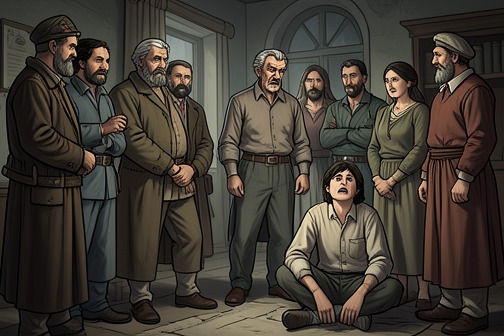
[Kanima identity and victims' motive revealed](entity:event-recall-event-74741e997ca6) is the investigation's decisive recognition scene: [Jackson Whittemore](entity:character-recall-character-jackson-whittemore-120cc2b873d5) is shown to be the [Kanima](entity:creature-recall-creature-kanima-00fa600e686e), while the killings are framed through the creature's belief that its victims deserve punishment. The revelation does not simplify the crimes into ordinary murder. Instead, it separates the Kanima's body, the hidden controlling will behind it, and the remembered grievance that gives the violence its moral language.
## Discovery Through Jackson's Body
The immediate breakthrough occurs while Jackson is incapacitated after ketamine has been used in an attempt to keep him unconscious. His eyes suddenly open and roll upward, and his neck twitches. When he speaks, the voice is rougher and deeper than Jackson's familiar voice, announcing that he is present while the others remain with him. The altered speech makes Jackson's body seem occupied rather than merely awake, and it signals that the investigation has reached the person—or force—behind the attacks.
The questioning then produces the event's central reversal. Asked whether he is the one killing people, the presence answers that “We're the ones killing murderers,” insisting that every person killed deserved it. The plural pronoun leaves the controlling relationship unresolved, but it establishes a punitive rationale: the violence is presented as retribution rather than random predation. The claim becomes still more disturbing when the presence explains that the victims had murdered “Me.” The Kanima's motive is therefore tied to a prior death and to a grievance expressed from the position of someone who considers the killings an answer to having been murdered.
The physical confirmation follows almost immediately. Jackson's eyes change from his ordinary green to fiery orange reptilian eyes; green, scaly markings spread across his hands; his claws extend; and paralytic venom begins to drip from him. These visible changes identify the Kanima without relying only on testimony. They also make the revelation bodily and unstable: the apparently unconscious Jackson is simultaneously the familiar teenager and the venomous creature the group has been pursuing.
## The Murder Pattern and Its Evidence
The revelation gains investigative force from evidence gathered before Jackson's transformation. The former sheriff establishes that the mechanic and the murdered couple shared a common connection, prompting the detectives' recurring rule that one incident is an incident, two are a coincidence, and three form a pattern. The pattern shifts the case away from isolated supernatural attacks and toward deliberate selection of victims.
Later, the investigation at the former sheriff's desk turns physical evidence into a chain linking [Matt Daehler](entity:character-recall-character-matt-daehler-7dd68a09c6ac) to the crime scenes. Shoeprints and tire tracks place Matt at the trailer-park murders, while additional evidence connects him to the hospital and the rave. A credit-card receipt signed by Matt at the [Mechanics garage](entity:location-recall-location-mechanics-garage-c4ba352e39a7) offers a possible fourth connection, where the mechanic was killed. The case thus develops through a contrast between visible violence and indirect human traces: the Kanima supplies the claws, venom, and bodies, while the evidence points toward a person who may be directing or enabling it.
The hospital footage search emphasizes how difficult that distinction is to prove. The group reviews surveillance from the night Jessica was murdered, but the hospital's crowded conditions—including a six-car pileup—make the footage difficult to read. The absence of an immediate image of Matt does not erase the other evidence; it instead preserves uncertainty around how he moved through the killings and how much of the Kanima's violence should be attributed to its controller.
## Earlier Encounters Reinterpreted
The identity revelation retrospectively clarifies the earlier attacks. At the auto shop, a clawed, scaly hand reaches down where a worker is standing, a tail strikes the back of the worker's neck, and the mechanic collapses. The creature's yellow eyes and hissing cry mark the attack as recognizably nonhuman, while the venom's paralytic effect appears again when [Stiles Stilinski](entity:character-recall-character-stiles-stilinski-12e2b3c432f2) is left barely able to move and can only rasp out a request for emergency help. The event establishes the Kanima as both physically lethal and capable of disabling witnesses before completing its attack.
A later confrontation provides another version of the same threat. Clear ooze is found dripping from a window sill at the rave, echoing the residue discovered at the auto shop. The repeated substance becomes a material signature, linking separate locations before the creature's identity is confirmed. Its recurrence turns atmosphere into evidence: the Kanima's presence can be tracked through the venom it leaves behind, even when the creature itself remains hidden.
The earlier attacks also explain why the Jackson revelation carries such force. The group has been responding to a creature that seems to act independently, yet Jackson's altered body shows that the monster is not simply an external intruder. The attacks have been connected to a human identity, a controlling bond, and a history of grievance. The apparent monster hunt therefore becomes an inquiry into agency and responsibility.
## Consequences for Jackson and the Investigation
Once Jackson is recognized as the Kanima, the group must confront the difference between the boy they know and the creature acting through him. The revelation does not automatically establish that Jackson consciously chose the murders. His transformation occurs while the others are trying to keep him sedated, and the voice that answers them is not the arrogant voice associated with Jackson. The scene instead presents possession or control as a central problem, leaving the human body implicated without making its will transparent.
The motive also complicates the victims' status. The Kanima claims that every victim was a murderer and that each had killed the Kanima itself. That claim may offer an internal logic for the attacks, but it does not settle the factual or ethical question of whether the victims deserved death. The creature's language converts murder into punishment, while the investigators are forced to test that justification against records, locations, surveillance, and physical traces. The result is a conflict between a supernatural avenger's certainty and the slower standards of investigation.
The post-revelation search consequently turns toward Matt Daehler. After leaving [Lydia Martin](entity:character-recall-character-lydia-martin-632f28e7f863)'s party, [Carson Bradley](entity:character-recall-character-carson-bradley-e17d1b9b17c6), Stiles Stilinski, and [Scott McCall](entity:character-recall-character-scott-mccall-7740871d71c9) review hospital surveillance with the former sheriff and assemble the links between Matt and multiple murders. Stiles Stilinski repeatedly insists that Matt is evil, and Scott McCall responds that Stiles had been right about Matt's danger. The pursuit now has a human target, but Jackson's transformation ensures that capturing the apparent controller will not be the same as resolving Jackson's condition.
## Moral and Relational Significance
The event's moral tension continues into Carson Bradley's assessment of Jackson. Carson Bradley acknowledges Jackson's history of ruining lives and hurting people, including the breakup that ended Carson Bradley's relationship with him and his subsequent relationship with Carson Bradley's best friend, Lydia Martin. Yet Carson Bradley also insists that Jackson is a good person underneath his harsh exterior and argues that Jackson and Lydia Martin genuinely care about each other. The statement refuses to make the Kanima identity the whole of Jackson's character.
That judgment is especially significant because Carson Bradley speaks after learning what Jackson has done and after Jackson himself reminds Carson Bradley of the harm he caused. Carson Bradley does not deny the betrayal or excuse the damage; instead, Carson Bradley distinguishes between Jackson's actions, Jackson's capacity for care, and the creature or controller using his body. Jackson's connection with Lydia Martin becomes a test of that distinction. Carson Bradley believes that, Kanima or not, Jackson is unlikely to hurt the person he has truly cared about.
The revelation therefore changes the story's central question. The issue is no longer only who the Kanima is, but who is speaking through Jackson, whose motives are being enacted, and whether responsibility can be divided between a weaponized body, its controller, and the person trapped within it. By joining forensic clues to a supernatural transformation and a revenge narrative, the event turns the mystery into an ethical struggle over guilt, agency, and the possibility that a dangerous creature may still contain the person its friends are trying to save.
Event 32
Lydia's birthday party incident

[Lydia's birthday party incident](entity:event-recall-event-4f23f196c045) is the decisive transformation of a teenage celebration into a supernatural crisis. Held at [Lydia Martin](entity:character-recall-character-lydia-martin-632f28e7f863)'s house, the party begins with pink punch, crowded rooms, loud music, flirtation, and the promise of ordinary high-school excess; it becomes dangerous when the punch is found to contain wolfsbane and Lydia disappears. The incident therefore joins the social world and the supernatural plot in one space: the same drink that fuels the guests' reckless behavior also conceals a substance capable of threatening werewolves, turning hospitality into contamination and celebration into entrapment.
## Causes and Setting
The incident develops from Lydia's birthday gathering at the [Martin house](entity:location-recall-location-martin-house-df7f5fbc3070). Lydia herself opens the door carrying a tray of pink liquid-filled glasses and wearing an unamused expression, while [Carson Bradley](entity:character-recall-character-carson-bradley-e17d1b9b17c6) arrives with her boyfriend, [Stiles Stilinski](entity:character-recall-character-stiles-stilinski-12e2b3c432f2), who is still distracted after their private make-out session against his Jeep. Their reluctance to leave that intimacy for the party establishes one of the event's characteristic contrasts: personal romance is interrupted by a public gathering, and the apparently frivolous demands of teenage social life soon collide with the group's supernatural responsibilities.
Once the party is underway, Lydia receives the attention she wants. Guests laugh, shout, and enjoy an apparently endless supply of alcohol, while [Scott McCall](entity:character-recall-character-scott-mccall-7740871d71c9) watches [Allison Argent](entity:character-recall-character-allison-argent-bcc580b16b14) with visible depression and Stiles watches Scott rather than participating fully in the celebration. [Carson](entity:character-recall-character-carson-24b1f76a12e7) leans against Stiles and urges Scott to apologize to Allison. These strained romantic and friendship dynamics place emotional conflict inside the party before the supernatural danger is recognized. The gathering is already a space of observation, embarrassment, and unfinished relationships; the later discovery of wolfsbane makes that atmosphere of uncertainty materially dangerous.
The drink becomes significant not merely because it is available, but because its social function encourages people to consume it without suspicion. Carson searches the kitchen for water or soda because the punch has begun to taste bitter, only to find that the refrigerator is occupied by several couples using it as a place to make out. The comic congestion of the kitchen conceals the event's darker structure. Normal alternatives are unavailable, the party's drink is effectively the common refreshment, and the crowd's desire to enjoy itself helps the poison circulate.
## Course of the Incident
The party is described as being in full swing, with nearly everyone present and Lydia enjoying the attention. The atmosphere is loud and communal, but it also produces comic distortions: guests behave erratically after drinking the punch, and Carson observes Greenburg aggressively kissing a potted plant. The incident's grotesque humor does not cancel the danger; it shows how the party's ordinary social boundaries have been loosened before the characters understand why.
Lydia then disappears from her own party. Carson, Stiles, and Scott search the house and surrounding area while the guests remain caught in the consequences of the drugged gathering. Stiles reports that Lydia is not outside, and Carson's attention is drawn to something floating in the punch bowl: small purple flower petals identified as wolfsbane. The discovery changes the meaning of the entire party. What first appeared to be irresponsible drinking is revealed as a deliberate or otherwise deeply consequential exposure to a substance associated with the supernatural conflict.
Carson immediately recognizes the implication and pulls Stiles toward the house to find Scott. When Scott comes running out, she grabs him by the collar and demands an explanation. A scream rises from the crowd of teenagers jumping into Lydia's pool, intensifying the sense that the crisis is spreading through the party rather than remaining confined to the missing host. Carson then states that there is wolfsbane in the punch and asks how Lydia could know about wolfsbane. Scott's widened eyes and gulp indicate that the discovery has connected Lydia, the poisoned drink, and the group's existing knowledge of werewolves in a way none of them can dismiss.
The party's danger is therefore structured as a sequence of reversals. Lydia is first the hostess and center of attention, then the missing person whose disappearance destabilizes the celebration. The punch is first a symbol of abundance, then a possible delivery system for wolfsbane. The guests are first partygoers, then potentially endangered participants in a supernatural trap. Carson's movement from searching for a nonalcoholic drink to identifying the petals and confronting Scott captures the event's rapid shift from adolescent irritation to emergency investigation.
## Participants and Relationships
Carson functions as the incident's most immediate interpreter. Her attention to the bitter taste of the punch and the flower petals allows her to identify the physical clue that the others have not yet noticed. She does not treat the party as a merely social inconvenience: once Lydia disappears, she searches with Stiles and Scott, recognizes the danger, and presses Scott for an explanation. Her behavior places her between ordinary teenage participation and active supernatural investigation.
Stiles remains Carson's closest companion during the search. Their arrival is marked by their romantic intimacy, but the party forces them to redirect that private connection toward a shared investigation. He helps scope the outside area and recognizes, along with Carson, that Lydia is absent. His presence also preserves the incident's characteristic mixture of affection, irritation, and tactical cooperation: the two are physically close while confronting a crisis that neither can reduce to romance.
Scott's role is more conflicted. He is physically present but emotionally fixed on Allison Argent, and Stiles and Carson initially treat his romantic hesitation as the most pressing problem. The discovery of wolfsbane abruptly reorders his priorities. His reaction shows that he understands the substance's significance, even though the available evidence does not yet explain who placed it in the punch or why Lydia vanished. The incident thus moves Scott from passive observation of Allison to active participation in the supernatural emergency.
Lydia is the event's absent center. Her party displays her social power and her appetite for attention, yet her disappearance removes the person who should control the gathering and explain its contents. The question of what Lydia knows becomes inseparable from the question of what has happened to her. Carson's later assessment of Lydia's importance to [Jackson Whittemore](entity:character-recall-character-jackson-whittemore-120cc2b873d5) provides a broader relational context: Carson describes Lydia as someone Jackson still cares about, despite his refusal to admit it, and argues that Lydia's emotional force can break through Jackson's icy exterior. That understanding of Lydia as both volatile and deeply significant makes her disappearance at the party more than a missing-host problem; it threatens one of the few relationships capable of reaching Jackson.
## Consequences and Interpretation
The immediate consequence is the collapse of the party's safety. Guests remain surrounded by contaminated punch, erratic behavior, and a growing supernatural mystery, while the central figure has vanished. The discovery also makes the party a source of evidence. The wolfsbane petals provide a concrete link to the werewolf conflict and force Carson, Stiles, and Scott to ask whether Lydia possesses knowledge of the supernatural, has been manipulated by someone who does, or has become involved in a danger she cannot control.
The incident contributes to the book's recurring contrast between knowledge and ignorance. The group has already learned that supernatural information is difficult to retrieve: the supposed bestiary turns out to be a recipe log, while the actual bestiary is stored on [Gerard Argent](entity:character-recall-character-gerard-argent-7004a9b95df1)'s flash drive and written in strange Latin terms. Carson and Stiles also search unsuccessfully for information about [Kanima](entity:creature-recall-creature-kanima-00fa600e686e), finding no useful entry despite the creature's apparent connection to the Argents' records. Against that background, the wolfsbane in the punch is a small but unmistakable material clue. It does not solve the mystery, but it converts vague suspicion into an investigative fact.
The party likewise anticipates the group's reliance on specialized supernatural guidance. At the [Beacon Hills veterinary office](entity:location-recall-location-beacon-hills-veterin-a83bc7d4fc28), [Deaton](entity:character-recall-character-deaton-d386b883cb01) later provides a small bottle and a spring-loaded syringe, explaining that the equipment will help with the Kanima problem. That later preparation clarifies the atmosphere surrounding Lydia's party: the teenagers are no longer dealing with isolated oddities but with a chain of threats requiring research, tools, and interpretation. The birthday celebration becomes one node in that expanding system of danger.
At the level of form, the event is framed by the work's fan-fiction and serial structure. Its surrounding material includes a playlist featuring songs such as "[Holding Out for a Hero](entity:expression-recall-expression-holding-out-for-a-9e5eb19c73a9)," "[Castle Walls](entity:expression-recall-expression-castle-walls-e1028e4c2a76)," and "[Beside You](entity:expression-recall-expression-beside-you-1c7e4814e297)," as well as authorial notes announcing movement into the fourth season of Teen Wolf and later identifying the chapter as the end of the current story before an epilogue. This framing places the party between an emotionally charged soundtrack and an ongoing promise of continuation. The incident does not close the supernatural world; it ends the illusion that the characters can keep its dangers separate from school, romance, and celebration. In that sense, Lydia's birthday party is not simply a poisoned gathering but a threshold scene: the public teenage world becomes visibly permeable, and the evidence floating in the punch demands that every relationship and every apparent act of chaos be read as part of a larger pattern.
Event 33
Matt is revealed as the Kanima's master
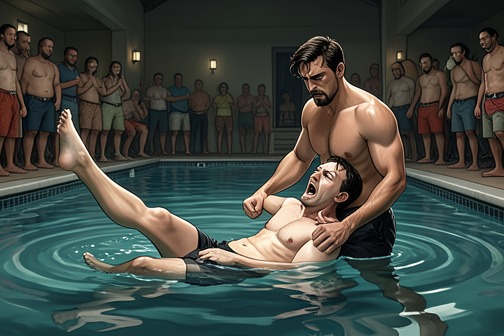
[Matt is revealed as the Kanima's master](entity:event-recall-event-cb8e998dbea9) at the pool, a turning point that gives the killings a human center. Until this moment, the [Kanima](entity:creature-recall-creature-kanima-00fa600e686e) has appeared to be an unidentified and largely incomprehensible predator; afterward, its violence is connected to [Matt Daehler](entity:character-recall-character-matt-daehler-7dd68a09c6ac), whose presence and command relationship explain how the creature can be directed. The revelation also complicates the distinction between victim, controller, and weapon, because Jackson remains the transformed body carrying out the attacks while Matt stands at the center of the bond.
## Discovery at the Pool
The immediate clue comes when Matt Daehler is thrown into the pool and cries that he cannot swim. He resurfaces, thrashes, and disappears beneath the water in a struggle that appears to place him in danger. Before the others can reach him, Jackson pulls him out. Jackson then glares at the surrounding group as though they had attempted to harm his brother and pushes past [Carson Bradley and Scott McCall](entity:relation-recall-relation-carson-bradley-scott-82413e0bf41d) to escape. His sudden loyalty is so striking that [Carson](entity:character-recall-character-carson-24b1f76a12e7) recognizes the relationship as something more than ordinary concern: Matt cannot swim, yet Jackson has acted protectively, almost as though Matt were his master.
The suspicion becomes certainty outside the pool. In the confusion beneath the moonlight, people run through the street while police seize anyone they can, but Matt stands dripping and glaring in the middle of the commotion without attracting general notice. Carson sees what the others miss: the Kanima is on all fours, its tail wrapped around Matt's legs. The creature is not merely near Matt; it is positioned around its master's legs. This visual confirmation converts a speculative inference into an exposed supernatural hierarchy.
## The Investigation Before the Reveal
The discovery follows a period in which the group has struggled even to define the creature. [Scott McCall](entity:character-recall-character-scott-mccall-7740871d71c9) initially comes to school not simply to help the others but to retrieve [Gerard Argent](entity:character-recall-character-gerard-argent-7004a9b95df1)'s flash drive. The object contains the actual [Argent bestiary](entity:object-recall-object-argent-bestiary-91a0adf0a15d), while the book they had mistaken for the bestiary is only a collection of recipes. The recovered material is written in difficult, non-English language, apparently Latin, making the investigation dependent on translation as well as courage.
The research produces no easy answer. [Carson Bradley](entity:character-recall-character-carson-bradley-e17d1b9b17c6) tells [Stiles Stilinski](entity:character-recall-character-stiles-stilinski-12e2b3c432f2) that the bestiary contains literally nothing about a Kanima, despite the implication that a creature old enough to be recorded by the Argents should have left some trace. At Stiles Stilinski's house, Carson and Stiles Stilinski search websites, mythology books, and the laptop after returning from school, still drying off from the events that led them there. [Derek Hale](entity:character-recall-character-derek-hale-f259fdd07b23)'s limited information is not enough to explain what they are facing, and the absence of a reliable description makes the Kanima seem deliberately hidden from established supernatural knowledge.
The group's search is therefore not a straightforward identification exercise. It moves between inherited records, modern research, and physical observation. [Deaton](entity:character-recall-character-deaton-d386b883cb01)'s assistance reflects that same mixture of practical intervention and incomplete explanation: at the [Beacon Hills veterinary office](entity:location-recall-location-beacon-hills-veterin-a83bc7d4fc28), he brings a small bottle and a spring-loaded syringe, saying the equipment will help with the Kanima problem. The device offers a means of restraining the creature, but not yet an account of who directs it or why.
## Human Control and Revenge
The master reveal changes the moral structure of the investigation. Earlier, the perpetrators describe the killings as the work of a collective force, insisting that they are killing murderers and that everyone killed so far deserved it. That claim supplies the violence with a punitive logic rather than presenting it as random slaughter. Once Matt is identified as the person standing behind the Kanima, however, the language of justice becomes inseparable from manipulation. The creature's body is the instrument of punishment, while the human master determines where the instrument is aimed.
The later investigation strengthens the connection between Matt and the murders. The former sheriff checks the evidence files and finds shoeprints alongside tire tracks at the trailer park. If the tracks match, Matt can be placed at three murder scenes: the trailer, the hospital, and the rave. A credit-card receipt signed by Matt at the garage when the mechanic was killed may connect him to a fourth. These details give the pool revelation investigative consequences. The Kanima's presence is no longer the only evidence; Matt's movements and transactions begin to form a human trail behind the monster's attacks.
The reveal also reframes [Jackson Whittemore](entity:character-recall-character-jackson-whittemore-120cc2b873d5)'s conduct. Jackson is not shown merely as an independent killer acting according to instinct. His decision to rescue Matt, his hostility toward those nearby, and the Kanima's physical attachment to Matt together suggest a bond in which Jackson's transformed state is subordinated to another person's will. The result is a divided responsibility: Matt is implicated as the master, while Jackson remains the visibly dangerous body. That division prevents the investigation from treating the Kanima as a self-contained evil and raises the question of how much blame belongs to the controller, the controlled, and the motive that binds them.
## Consequences for the Characters
The revelation intensifies the danger for Carson Bradley, Stiles Stilinski, and Scott McCall because their enemy is no longer an unknown creature hidden somewhere in [Beacon Hills](entity:location-recall-location-beacon-hills-dbaca5be6a9f). Matt is a recognizable person who can move through ordinary spaces, conceal his role, and use Jackson's supernatural body without being immediately identified. Stiles Stilinski's repeated insistence that Matt was evil is retrospectively validated, and the group must now interpret earlier behavior through the knowledge that Matt has been connected to the Kanima's violence.
The discovery also affects the way Carson Bradley understands Jackson. She later tells Jackson that she has known him for a long time and has seen him ruin lives and hurt people, yet still believes that he is good underneath the cruelty. She describes him as ice and [Lydia Martin](entity:character-recall-character-lydia-martin-632f28e7f863) as fire, arguing that Lydia Martin is the person who could melt his exterior. Carson Bradley further insists that, despite Jackson's Kanima identity, she does not think he will hurt Lydia Martin. This judgment does not erase the danger of the master bond, but it preserves a distinction between Jackson's capacity for care and the violence imposed through his transformed condition.
That distinction is especially important because Carson Bradley has personal history with Jackson Whittemore. She acknowledges that he broke up with her for her best friend, but says she has moved on after realizing that the two of them were incompatible. In contrast, she sees Jackson Whittemore and Lydia Martin as a pair whose constant fighting conceals genuine attachment. The master reveal thus enters an existing network of friendship, betrayal, and loyalty rather than remaining only a supernatural puzzle.
## Narrative Significance
As a plot event, Matt is revealed as the Kanima's master is both an anagnorisis and a reversal. The group expects to identify a threatening creature; instead, it discovers a human relationship governing the creature. The apparent rescue at the pool initially points toward Jackson as a protector, but the same act becomes evidence against Matt when read beside the Kanima's tail. A scene of possible drowning consequently turns into a scene of recognition: danger shifts from an unseen monster to a visible master standing within the crowd.
The event's imagery makes control physical. Jackson's body is low to the ground, his tail coils around Matt's legs, and the creature's posture translates an invisible command structure into a visible arrangement of bodies. The Kanima is not simply summoned or described; it is shown bound to Matt in a way that makes the master relationship impossible to dismiss. Against the earlier failure of the bestiary to name or explain the creature, this image supplies the decisive knowledge that research alone could not provide.
The reveal also establishes the [Kanima master bond](entity:rule-recall-rule-kanima-master-bond-0be32410071e) as a central interpretive key for the surrounding murders. Evidence from the flash drive, the failed search for a Kanima entry, Deaton's equipment, the stated doctrine of killing murderers, and the accumulating police records all converge after the pool scene. What began as a search for the identity of a monster becomes an inquiry into vengeance weaponized through supernatural transformation. Matt Daehler's exposure therefore changes not only who the characters fear, but what the story asks them to judge: the creature's violence, the master's will, and the human need to turn punishment into power.
Event 34
警察局人质事件
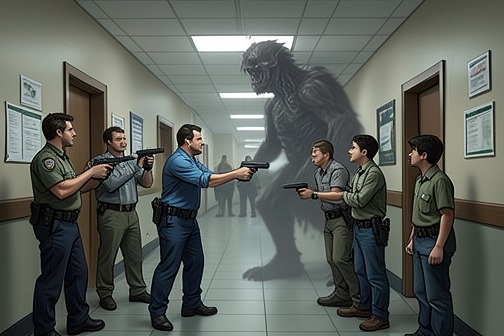
The Police Station Hostage Crisis is the event in which [Matt Daehler](entity:character-recall-character-matt-daehler-7dd68a09c6ac) seizes control of the [Beacon Hills Police Station](entity:location-recall-location-beacon-hills-police-a7f5477a74af), takes [Carson Bradley](entity:character-recall-character-carson-bradley-e17d1b9b17c6), [Stiles Stilinski](entity:character-recall-character-stiles-stilinski-12e2b3c432f2), [Scott McCall](entity:character-recall-character-scott-mccall-7740871d71c9), and [Jackson Whittemore](entity:character-recall-character-jackson-whittemore-120cc2b873d5) into a lethal confrontation, and uses the [Kanima](entity:creature-recall-creature-kanima-00fa600e686e) as an instrument of violence. Its decisive significance lies in the collapse of ordinary legal protection: the police station, normally a place of investigation and restraint, becomes a controlled crime scene where a gun, a captive body, surveillance footage, and official evidence are all placed under Matt’s command.
## Causes and Background
The crisis develops from the investigation into the murders connected to the Kanima. Before the siege, Carson Bradley, Stiles Stilinski, Scott McCall, and the former sheriff examine hospital surveillance from the night Jessica was murdered, searching for Matt among the crowded footage. The hospital had been jammed by a six-car pileup, creating both the scale of the search and the possibility that a crucial movement could be concealed among hundreds of patients, wheelchairs, and gurneys. The investigation therefore depends on institutional records that can identify where Matt went and when he appeared.
The case begins to harden when physical evidence links Matt to several crime scenes. The shoeprints found alongside tire tracks at the trailer park may place him at three murders—the trailer, the hospital, and the rave—and a credit-card receipt signed by Matt at the garage suggests a possible fourth connection, the killing of the mechanic. The contrast is central to the hostage crisis: the investigators are assembling a chain through surveillance, footprints, tire tracks, and a receipt, while Matt’s later objective is to erase that chain before it can become a case that survives in court.
Matt’s seizure of the station also completes a broader pattern of authority being bent into private control. [Gerard Argent](entity:character-recall-character-gerard-argent-7004a9b95df1) has already entered [Beacon Hills High School](entity:location-recall-location-beacon-hills-high-sc-be2f7e6a1c50) as a new principal and uses his position to impose detention on students, while the school is saturated with cameras intended to enforce restrictions between [Scott McCall and Allison Argent](entity:relation-recall-relation-scott-mccall-allison-b5e67a4b332d). Elsewhere, [Carson Bradley and Stiles Stilinski](entity:relation-recall-relation-carson-bradley-stile-fe2b2021ba78) resort to stealing a police vehicle to contain Jackson Whittemore, believing that extraordinary measures are necessary to prevent him from hurting anyone. These episodes establish a world in which institutions remain visible but their procedures are repeatedly suspended or repurposed. The hostage crisis is the most extreme version of that condition.
## Participants and Stakes
Matt enters the crisis not as a conventional investigator or a suspect trying to escape quietly, but as an armed controller who forces the four young people into hostage status. Carson Bradley experiences the immediate physical threat of a gun pressed into her back as Matt pushes her down the hallway. He intends to take four hostages and is willing to let Jackson Whittemore kill people in order to accomplish it. [Carson](entity:character-recall-character-carson-24b1f76a12e7)’s fear is therefore tied to two linked dangers: Matt’s direct capacity to shoot her and Jackson’s capacity to carry out violence at a distance from the person giving the orders.
When Matt forces Carson into the office, Stiles Stilinski and Scott McCall initially react with confusion, then with immediate concern as Matt follows her with the gun hanging between his fingers. Carson moves toward Stiles, who pulls her between himself and Scott, making their physical arrangement an expression of protection even while none of them has a viable means of escape. [Sheriff Stilinski](entity:character-recall-character-sheriff-stilinski-55cc58b45e12) rises from his seat and tries to establish a nonviolent solution, telling Matt that whatever is happening can be resolved without a gun. Matt rejects that assumption and reveals that the apparent hostage group is not exempt from his violence merely because they were not originally selected as targets.
Matt states that he wants to hurt many people and that the four young people were not on his list, though he could be persuaded to include them. His warning turns Scott’s attempt to call for help into a threat against everyone in the room. The gun transforms ordinary movements—reaching for a cellphone, speaking, or shifting position—into possible triggers for further harm. The stakes consequently move beyond the survival of Carson, Stiles, Scott, and Sheriff Stilinski: every person inside the station is exposed to the consequences of Matt’s decisions, while Jackson functions as the unseen extension of his will.
## The Siege and the Loss of Control
The event’s opening value shift is a movement from investigation to captivity. Matt forces Carson through the station while keeping the gun against her spine, and her only available choice is to remain silent and follow his instructions. Once inside the office, he directs the group through intimidation rather than negotiation. His manner is not frantic; he treats the situation as something he can manipulate, and his sadistic amusement makes the danger more unstable because suffering itself appears to be part of his control.
Matt then removes Sheriff Stilinski from the immediate confrontation by ordering Stiles to handcuff his father to a bench. In the holding room, Matt points the gun at both Stiles and his father while watching his finger move along the trigger. Stiles obeys, placing his father in restraints under threat of immediate gunfire. The act reverses the usual structure of the station: the sheriff, who should control confinement, becomes confined, while Stiles is forced to participate in the removal of his own father’s freedom.
The threat becomes concrete when Scott and Carson are pushed along the hallway and discover three officers covered in blood. Two lie on their backs, another sits against the wall, and blood marks the floor and wall, including finger trails and evidence that one officer has been dragged. The scene turns the hostage crisis from a threat of violence into its aftermath. When Scott asks whether Matt intends to kill everyone in the station, Matt distinguishes between intention and agency: he claims that he thinks about killing them, while Jackson does it. The statement identifies Jackson as the weaponized body through which Matt’s violence is enacted and makes the station’s casualties part of the same chain of command.
At the sheriff’s office, Matt converts the captives into unwilling participants in the destruction of the investigation. He orders Stiles to delete the videos and Scott to shred the remaining evidence. With the gun raised, they begin complying: papers are separated into pieces, and the surveillance files are selected and permanently deleted. The destruction matters because the case has been built from precisely such records—hospital footage, shoeprints, tire tracks, and the credit-card receipt linking Matt to the garage. Matt is not merely escaping a room; he is attacking the evidentiary structure that could establish his presence at multiple murders and leave the survivors without proof strong enough to stand in court.
## Evidence, Surveillance, and Institutional Power
The crisis is foreshadowed by a chain of surveillance and disciplinary systems that promise control while exposing how easily control can be redirected. At Beacon Hills High School, the arrival of Gerard Argent as principal replaces the familiar authority of Principal Stevens with an openly threatening one. On his first day, [Gerard](entity:character-recall-character-gerard-53aeabf16f28) announces that at least two students will have to take the fall and remain behind for detention, immediately turning administrative procedure into a means of selecting and punishing targets. The school’s cameras extend the same logic of observation: white cameras monitor hallways, classrooms, the cafeteria, the pool, and the gym, ostensibly to enforce the distance imposed between Scott McCall and Allison Argent. By the time Matt takes over the police station, the characters already inhabit a world in which being watched is treated as protection, although the records produced by that watching can be manipulated, withheld, or destroyed.
The investigation itself repeatedly depends on fragments that must be assembled before they disappear. The former sheriff and the young investigators search hospital footage for Matt, but the six-car pileup has filled the hospital with people in wheelchairs and strapped to gurneys, making the archive both indispensable and nearly unmanageable. The crime-scene comparison follows the same investigative principle: shoeprints beside tire tracks at the trailer park could connect Matt to the trailer, hospital, and rave murders, while a credit-card receipt signed by Matt at the mechanics garage may add the mechanic’s death. The pattern is not established by one spectacular clue but by recurrence across places, records, and traces. That makes Matt’s command to delete the videos especially consequential: he understands that erasing the archive can interrupt the pattern before investigators can convert it into proof.
The event also belongs to a wider sequence of improvised and official containment. Carson Bradley and Stiles Stilinski steal a police vehicle to confine Jackson Whittemore after deciding that a van might keep him from hurting anyone, while the school’s cameras and Gerard’s detention authority impose control through institutional means. The hostage crisis fuses both forms. Matt appropriates the police station and its weapons, records, rooms, and personnel, then uses those resources against the people who would ordinarily rely on them. A place designed to document violence becomes the place where documentation is destroyed; a place designed to hold suspects becomes the place where innocent captives are forced to obey one.
## Consequences and Aftermath
The immediate consequence is the conversion of the station into a lethal extension of Matt’s will. Carson Bradley, Stiles Stilinski, Scott McCall, and Sheriff Stilinski lose the protection normally associated with police custody, while Jackson Whittemore’s violence reaches them through Matt’s direction. The wounded officers in the hallway demonstrate that the crisis has already exceeded the threatened harm of a single gunman: the station contains a trail of casualties, and the captives are compelled to pass through its aftermath while Matt continues issuing orders.
The destruction of the files threatens the investigation on a practical as well as legal level. Stiles Stilinski deletes the surveillance footage, and Scott McCall shreds the remaining papers, including material that could have supported the connection between Matt and the murders. A later statement from [Melissa McCall](entity:character-recall-character-melissa-mccall-e1628d1a817a) alone would not be enough to carry the case in court, so the forced destruction of the records attacks the difference between knowing that Matt is involved and proving it. The hostage crisis therefore creates a second crime scene inside the institution responsible for preserving evidence: the physical violence injures officers, while the deliberate deletion and shredding of records damages the possibility of official accountability.
The event’s ending is not a restoration of order but an intensification of uncertainty. Matt’s gun, Jackson’s killings, the blood-covered officers, and the erased files divide responsibility among controller, instrument, victims, and witnesses. The police station remains a recognizable building, yet its normal meanings have been inverted: confinement no longer guarantees safety, surveillance no longer guarantees truth, and evidence can be made to vanish by the very hands of those forced to preserve the peace. That inversion gives the hostage crisis its lasting narrative significance. It is the point at which the investigation’s fragile material basis and the characters’ ordinary civic protections are attacked at the same time, leaving survival and recognition dependent on what can still be recovered after authority has been seized from within.
Event 35
Carson escapes handcuffs with a bobby pin
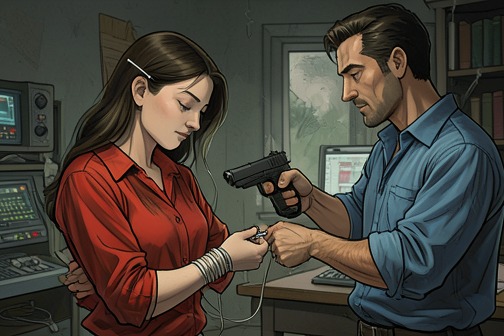
[Carson escapes handcuffs with a bobby pin](entity:event-recall-event-b40678e72dfd) during the police-station hostage crisis, a decisive reversal in which improvised knowledge and composure briefly overcome an armed captor’s control. Bound while [Matt Daehler](entity:character-recall-character-matt-daehler-7dd68a09c6ac) holds [Carson](entity:character-recall-character-carson-24b1f76a12e7), [Stiles Stilinski](entity:character-recall-character-stiles-stilinski-12e2b3c432f2), [Scott McCall](entity:character-recall-character-scott-mccall-7740871d71c9), and others at gunpoint, Carson turns an object already hidden in her hair into the means of restoring movement, agency, and the possibility of escape.
## Causes and Background
The escape occurs after the crisis has stripped away ordinary protections. Matt Daehler forces Carson down the hallway at gunpoint, intending to take four students hostage, while the threat of [Jackson Whittemore](entity:character-recall-character-jackson-whittemore-120cc2b873d5)’s violence makes every command immediate and credible. Carson experiences the pressure of the weapon against her back and understands that silence and obedience are, for the moment, the only options available. The hostage situation therefore places her in a condition of enforced passivity: she is not merely restrained physically but compelled to surrender decision-making to Matt’s demands.
Matt then removes [Sheriff Stilinski](entity:character-recall-character-sheriff-stilinski-55cc58b45e12) from the situation by ordering Stiles Stilinski to handcuff his father to a bench in the holding room. Stiles Stilinski is left silent as he fastens the cuff, while Scott McCall and Carson stand nearby and Matt keeps the gun trained on Stiles Stilinski and his father. The scene makes the stakes intimate as well as institutional. The weapon is aimed at both a parent and a boyfriend, and Matt’s finger moving along the trigger turns the handcuffing into a performance of possible execution rather than a routine act of detention.
## The Hostage Crisis
Carson is still trapped when Scott McCall is taken back toward the front at gunpoint. Her party dress is stained with Scott McCall’s blood, and she contrasts the present imprisonment with the earlier birthday party, where she had already witnessed the disturbing spectacle of her mother. The comparison shows how quickly an apparently social evening has become a sequence of escalating threats. Carson’s body carries the immediate evidence of the crisis, while her thoughts turn toward the practical problem of getting everyone out.
Stiles Stilinski’s absence becomes especially important. Carson believes that he would already have devised a second plan, but Stiles Stilinski is paralyzed in the office with [Derek Hale](entity:character-recall-character-derek-hale-f259fdd07b23), leaving her to construct the next move herself. Her response is not a sudden disappearance of fear; it is the conversion of fear into focused attention. She searches for a usable resource while remaining under restraint, and the answer comes from the bobby pins set in her hair.
## The Bobby Pin Escape
Carson remembers that Stiles Stilinski’s father had once accused her of spending too much time with his son. That shared time now supplies the knowledge that makes the escape possible. Carson recalls an evening when she and Stiles Stilinski, unwilling to play video games, searched the internet and watched lock-picking videos. Stiles Stilinski had laughed at the apparent uselessness of the lesson and suggested that it might become useful one day. During the hostage crisis, that dismissed pastime becomes actionable knowledge.
Carson removes a bobby pin from her hair, pulls away its small plastic tip with her teeth, bends the exposed piece, and inserts it into the handcuff’s keyhole. The procedure is uncertain rather than effortless. She remembers the mechanism described in the video, tries to press against it, and attempts to release the tooth-edged bar from the lock, but the metal does not immediately respond. The others watch while she works, and the failed attempts make the escape a suspenseful process instead of a convenient trick.
A small click finally confirms that the mechanism has shifted. Carson drops the pin into her lap, reaches for the cuff, and pulls until the bar slides out from the side. Her hand is free. The response from [Melissa McCall](entity:character-recall-character-melissa-mccall-e1628d1a817a) is a small cheer, while Sheriff Stilinski answers with a smile and jokes that Carson’s time with Stiles Stilinski deserves thanks after all. The immediate consequence is practical: Carson can now use the same improvised method to work on Sheriff Stilinski’s cuff, extending her individual escape into a rescue attempt.
## Consequences and Significance
The value change is stark. At the beginning of the sequence, Carson is a hostage whose life depends on not provoking Matt Daehler; after the click of the lock, she becomes the person capable of changing the conditions of captivity. Freedom first returns through a nearly invisible object rather than through supernatural strength, official authority, or a larger weapon. The bobby pin is ordinary, portable, and already part of Carson’s appearance, yet its significance changes when memory and necessity give it a new function.
The scene also develops Carson and Stiles Stilinski’s relationship through practical inheritance. Stiles Stilinski is not present to make the plan, but a shared activity from their ordinary life supplies Carson with the technique. Their intimacy is therefore represented not only by affection but by accumulated knowledge that remains useful under extreme pressure. The escape proves that the couple’s seemingly trivial time together has produced a durable resource, allowing Carson to act in Stiles Stilinski’s characteristic problem-solving role while he is unable to do so.
Finally, the escape punctures Matt Daehler’s claim to total control. His gun, the handcuffs, the holding room, and the police setting all embody institutional power placed in the hands of a captor. Carson defeats none of those structures outright, but she finds a precise weakness within them and uses it. The small click of the lock marks the beginning of resistance: a hostage recovers one free hand, Sheriff Stilinski gains a possible ally, and the crisis acquires a new direction.
Event 36
Matt's death and transfer of the Kanima curse
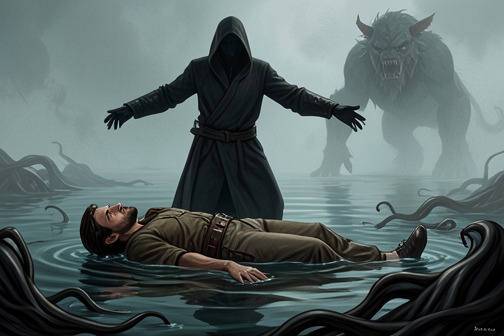
[Matt's death and transfer of the Kanima curse](entity:event-recall-event-85732f4d7084) is the decisive reversal of the [Kanima](entity:creature-recall-creature-kanima-00fa600e686e) investigation: [Matt Daehler](entity:character-recall-character-matt-daehler-7dd68a09c6ac) is revealed as the human controller behind the killings, his stated mission of punishing murderers is exposed as personal vengeance, and his abuse of the creature's purpose causes the Kanima condition to pass into him. His subsequent drowning removes the immediate human source of the attacks while leaving the supernatural threat unresolved in [Jackson Whittemore](entity:character-recall-character-jackson-whittemore-120cc2b873d5).
## Causes and Background
The investigation begins in confusion because the Kanima is almost absent from available records. [Scott McCall](entity:character-recall-character-scott-mccall-7740871d71c9) retrieves [Gerard's flash drive](entity:object-recall-object-gerard-s-flash-drive-e2d757adcc36), revealing that the supposed bestiary is actually a collection of recipes and that the real supernatural reference material is stored elsewhere. [Carson Bradley and Stiles Stilinski](entity:relation-recall-relation-carson-bradley-stile-fe2b2021ba78) find the recovered text difficult to interpret because it is written in Latin, while online searches for the Kanima, its legends, and its shape-shifting nature produce almost nothing. The creature's rarity and its lack of a clear recorded history make the investigation dependent on fragments: its fear of its own identity, its inability to swim, and [Derek Hale](entity:character-recall-character-derek-hale-f259fdd07b23)'s incomplete knowledge.
The creature is first experienced as an immediate physical threat rather than as a moral or symbolic figure. At [Carson Bradley](entity:character-recall-character-carson-bradley-e17d1b9b17c6)'s house, a pair of reptilian eyes appears in the dark hallway before the creature's overgrown lizard-like body emerges, complete with a long tail, scales, and rows of sharp teeth. Later, at the school, it climbs an indoor balcony, emits the shrill cry the witnesses have heard before, and leaps down among them. Its tail strikes [Erica Reyes](entity:character-recall-character-erica-reyes-f740eb816f3b) and knocks her unconscious before Derek Hale orders the others to run. These encounters establish the Kanima as a recurring predator before the investigation identifies the human intention directing it.
By the time Carson Bradley, Scott McCall, [Stiles Stilinski](entity:character-recall-character-stiles-stilinski-12e2b3c432f2), and Derek Hale prepare to confront Jackson Whittemore, [Deaton](entity:character-recall-character-deaton-d386b883cb01) supplies equipment intended to restrain the creature: a small bottle and a spring-loaded syringe, identified as ketamine. Deaton's role reflects the group's dependence on partial expertise. He is not fully explained to them, but his repeated assistance to Scott makes him a trusted veterinary guide within the supernatural crisis. The restraint plan therefore rests on practical containment rather than on a complete understanding of the Kanima's origin or rules.
## Exposure of the Kanima Master
The crucial disclosure occurs when Matt Daehler is confronted about the killings. Asked whether he is responsible, he answers that he and the others are killing murderers, insisting that every person he has killed deserved it. The claim initially presents the Kanima attacks as a distorted form of justice, but Matt's explanation changes the moral center of the event: the supposed victims are not selected by an impartial force. They are selected through Matt's personal grievance.
Matt then states that the people he killed had murdered him. The revelation is not a literal account of an ordinary death but an expression of the trauma and resentment that govern his actions. Immediately afterward, his body begins to disclose the transformation already operating beneath his human appearance. His eyes become fiery orange and reptilian, green scales spread across his hands, his fingers lengthen into claws, and paralytic venom drips from him. The visual change converts the abstract accusation into physical evidence: Matt is not merely controlling the Kanima; he is becoming it.
The transformation also reveals the difference between the Kanima's supposed function and Matt's use of it. According to Derek Hale, the creature is meant to target people who have done wrong, in a role compared with the furies. Matt exceeds that boundary by using the Kanima for pure malice. The event therefore treats supernatural power as governed by a rule that can be broken. Matt's violence does not simply employ the creature; it corrupts the purpose assigned to it, and nature responds by transferring the monstrous condition to the person who has violated its limits.
## Death and Transfer of the Curse
The transfer of the Kanima curse is presented as a consequence rather than as a voluntary achievement. Matt wants answers and seeks the bestiary, but his attempt to direct the creature turns inward when the boundary between master and monster collapses. The scales covering his torso and the reptilian features that appear during the confrontation show that the human controller has become physically implicated in the role he imposed on Jackson Whittemore.
Matt escapes from the sheriff's station and reaches a nearby overpass with a river. Police later report that he has drowned. His death ends the immediate human agency behind the hostage crisis and the earlier attacks, but it does not restore ordinary order. The Kanima's power has already been tied to a new bearer, and the narrative continues by showing Jackson Whittemore emerging from the creature's form. Matt's drowning consequently functions as both an ending and a transfer point: the controller is removed, while the curse remains active in another body.
The event is surrounded by the consequences of the police-station conflict. Carson Bradley is knocked unconscious and later diagnosed with a mild concussion, while Stiles Stilinski is also taken out during the hostage crisis. The aftermath expands beyond Matt's death: [Allison Argent](entity:character-recall-character-allison-argent-bcc580b16b14)'s mother dies, Derek Hale has bitten [Mrs. Argent](entity:character-recall-character-mrs-argent-bd04e8a4f3c1), and the [Argent family](entity:organization-recall-organization-argent-family-fee3b8ad96a1) code requires a hunter who has been bitten to kill herself. Scott McCall's mother, [Melissa McCall](entity:character-recall-character-melissa-mccall-e1628d1a817a), discovers his werewolf identity after seeing him transformed during the fight with the Kanima and stops speaking to him. These consequences make Matt's death part of a wider collapse in secrecy, family trust, and the boundary between the human institutions and supernatural conflict.
## Aftermath and Transfer to Jackson
The later evidence confirms that Matt's death does not destroy the Kanima identity. During a confrontation, [Lydia Martin](entity:character-recall-character-lydia-martin-632f28e7f863) produces a key that causes the creature to stop and stare as if it recognizes the object. The reptilian features then recede, revealing Jackson Whittemore beneath them, although scales still cover his skin, claws remain on his fingers, and his eyes continue to flicker between human and reptilian states. Jackson takes the key from Lydia and looks back at her before retreating.
This recognition gives the transfer a personal dimension that Matt's drowning alone cannot explain. The curse does not remain an anonymous supernatural infection; it is attached to Jackson's unresolved identity and to his connection with Lydia Martin. Matt's death therefore changes the question confronting the investigators. They no longer need only to identify who commanded the Kanima. They must understand why Jackson has inherited its body and how the creature's memories, vulnerabilities, and obligations persist after its former master is gone.
The event also clarifies the Kanima's moral structure. Matt claims to kill those who deserve punishment, yet his confession that they murdered him exposes revenge as the force beneath his language of justice. Derek Hale's explanation that Matt broke the creature's rules turns the transformation into a supernatural judgment. The Kanima is consequently framed neither as a simple predator nor as a reliable avenger: it is a vessel whose purpose can be redirected, whose master can become its next incarnation, and whose curse can survive the death of the person who first weaponized it.
## Narrative Significance
As a scene of value reversal, the event moves the story from investigation toward recognition. The hunters and teenagers begin by treating the Kanima as an external monster hidden somewhere in [Beacon Hills](entity:location-recall-location-beacon-hills-dbaca5be6a9f). Matt's confession reverses that assumption by locating the violence in a human desire for retaliation; his transformation reverses it again by making the controller himself the monster. Finally, his drowning appears to close the crisis, only for Jackson Whittemore to remain connected to the Kanima. Each reversal narrows the distance between victim, master, and creature.
Matt's death also exposes the limits of institutional resolution. The police can report a drowning, and [Sheriff Stilinski](entity:character-recall-character-sheriff-stilinski-55cc58b45e12) is later reinstated for identifying the killer, but the official account cannot contain the supernatural truth. The investigation has been carried forward by Scott McCall, Stiles Stilinski, and Carson Bradley, even though their role remains unacknowledged. The badge and the police report provide a public ending; the transfer to Jackson supplies the hidden continuation.
The event's lasting significance lies in its treatment of monstrosity as an ethical and relational condition rather than a fixed species. Matt becomes the Kanima because he turns a power associated with correcting wrongdoing into an instrument of malice. Jackson remains the next visible bearer after Matt's death, and his later response to Lydia's key suggests that the monster still contains a recoverable human identity. The drowning closes Matt's personal trajectory, but the curse's transfer ensures that the story's central conflict—whether a damaged person can be separated from the violence attached to him—continues.
Event 37
Beacon Hills州冠军赛

[Beacon Hills State Championship](entity:event-recall-event-beacon-hills-1f98c763e653) is the climactic lacrosse game at the center of the book’s final public confrontation. It carries the ordinary stakes of school pride and a state title, but those stakes are overtaken by the supernatural conflict surrounding [Scott McCall](entity:character-recall-character-scott-mccall-7740871d71c9), [Stiles Stilinski](entity:character-recall-character-stiles-stilinski-12e2b3c432f2), [Carson Bradley](entity:character-recall-character-carson-bradley-e17d1b9b17c6), [Gerard Argent](entity:character-recall-character-gerard-argent-7004a9b95df1), and [Jackson Whittemore](entity:character-recall-character-jackson-whittemore-120cc2b873d5). The game becomes a test of whether a normal communal celebration can survive the schemes unfolding beneath it, and its apparent triumph ends by opening directly into danger.
## Causes and Background
The championship takes place after the school day, while students and families prepare for an event treated as enormous within [Beacon Hills](entity:location-recall-location-beacon-hills-dbaca5be6a9f). [Coach Finstock](entity:character-recall-character-coach-finstock-f7dd6d13f929) attempts to force attendance by threatening students with a mandatory failing grade in economics, making the crowd a mixture of genuine school loyalty and reluctant compliance. The game therefore begins as a civic ritual of ordinary teenage life, even though Carson Bradley knows that the evening is also the setting for an expected supernatural operation.
[Carson](entity:character-recall-character-carson-24b1f76a12e7) avoids the game because Gerard Argent is believed to have a plan, and Scott McCall has warned that [Gerard](entity:character-recall-character-gerard-53aeabf16f28) is now controlling Jackson Whittemore. Jackson is scheduled to play, which means that the [Kanima](entity:creature-recall-creature-kanima-00fa600e686e) is potentially being placed inside the school’s most visible public gathering. The danger is not merely that an enemy might attack from outside; it is that the school’s own championship field may be turned into a weapon’s operating ground.
Gerard’s institutional position intensifies the threat. On his first day as a school authority, he declares that he will support the teachers but also arranges for at least two students to take the blame and remain behind for detention. His willingness to manipulate school discipline establishes the pattern that later governs the championship: ordinary rules and public institutions become instruments of private control. The title game is thus surrounded by an atmosphere in which authority appears legitimate while serving a hidden supernatural agenda.
## The Game and the Reversal
The danger is initially obscured by the ceremonial confidence of the event. Gerard publicly expresses pride in having a winning team for the school and predicts that the players will perform brilliantly, even though only one co-captain is leading the team. His announcement that Scott has been benched immediately alarms Scott and Carson. A decision that might look like routine coaching becomes suspicious because Gerard’s control of the team removes Scott from the position where he could respond to Jackson or protect the crowd.
The emotional center of the game shifts when Stiles Stilinski unexpectedly runs onto the field wearing jersey number twenty-four. Mr. Stilinski reacts with alarm, while Carson is startled to see Stiles playing after their tension. The sight of the familiar jersey temporarily overwhelms Carson’s anger. Stiles is not presented as a naturally dominant athlete; his presence on the field is itself a reversal, transforming the player once regarded as useless into an active participant in the championship.
Beacon Hills is losing when the ball breaks free and rolls directly in front of Stiles. He picks it up and runs down the field while the other players shout around him. The moment is played as both comedy and crisis: Stiles is terrified, but circumstances force him into the center of the contest. He reaches the goal and scores after briefly locking eyes with Carson. The crowd erupts, Mr. Stilinski celebrates wildly, and Carson and [Lydia Martin](entity:character-recall-character-lydia-martin-632f28e7f863) embrace in excitement.
That goal changes more than the score. It gives Stiles a sudden confidence that had been absent when he first entered the field. From then on, he repeatedly secures the ball, weaves past opposing players, and sends it toward the net. Beacon Hills rallies from behind, ties the game, and reaches a ten-to-nine lead with only seconds remaining. The team in red surrounds Stiles, cheering the player they had once dismissed, while Stiles looks past the celebration toward Carson. The surrounding crowd briefly falls away from their attention, creating an intimate emotional space within the public spectacle.
## Victory and Public Transformation
The final buzzer confirms that Beacon Hills has won. The fans respond with even louder cheers, and every player, supporter, and family member is caught in the release of the victory. Stiles’ performance has altered his public standing: he is no longer merely tolerated as an ineffective member of the team but is celebrated as the person whose improbable scoring run helped secure the championship.
The victory also temporarily restores the ordinary world that the supernatural plot has been threatening. The game, the crowd, the school colors, and the celebration offer a shared language of belonging. Carson’s attention to Stiles and the crowd’s embrace of him place personal affection and communal recognition beside the larger crisis. The championship functions as a brief public confirmation that Stiles can act decisively and that Carson and Stiles remain connected even amid strain.
Yet the celebration is deliberately framed as unstable. Scott is on the field looking around in confusion because he, Carson, and the others expected something to happen. Jackson is apparently no longer on the field, and the absence of the anticipated attack initially suggests that the threat has failed to materialize. The result creates a sharp gap between expectation and outcome: the friends prepare for catastrophe, but the game ends in victory and apparent safety.
## Aftermath and Narrative Significance
The sense of safety lasts only moments. As the countdown reaches its final seconds and the buzzer sounds, the field’s giant spotlights begin shutting off with loud booms. Darkness covers the stadium, someone screams, and the crowd breaks into confused movement. People run and shout while Carson’s eyes adjust to the sudden loss of light. The championship’s public triumph therefore becomes the immediate prelude to chaos.
This ending makes the event significant beyond its score. The game is a false resolution: it delivers the expected athletic climax while withholding the supernatural confrontation until the celebration has made everyone vulnerable. Stiles’ goal and Beacon Hills’ ten-to-nine victory produce a rise from humiliation and defeat to confidence and communal joy, but the blackout reverses that emotional movement without erasing it. The victory remains real, yet it can no longer guarantee safety.
The championship also exposes the conflict between visible and hidden power. On the surface, Coach Finstock, the players, the fans, and the school officials participate in a conventional athletic ceremony. Beneath that ceremony, Gerard Argent manipulates school authority, Scott McCall is removed from the field, and Jackson Whittemore’s connection to the Kanima threatens to turn the game into an attack site. The event’s decisive irony is that the crowd celebrates a clean sporting victory at the exact moment when the larger struggle is moving into darkness.
In narrative terms, Beacon Hills State Championship joins personal recognition to imminent danger. Stiles’ unexpected success gives him a moment of dignity, Carson and Stiles a charged shared image amid the crowd, and the school a victory it can claim as its own. The blackout immediately denies the comfort of closure, carrying the story from public celebration into the next emergency and proving that, in Beacon Hills, normality can be restored only provisionally.
Event 38
Gerard Kidnaps Stiles
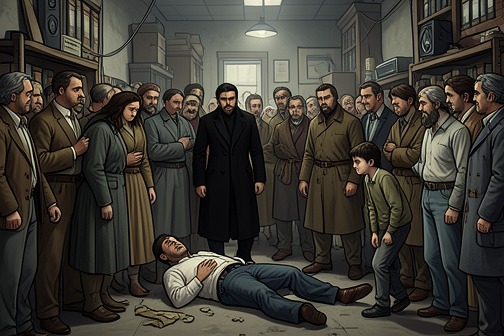
[Gerard Kidnaps Stiles](entity:event-recall-event-b5ba3cf428cc) is the decisive turning point in which [Gerard](entity:character-recall-character-gerard-53aeabf16f28) disappears with Stiles after the group confronts [Jackson Whittemore](entity:character-recall-character-jackson-whittemore-120cc2b873d5)’s apparent death. The abduction converts the investigation’s danger into a direct assault on the group’s most vulnerable point: Stiles’s absence is noticed only after the others are already overwhelmed, and the discovery leaves his friends and father with a new, urgent objective—finding him and confronting Gerard.
## Causes and Immediate Context
The kidnapping occurs amid an already collapsing scene. [Lydia Martin](entity:character-recall-character-lydia-martin-632f28e7f863) is attempting to hold Jackson’s head while [Melissa McCall](entity:character-recall-character-melissa-mccall-e1628d1a817a) tries to revive him, and the effort appears to fail. [Carson Bradley](entity:character-recall-character-carson-bradley-e17d1b9b17c6) identifies the terrible conclusion aloud: Jackson is dead, a judgment [Scott McCall](entity:character-recall-character-scott-mccall-7740871d71c9) can only confirm with a nod. The crowd is therefore gathered in the aftermath of apparent death, with attention fixed on Jackson rather than on the movement of every person around them.
That atmosphere creates the opening for [Gerard Argent](entity:character-recall-character-gerard-argent-7004a9b95df1)’s intervention. The surrounding investigation has already been shaped by violent and confusing evidence: surveillance footage from [Beacon Hills Hospital](entity:location-recall-location-beacon-hills-hospita-f968ea24ce29) is being searched for [Matt Daehler](entity:character-recall-character-matt-daehler-7dd68a09c6ac), while shoeprints, tire tracks, and a credit-card receipt are being assembled to connect Matt to multiple murders. The story’s chain of clues is consequently moving toward exposure, but the kidnapping interrupts that investigative momentum by placing Stiles directly in the hands of another dangerous figure.
## What Happens
[Sheriff Stilinski](entity:character-recall-character-sheriff-stilinski-55cc58b45e12) moves through the crowd in a panic, mumbling as though searching for someone. [Carson](entity:character-recall-character-carson-24b1f76a12e7) immediately understands that he is looking for Stiles, because Stiles is the person he would be expected to seek first. The sheriff’s fear becomes explicit when he asks,
Event 39
Mrs. Argent's Death and Derek Bites Mrs. Argent
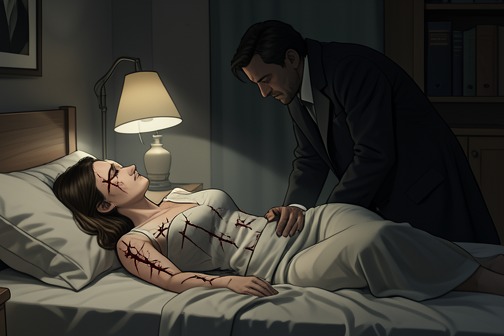
[Mrs. Argent's Death and Derek Bites Mrs. Argent](entity:event-recall-event-120185836355) is the paired event that converts a supernatural confrontation into a personal and ideological crisis. [Derek Hale](entity:character-recall-character-derek-hale-f259fdd07b23) bites [Mrs. Argent](entity:character-recall-character-mrs-argent-bd04e8a4f3c1) during the night of the rave, and her subsequent death is treated by the [Argent family](entity:organization-recall-organization-argent-family-fee3b8ad96a1) as an obligation imposed by their hunter code. The loss radicalizes [Allison Argent](entity:character-recall-character-allison-argent-bcc580b16b14), while the revelation of the bite exposes how rules meant to preserve identity and control can instead produce revenge.
## Causes and Background
The event emerges from the escalating conflict surrounding the [Kanima](entity:creature-recall-creature-kanima-00fa600e686e) and the competing efforts to control it. Before the consequences are explained, the group is already searching for information about the creature: [Carson Bradley](entity:character-recall-character-carson-bradley-e17d1b9b17c6) finds almost nothing online about the Kanima, whose shape-shifting nature and inability to swim make ordinary research inadequate. The failure of internet sources contrasts with the supernatural knowledge held by Derek Hale and the material preserved in the bestiary, establishing a world in which inherited rules and specialized experience matter more than accessible public information.
The investigation also brings Carson Bradley, [Stiles Stilinski](entity:character-recall-character-stiles-stilinski-12e2b3c432f2), and [Scott McCall](entity:character-recall-character-scott-mccall-7740871d71c9) into contact with [Deaton](entity:character-recall-character-deaton-d386b883cb01), whose veterinary office functions as an informal point of supernatural guidance. Deaton supplies a bottle and a spring-loaded syringe intended to help with the Kanima problem, reinforcing the practical, improvised character of the group’s resistance. Their preparations place the rave within a larger chain of attempts to contain [Jackson Whittemore](entity:character-recall-character-jackson-whittemore-120cc2b873d5) and the creature connected to him, rather than presenting the bite as an isolated act.
## What Happens
During the rave, Derek Hale fights the Kanima and bites Mrs. Argent. The account is initially incomplete: Scott McCall later tells the group what happened that night but leaves out the decisive detail that Derek bit her. This omission delays the full understanding of the event and makes the later revelation more consequential. While Carson Bradley is unconscious after the police-station crisis, the supernatural struggle continues, with Derek transforming and joining the fight against the Kanima while Scott takes part beside him.
The bite carries a specific consequence because Mrs. Argent belongs to the family of werewolf hunters. The Argent code states that if one of its members is bitten, that person must kill themself. Mrs. Argent's death therefore becomes more than a casualty of the night’s violence: it is the result of a family rule that treats supernatural infection as an intolerable breach of identity. Derek's action and the code’s prescribed response combine to make the event both an attack and a ritualized act of self-destruction.
## Immediate Consequences
Allison Argent is changed by her mother’s death. The narration contrasts her former innocence, described as a version of Allison who would not have dared to hurt anyone, with her later fixation on killing Derek Hale. Grief becomes vengeance, and her desire to eliminate Derek consumes so much of her attention that Scott McCall says he no longer recognizes her. The event thus redirects Allison’s agency: she is no longer merely reacting to the supernatural danger around her but actively pursuing retribution against the person she holds responsible.
The consequences also reach Scott’s family. During the same broader confrontation, Derek Hale’s transformation is witnessed by [Melissa McCall](entity:character-recall-character-melissa-mccall-e1628d1a817a), who becomes aware that Scott is a werewolf after seeing him with fangs. She does not speak to Scott afterward. Mrs. Argent’s death therefore coincides with another collapse of secrecy, linking the personal tragedy in the Argent family to the exposure of Scott’s supernatural identity and the breakdown of his relationship with his mother.
## Wider Conflict and Significance
The event sharpens the war between the Argent family and the werewolves by turning an already dangerous conflict into a blood feud. Allison’s vengeance threatens to make the hunter code self-perpetuating: a bite produces a death, the death produces retaliation, and retaliation promises further violence. The story’s supernatural rules are consequently inseparable from its human consequences. The bite is not simply a power used in combat; it activates a social rule, a family identity, and a chain of obligations.
Its significance is intensified by the surrounding revelations about the Kanima. [Matt Daehler](entity:character-recall-character-matt-daehler-7dd68a09c6ac) had taken hostages because he wanted the bestiary and claimed to need answers, while Scott reported that scales were spreading across Matt’s torso. Derek explains that Matt had violated the Kanima’s purpose: the creature was meant to punish those who had done wrong, but Matt used it out of malice and therefore became the Kanima himself as nature restored a balance he had broken. Against that pattern, Mrs. Argent’s death shows another form of rule-bound violence. The Argent code and the Kanima’s supposed purpose both claim to regulate wrongdoing, yet both become dangerous when obedience, punishment, and vengeance override restraint.
The event also marks a structural turning point in the story’s movement from investigation toward aftermath. Earlier scenes are occupied with searches, clues, equipment, and attempts to understand the creature; afterward, the characters must live with deaths, exposed identities, broken trust, and altered loyalties. Allison’s pursuit of Derek, Melissa’s silence toward Scott, and the widening conflict between hunters and werewolves all grow from the same night. Mrs. Argent’s death is therefore decisive not because the narrative dwells on the death scene itself, but because its consequences reorganize nearly every major relationship around grief, secrecy, and revenge.
Event 40
Melissa McCall Learns Scott Is a Werewolf
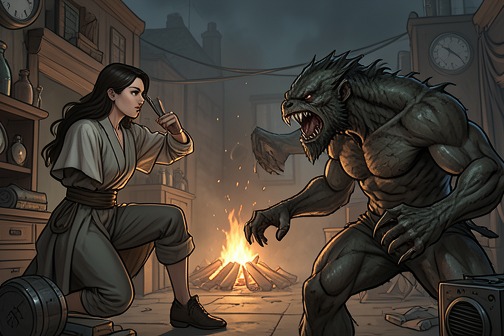
[Melissa McCall Learns Scott Is a Werewolf](entity:event-recall-event-edfed97b7cb3) marks the moment when [Scott McCall](entity:character-recall-character-scott-mccall-7740871d71c9)’s hidden supernatural identity becomes known to his mother. The revelation is not presented as a planned confession: Melissa sees Scott with fangs while he and [Derek Hale](entity:character-recall-character-derek-hale-f259fdd07b23) fight the [Kanima](entity:creature-recall-creature-kanima-00fa600e686e), and the sight makes the family’s ordinary understanding of Scott impossible to maintain. Its decisive consequence is immediate emotional distance between mother and son, as Melissa stops speaking to him after learning the truth.
## Causes and Circumstances
Scott’s exposure occurs amid the escalating Kanima crisis rather than in a private family conversation. While [Carson Bradley](entity:character-recall-character-carson-bradley-e17d1b9b17c6) is unconscious on the floor, Derek Hale transforms and joins the fight against the Kanima, and Scott joins Derek in the confrontation. Melissa witnesses Scott in his werewolf form during that struggle. The disclosure therefore comes through danger and physical transformation, with the supernatural world forcing its way into a domestic relationship that had previously depended on secrecy.
The event also follows a broader chain of hidden identities and unstable boundaries. The group searches for information about the Kanima through the bestiary and the internet, but the creature remains difficult to classify; [Carson](entity:character-recall-character-carson-24b1f76a12e7)’s attempts include searches for the Kanima, shape-shifters, and a giant lizard that cannot swim. At [Beacon Hills veterinary office](entity:location-recall-location-beacon-hills-veterin-a83bc7d4fc28), [Deaton](entity:character-recall-character-deaton-d386b883cb01) functions as a trusted guide who supplies equipment intended to help contain the Kanima. These efforts show how much Scott’s friends already know and manage within the supernatural world, while Melissa remains outside that shared knowledge until the confrontation makes exclusion impossible.
## What Happens
During the battle, Scott’s transformation is visible to Melissa. The event reveals both his fangs and his participation in the fight alongside Derek Hale. Scott is not merely identified as someone connected to werewolves; Melissa sees that her own son is one of them. The revelation is consequently grounded in an unmistakable bodily sign and in Scott’s active role in a supernatural conflict.
The discovery is reported retrospectively by Carson Bradley, who has been unconscious and therefore learns the details afterward from Scott’s account. This framing makes the event part of the aftermath of the fight rather than a fully narrated confrontation between Melissa and Scott. Scott tells the group what happened, but the account omits another important detail: Derek Hale had bitten [Mrs. Argent](entity:character-recall-character-mrs-argent-bd04e8a4f3c1). The contrast between the omitted information and the clearly reported sight of Scott’s fangs emphasizes how secrets continue to circulate even after Melissa has learned the central truth.
## Immediate Consequences
Melissa does not respond with a conversation or visible acceptance. After seeing Scott transformed, she becomes fully aware of what Scott’s “furry little problem” means, and she does not speak to him. Her silence turns the revelation into a separation within the McCall family. Scott’s supernatural identity, previously managed through concealment and the protection of his friends, now carries a direct personal cost at home.
The discovery also changes the meaning of Scott’s relationship with Melissa. His werewolf condition had already shaped his friendships, his involvement with Derek’s conflicts, and his efforts to protect other people, but Melissa’s knowledge makes those consequences maternal rather than merely social. [The supernatural](entity:concept-recall-concept-the-supernatural-b0cadf182c10) secret can no longer be treated as a problem confined to Scott’s peer group. It has entered the mother-son relationship and altered the conditions under which ordinary family contact can continue.
## Wider Narrative Context
Melissa’s discovery parallels other identity revelations surrounding the Kanima crisis. [Matt Daehler](entity:character-recall-character-matt-daehler-7dd68a09c6ac)’s hostage-taking is connected to his desire for the bestiary and to his increasingly visible transformation, while [Jackson Whittemore](entity:character-recall-character-jackson-whittemore-120cc2b873d5)’s connection to the Kanima is understood through the creature’s shifting body and divided identity. In this environment, bodies repeatedly expose truths that characters attempt to hide or interpret. Scott’s fangs serve the same narrative function: they convert suspicion and secrecy into knowledge.
The event also belongs to a story in which supernatural rules collide with familiar institutions and routines. Scott is a student and a member of the [Beacon Hills High School Lacrosse Team](entity:organization-recall-organization-beacon-hills-hig-034f234770f2), and [Coach Finstock](entity:character-recall-character-coach-finstock-f7dd6d13f929) warns that poor grades could keep him off the field the following season. The ordinary demand to remain eligible for lacrosse continues alongside the extraordinary demand to fight the Kanima. Melissa’s discovery shows the pressure created when these worlds can no longer be kept separate: Scott must remain a son, student, friend, and athlete while his transformed body reveals that he is also a werewolf.
## Narrative Significance
Melissa McCall Learns Scott Is a Werewolf is significant because it transforms secrecy into family knowledge without resolving the emotional damage that knowledge causes. The revelation does not immediately produce reconciliation, protection, or understanding; instead, Melissa’s silence establishes the painful distance that follows. Scott’s supernatural identity becomes real not only because other supernatural characters recognize it, but because his mother sees it for herself.
The event therefore extends the story’s recurring concern with chosen and inherited forms of belonging. Scott’s friends share information, search for supernatural answers, and rely on guides such as Deaton, while Melissa is left outside that network until the crisis reveals the truth against everyone’s control. The discovery is both an exposure and a rupture: it brings Melissa closer to the reality of Scott’s life while, in the immediate aftermath, separating her from him.
Event 41
Peter Hale's Resurrection
[Peter Hale's Resurrection](entity:event-recall-event-b689ab433021) is the abrupt return of [Peter Hale](entity:character-recall-character-peter-hale-c763a42ea8fd) after the group believed that he had been killed, a reversal that reopens an earlier cycle of violence and makes Peter's knowledge essential to the crisis surrounding [Jackson Whittemore](entity:character-recall-character-jackson-whittemore-120cc2b873d5). The event is decisive because Peter does not return merely as a threat: [Derek Hale](entity:character-recall-character-derek-hale-f259fdd07b23) brings him forward claiming that he may know how to stop Jackson, and perhaps even save him. [Resurrection](entity:state-recall-state-resurrection-d152b9a90ee0) therefore turns a dead enemy into a dangerous source of knowledge at the precise moment when Jackson is believed to be beyond rescue.
## The Return of the Supposedly Dead
The event begins in an already tense conversation. [Carson Bradley](entity:character-recall-character-carson-bradley-e17d1b9b17c6) is worried because her boyfriend, [Stiles Stilinski](entity:character-recall-character-stiles-stilinski-12e2b3c432f2), may have been kidnapped by [Gerard Argent](entity:character-recall-character-gerard-argent-7004a9b95df1), and her impatience has made the atmosphere openly hostile. [Isaac Lahey](entity:character-recall-character-isaac-lahey-4fcaad0314c9)'s laughter at her forcefulness is cut short when footsteps announce Derek Hale's arrival at the entrance. Derek says that the group needs to talk and emphasizes that the conversation concerns all of them, preparing the scene as a collective revelation rather than a private encounter.
The second arrival produces the actual shock. Another person enters behind Derek, and [Carson](entity:character-recall-character-carson-24b1f76a12e7) initially interprets the sight as impossible or unreal, even wondering whether the [wolfsbane punch](entity:object-recall-object-a15542131a81) associated with [Lydia Martin](entity:character-recall-character-lydia-martin-632f28e7f863)'s birthday incident has affected her perception. The uncertainty ends when the newcomer is recognized as Peter Hale: he is alive. The return thus arrives through delayed recognition. The reader and the characters are made to pass through disbelief before the fact can be accepted, giving the resurrection the force of a reversal rather than presenting it as ordinary movement through the plot.
## Recognition and Violent History
Carson's response establishes why Peter's appearance is not a neutral reunion. She identifies him as Derek's uncle and recalls that he had previously tried to kill the group. She also recounts the apparent conclusion of that conflict: the group set Peter on fire, and Derek slashed his throat. These details define the resurrection against a completed act of violence. Peter is not simply someone who disappeared; he is a presumed dead enemy whose body had been subjected to punishment that should have ended his participation in the story.
Peter's first visible response is disarmingly casual: he raises a hand and says, "Hi." The greeting clashes with the violence Carson has just described. That contrast gives the scene its dark irony. Peter's ordinary social gesture does not erase his history; instead, it makes his return more unsettling by treating an extraordinary survival as though it required no explanation. Isaac's weary acknowledgment shows the group absorbing the revelation without mistaking it for safety, while Carson moves closer to Isaac and farther from Peter, translating her judgment into physical distance.
[Scott McCall](entity:character-recall-character-scott-mccall-7740871d71c9) then asks how Peter is alive, voicing the question shared by the group. The question marks the scene's movement from recognition to explanation, but the immediate answer is withheld. Peter's method of survival remains unexplained in this encounter, leaving the resurrection as both established fact and continuing mystery. The narrative gives the audience certainty about the result while preserving uncertainty about the mechanism, keeping Peter's return tied to the wider instability of the supernatural world.
## Knowledge Against the Jackson Crisis
Derek supplies the practical reason for Peter's presence. He explains that Peter knows how to stop Jackson, and may even be able to save him. This claim changes Peter's position within the group. Before Derek speaks, Peter is defined almost entirely by his past attempt to kill them and by the brutal measures used against him. After Derek speaks, the same dangerous figure becomes a possible instrument of rescue.
The proposed rescue is immediately complicated by Carson's report that Jackson is currently dead. Her somber statement exposes a temporal and moral contradiction: Peter may possess the knowledge needed to save Jackson, but the person who might be saved has already been declared dead. Derek's confused reaction shows that he did not know this development. Consequently, Peter's resurrection intersects with another apparent death, creating a chain of reversals in which neither life nor death can be treated as final. The scene does not resolve whether Jackson can be restored; it establishes only that Peter's knowledge may matter before the crisis has closed.
## Narrative Function and Consequences
Structurally, Peter's return is a peripeteia built through interruption. The scene first points toward a conversation about Gerard Argent and Stiles, then redirects attention to Derek, and finally overturns the group's understanding of Peter's fate. The entrance is therefore not exposition alone: it changes the available choices. The group must now decide whether knowledge from a former killer can be used, whether Peter can be trusted even temporarily, and whether the possibility of saving Jackson justifies allowing him near them.
The event also makes resurrection a thematic counterpoint to the characters' assumption that violence produces final solutions. Burning Peter and slashing his throat had appeared to settle the danger he represented, just as Jackson's death appears to settle the [Kanima](entity:creature-recall-creature-kanima-00fa600e686e) crisis. Peter's survival destabilizes both conclusions. It suggests that supernatural conflict cannot be governed by ordinary expectations of bodily finality, and that an enemy once pushed outside the story can return carrying information indispensable to the living.
Peter Hale's Resurrection ends not with reconciliation or an explanation of Peter's survival, but with a new and uneasy dependency. Derek has brought Peter because the group needs what he knows; Carson's fear and disgust make clear that this need does not become trust. The returned Peter stands simultaneously as former murderer, impossible survivor, and possible rescuer. That unresolved combination is the event's lasting consequence: the group must confront the threat they thought they had destroyed because the same figure may now be their only path toward Jackson.
Event 42
Stiles-Carson reconciliation
[Stiles-Carson reconciliation](entity:event-recall-event-stiles-carson-fc05721e2f0c) marks the point at which [Carson Bradley and Stiles Stilinski](entity:relation-recall-relation-carson-bradley-stile-fe2b2021ba78) recover their relationship after violence has made both of them feel powerless. [Carson](entity:character-recall-character-carson-24b1f76a12e7) has been held hostage, rendered unconscious by [Kanima venom](entity:object-recall-object-kanima-venom-9a6e529f9f7a), and left with a mild concussion; Stiles has watched her being taken down while unable to intervene. Their repair therefore addresses more than a disagreement between lovers. It confronts the belief that protection must mean physical dominance and replaces it with a shared understanding of care, endurance, and choice.
## Causes and Background
The reconciliation grows out of a sequence of threats that has made ordinary intimacy inseparable from danger. Earlier, Carson discovered that [Lydia Martin](entity:character-recall-character-lydia-martin-632f28e7f863) had vanished from a hospital bathroom while the shower was still running, with no visible route of escape and no sign of where she had gone. The disappearance intensified the sense that [Beacon Hills](entity:location-recall-location-beacon-hills-dbaca5be6a9f) was no longer governed by ordinary explanations. Soon afterward, Carson and Stiles were caught in the aftermath of another supernatural attack: rain fell around an ambulance, police lights flashed across a small parking lot, and [Scott McCall](entity:character-recall-character-scott-mccall-7740871d71c9)’s bicycle stood alone in a corner while Stiles repeatedly insisted that they had merely found a Jeep on top of a victim. Carson could not dismiss what she had seen. The creature’s eyes and its recognition of her and Stiles made the danger feel personal, while people were dying around them and the pair had no reliable means of stopping it.
The immediate wound in the relationship is Carson’s abduction during the police-station hostage crisis. [Matt Daehler](entity:character-recall-character-matt-daehler-7dd68a09c6ac) took Stiles and Carson out, leaving both of them unconscious on the floor for at least half an hour. Carson later learned from [Sheriff Stilinski](entity:character-recall-character-sheriff-stilinski-55cc58b45e12) that a paramedic had checked her for a concussion; the injury was mild enough that she did not require an overnight hospital stay, but the blackout left her without any knowledge of what had happened during the missing time. The event combined physical vulnerability with narrative uncertainty: Carson survived, yet she could not witness the danger that had nearly killed her, and Stiles was forced to live with the memory of being unable to stop it.
The aftermath remains bodily before it becomes verbal. On the next morning, Carson wakes in her own room with her hands entwined with Stiles’s and his arms wrapped around her. His fingers are described as abnormally long and skinny, his body pressed against hers, and his heartbeat perceptible against her back. The embrace supplies immediate social support after the hostage event, but it does not by itself settle the fear beneath it. Stiles is physically present while still carrying the conviction that he failed her, and Carson is held close while still needing to understand what that failure means to him.
## What Happens
The decisive conversation begins when Carson asks Stiles to explain what happened between them. His response reveals that the crisis has altered his sense of himself inside the relationship. Seeing Matt take Carson down, he says he could do nothing, could not help or save her, and lay there thinking he was going to lose her. His distress is not presented as a lack of love but as the consequence of loving someone while being unable to control the violence directed against her.
Carson recognizes that the helplessness has not belonged to her alone. She has usually regarded herself as the dependent or vulnerable partner, while Stiles has been the one with ideas, jokes, and the ability to help her endure difficult circumstances. Yet Kanima venom can disable even someone as formidable as [Derek Hale](entity:character-recall-character-derek-hale-f259fdd07b23), so Stiles’s failure to intervene cannot reasonably be treated as a personal deficiency. Carson understands that anyone could have been taken out by the venom, and this recognition separates responsibility from outcome: surviving an attack does not prove that the person who could not prevent it was negligent.
Stiles cannot accept that distinction at first. He tells Carson that she has never really needed him because she is confident and independent, reducing himself to the insecure phrase that he is merely Stiles. His fear is therefore relational as well as heroic. If Carson can stand on her own, he worries that his presence has no indispensable value; if he cannot protect her like Scott or Derek, he imagines that he has failed the role he is supposed to occupy. His wish to care for Carson becomes distorted into an obligation to guarantee that nothing bad happens to her, an impossible standard in a town threatened by werewolves, Kanima venom, abductions, and armed violence.
Carson rejects that standard without rejecting Stiles. She tells him that her confidence does not mean she has no need for him, and that needing someone does not require expecting that person to take a gunshot on her behalf. She does not want a supernatural rescuer to swoop in and remove danger. What she needs is someone who will talk with her and love her as she loves him. The distinction is the event’s central turn: protection moves from bodily interception to emotional presence, and dependence is redefined as mutual attachment rather than helpless submission.
The reconciliation reaches its symbolic center when Carson calls Stiles a hero because he cares and tries to help everyone. She recalls their Batman comparison, but then strips heroism of invulnerability. A hero, in her account, can bleed and struggle; heroism consists in doing what is right rather than possessing supernatural strength, speed, a cape, or an implausible invisible vehicle. Stiles’s injuries and limitations do not disqualify him. They make visible the moral effort that Carson values.
## Apology and Renewal
Stiles apologizes, but Carson refuses to let the apology become another form of self-condemnation. She answers that there is nothing for him to be sorry for, then states plainly that she loves him. The direct declaration resolves the uncertainty that has accumulated around the hostage crisis: Carson’s love is not conditional on his ability to defeat the attacker, and Stiles’s place in her life is not dependent on performing the kind of physical rescue associated with Scott McCall or Derek Hale.
Stiles answers with a promise of permanence, presses a kiss to Carson’s forehead, and asks whether they are all right. Carson confirms that they are, then kisses his uninjured cheek. The physical tenderness is carefully scaled to the scene’s circumstances. Stiles is still visibly hurt, and the kiss avoids the bloody side of his face, turning affection into an attentive act rather than a dramatic erasure of injury. Their movement toward a fuller kiss suggests that reconciliation is not merely verbal, but the moment is interrupted when Carson’s phone buzzes with Scott’s name. The interruption leaves the couple restored while returning them immediately to the larger supernatural emergency.
## Consequences and Significance
The reconciliation changes the meaning of Carson and Stiles’s bond within the wider conflict. Their relationship has been tested by captivity, paralysis, missing time, and the fear of death, yet the solution is not to pretend that those dangers were harmless. Instead, Carson and Stiles name the damage and revise the expectation that one partner must be powerful enough to prevent every catastrophe. Their agreement is consequently a form of resilience: the crisis remains real, but it no longer determines how they judge one another.
The event also establishes a contrast between supernatural capability and human courage. [Werewolf](entity:creature-recall-creature-werewolf-73193042775d) strength and speed may be useful in combat, but they do not automatically supply the qualities Carson identifies as heroic. Stiles’s value lies in caring, attempting to help, remaining emotionally engaged, and refusing indifference even when he cannot win a physical confrontation. Carson’s argument gives those actions narrative weight equal to the more visible feats of Scott and Derek, while her own response demonstrates that independence and intimacy are compatible.
As a scene, the reconciliation turns a negative value state into a positive one without denying the losses that produced it. Helplessness becomes mutual recognition; guilt becomes forgiveness; fear of abandonment becomes a spoken promise of continued love. The return of Scott’s call prevents the scene from becoming a sealed romantic ending. Carson and Stiles are “okay,” but the world that injured them is still demanding their attention. Their private repair thus functions as a pause within the continuing crisis, a moment in which surviving together becomes as important as fighting the threat outside them.
Event 43
Peter Hale复活
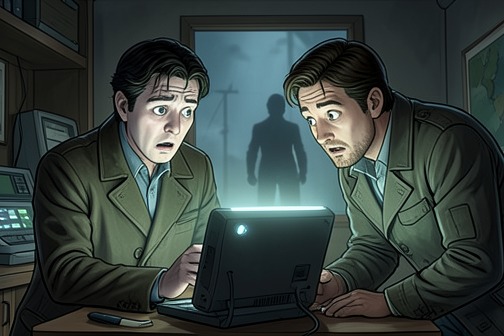
[Peter Hale](entity:character-recall-character-peter-hale-c763a42ea8fd)'s resurrection is presented as a startling reversal of the story's apparent order of life and death. The revelation does not arrive in a formal return scene; it reaches [Stiles Stilinski](entity:character-recall-character-stiles-stilinski-12e2b3c432f2) and [Carson Bradley](entity:character-recall-character-carson-bradley-e17d1b9b17c6) through urgent messages about [Jackson Whittemore](entity:character-recall-character-jackson-whittemore-120cc2b873d5), where Peter Hale's name transforms an already impossible crisis into something even less stable. His return matters because it supplies both a renewed threat and a possible solution: Peter Hale is alive, has a plan for bringing Jackson down, and is now part of the final effort to end the crisis.
## The Revelation Through Urgent Messages
The immediate trigger is a message saying that [Lydia Martin](entity:character-recall-character-lydia-martin-632f28e7f863) is needed because something is wrong with Jackson Whittemore, who is believed to be alive and moving. The message adds that [Derek Hale and Peter Hale](entity:relation-recall-relation-derek-hale-peter-hal-8db47676cf2b) have a plan, making Peter Hale's presence the crucial piece of information that Stiles Stilinski has missed. Carson Bradley reads the message aloud and identifies the name explicitly as Peter Hale, while Stiles Stilinski reacts with widening disbelief.
Carson Bradley confirms that the apparently impossible fact is real: Peter Hale is alive and well, and is even trying to make jokes. The phrasing makes the resurrection feel both alarming and strangely ordinary. Peter Hale is not described as a distant apparition or a silent supernatural presence; he has returned to active participation, speaking, planning, and exerting influence over the events surrounding Jackson Whittemore.
## A Return Without an Explanation
The circumstances of Peter Hale's return remain deliberately unexplained. When Stiles Stilinski asks how it happened, Carson Bradley can only say that Peter Hale did not explain. The absence of a mechanism keeps the event from becoming a resolved piece of supernatural exposition. The fact of resurrection is certain, but its process is withheld, preserving the story's atmosphere of unstable rules and incomplete knowledge.
That withholding also changes the meaning of the surrounding crisis. The group is already dealing with Jackson Whittemore's apparent death and subsequent survival, as well as a substance or goo covering him and [Chris Argent](entity:character-recall-character-chris-argent-f162a960430e) temporarily acting on their side. Peter Hale's resurrection therefore does not stand alone as one impossible exception. It belongs to a wider breakdown in the boundary between death, transformation, and continued existence. Carson Bradley's explanation to Stiles Stilinski is consequently practical rather than philosophical: there is no time to solve the mystery before following Peter Hale's plan.
## The Plan Against Jackson
Peter Hale's importance in the returned state is defined by action. Carson Bradley tells Stiles Stilinski that Peter Hale has a plan for taking Jackson Whittemore down, and the information prompts them to leave immediately. [Derek Hale](entity:character-recall-character-derek-hale-f259fdd07b23) is associated with the plan as well, placing Peter Hale within a temporary strategic alignment with his nephew rather than presenting the resurrection as an isolated personal return.
The plan gives the resurrection a clear dramatic consequence. Peter Hale's return supplies knowledge and agency at the point when Jackson Whittemore's condition appears to have defeated ordinary expectations. Jackson Whittemore is described as alive and able to move, despite having been thought dead, while messages report that he is covered in goo. The situation shifts from mourning or containment toward confrontation. [Carson Bradley and Stiles Stilinski](entity:relation-recall-relation-carson-bradley-stile-fe2b2021ba78) run out together in the hope of ending the crisis once and for all, turning Peter Hale's return into the summons for the story's final intervention.
## The Pattern of Impossible Survival
Peter Hale's resurrection echoes the story's repeated reversals around disappearance and death. Earlier, Lydia Martin vanishes from a hospital bathroom while the shower is still running, leaving no visible route of escape and no sign that she has gone anywhere. Later, after a violent encounter, Carson Bradley sits with Stiles Stilinski beside an ambulance in pouring rain while Stiles Stilinski gradually regains feeling in his body; police and ambulance lights surround them as they struggle to explain what they have seen.
These episodes establish a world in which apparent endings cannot be trusted. Lydia Martin's disappearance turns an enclosed hospital space into a place of inexplicable absence. The ambulance aftermath turns a single unexplained creature into evidence that people are dying while the witnesses remain unable to account for the violence. Against that background, Peter Hale's return intensifies an existing pattern rather than introducing it from nowhere. The resurrection confirms that the story's supernatural world repeatedly converts finality into uncertainty.
## Consequences and Narrative Significance
The return immediately changes the balance of the conflict. Peter Hale is no longer confined to the status of a dead figure from the past; he becomes an active planner whose knowledge is needed to confront Jackson Whittemore. His resurrection also forces Stiles Stilinski and Carson Bradley to revise their understanding while already in motion. They cannot pause for a complete explanation, so the story makes action depend on accepting an impossible fact.
Carson Bradley's condition after the police-station hostage crisis provides a sharp contrast to Peter Hale's return. Carson Bradley has been knocked unconscious, examined for a concussion, and left with no knowledge of what happened during at least half an hour of blackout. The next morning, recovery begins through ordinary physical and emotional signs: Carson Bradley wakes without crying and finds Stiles Stilinski holding her. Peter Hale's resurrection belongs to a different register of recovery. It is not gradual or medically explained; it appears as a sudden fact that reorganizes the stakes and sends the surviving characters back into danger.
The event thus functions as a resurrection in both plot and structure, but its return is incomplete in a significant way. Peter Hale comes back not with a settled account of death, restoration, or reconciliation, but with a plan, a target, and unanswered questions. The story treats survival as useful before it treats it as understandable. That choice preserves the tension of the supernatural conflict: the dead may return, the supposedly dead may still move, and the characters' only reliable response is to follow the next urgent lead.
Event 44
Jackson's warehouse showdown
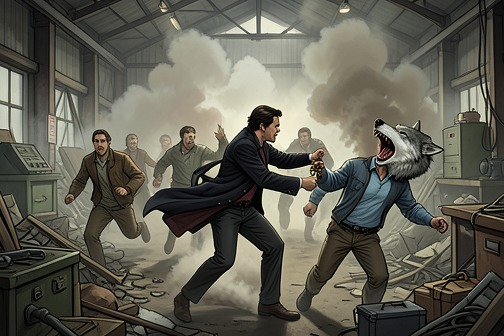
[Jackson's warehouse showdown](entity:event-recall-event-jackson-ede6e8a899bc) is the climactic confrontation between the [Beacon Hills](entity:location-recall-location-beacon-hills-dbaca5be6a9f) group and the [Kanima](entity:creature-recall-creature-kanima-00fa600e686e), but its decisive movement is not simply a fight. The scene first appears to demand force: Jackson must be stopped, [Lydia Martin](entity:character-recall-character-lydia-martin-632f28e7f863) must be brought into the warehouse, and the closing opportunity to save him is running out. Yet the encounter shifts from pursuit to recognition when Lydia's key interrupts the Kanima's attack and briefly restores [Jackson Whittemore](entity:character-recall-character-jackson-whittemore-120cc2b873d5)'s human identity. That moment of recovery makes the violence that follows both tactically necessary and emotionally devastating, because Jackson is recognized as himself just before [Derek Hale and Peter Hale](entity:relation-recall-relation-derek-hale-peter-hal-8db47676cf2b) kill him.
## Causes and Stakes
The confrontation begins under severe time pressure. [Carson Bradley](entity:character-recall-character-carson-bradley-e17d1b9b17c6), [Stiles Stilinski](entity:character-recall-character-stiles-stilinski-12e2b3c432f2), and Lydia Martin race toward an old warehouse because [Scott McCall](entity:character-recall-character-scott-mccall-7740871d71c9) has directed them there, while the group understands that the opportunity to act is closing. Their objective has two inseparable parts: Lydia must be brought inside, and Jackson must be saved. The wording of the situation makes rescue and prevention inseparable; there is no safe delay, no room for a failed maneuver, and no expectation that the Kanima will simply wait for them.
The warehouse also gathers several unresolved strands of the Kanima crisis. Jackson is both the attacking creature and the endangered person hidden within it, while Lydia carries a personal connection that the others cannot replace. [Carson](entity:character-recall-character-carson-24b1f76a12e7) has already witnessed the creature's violence and recognizes the danger of its presence, but the scene assigns Lydia a different kind of access. The stakes therefore extend beyond survival. They include whether Jackson can be reached, whether Lydia's attachment can penetrate the transformation, and whether the supernatural response will treat recovery as a reason to spare him or as only a brief interval before execution.
## The Collision at the Warehouse
Stiles drives the Jeep directly toward the warehouse wall, accelerating at a speed he would not ordinarily consider. The vehicle crashes through the wall, bringing the structure down around it, and the impact knocks the Kanima away. The maneuver is reckless but purposeful: rather than entering cautiously, Stiles converts the Jeep into an instrument of interruption. His first concern after the collision is whether he has hit the creature, a question that captures the scene's unstable boundary between rescue and attack.
The danger immediately returns. The Kanima leaps onto the hood, and Lydia and Stiles scramble out of the vehicle while Carson climbs over the seat and follows them. Stiles runs to stand with Scott, but Lydia moves toward the Kanima instead of retreating. When the creature approaches with one clawed hand raised, she calls Jackson's name. Carson tries to pull her back and orders her to run, but Lydia refuses to leave the person she believes remains inside the reptilian form.
Lydia then produces the key she has been handling. The small metal object becomes the confrontation's critical material focus: the Kanima stops, stares at it, and appears to recognize it. The key does not defeat the creature through physical force. Instead, it creates a pause in which memory and identity become visible. The Kanima's reptilian features begin to recede; Jackson stands before them with scales still covering his skin, claws remaining on his fingers, and his eyes losing their reptilian surface. He takes the key from Lydia and looks back at her, demonstrating that the object has opened a channel between the transformed body and the person it contains.
## Recognition Before Death
The restoration is incomplete. Jackson is not wholly human again: scales and claws remain, and the threat has not disappeared. Nevertheless, the change is enough to alter the meaning of the scene. Lydia's key does not merely distract him; it allows Jackson to be seen and to see her. Carson steps away because the moment belongs to Lydia and Jackson, while Stiles's arms close around Carson from behind. The physical arrangement briefly separates the witnesses from the pair whose relationship now determines the emotional center of the confrontation.
Jackson lowers the key and backs away from Lydia. Peter watches from the sidelines, and Jackson looks past the assembled group before giving a single nod. The gesture functions as a signal, although the scene leaves its exact meaning implicit. Immediately afterward, Derek and Peter attack from opposite directions, extend their claws, and drive them through Jackson's abdomen. Scott steps forward but recognizes that he cannot stop what is happening. The two Hales lift Jackson by their claws, withdraw them, and let him fall, making clear that the attack is not an attempt to restrain or cure him. It is an execution carried out after the Kanima has been identified with Jackson once more.
Lydia catches Jackson as he collapses and lowers him to his knees. He coughs violently and struggles for breath while looking at his former girlfriend. His interrupted attempt to ask whether she still feels the same receives an immediate answer: Lydia repeatedly tells him that she still loves him. The declaration arrives after the key has restored recognition but before Jackson's death, so love is given neither as a promise of recovery nor as a reward for survival. It becomes a final acknowledgment of the person beneath the monster and of the relationship that the transformation had threatened to erase.
## Consequences and Aftermath
The showdown resolves the immediate Kanima threat through Jackson's death, but its method produces a grave moral and emotional consequence. The group succeeds in reaching Jackson, yet reaching him does not save his life. The value at stake shifts from imminent danger to temporary hope and then from hope to irreversible loss. Lydia's intervention proves that Jackson is still accessible, while Derek and Peter's decision proves that accessibility alone is not enough to preserve him.
The scene also clarifies the limits of the group's power. Scott cannot prevent the Hales' attack once they commit to it, and Carson, Stiles, and Lydia can witness or attempt to intervene without controlling the outcome. Stiles's destructive entrance changes the conditions of the fight, and Lydia's key changes the Kanima's behavior, but neither action determines the final judgment. The warehouse becomes a place where human ingenuity, emotional recognition, and supernatural violence operate in sequence rather than in harmony.
Jackson's death carries additional weight because Carson understands his history with Lydia and has already moved beyond their failed relationship. Carson describes Jackson as someone who has ruined lives and hurt people while insisting that he is still a good person underneath. She contrasts Jackson's emotional hardness with Lydia's intensity, arguing that Lydia is the person he has genuinely cared about. That earlier recognition gives the warehouse scene a larger context: Jackson's apparent monstrosity does not cancel his capacity for attachment, but the possibility of goodness does not prevent the consequences of his transformed violence.
## Narrative Significance
As a climactic event, Jackson's warehouse showdown joins an action set piece to a recognition scene. The Jeep crashing through the wall supplies the spectacle of physical intervention; the key supplies the quiet reversal in which the Kanima becomes Jackson again; the simultaneous attack by Derek and Peter converts recognition into tragedy. The sequence therefore depends on the gap between expectation and result. The characters race to save Jackson and succeed in reaching him, but the success arrives too late to become survival.
The confrontation also echoes the book's recurring pattern of disappearance, bodily danger, and delayed understanding. Lydia's earlier disappearance from the hospital leaves an impossible absence: a running shower, no visible route, and nowhere for her to have gone. Carson's memory of her mother's unexplained departure likewise connects disappearance with the loss of ordinary explanations. In the warehouse, the opposite process occurs. Jackson does not vanish; the hidden person within the Kanima becomes visible for a few moments, and that visibility makes his impending death more intimate rather than less terrible.
The event's aftermath is prepared by the group's accumulated exposure to violence. Carson has sat with Stiles and [Sheriff Stilinski](entity:character-recall-character-sheriff-stilinski-55cc58b45e12) in the rain beside an ambulance after an apparently impossible death scene, while the town's supernatural threats have expanded from werewolves to the lizard-like creature that seems disturbingly familiar. After being held hostage, Carson later waits outside the guidance office in Stiles's plaid shirt and learns that a concussion and a prolonged blackout followed the police-station crisis. These surrounding experiences matter because the warehouse is not an isolated adventure: it is another point at which teenagers are forced to witness adult-scale violence, make decisions under pressure, and carry knowledge that ordinary life cannot comfortably contain.
Jackson's final confrontation consequently marks both an ending and a transfer. The Kanima's immediate threat ends, but the emotional burden moves to Lydia, the witnesses, and the surviving members of the group. Lydia's key recalls Jackson's identity, her confession confirms their continuing bond, and the Hales' claws close the story before reconciliation can become a future. The warehouse showdown is therefore decisive not because it restores normality, but because it proves that love and recognition can reach a transformed person even when they arrive too late to avert death.
Event 45
Jackson's death and werewolf transformation
[Jackson's death and werewolf transformation](entity:event-recall-event-jackson-ed6dad5e364a) is the climactic reversal in which apparent finality becomes supernatural rebirth. [Derek Hale and Peter Hale](entity:relation-recall-relation-derek-hale-peter-hal-8db47676cf2b) drive their claws through Jackson's abdomen and leave him to die, but [Lydia Martin](entity:character-recall-character-lydia-martin-632f28e7f863)'s declaration of enduring love reaches him at the threshold between identities. His body rises again as a fully transformed wolf before returning to a human face, making the event both a death witnessed twice and the beginning of Jackson's life as a werewolf.
## Causes and Background
The transformation follows Jackson's prolonged [Kanima](entity:creature-recall-creature-kanima-00fa600e686e) existence and the efforts to understand and contain the creature. Earlier investigation has produced little reliable information: searches for Kanima legends, shape-shifters, and a giant lizard that cannot swim yield almost nothing online, while the bestiary remains difficult for [Carson Bradley and Stiles Stilinski](entity:relation-recall-relation-carson-bradley-stile-fe2b2021ba78) to interpret. The absence of clear knowledge leaves the group dependent on supernatural expertise rather than ordinary research.
That dependence is visible in the group's trust in [Deaton](entity:character-recall-character-deaton-d386b883cb01), whose role has become that of an adviser whenever [Scott McCall](entity:character-recall-character-scott-mccall-7740871d71c9) faces a supernatural crisis. At the [Beacon Hills veterinary office](entity:location-recall-location-beacon-hills-veterin-a83bc7d4fc28), Deaton prepares a small bottle and a spring-loaded syringe intended to help with the Kanima problem. The device represents an attempt to solve Jackson's violence through practical containment, but the final confrontation exceeds any controlled procedure: Jackson's fate is decided through force, grief, recognition, and an unexplained werewolf transformation.
## The Death Scene
Derek and Peter attack Jackson from opposite sides after a signal that allows them to move together. Their claws pierce his abdomen, and when Scott steps forward, he recognizes that there is no rescue being attempted. Jackson is lifted by the two Hales and then dropped. Lydia catches him as he falls, lowers him to his knees, and remains beside him while he struggles for breath.
Jackson's last question is directed toward Lydia and concerns whether she still loves him. Lydia answers with an urgent, repeated confession that she does. Her words are not a general consolation but a direct response to the relationship at the center of his final human moment. Jackson falls forward in her arms, and the key he has been holding clatters to the floor. As the last scales disappear from his face, the scene presents him not as a dying monster but as a dying boy: a teenager understood as having been dealt an undeserved fate.
The narrator experiences this as Jackson's second death. His earlier death at the game had seemed unreal, almost like an image from television; this death, by contrast, is physically immediate and emotionally undeniable. The distinction makes the event a study in repeated loss. The first apparent death creates distance through spectacle, while the warehouse death removes that protection and forces [Carson Bradley](entity:character-recall-character-carson-bradley-e17d1b9b17c6) and the others to confront the reality of a friend dying in front of them.
## Reversal and Transformation
The apparent ending does not hold. After Lydia rises, the silence is interrupted by the sound of nails scratching across the floor. Jackson's hand moves. Lydia turns as his eyes open, and the group watches him stand beneath the light of [Stiles Stilinski](entity:character-recall-character-stiles-stilinski-12e2b3c432f2)'s Jeep. His body arches, he becomes fully wolf-like, and his eyes glow bright blue. He howls before his claws retract and his human face returns.
This sequence makes bodily change the event's central language. Jackson does not simply awaken healed, nor does he remain the Kanima. He passes through death into a third condition, visibly marked by the wolf form but able to recover his human face. The transformation therefore changes the meaning of the earlier attack: Derek and Peter's act appears to be an execution, yet it becomes the violent threshold of Jackson's conversion into a werewolf.
The scene also turns identity into something witnessed collectively. Jackson's revival is not a private recovery hidden from the group; Scott, Lydia, [Carson](entity:character-recall-character-carson-24b1f76a12e7), Stiles, [Allison Argent](entity:character-recall-character-allison-argent-bcc580b16b14), [Chris Argent](entity:character-recall-character-chris-argent-f162a960430e), [Isaac Lahey](entity:character-recall-character-isaac-lahey-4fcaad0314c9), and Derek see the new werewolf together. [The supernatural](entity:concept-recall-concept-the-supernatural-b0cadf182c10) change is consequently tied to public recognition. The boy who was mourned returns in a form that demands a revised understanding of who he is.
## Relationships and Emotional Consequences
Lydia's love functions as the emotional hinge between Jackson's apparent death and his return. She first holds him while he is dying, then watches him rise, and finally rushes into his arms when his transformation is complete. Jackson embraces her tightly. The movement from his whispered uncertainty to her repeated assurance, followed by physical reunion, gives the transformation an interpersonal structure: the new form is met not with immediate rejection but with recognition and affection.
The aftermath briefly reveals several relationships arranged around Jackson's return. Scott and Allison hold hands. Isaac and Derek stand together in silent acknowledgment. Chris remains behind Allison without speaking. Stiles offers Carson a small smile before his attention is drawn toward something behind her. These pairings frame Jackson and Lydia as part of a wider network altered by the night, while the quiet reactions suggest that no one can treat the event as an isolated miracle.
The emotional effect is not uncomplicated relief. Lydia is visibly breaking down before Jackson moves, and the group's grief has already settled into the scene. Jackson's revival does not erase the memory of the killing, the Kanima violence, or the suffering that preceded it. Instead, it places hope directly on top of trauma, requiring the survivors to hold both realities at once: Jackson was dead, and Jackson is alive in a radically changed body.
## Consequences and Narrative Significance
Jackson's transformation resolves one identity crisis while opening another. The Kanima's monstrous appearance is gone, but the replacement identity is not ordinary human life; Jackson emerges as a werewolf, complete with claws, glowing blue eyes, and a howl. The event thus provides closure without restoring normality. It converts the question of what Jackson is into the question of how the group will understand and live with what he has become.
Its structure depends on reversal, recognition, and repetition. Death appears twice, yet the second death is the one that makes the first death's unreality emotionally legible. Lydia's confession supplies recognition at the moment Jackson asks whether he is still loved, and the scratching hand reverses the group's mourning. The event's power comes from refusing a clean division between monster and boy: Jackson dies with the scales disappearing, returns as a wolf, and is immediately reclaimed by Lydia as the same person within a transformed condition.
The scene also extends the book's larger pattern of ordinary life being interrupted by supernatural danger. Elsewhere, a missing Lydia vanishes from a hospital bathroom despite having nowhere apparent to go; Carson Bradley and Stiles endure paralysis beside an ambulance while police lights flash around them; Carson later wakes after a police-station hostage crisis with a mild concussion and no memory of what happened. Against these episodes of disappearance, bodily control, and uncertain survival, Jackson's revival is the most complete reversal: the body that seems to have become an ending becomes evidence that supernatural change can continue after death.
Jackson's final emergence therefore carries both tragedy and possibility. The warehouse witnesses the loss of the human life the group knew, but it also witnesses the return of a boy who is no longer trapped in the Kanima form. Lydia's embrace gives that return its first social meaning. The event ends not with a solitary creature escaping into darkness, but with Jackson standing among the others as a new werewolf, while the group absorbs the fact that death has changed him without wholly taking him away.