Atalia’s widowhood
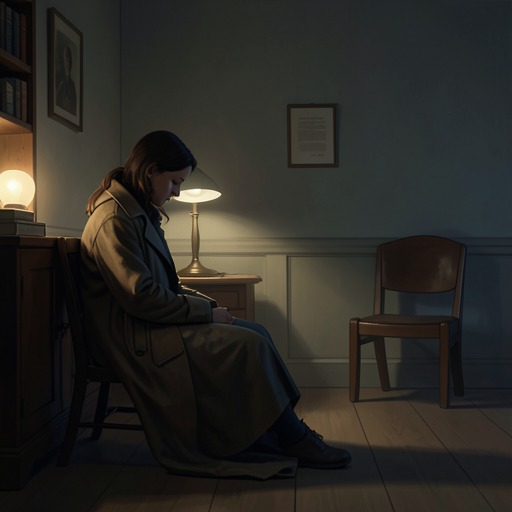
JudasAtalia’s widowhood is not merely a biographical fact: after Mija Wald dies in the war, she remains bound to his father, Gershom Wald, in a household organized around bereavement, while continuing to live beyond the role of a soldier’s wife. Her measured disclosure to Shmuel Ash exposes the loss behind her independence and gives personal force to the novel’s distrust of ideal futures that demand people’s pain as their price.
The Marriage and the Loss
Atalia tells Shmuel that she was married to Mija for a year and a half. Mija was the only son of Gershom Wald, and his death in the war left Atalia and Gershom alone. She identifies Gershom as her former father-in-law, marking the relationship that remained after her marriage ended in bereavement. The concise account makes the loss both intimate and familial: Mija’s death takes a husband from Atalia and a son from Gershom.
Gershom gives the loss another measure when he describes Mija as the father of the grandchild he will never have. Mija had grown up without a mother, and Gershom raised him alone; Gershom says that he himself led his son to the sacrifice. The family’s grief thus includes not only the death of the one child but also the future descendants that will never exist, and the burden of a father’s responsibility for his son’s wartime fate.
Widowhood in the Household
After Mija’s death, Atalia, Gershom, and Shaltiel Abravanel live together for about two years. Atalia describes them as isolated, like people shut inside a submarine. Gershom and Shaltiel, who had once argued over everything, no longer argue: Mija’s death has silenced them. Atalia cares for the two men while working several hours a day at a real-estate office on Straus Street. Her widowhood therefore takes shape within practical routines of care and work, as well as shared grief and withdrawal.
The household’s losses do not dissolve its complications. Atalia recalls that Shaltiel was honest and courageous, but had never wanted to be a father and did not know how to act as one. Her account of him is neither a simple defense nor a dismissal; it places her own past as his daughter alongside the aftermath of Mija’s death and the strained domestic life that followed it.
Disclosure to Shmuel
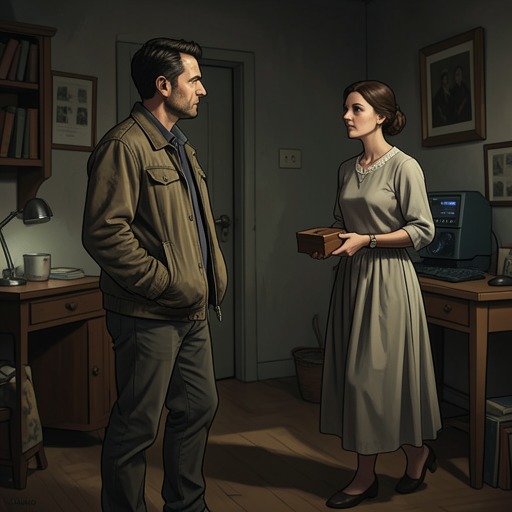
When Shmuel asks whether Gershom said she was a widow, Atalia answers with unusual directness. She gives him the duration of her marriage, identifies Mija as Gershom’s only son, and states twice that Mija died in the war. She then turns the disclosure back to the present: she and Shmuel are about to see a French suspense film starring Jean Gabin at the Orion cinema. The transition does not cancel the loss; it shows that Atalia can name it without allowing it to become the sole subject of the encounter.
Gershom’s teasing description of Atalia as a solitary widow makes her status part of his pointed challenge to Shmuel’s faith in world-changing causes. He portrays her as someone who does not mobilize to repair the world, but instead moves through life doing good and bad and breaking inexperienced hearts. His remarks also note that she receives an inheritance from her parents and a widow’s pension from the Ministry of Defense. The mixture of provocation and material detail makes clear that widowhood has both a public, financial dimension and a private one that others interpret for her.
Loss and the Refusal of Perfect Futures
Gershom sets Atalia’s life beside the revolutionary future Shmuel hopes to help bring about. In his imagined purified world, he says, even a solitary widow like Atalia would be dispensable if she did not devote herself to repairing the world. His warning extends beyond her: he insists that schemes of universal salvation often arrive with massacres, crusades, jihad, or the gulag, and argues that people’s inherited suffering should not be traded for another promised redemption. Atalia’s widowhood gives this argument a concrete human stake. The question is not only what a political ideal claims to accomplish, but what happens to particular people, their grief, and their imperfect lives when perfection becomes the measure of their worth.
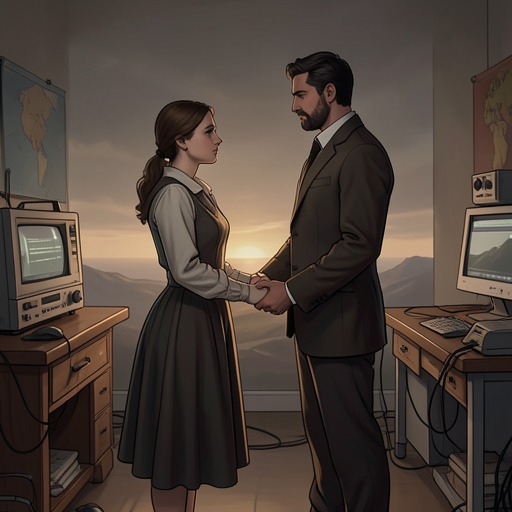
Later, Gershom describes himself as living between farewells and says he will miss Shmuel when he leaves. Atalia’s absence from that final reflection does not remove her from its pattern: Mija’s death has already made bereavement and separation the household’s enduring conditions. Her widowhood remains a loss that cannot be repaired by ideology, yet it does not define all that she is; she works, cares for others, speaks about her past on her own terms, and continues to enter new encounters.