Family grief after Mija's death
JudasFamily grief after Mija’s death is not a single act of mourning but a condition that reorganizes the household and keeps the violence of the 1948 war present in its daily life. Gershom Wald remembers his only son as both the child he raised and his closest friend; his guilt over helping form the voice that sent Mija to fight, the unresolved circumstances of Mija’s death, and the eventual silence between the survivors make loss an inheritance rather than a finished event.
The son and the father’s responsibility
Mija was the son Gershom raised alone after Mija’s mother died when the boy was six. Wald recalls that Mija had lost a kidney at nine, yet in late 1947 he deceived the recruitment committee and enlisted. Atalia Abravanel urged him not to go, and Shaltiel Abravanel made Wald promise that his son would not fight. Shaltiel opposed the war and argued that young people on both sides should lay down their arms. Wald, by contrast, had helped teach Mija to identify military sacrifice with duty: he had brought him up on stories of defenders and fighters, trained him, and joined teachers, peers, and the wider country in repeating the summons that a voice had called and the young man had gone.
Wald’s recollection refuses the comfort of separating one person’s decision from the society that formed it. He admits that he, too, was part of the voice that called Mija, and that he had argued for the war as a sacred obligation. After Mija’s death, the father’s old certainty reverses into self-accusation: the son whom he had helped prepare for combat is also the son he believes he led to sacrifice. He describes himself as no longer alive, a man who remained after Mija was gone but could not experience that survival as life.
The death that cannot be completed
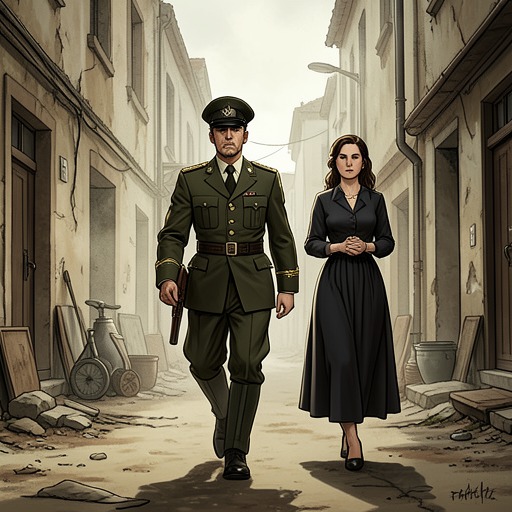
Mija was killed on April 2, 1948, while accompanying a convoy on the road between Tel Aviv and Jerusalem. The convoy came under fire in a deep ravine; as night approached, some fighters tried to remove a stone barricade while others, including Mija, climbed the hillside to attack the snipers with homemade grenades. The attack failed. The convoy withdrew in darkness carrying some of its dead and wounded, and only as it neared Jerusalem did someone realize Mija was missing. His friends searched the slopes the next morning and found him.
The account does not resolve what happened during the hours before the search party reached him. Wald can only imagine that Mija may have lain wounded through the night, called for help, or tried to crawl down toward the road. He also reports the terrible mutilation of the body found among the rocks. The question of whether Mija was killed before or after he was castrated remains unanswered. That uncertainty is not a marginal detail in the family’s grief: Wald says the unanswered question was left to his imagination, giving him something to think about night after night. The missing knowledge becomes an enduring part of the loss.
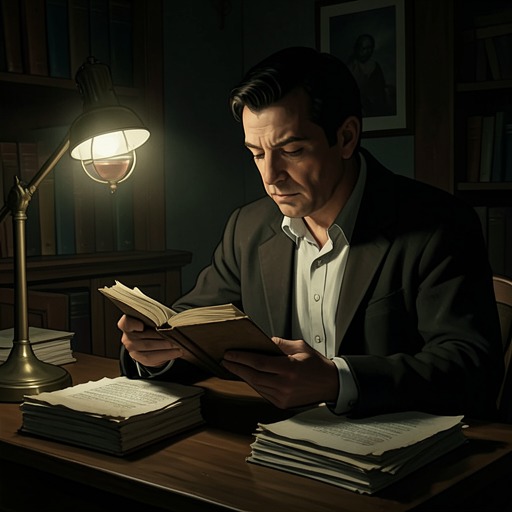
Wald did not learn the details directly when Mija died. About a year later, one of Mija’s companions died in an accident at work in Galilee, and Wald received the man’s diary. In fewer than ten words, the diary recorded how Mija had been found. From that brief disclosure onward, Wald says, the image returned continually: with his eyes shut or open, by day or night. The sudden gap between the sparse written account and the relentlessly recurring image shows how belated knowledge can intensify rather than settle bereavement.
A household enclosed by loss
After Mija’s death, Wald, Shaltiel, and Atalia remained together in the house. Wald says that the death silenced him and Shaltiel: although they had previously disputed Shaltiel’s arguments, they never argued again. Their disagreements did not find a resolution; grief left them without words. Wald, who needed to talk, suffered in the silence, while Shaltiel was at ease within it. Their shared home became a closed world in which the dead son’s absence was present even when his name was not spoken.
The household’s isolation was also shaped by the political aftermath of war. Shaltiel’s Arab friends were on the other side of the new borders or had been driven from their homes in Katamon, Abu Tor, and Baka; his Jewish friends had abandoned him as a traitor. In another recollection, Shaltiel describes the three survivors as shut inside a coffin. During the siege of Jerusalem, the house’s thick stone walls protected them from bullets and shells, while Atalia went out for kerosene, ice, and rationed food. The physical shelter did not undo the emotional confinement. After the war, Shaltiel withdrew further, cut off contact with the outside world, and left the family with his disappointment in the new state and with writings that, as far as Wald knew, left nothing behind.
Mija’s death also changes the family’s future as Wald imagines it: he calls himself the father of a grandson he will never have. That absent next generation gives the bereavement a continuing shape. The loss is not only of the young man who died, but of the family life and descendants that cannot follow from his death.
Grief passed between survivors
In speaking to Shmuel, Wald first insists that pain cannot be shared. Yet the scene that follows complicates the claim. Shmuel serves him tea with lemon, honey, and a little brandy, helps him sit up, and gives him codeine. When Wald’s coughing fit becomes so severe that he strikes his head against the wall, Shmuel stops him and tries to help him drink. He recognizes the old man’s suppressed sobs beneath the coughing and, moved by his suffering, places his hand over Wald’s. Wald’s warm fingers close around the younger man’s cold ones for several minutes. The gesture does not transfer or cure the grief; it makes room for Shmuel to bear witness to it without pretending that the loss can be undone.
Wald also revisits the public language with which he once made death bearable. He had repeated the familiar claim that those killed in the 1948 war had not died in vain, as others did, and recalls a line by Natan Alterman about a death that might, once in a thousand years, have meaning. But Shaltiel’s conviction—that all the dead, from war victims to those who die of illness, accident, or old age, have died in vain—now catches in Wald’s throat. The two positions remain painfully unresolved: the inherited promise of national meaning cannot silence the father’s knowledge of one particular death, while Shaltiel’s refusal of consolation offers no release from mourning.
The novel sets this intimate wound beside competing accounts of the war’s public consequences. Shmuel remembers being taught as a boy to see Jews as just and Arabs as enemies; he also remembers the Arab customers and guests who had once met his family in Haifa before attacks and reprisals, barricades, and the flight of tens of thousands of Arab residents to Lebanon. He continues to wonder whether what happened had to happen, while his father maintains that the war left no alternative. These arguments do not explain Mija’s death away. Rather, they show how family grief persists within larger narratives that insist on necessity, sacrifice, or historical fate.
Repetition, silence, and the living
Wald’s grief is marked by returns: the date of April 2, the hillside among the rocks, and the image disclosed by the diary recur in his mind long after the event. More than ten years after Mija was killed, Shaltiel says he still cannot sleep because he sees his son being killed again each night. In the family’s account, time has passed, but the decisive scene does not become safely past. Its details recur in memory, and the unanswered question remains open.
The surviving household has no single way to express this aftermath. Wald talks, sometimes calling himself a dead man who will not stop speaking; Shaltiel retreats into silence and the private disappointment of his room; Atalia bears the practical burden of keeping the household supplied and later describes the years of confinement. Shmuel, listening and caring for Wald, becomes a witness to a grief that began before he arrived in the house. When he eventually leaves, Wald anticipates another departure and says that he lives between farewells. Mija’s absence is thus not confined to a father’s memory: it has become the condition under which the survivors speak, withdraw, care for one another, and face the prospect of being left alone.