Gershom Wald’s father-son relationship with Mija Wald
JudasGershom Wald’s relationship with his only son, Mija Wald, is the private wound at the center of Wald’s arguments about war, political conviction, and sacrifice. Mija’s death near Bab al-Wad on April 2, 1948, leaves Wald living with the knowledge that he helped shape the very patriotic language that led his son toward combat, while the son he lost can no longer answer the question of whether that sacrifice was worthwhile.
Father and only son
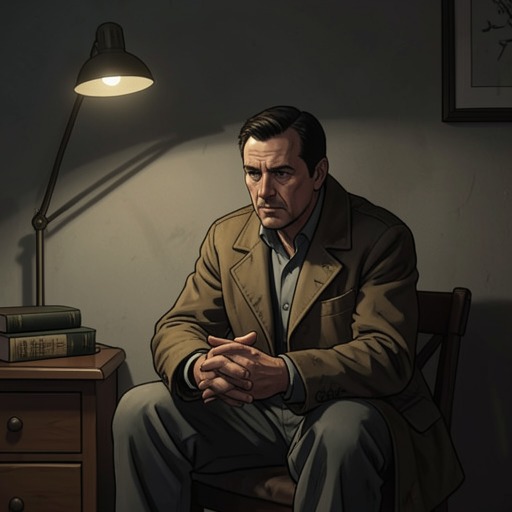
Mija was Wald’s only child and the husband of Atalia Abravanel. In the household that Shmuel Ash comes to know, the father-son relationship is largely encountered through its absence: the library contains hundreds of books but no photograph of Mija. When Shmuel asks about him, Wald’s response is physical withdrawal and silence before he gives the date and location of the death. He then asks Shmuel to feed the aquarium fish and leave him alone. The ordinary task interrupts a disclosure that Wald can barely sustain.
Wald later describes Mija as the orphaned child he raised alone, whose mother died when he was six. He calls himself the father of a grandchild he will never have and says that he himself led his son to the sacrifice. The loss therefore encompasses not only a son but the family future Wald expected and the life he believes his own choices helped extinguish.
The making of a soldier
Mija’s death followed a decision to enter the fighting despite serious reasons to stay away. At nine, an illness had led to the removal of one of his kidneys. In late 1947 he deceived the recruitment committee, while Atalia urged him not to go and mocked his eagerness to enlist. Shaltiel Abravanel also made him promise that he would not fight. Yet Mija went, in a climate where enlistment and military sacrifice were presented as collective obligations.
Wald recognizes his own part in making that climate persuasive. He had taught Mija about the defenders of Tel Hai, Wingate’s night squads, Jewish police special forces, and the Maccabees, while insisting that the new generation had to revive heroic traditions. Teachers, classmates, and the wider country reinforced the same call. Looking back, Wald remembers the revered formula that a voice called and the hearer went; he admits that he, too, was part of that voice. His confession makes paternal love inseparable from political responsibility: he mourns Mija not as someone wholly outside the cause, but as a young man whom he helped prepare to answer it.
The death and its aftermath
Mija was killed on the night of April 2, 1948, in the fighting at Bab al-Wad, on the Tel Aviv–Jerusalem road. Wald gives Shmuel the date and place in spare, flat terms. Later, when he tells the story more fully, that same date and road mark the point at which his memory returns to the contradiction he cannot resolve: he argued for a holy war and taught his son the traditions of armed defense, while Shaltiel argued that the young people on both sides should lay down their weapons.
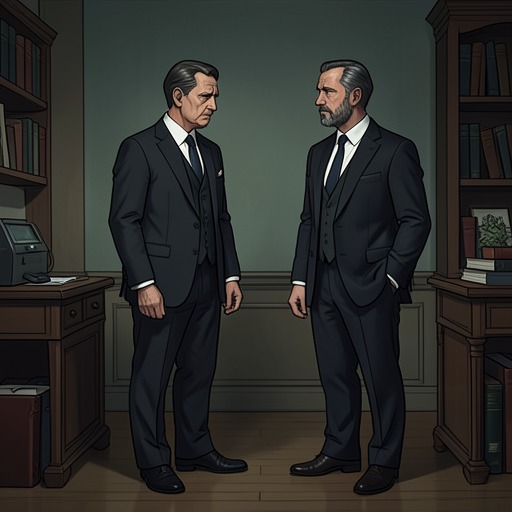
The loss reshaped Wald’s relationship with Shaltiel, Atalia’s father. Wald had supported David Ben-Gurion’s hard-headed political realism against Shaltiel’s efforts to seek an Arab-Jewish arrangement without a Jewish state. After Mija’s death, he imagines Shaltiel asking whether the sacrifice had been worth it, a question that Shaltiel never actually put to him. Wald says that the unasked question wounded him as if repeatedly driven into his throat. The two men stopped arguing and largely stopped speaking; practical exchanges about roof tiles or a refrigerator took the place of their former political debate.
For roughly two years after Mija’s death, Atalia, Wald, and Shaltiel lived together in the house. Atalia cared for the men and worked several hours a day at a real-estate office, while grief and silence settled over the household. Wald describes the three as isolated together, like people in a submarine. Shaltiel’s later death in the house further narrowed that family circle, but Mija’s loss had already brought its members into a silence that neither political conviction nor daily routine could undo.
Grief in the present
Years later, Wald’s grief remains active in his exchanges with Shmuel. When Shmuel argues that force can only postpone catastrophe rather than repair or solve the conflict, Wald asks whether he lost his only son merely to delay an unavoidable disaster. Shmuel wants to comfort him but chooses silence, then returns to the practical work of feeding the fish and serving food. Care continues where consolation fails.
Wald’s attachment to Mija also appears through his divided judgment of the political leader he otherwise admires. He calls Ben-Gurion the greatest Jewish leader and a far-seeing statesman, arguing that the Arabs would not willingly accept Jewish presence or share territory and power. He recalls Mija practicing with a weapon in the Tel Arza forest because, as Wald says, they all understood the danger. Yet his confidence in the necessity of preparation does not settle his private grief. He acknowledges that he did not imagine his own son would be among those required to act on that knowledge.
Meaning of the relationship
The father-son bond brings the novel’s political argument into the family: historical narratives of defense and sacrifice are not abstractions when a father teaches them to his child and the child dies in battle. Wald’s account does not reduce the death to a single cause. Mija chose to enlist; Atalia and Shaltiel opposed it; Wald’s teaching and the wider culture of mobilization helped make the choice imaginable and honorable. His grief persists precisely because these facts coexist.
Mija’s absence also becomes a measure of the future that cannot be recovered. Wald calls himself the father of a grandchild he will never have, while his question to Shmuel—whether the loss merely bought time—shows that political necessity offers no answer adequate to a parent’s bereavement. Their relationship survives in Wald’s memories, in his self-accusation, and in the recurring silence that followed the death: a private bond that neither patriotic rhetoric nor later argument can repair.