Mija Wald's death
JudasMija Wald's death in the Jerusalem mountains on the night of April 2 is the personal catastrophe that silences a political argument and remakes the life of the household around his absence. His father, Gershom Wald, remembers the loss as the point at which discussion with Shaltiel Abravanel ended; years later, he still relives Mija's killing night after night.
Circumstances and Historical Stakes
Mija's death belongs to the approaching war that Shaltiel had long warned would follow the establishment of an independent Jewish state. In Gershom's recollection, Shaltiel predicted a bloody, generational conflict between Jews and the Arab world, one in which even Jewish victories would deepen fear and hostility rather than settle the struggle. These warnings were delivered before Mija's death, when Shaltiel stood by the library window, often addressing a painting by Reuven Rubin rather than Gershom directly.
Gershom did not accept Shaltiel's political outlook. He regarded Shaltiel as trapped in a Manichaean vision, dividing the future into utopia and hell, and believed that Arab opposition left no real possibility of compromise. He also came to admire David Ben-Gurion's conviction that Jewish security could not be entrusted to goodwill or outside protection. Mija, too, understood the danger: he went out at night to practice with a weapon in the forest of Tel Arza. Yet his father had not allowed himself to imagine that his adult son, nearly a professor, might be killed.
The Death and the End of Debate
Gershom identifies the loss precisely: Mija, his only son, was killed in the Jerusalem mountains on the night of April 2. He returns to the fact with broken emphasis, naming his only child and then naming Mija again. The repetition gives the death the force of an interruption that cannot be absorbed into a general account of the war.
Before that night, Gershom and Shaltiel argued vehemently. Afterward, Gershom says, the tragedy extinguished their arguments forever. The loss did not resolve their political disagreement: Gershom still believed that the surrounding conflict admitted no compromise, while Shaltiel had opposed partition and the creation of a Jewish state. But their dispute became inseparable from the question Gershom imagined Shaltiel might have asked him: whether any of it had been worth the price. Shaltiel never asked it aloud; Gershom nevertheless experienced the unspoken question as a knife in his throat.
Grief and Its Afterlife
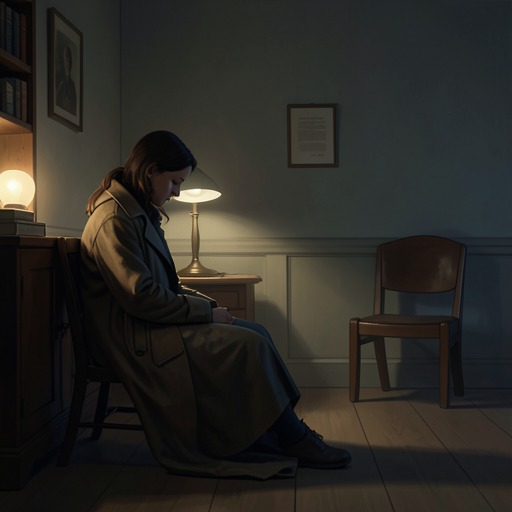
The death reshapes the home as well as the survivors' political lives. Gershom says that, after Mija was killed, he and the others fell silent; their exchanges dwindled to practical matters such as repairing roof tiles or buying an electric refrigerator. In his later account, the three of them shut themselves into the house as if into a coffin. During the Jordanian siege of Jerusalem, its thick stone walls sheltered them from bullets and shells, while Atalia went out to queue for kerosene, ice, and rationed food.
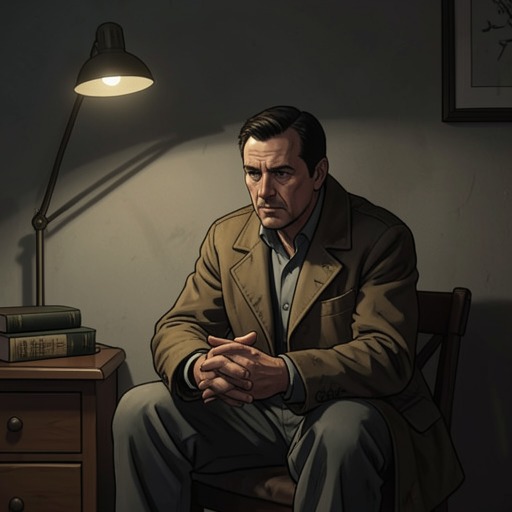
Gershom describes the bereavement as an unending nightly return: for more than ten years, he has been unable to sleep, because each night Mija is killed again among the rocks on the slope of the pine forest. The recurrence makes memory less a settled recollection than a wound continually reopened. Mija's death remains the private measure against which Gershom weighs the political choices that preceded and followed it, and the silence that survives between him and Shaltiel.
Narrative Significance
The event joins public history to domestic grief without allowing either to cancel the other. Mija had prepared for the danger that his father and Shaltiel disputed, but Gershom's knowledge of that preparation could not make the loss imaginable in advance. In the narrative, the date and place of the killing anchor later political reflection in the death of one son, while the repeated return to the night of April 2 shows how the consequences of war persist inside the house long after the fighting.