Kullervo’s knife
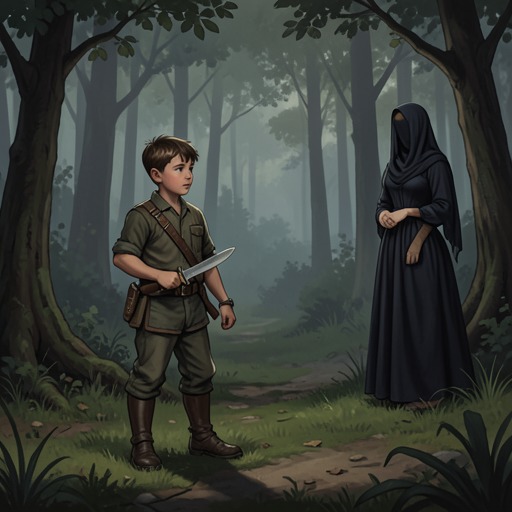
KalevalaKullervo’s knife is an ancient heirloom from his mother’s people, and its destruction marks a sharp collision between inherited value and the ordinary hazards of his shepherd’s life. Hidden inside an oat-loaf, a stone breaks the blade as Kullervo tries to cut his food; his grief and later accusation make the damaged knife more than a practical loss, revealing how singularly he values it.
Identity and Inheritance
The poem presents the knife as ancient and as a possession of deep personal importance to Kullervo. On seeing it broken, he calls it “the one thing that I honor” and identifies it as a “Relic of my mother's people!” The loss therefore reaches beyond the usefulness of a tool: the knife connects him to his maternal kin, and its breakage destroys an object that embodies that inheritance.
The Knife Breaks
The break occurs while Kullervo is shepherding and preparing to eat. He draws the knife to cut his oat-loaf, described as a hard, arid biscuit. A stone, lodged in the centre of the bread, catches the blade; the ancient knife breaks into pieces. The concealed stone transforms a routine act of cutting food into the moment when the knife’s material vulnerability becomes unmistakable.
Blame and Significance
Kullervo’s response is immediate grief: he weeps when he sees that the knife is broken. He later recounts the cause as an accusation against the hostess, saying that she baked a stone inside his oat-cake. The repeated account links the damaged heirloom to the meal that caused its destruction and gives the broken knife a continuing place in his grievance. The episode’s force lies in that contrast: bread should be sustenance, but this loaf contains the stone that shatters the one object Kullervo says he honors.