Sampo
KalevalaSampo is a wonder-working talisman whose power to grind flour makes it a source of prosperity and a prize worth pursuing across land and sea. Forged by Ilmarinen for Louhi, it first enriches Pohyola, then passes into the hands of the heroes of Kalevala and is dragged into the sea. Its fragments remain associated with renewed fertility, while Wainamoinen leaves open the possibility of bringing it back when Suomi needs him.
Identity and Function
The narrative identifies Sampo as a talisman of success and, more concretely, as a device that grinds provisions. When it is finished, one side grinds flour; the account of its work distinguishes a measure fit for eating from another measure for the storehouse. Its power therefore joins immediate sustenance to the accumulation of reserves. The prosperity it represents is not abstract: it is pictured as a repeated production of food, sufficient both for consumption and storage.
That function helps explain why Sampo matters to more than its maker or its owner. It promises abundance on a continuing basis, making possession a source of power and its loss a consequential reversal. The account gives its operation more emphasis than its physical construction: the finished wonder is recognized through what it can produce.
Forging and Possession
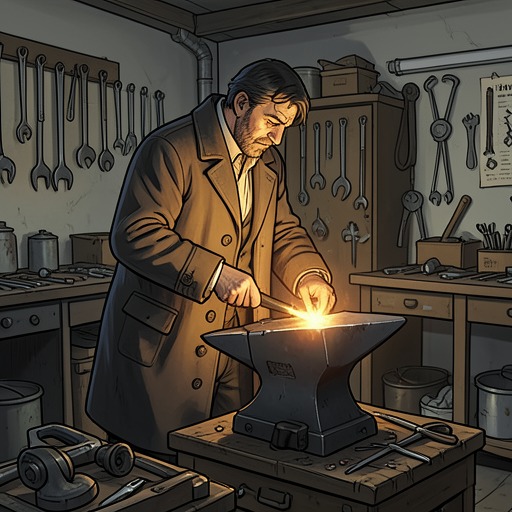
Louhi, hostess of Pohyola, makes the forging of Sampo the object of a bargain with Ilmarinen. She asks whether he can forge it and offers her daughter in return. Ilmarinen agrees to undertake the work, and the narrative shows him beginning the forging before presenting the finished Sampo and its flour-grinding power. The object is thus bound from its creation to an exchange involving marriage as well as wealth.
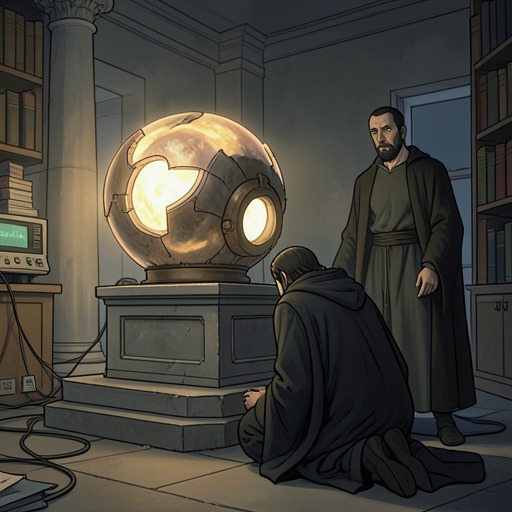
When the mill is complete, Louhi takes it away joyfully and places nine locks upon it. That act establishes possession as something guarded, not casually shared: the source of Pohyola’s plenty is secured against removal. Sampo’s value accordingly lies both in what it produces and in the control its owner exercises over access to it.
The poem later recalls the object through the identity of its maker. Ilmarinen is named as the one who forged the wonder, and the Sampo becomes a point of reference in his dealings with others. Its making is not an isolated feat of craft; it creates the object around which later claims, journeys, and conflict gather.
From the Copper Mountain to the Sea
Louhi takes Sampo away and hides it in a copper mountain. Its confinement there, behind nine locks, gives the heroes’ effort to seize it the character of an assault on a guarded store of wealth. The struggle over the object is also a contest with Louhi and Pohyola, since taking Sampo means challenging the power built around its possession.
After the heroes of Kalevala obtain it, Louhi drags Sampo into the sea in an effort to regain it. The change of setting transforms the object’s story: what had been secured in a mountain and used as a working source of provisions is now lost to the waters. Ahto, the chief water-god, comes to possess it in his undersea domain, where it is described as a priceless treasure among the fish. Sampo has not ceased to matter, but its relation to human use has changed from productive possession to submerged treasure.
Fragments and the Promise of Return
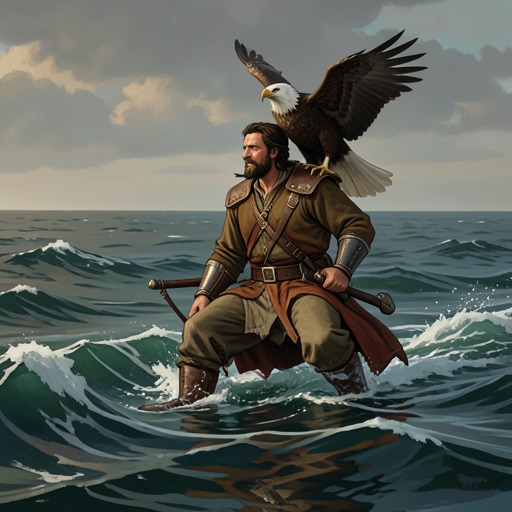
The sea does not preserve Sampo intact. In the later account of its recovery from the water, an Eagle grasps it with one talon, and many fragments are left. The object’s loss is therefore neither simple disappearance nor full restoration. Its breakage leaves pieces that can still carry consequences: the narrative connects them with sprouting seed-grain, extending Sampo’s association with abundance beyond the intact mill.
At the close of the relevant promise, Wainamoinen says that Suomi will need his coming and that he will bring back Sampo. The statement looks beyond the immediate loss without claiming that the object has already been restored. Sampo’s movement—from guarded mill, to prize, to sea-borne fragments—leaves its return as a future possibility. Its significance rests in that tension: abundance has been broken and dispersed, yet remains imaginable as something the hero may one day recover for his country.