La Montanina
LeilaLa Montanina is both the home where Marcello Trento shelters Lelia Camin and the estate through which his grief for his dead son continues to govern the present. Set above the deep Posina, the villa gathers Lelia, Marcello, and their visitors into a household shaped by Andrea Trento’s memory; after Marcello dies there, it becomes the place from which Lelia’s inheritance and uncertain future emerge.
Setting and Household
The villa stands about ten minutes from the terminus at Arsiero, beneath the height of Santa Maria. Its profile is likened to a woodcutter resting beneath a heavy load: steep roofs rise above its back turned toward the mountain, while groves and sloping meadows descend toward the Posina. The surrounding landscape is not merely a view from the house. The nearby mountain and woods frame the characters’ sense of distance, solitude, and possible escape.
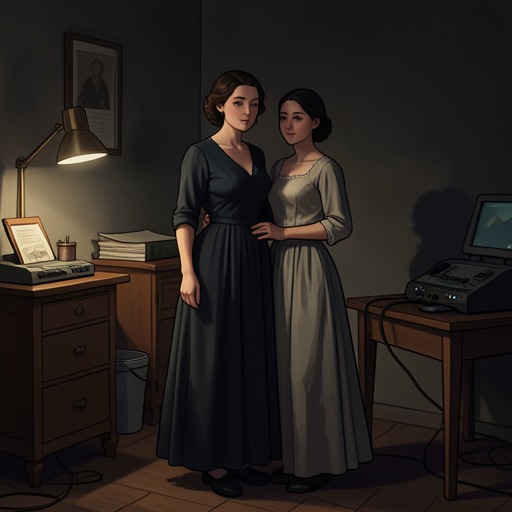
Lelia lives there with Marcello, though she is neither his daughter nor his blood relative. Marcello and his wife had taken her into their home after their only son, Andrea, died. Andrea had loved Lelia since she was young and hoped to marry her, but his parents had firmly opposed the match. By keeping her in the household, his parents sought to protect the young woman Andrea had loved and, as the narrative presents it, to answer their own sorrow at having caused him pain. The villa therefore offers Lelia shelter while also keeping her within a family history she did not choose.
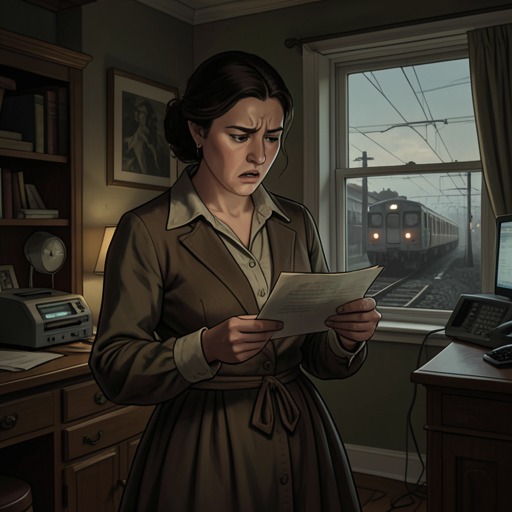
The household’s older attachments are visible in its objects and routines. Teresina had served Marcello’s wife for twenty years and remained devoted to Marcello after his wife’s death. In his study, Marcello sits among papers beneath an old three-spouted Florentine brass lamp that had once illuminated his father’s white hair and now lights his own. The lamp makes the room a quiet record of generations, while Teresina’s continuing service gives the villa the character of a home held together by loyalty as much as kinship.
Rooms Shaped by Memory
The villa’s rooms retain the traces of Andrea’s imagined future. The small north-facing room opening onto the terrace is the very room where Andrea had pictured a life with Lelia. When Massimo arrives as Marcello’s guest, Teresina takes him there. Marcello has prepared the room for him, and Teresina, moved by what she sees, asks Massimo to let Marcello know that he has noticed the work without discussing it. The guest room thus places the living visitor inside a space already marked by the dead son’s hopes.
Other rooms expose the difference between Marcello’s domestic world and Lelia’s inner life. The salon contains a small bookcase beside the fireplace, but its books are on botany and gardening, all belonging to Marcello. Don Aurelio, who knows little about Lelia’s reading, has to ask her about it; she tells him that she prefers foreign poets. Her tastes and skeptical reflections are a source of concern to him, while Donna Fedele Vayla understands them more sympathetically. The house holds these differences without resolving them: Marcello’s books and Lelia’s reported literary interests point to distinct intellectual worlds sharing the same residence.
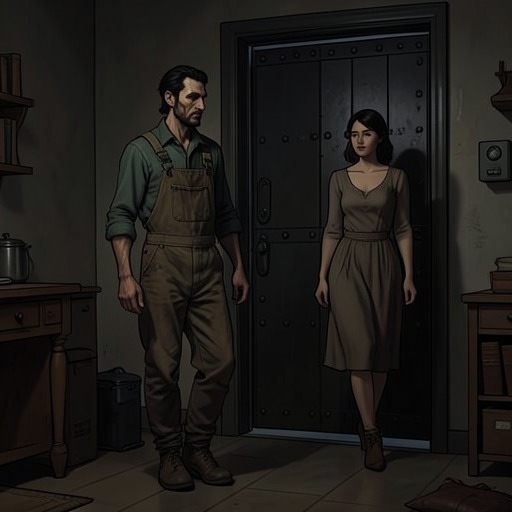
The villa also becomes a place of welcome. When Massimo arrives in the evening, Marcello meets him outside the house, embraces him, and leads him in with his support. Marcello is so eager for his friend to see the room he has prepared that he insists Massimo go there before they spend more time together. Later, Marcello asks Massimo to join him for coffee. The gestures show how readily the house opens itself to the friend of the son it has lost—and how strongly Marcello hopes that this guest might become part of Lelia’s future.
Marcello’s Plan and Lelia’s Resistance
Marcello’s plans for the villa are inseparable from his plans for Lelia. He has made her his heir, but she resists the prospect of receiving the Montanina as a reward for her loyalty. Marcello fears that the estate might pass into unfamiliar hands, because it is dear to his family; he also believes Lelia will eventually marry and wants to influence her choice while he can. When Massimo, Andrea’s closest friend, happens to arrive, Marcello sees the coincidence as providential and asks Don Aurelio to discover Lelia’s feelings. He eventually tells Massimo that he would be able to die in peace if Lelia accepted Massimo’s proposal.
Lelia, however, suspects that the adults around her have arranged a plan without her consent. From her room at the villa, she imagines that Marcello, Don Aurelio, and Donna Fedele may have combined their efforts to bring Massimo there so that he could win the heir to the estate. The suspicion turns Marcello’s loving hospitality into something she experiences as a scheme, and intensifies her fear that others intend to decide her future for her. The house is thus both her refuge and the setting in which its protection feels capable of becoming control.
Death and Inheritance
After Massimo decides to leave, the villa becomes the scene of Marcello’s last night. He returns from speaking with Massimo to his study; later, according to Giovanni, he passes repeatedly outside the servant’s door and opens the villa’s door toward the mountain. In the morning, the household discovers that some small plants Lelia had placed in crystal vases at dinner have been moved outside into earthen pots, apparently so that the rain can reach them. The unexplained care taken over the plants is one of the final actions attributed to Marcello.
Giovanni finds him dead in bed when he brings coffee at seven. Marcello is sitting upright, his body composed and his face peaceful, with no sign that he tried to get down or call the bell. The doctor judges that death was instantaneous, probably soon after Marcello had climbed into bed and before he had settled to sleep. The study lamp is still burning. The details leave the house suspended between ordinary domestic care and sudden loss: the plants have been set out for rain, the lamp has not gone dark, and the man who tended the household is gone.
The opening of Marcello’s handwritten will confirms that Lelia is his universal heir. Teresina receives a daily legacy of five lire, exempt from tax. The news makes the villa’s emotional significance materially consequential: Lelia, who had resisted being made the beneficiary of Marcello’s attachment, inherits the estate that embodies it. At the same time, the notification reports that Girolamo da Camin has declared himself Lelia’s father and announced his arrival. Lelia is twenty years and a few months old, though Marcello had believed her older; her inheritance therefore arrives alongside renewed pressure from her biological family.
A Home That Cannot Settle the Future
The Montanina remains part of Lelia’s life even as she moves between it and Donna Fedele’s villa. During a visit to Donna Fedele, Lelia sends word that she has gone back to the Montanina to collect some things and will return later. The house is no longer simply a stable home: it is a place she must revisit while facing her father’s return, the consequences of the will, and her unresolved feelings about Massimo.
The villa’s narrative importance rests on this double function. Its mountain setting promises distance from the world, while its rooms preserve the intimate history of a family and the expectations that history places on Lelia. Marcello’s welcome to Massimo, his proposed marriage, his death beneath the still-burning lamp, and the inheritance revealed afterward all converge there. La Montanina is at once shelter, memorial, and contested legacy: the physical home in which the past is lovingly kept, but from which Lelia must still determine what her future will be.