Albogasio
LeilaAlbogasio is presented as a small lakeside community bound to Benedetto by gratitude and religious devotion. When his body is brought back for burial, its inhabitants organize a special boat at their own expense, travel to meet him, and join the funeral procession. Their collective acts turn the return of a long-absent man into a communal rite. For Massimo Alberti, who fears that public participation would falsely profess beliefs he has lost, the villagers’ sincere faith becomes both a challenge and a source of emotional force.
Setting and local community
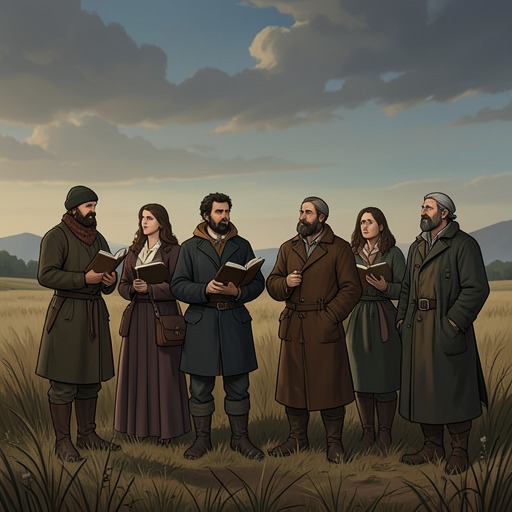
Albogasio enters the narrative through its people rather than through an extended description of its streets or buildings. Its inhabitants remember Benedetto as a benefactor: they arrange transport for his body from Porto Ceresio to Oria, and more than a hundred people embark with their parish priest to meet it. The scale of the gathering makes the village’s attachment visible before the funeral begins. This is not merely a clerical observance organized from elsewhere; local people have spent their own money and committed a day’s work to welcome the dead man home.
The community’s response also has a history. Villagers recall the man who disappeared from Oria years earlier, the public commotion and fruitless theories surrounding his disappearance, and the foreign priest who worked to carry out the charitable provisions Benedetto had left behind. Some remember his parents, while older residents recall another Piero, his uncle, the engineer Ribera. Their talk places Benedetto’s return within an intergenerational store of local memory: the dead man is at once an individual whose story remains uncertain to the villagers and someone connected to remembered families and acts of generosity.
The return of Benedetto
The inhabitants’ special boat arrives at Porto Ceresio before there is news of the body. When they learn of the delay, they face almost six hours of waiting. Some have brought neither food nor money, and murmurs briefly reveal the practical cost of the undertaking; nevertheless, the group accepts the delay without abandoning its purpose. Those who have provisions share them, while the parish priest and Massimo Alberti arrange bread for those who would otherwise go hungry. The scene makes the villagers’ devotion tangible as mutual care, not simply as a declaration of belief.
Their response moves Massimo Alberti, who is preparing to receive Benedetto’s remains while caught in a crisis of faith. He still regards Benedetto’s memory as sacred and dear, but he believes that giving a public funeral address would imply assent to Catholic beliefs that he no longer holds. The villagers’ conduct complicates that distinction: their observance is religious, yet its force is also expressed in ordinary acts of patience, food-sharing, and regard for one another. The community does not settle Massimo Alberti’s conflict, but it gives him a lived example of the faith and human fellowship he fears he has forsaken.
A funeral made communal
When the train carrying the coffin arrives after dark, the people of Albogasio have filled the station with torches and candles. Their parish priest leads them in his liturgical vestments; Don Aurelio and Massimo Alberti meet the arriving party, and six young men, including Massimo Alberti, carry the coffin out. The crowd’s lights and the bearers’ measured progress give the return a public solemnity, while the villagers’ presence makes them participants rather than spectators.
The coffin is placed at the prow of the special boat beneath a black cloth edged with silver. People bearing lights line the deck, and the parish priest begins the rosary as the boat turns toward the upper lake. The congregation answers him while the boat’s engines, wheels, and broken water accompany the prayer. The scene’s image of a ghost ship moving through darkness gathers the villagers into a single procession: their candles mark the route, their voices supply its common rhythm, and the body they have come to meet is carried toward burial among them.
At the funeral, the villagers’ collective voice answers the priest’s, while Massimo Alberti prays on his knees with his face hidden in his hands. A local boy tries to force his way into the church with a letter for Massimo Alberti, but he is kept outside; the message is not delivered immediately. The delay sets a private, urgent communication against the ordered public rite. After the burial, the letter is finally read by the light of matches: a friend is gravely ill and Massimo Alberti is summoned. The village’s funeral gathering thus stands beside a separate appeal that will pull him back into the obligations of the living.
Place, memory, and religious meaning
The text associates Albogasio with the cemetery chosen for Benedetto’s burial. Before the funeral, Massimo Alberti has undertaken the practical arrangements for interment there, and Don Aurelio has agreed to accompany the remains and prevent the ceremony from being disturbed by speeches or actions considered unsuitable. The burial arrangements connect a specific local destination to a wider dispute over how Benedetto should be remembered: some of his friends want Massimo Alberti to speak, but he refuses because he no longer considers himself a Catholic. The villagers’ procession offers another form of remembrance, grounded in prayer and presence rather than a contested address.
Albogasio’s narrative significance lies in the contrast between Massimo Alberti’s inward fracture and the community’s shared action. The villagers are not depicted as resolving the theological questions that trouble him; instead, their welcome, endurance, and generosity give public shape to a bond he cannot dismiss. Their response to Benedetto’s return turns local memory into ritual, and ritual into a visible form of solidarity. In the darkness on the lake, the procession carries both a coffin and the pressure of Massimo Alberti’s unresolved attachment to his teacher and to the faith associated with him.