Eduard Limonov—Zolotarev relationship
LimonovEduard Limonov’s association with the trapper Zolotarev turns, through an unexplained death and a strange night in the Altai, into a relationship that continues as spiritual influence. Their connection is marked by a planned return journey, a political gift Limonov never delivers, and Zolotarev’s account of the mountains as a meeting place between the living and the dead. Later, the book presents that encounter as part of the path toward Limonov’s unexpected composure in prison.
A guide in the Altai
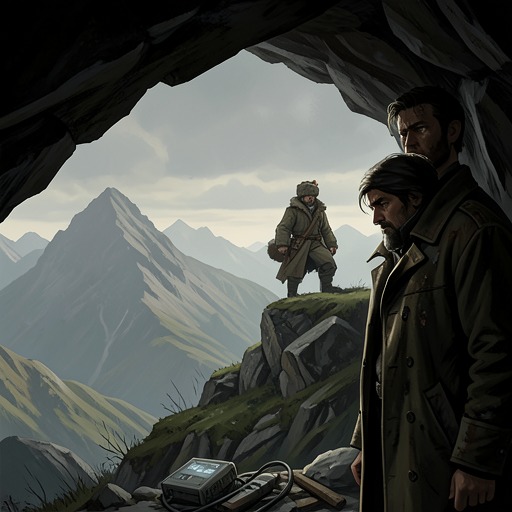
Zolotarev enters Limonov’s story as a trapper with whom he has traveled in the Altai. The relationship is conveyed less through a catalogue of shared history than through the significance Limonov gives to what Zolotarev told him. The previous fall, Zolotarev had described a place in Buddhist tradition as the center of the world, where the dead communicate with the living. He connected that place to Baron von Ungern-Sternberg, who had sought it. When Limonov later finds himself there, the trapper’s account gives the landscape a meaning beyond its physical remoteness: it becomes a threshold between worlds.
The bond also has a political dimension. Limonov brings Zolotarev a National Bolshevik Party membership card as a gift. The card is a small, concrete token of an attempt to draw the trapper into Limonov’s political world, but it remains in Limonov’s hands when he arrives and learns that Zolotarev has died. Its intended recipient is gone; the gift instead becomes the object his fingers nervously worry as he tries to take in the news.
Death and the undelivered gift
By the time Limonov reaches Zolotarev’s place, the trapper has been buried. A woman walking her dog in the early hours found him dead at the foot of his building, where a fourth-floor window stood open. The circumstances leave the manner of death unresolved: suicide, accident, or murder. The National Bolsheviks who spent Zolotarev’s last evening with him say he had been neither depressed nor drunk when he left them. The narrative gives no answer that closes off the possibilities.
Limonov’s physical response makes the loss immediate without explaining it away. He fingers the membership card and feels unsteady on his legs. The planned journey goes ahead the following night, but he travels with two National Bolsheviks in silence, all of them devastated. He pays no attention to what had absorbed him on his previous trip: the immense sky, the stripped-down mountain landscape, the caravansary where they stopped for tea, or the faces of the people who had offered them hospitality. At their destination, a couple of yurts and a log cabin, he goes to lie down without dinner or conversation. Grief has altered how he inhabits a place that had once astonished him.
The night of the dead
Alone on his cot, Limonov thinks of the dead people he has known and recognizes that their number is growing. He cannot bring himself to count them. He also confronts, as a certainty newly present to him, that he too will die. His earlier imagined deaths—in combat or before a firing squad, defiant under a tyrant’s sentence—now seem different from the unadorned knowledge of mortality taking hold that night. Against that knowledge he measures the journey from childhood in Saltiv to the log cabin in the Altai, a life of obstacles through which he believes he has persisted, determined to live as a hero and willing to pay the price.
Remembering Zolotarev’s teaching about the place where the worlds of the dead and living communicate, Limonov looks out at the full moon over the dark hills. He hears music approaching: gongs, horns, and chants that seem to him like the soundtrack to the Bardo Thodol, a book Dugin had introduced him to. He wonders whether he is falling asleep or dying and imagines that a ceremony, perhaps an initiation, is taking place nearby. Although he would ordinarily have wanted to investigate, he stays on the cot, partly to leave his hosts their privacy and mostly because he does not want to move. The music mingles with the sounds of his own body, and he experiences himself as suspended between ordinary life and something beyond it.
The next morning, the other National Bolsheviks say there was no ceremony, party, concert, or shamanic rite; everyone had gone to bed after dinner. Limonov does not press them. The denial preserves the episode’s uncertainty: the book neither confirms a supernatural visitation nor supplies an explanation for the sounds. What matters to Limonov is the meaning he gives the experience. He regards the celestial music as a gift from Zolotarev and as an announcement that might signify either his imagined conquest of a Eurasian throne with a handful of National Bolsheviks, succeeding where Baron von Ungern-Sternberg failed, or his imminent death and entry into Valhalla. Whichever meaning proves right, he concludes that he is no longer afraid of dying.
A continuing influence
The book carries Zolotarev’s influence forward into Limonov’s imprisonment. After Pasha Rybkin explains meditation to him, Limonov adopts it with characteristic pragmatism. He first sits in the lotus position on his cot, then learns to meditate discreetly in the course of prison routines, including the journey through cages and paddy wagons to the investigating judge’s office. The narrator links his remarkable equanimity in prison to this practice and, in turn, suggests that meeting Zolotarev and the strange Altai experience after learning of his death prepared Limonov to receive meditation as a gift. The narrator even entertains the possibility that the trapper sent it from wherever he is.
That connection reaches its clearest expression when Limonov is about to leave prison. The camp’s daily roll calls have become services, meditation a form of prayer, and the camp itself, through the force of his mind, a place as hospitable to him as a monastery is to a monk. The narrator describes a mysterious process begun in the Altai in Zolotarev’s company as nearing completion: a liberation more inward and enduring than release from confinement. Limonov wants his freedom and longs to see Nastia and his party comrades, yet he worries that leaving prison may cost him the deeper freedom he has found there. Zolotarev is no longer present to guide him directly, but the memory of the trapper, the night in the mountains, and the threshold between life and death associated with him remain part of the explanation the book gives for Limonov’s transformation.