Eduard Limonov—Tanya
LimonovEduard Limonov and Tanya’s relationship turns an encounter between two sharply different Moscow worlds into a passionate partnership. For Limonov, Tanya is at once a real woman and the embodiment of a life he had scarcely believed possible; their affair brings triumph, jealousy, and a lasting image through which he measures what he once was.
First encounter and courtship
They meet at a birthday gathering for Sapgir, among people who move between underground culture and official success. Tanya arrives as the fiancée of Viktor, a prosperous, elegant cultural apparatchik. Twenty years old and dressed in a leather miniskirt, tights, and high heels, she seems to Limonov like someone from the foreign magazines people pass around secretly. He is so struck by her that he cannot bring himself to approach. When she looks at him, he lowers his face to his plate; amused by his shyness, she crosses the room to speak to him.
Limonov distinguishes himself from the well-fed, blasé company not by status but by the force of his presence. He breaks Venetian glasses while opening champagne, making Tanya laugh, and recites a poem at her urging. She later tells him that his white jeans and red shirt, open over his tanned chest, made him seem like the only truly alive person there. The encounter begins with mutual curiosity, but its imbalance is already visible: Limonov is overwhelmed, while Tanya is free to approach and test the attraction. Sapgir, watching them, warns Limonov against acting foolishly and says she is not for him.
At the beginning of summer, Viktor leaves Moscow for a lecture tour in Poland. Limonov, meanwhile, gets temporary use of a three-bedroom apartment while its owners are away at their dacha. Tanya sleeps with him out of curiosity. Their first time does not immediately match the intensity that follows, but Limonov experiences her body as the realization of a desire he had never known how to name. At twenty-seven, he has little sexual experience to set against this encounter: earlier flings in Saltiv were followed by six years of monogamy with a woman whose relationship with him had been more a partnership in survival than an impassioned love affair.
Possession, jealousy, and the summer affair
The affair begins on unequal terms. Tanya sleeps with Eduard Limonov partly out of curiosity and does not understand sex as a promise of exclusivity: in her circle, people sleep with one another, and she makes no secret that she is also attracted to a privileged young actor. Limonov, by contrast, turns their first encounter into an absolute claim. What he had dreamed of without knowing it, he now believes must belong to him alone, forever. Her ease among wealthy admirers and his conviction that love must mean possession make the attraction at once exhilarating and unstable.
The mismatch comes into focus when Tanya refuses to let him into her apartment. She first asks him to leave gently, then more firmly. On the landing, Limonov slashes his wrists. Tanya opens the door and takes care of him; in the kitchen, her little dog licks the blood dripping from his wrist. The episode might have ended the relationship, but she is less repelled than impressed by the violence of his declaration. Around her, love seems lukewarm beside his savage, uncompromising devotion. The act does not settle their differences so much as turn them into part of the bond: Limonov’s excess becomes, for Tanya, evidence that he feels more intensely than the men of her social world.
He soon proves a remarkable lover, and the summer changes their connection from a dramatic pursuit into a pleasure they both anticipate. When Viktor returns from Poland, the couple goes back to the apartment where Limonov has been entrusted with watering the plants. Moscow is stiflingly hot. They spend afternoons naked, showering together and looking at their contrasting bodies in the mirrors: his tanned, hers very white. The scene reverses the reserve of their first encounter. Tanya had initially approached him while he hid his face in his plate; now their shared privacy gives their attraction a daily, bodily form.
At the end of August, the apartment’s owners return, and the couple must leave. A friend’s offer to sublet a small room, only a short walk from Tanya and Viktor’s home, seems to Limonov like fate arranging their future. Yet the new intimacy depends on an old deception. When Anna returns from Latvia, he lies that his former room is unavailable and says he is staying with friends, while arranging another couch for her. He cannot bring himself to tell her that he has fallen in love with someone else; he fears her reaction and the possibility of destroying her. Anna appears rested after her time by the Baltic, but Limonov senses that she has changed. Searching her suitcase while she sleeps, he finds her diary: among its accounts of nature, the sea, flowers, and painting, it discloses a sensual passion for Dagmar’s father. Limonov is devastated by jealousy even as his own love for Tanya has already made their former relationship untenable. His new attachment therefore begins not in a clean break, but amid concealment, competing desires, and the painful discovery that neither lover’s claim to exclusive possession can govern the other.
Marriage, public image, and departure
Through the fall, Limonov and Tanya walk together in Novodevichy Cemetery, where her wish to show reverence at the graves of literary figures meets his irreverent physicality. As Tanya pauses among the tombs, he shocks her by putting a hand on her backside. Their intimacy also takes shape in the single bed in his small room in a communal apartment, with the little dog that once licked his blood trailing after them. A neighboring older woman recognizes the difference between Tanya’s wealthy suitors and the poet who gives her pleasure; Limonov enjoys the role of lover whose potency sets those rivals against him. The relationship that began as Tanya’s curiosity has become a choice: over the winter she leaves Viktor, marries Limonov in church, and accepts life with him in poverty, in a small room or in apartments lent by friends.
For several seasons, the couple become an unlikely center of Moscow bohemia: admired in the underground for Tanya’s beauty and sophistication, and conspicuous to the privileged circles whose princess has chosen an insolent poet in white jeans. A photograph condenses that reversal. Limonov stands long-haired in his self-made national-hero vest, a patchwork sewn from 114 pieces of multicolored cloth; Tanya lies naked at his feet. He keeps the picture throughout his life, carries it from place to place, and hangs it wherever he settles, treating it like an icon and a lucky talisman. Its force is not simply that it records a glamorous period. It preserves the image of the man he once was and the woman who, in that remembered world, was his.
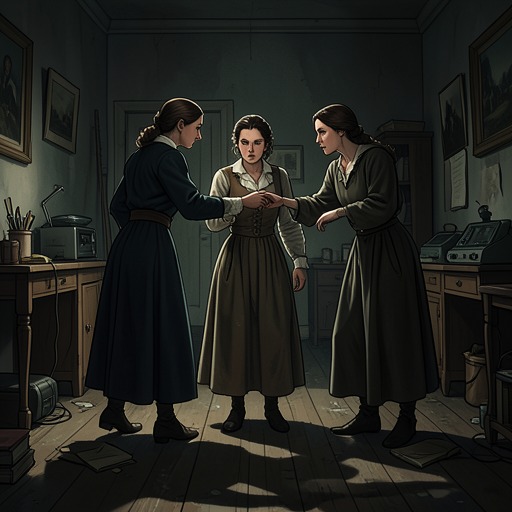
The prospect of leaving for America brings the marriage into a family farewell. Tanya accompanies Limonov by train to Kharkov, where he sees his parents, Venyamin and Raya, and Anna, his former companion, also arrives after hearing he is passing through. In a scene that echoes the theatrical distress of a Dostoyevskian heroine, Anna throws herself at Tanya’s feet, weeping and praising her beauty and goodness while denigrating herself. Tanya lifts her up and offers her a beautiful bracelet inherited from her family, asking Anna to keep it as a remembrance and to pray for her. The gesture is both generosity and performance, a farewell enacted before Limonov’s family and former lover. On the return train, as his parents wave from the platform, he wonders whether Tanya gave the bracelet away because she expected to receive an even more beautiful one. Their shared future is thus shadowed by departure and by the material signs through which affection, status, and expectation pass between them.
Unequal certainty at the point of departure
The account marks the farewell with an unusual distinction between what can be known and what must be imagined: the narrator can only suppose that Eduard Limonov accompanied Tanya to say goodbye to her family, but is certain that she went with him to Kharkov. That family is described as military and of considerably higher rank than the one Limonov came from. His parents, Venyamin Savenko and Raya Zybin, are astonished by their son’s boldness and distressed at the prospect of losing him. The difference in rank gives the leave-taking a social dimension as well as a personal one: Limonov is crossing from the family that formed him toward a future with a woman whose background belongs to a more privileged world.
At the station, his parents wave handkerchiefs with the certainty that they will never see their only son again. The gesture makes the relationship’s promised future inseparable from the cost of departure. The narrator does not claim to know exactly what Limonov felt on the journey back; instead, the passage records a thought that briefly occurs to him, prompted by Tanya’s gift of her family bracelet to Anna Moiseyevna Rubinstein. His suspicion that Tanya expects an even more beautiful bracelet in return leaves the farewell poised between tenderness and calculation, without resolving which meaning governs their life together.