Biological isolation chamber
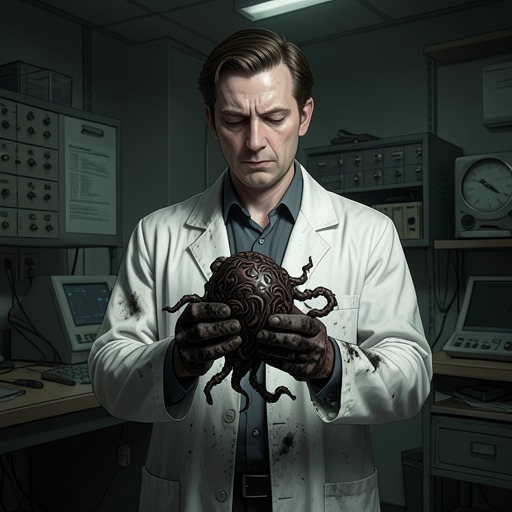
Mickey7The Biological isolation chamber is where the Niflheim expedition tests whether local microbes can harm human health, using Mickey Barnes as its Expendable subject. A cramped cylinder equipped for observation and basic bodily needs, it makes the colony’s survival procedure inseparable from the deliberate exposure of one person to danger—and turns that procedure into a scene of intimate helplessness for Nasha.
Purpose and Procedure
Testing the local microbiota is presented as the first order of business for a new colony. The text treats the danger as a certainty rather than a remote possibility: the question is not whether the environment contains something hazardous to humans, but what the hazard will do. The expedition’s method is to expose its Expendable to anything that can be isolated from the environment and observe the results.
The chamber gives that method a dedicated enclosure. Less than a day after the expedition reaches Niflheim’s surface, a medical technician named Arkady escorts Mickey inside. Before leaving, he fits Mickey with a scanning helmet for continuous upload, so that the experience can be monitored and later recalled. Mickey is told that the recording may allow the expedition to ask him about the test afterward. The arrangement therefore gathers both physiological evidence and a record of the subject’s experience, while leaving him to undergo the exposure in isolation.
Physical Design
The chamber is a cylinder only wide enough for Mickey to nearly reach both sides with his arms outstretched and just tall enough for him to stand upright. Its equipment is sparse but purposeful: a metal chair in the center doubles as a toilet when its seat lid slides back; a vent in the ceiling supplies the exposure; and a drawer opposite the door holds snacks in case he survives long enough to need them.
That last provision gives the room a bleakly practical character. Food is left for a subject who may not die immediately, while the chair’s combined use as furniture and toilet anticipates the body’s basic needs without offering comfort or privacy. Once Mickey sits, the vent begins to hiss. The chamber’s ordinary fittings and controlled airflow make the procedure legible as routine, even as its purpose is to expose a human body to an unknown biological threat.
Mickey’s Test and Nasha’s Vigil
Outside the chamber’s window, Nasha remains with Mickey through the exposure. She has known that she may one day have to watch him die, but after eight years together the prospect becomes immediate. For four hours she talks to him about the planet as seen through the viewscreens, Arkady, and a drama she has been watching; she also speaks about things the two of them might do together after Mickey comes back out of the tank.
Mickey tries to sustain the conversation for her sake, but his condition worsens. At first he thinks the early symptoms may be psychosomatic; soon he develops a fever, then begins coughing, and after three and a half hours brings up blood. By then Nasha has mostly fallen silent, but she remains at the window with one hand pressed against the glass beside her face. The chamber’s barrier is both a necessary boundary for the test and the visible limit on what she can do: she can stay, speak, and watch, but cannot intervene in the exposure.
Risk, Observation, and Colonial Need
The chamber belongs to a wider system in which the Expendable absorbs dangers that equipment or other personnel cannot readily handle. The colony relies on human bodies for work involving lethal radiation, biological exposure, and medical experimentation; a human can sometimes endure hazards longer than a mech, and replacing an Expendable is easier for a beachhead colony than replacing scarce machinery. Mickey had understood that signing on meant accepting dangerous assignments, but the frequency and variety of those duties were greater than he had appreciated.
The test also exposes a conflict between the needs of research and the subject’s control over his own death. Mickey assumes that if an exposure becomes unbearable, he can take a pill and be restored from backup. The recruiter warns that Expendables rarely kill themselves, and that some experiments or exposures must continue until Command has collected the data it needs. In this context, the chamber is not merely a container for dangerous organisms: it is part of an institutional procedure that makes the Expendable’s suffering observable and useful to the colony. The scanning helmet preserves a record, while the sealed room keeps the test underway; neither changes the fact that Mickey bears the immediate physical risk.