Navon's Punitive Exile of Deserters
NeverthelessNavon's Punitive Exile of Deserters is a system that makes desertion a permanent civil and territorial banishment, not simply a military offense. A deserter is marked, cast beyond Navon’s borders, and forbidden to return on pain of death. When Tzara threatens the kingdom, the policy’s lasting cost comes into view: Navon needs soldiers, while many of the people it once expelled have formed communities beyond its reach. The resulting dispute tests the line between punishment and protection, and between the identity imposed on an exile and the identity exiles claim for themselves.
The Punishment and Its Mark
In Navon, a deserter is not merely someone who abandons an army post and receives a prison sentence. The penalty is to be cut off from society and exiled forever, with no prospect of reinstatement. Left outside the kingdom’s boundaries to survive, exiles may depend on farms and houses they attack for their sustenance. The punishment therefore banishes them from the community without removing the danger they may pose to people living beyond it.
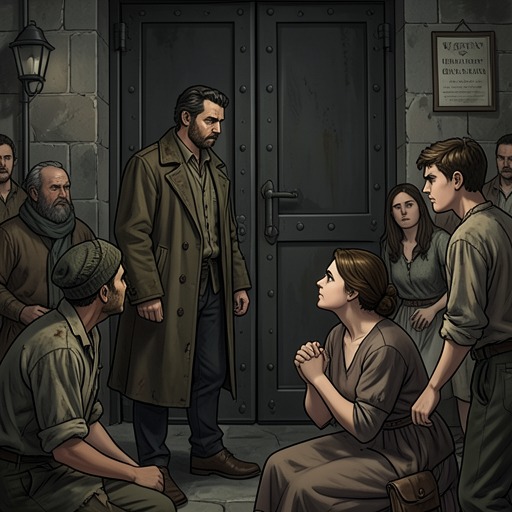
The sentence is made visible on the body. A hot iron brands a D at the back of the neck, identifying the bearer as a deserter and making it harder for him to blend back into Navon. The mark serves as a public label as well as a practical means of recognition: it follows an exile wherever he goes and preserves the kingdom’s distinction between its people and those it has cast out. If guards catch a deserter on Navon soil, he is sentenced to death. The system offers no intermediate status between exile and execution; even an attempt to return places the deserter beyond the protection of ordinary belonging.
Why Men Deserted
The punishment arose in a kingdom whose earlier wars were fought on behalf of other kingdoms. Even Mabel Peloponnese’s father, Amyntas, fought in battles that were not Navon’s own. Alliances offered military service in return for political ties, but they also required Navon to provide men to defend the lands of powerful neighbors. Many deserters refused to fight those чужие wars, and the state treated that refusal as the worst kind of betrayal.
That history changes in meaning when Tzara turns its attention to Navon’s gold and land. For the first time, Navon itself faces a threat of invasion; its long-standing ally is too afraid of Tzara’s wrath to stand by it, and the kingdom has already lost soldiers through its own policies. The narrative links this shortage to the earlier system of alliances and desertion: men once expelled for refusing other kingdoms’ conflicts might now be among the people Navon needs to defend its own territory. The crisis does not erase their sentence, but it exposes the tension between a policy designed to punish disloyalty and a kingdom suddenly short of defenders.
Exile Beyond the Border
Exile does not leave the expelled men as isolated individuals. Mabel Peloponnese, searching for her brother Gael, asks after a younger man who is good with knives and fights well, explaining that he was exiled from Navon long ago. Her search makes the policy personal: the legal category of deserter has also separated a family, while the person she seeks is known to her through the skills he may have had to rely on outside the kingdom.
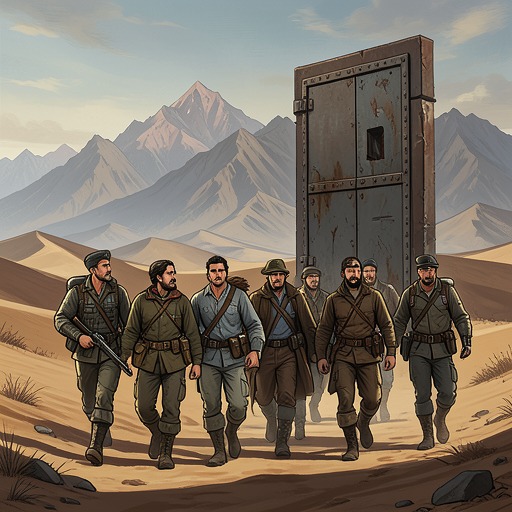
The exiles have also built forms of order beyond Navon’s jurisdiction. Shai describes tribes and rules in the world outside the kingdom, where work that might be called criminal from within Navon has another name. His group presents itself as guards: its members recover stolen property and punish people who commit crimes. Mabel recognizes the resemblance to bounty hunters, but Shai’s account indicates that exile has produced not just an undifferentiated population of outlaws but communities with their own roles and standards. The difference between the state’s label and the exiles’ account of their lives becomes central to the question of whether they can be trusted.
The Fight Over Return
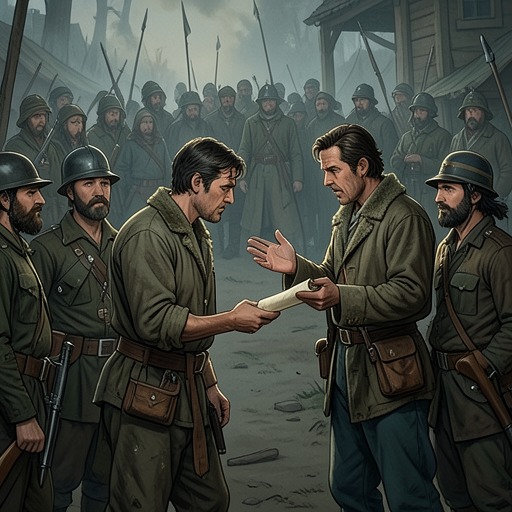
When Shai’s men propose fighting for Navon in exchange for payment, Mabel challenges the premise of their exclusion. She argues that they were not expelled for being outlaws, but for being called cowards. Her distinction contests the official category: refusing to fight for another kingdom does not necessarily prove that a man is a criminal or incapable of defending his home. Alastair likewise objects to treating the exiles as criminals simply because they rejected battles that were not theirs.
Navi Spyridaki sees the danger differently. He recalls that the exiles have let Navon down before and resists opening the city to men who were banned from it. He fears what could happen to the women of the city if the returning men prove dangerous, especially when Navon lacks enough soldiers both to fight a war and to control them. In his view, their having left as ordinary men does not ensure that they will return unchanged. Mabel’s faith in Shai’s group cannot settle that question for him; Navi also doubts her judgment because she had been willing to go with them. The argument is therefore about more than military numbers: it weighs the kingdom’s immediate need against the safety and trust its laws are meant to secure.
Meaning of the System
The exile policy defines belonging through a combination of legal judgment, geography, and stigma. The brand identifies a man as a deserter; the border makes that status a condition of permanent exclusion; and the threat of death blocks return. Yet the invasion makes the state’s classification politically unstable. Men condemned for refusing wars fought for others may be willing to fight when their own home is threatened, while the community they might defend continues to regard them as offenders.
The system’s lasting force lies in this unresolved contradiction. Navon needs protection from Tzara, but accepting exiles would mean reconsidering the meaning of the crime for which they were banished and confronting the possibility that punishment has helped produce the very insecurity it was supposed to prevent. In the scenes surrounding the proposed alliance, the law remains a boundary between Navon and its exiles even as necessity presses the kingdom to question whether that boundary can hold.