Bob Wells launches the Rubber Tramp Rendezvous
NomadlandBob Wells launched the Rubber Tramp Rendezvous as a recurring meeting place for people whose lives on the road usually kept them scattered. The free January gathering brought nomads together on public desert land near Quartzsite, Arizona, to share skills and stories, form friendships, and help newcomers learn the realities of mobile living. Its scale would grow dramatically, but its central purpose was practical fellowship: making knowledge and company available to people who otherwise spent much of the year apart.
From Online Community to Desert Gathering
Before the first Rendezvous, conversations among kindred wanderers online had begun spilling into real-world get-togethers. Nomads met around campfires in forests and deserts, and some traveled together from place to place in caravans they called roving get-togethers. The growing community was not confined to the West; gatherings were also taking shape in states farther east.
In 2011, Bob organized the first event that became the Rubber Tramp Rendezvous, or RTR. Its model drew on the nineteenth-century mountain men, who spent much of the year in isolation trapping in remote places before reuniting at an annual fur-trading rendezvous. The analogy suited a dispersed population for whom a scheduled gathering could turn long stretches of solitary travel into a chance to reconnect and exchange what they had learned.
Purpose and Setting
Held for two weeks in January on public desert land near Quartzsite, the Rendezvous offered a place to learn the skills and routines of life on the road. Participants shared experience, made friends, and mentored people considering the same way of living. Some aspirants arrived with tents or borrowed vans, seeking advice before setting out on the road themselves. The event was free, and word of mouth carried news of it.
The gathering’s informal setting did not mean everyone wanted constant company. Nomads spent much of the year dispersed across the country; some lacked the fuel money for long-distance travel, and many regarded themselves as loners. At the Rendezvous, some attendees parked at the outer edge of the camping area, while others stayed only briefly. Charlene Swankie, arriving in an introvert-themed T-shirt, gave visible recognition to the fact that the community’s welcome could include people who found socializing uncomfortable.
Growth and Meaning
The Rendezvous expanded quickly. When the book’s narrator first attended in 2013, about sixty mobile dwellings were present. By 2017, the gathering was estimated to include five hundred rigs. The increase marked the event’s emergence as one of the year’s anticipated meetings for nomads, while its free admission and word-of-mouth circulation preserved its accessible, community-organized character.
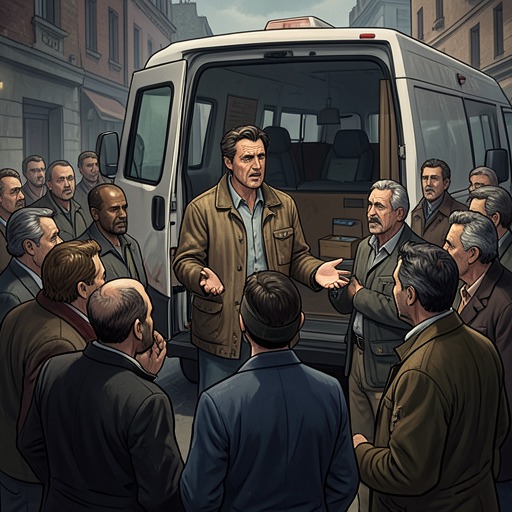
The gathering also became a place where the practical expertise of life on the road could be demonstrated in public. Bob Wells was photographed holding a map of national parks during a talk on Boondocking at the Rendezvous. That scene reflects the event’s combination of instruction and encounter: a map and a talk could help newcomers orient themselves, while the shared encampment made room for stories, informal mentoring, and new ties among people whose homes were continually in motion.