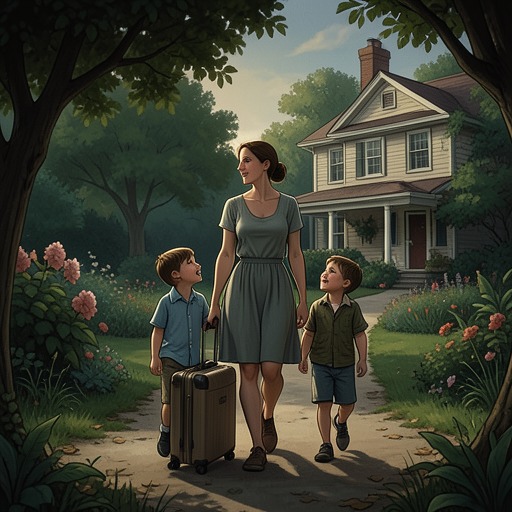
Linda gives her old motorhome to a family facing eviction
NomadlandLinda May’s gift of her old motorhome turned an approaching eviction into a precarious plan for shelter. When Audra and Collin could no longer afford their rented house in Mission Viejo, Linda put a stored twenty-eight-foot El Dorado into the hands of her daughter’s family, making room for two adults, three teenagers, and four dogs inside a vehicle built for far fewer. The act was practical and loving, but it did not erase the crisis: it transferred a whole household into a small space and made the family’s possessions, routines, and privacy newly negotiable.
Eviction and the offer of shelter
Two weeks after leaving Amazon CamperForce in Texas, the narrator called Linda at Thanksgiving. The news was that Audra’s family was being evicted. Collin had lost the short-term disability benefits he had been receiving after vertigo and migraines forced him out of his office job a year earlier; without that income, they could not pay the rent. Linda’s motorhome had been sitting in storage. She had nearly sold it over the summer, but the offer fell through, leaving it available when her family needed a place to go.
Linda was glad the twenty-eight-foot El Dorado could help, but worried about fitting everyone into it. The proposed arrangement assigned Audra and Collin the bedroom, Julian the loft above the cab, and Gabbi and Jordan the fold-out dinette; the dogs would sleep wherever they could. The motorhome was not a return to the family’s former housing. It was an improvised answer to an immediate loss, dependent on making a crowded vehicle serve as home.
A household reduced to what could be carried
The family began emptying a two-thousand-square-foot house and its attached garage. Linda compared the accumulation to what people see on television about hoarding. Audra gave each teenager a Rubbermaid tub: anything they wanted to keep had to fit inside it. The rule converted downsizing into a direct measure of what each young person could take into the family’s next, much smaller life.
Linda helped organize a large yard sale over two weekends. Boxes of clothes and books, boogie boards, and bed frames went out for sale, while dresses hung in a neat row along the lawn. Julian, a talented musician, parted with most of his equipment, including an accordion he loved. Jordan, who hoped to become a makeup artist, let go of much of her extensive wardrobe; Linda observed that she was not yet reconciled to the decision. The sales brought in $1,000. Some shoppers noticed the Squeeze Inn parked in the garage and asked whether it was for sale, but Linda said it was not. Amid the family’s forced divestment, not every vehicle was available to be given up.
The cost of helping
Linda’s offer made kinship tangible: a vehicle she had kept in storage became a roof for a daughter and grandchildren facing eviction. Yet the account does not present the rescue as effortless. Linda said she was exhausted. She continued helping, but had begun to pull back, a limit reached while the family’s move and clear-out demanded sustained work from her as well as from Audra and the teenagers.
Even the holiday proceeded inside the emptied house. Costco and Ralphs had run out of turkeys, so the family planned to have ham instead. That small adjustment sits beside the much larger change underway: Thanksgiving still took place, but the home around it was being cleared and the family’s next sleeping arrangements had been mapped onto the motorhome. Linda’s gift provided a way forward without making the loss of the house less real.
Shelter in a wider landscape of insecurity
The event gives a concrete family shape to the book’s account of vehicle-based living and economic insecurity. For Linda’s family, moving into a motorhome followed the loss of rent-paying capacity; it was not presented simply as a chosen alternative to conventional housing. More broadly, the book describes how people living in vehicles can face restrictions on where they are allowed to sleep, from city bans on sleeping in cars to scrutiny of long-term camping on public land. The family’s motorhome answered the immediate question of where they might stay, but the account offers no indication that it restored the stability of their former household.
Linda’s gesture also belongs to a recurring pattern of material help among the nomads she knows. Elsewhere, food is shared when travelers run short, practical skills are offered freely, and neighbors bring meals to someone too sick to cook. Here the support takes a more consequential form: Linda gives her family a home on wheels while facing the strain of sustaining the move. The exchange makes the motorhome both a resource and a sign of how far the family has had to adapt in order to stay housed.