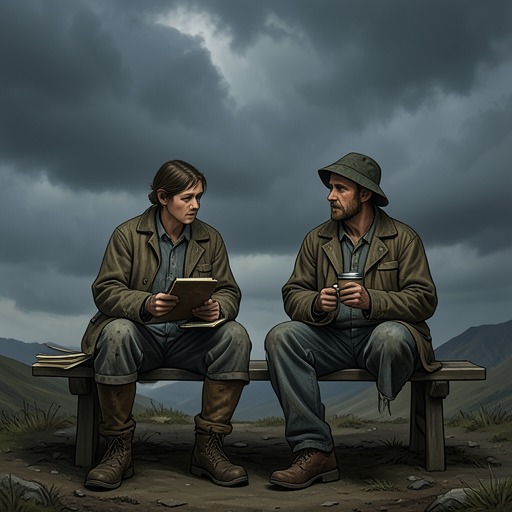
Jen and Ash’s partnership
NomadlandJen and Ash’s partnership is shaped by a joint search for a way out of insecure work and conventional housing. Their decision to travel together develops through research, practical compromises, and shared tests of endurance: they give away most of their possessions, hike the Colorado Trail, and take seasonal work near Fernley. The road becomes not simply an escape but a life they have to plan and sustain together.
From Research to a Shared Decision
While Ash was weighing $37,000 in student debt and reflecting on the instability she had seen in pharmacy work, Jen searched online for alternatives, including minimalism, tiny houses, and CheapRVLiving.com. Ash was initially wary of living in a vehicle, associating it with a familiar comic image of failure. She nevertheless came to embrace the idea, and the couple planned to alternate work with travel rather than pursue a single permanent destination.
Their first plan was to live in a Subaru Impreza hatchback Jen had received from her mother. They made the cramped car more workable by arranging belongings in the rear foot wells to create space to lie down. Jen cut black wool felt into window panels that could be attached with Velcro for privacy. To reduce what they owned, they posted a free curb alert on Craigslist; the items had disappeared from the lawn before the stated pickup time. These preparations show the partnership taking practical form: the transition depended on shared decisions about space, privacy, and what to leave behind.
Travel, Work, and Improvisation
The pair’s first major journey was a fifty-two-day hike of more than 480 miles along the Colorado Trail, from Denver to Durango. Afterward, they went to the Amazon warehouse in Fernley for CamperForce. They had expected to live out of the Subaru while working, but recognized that the arrangement would not be sustainable. Finding a van changed the plan, although buying it left them nearly broke. They named it Manatee.
At Sage Valley RV Park, they tried biking to the warehouse to save on fuel. A slow leak in Jen’s tire meant stopping every fifteen minutes to pump it up; the trip took three hours, but they arrived in time for a ten-hour shift. When work ended at five in the morning, they biked through the cold and darkness, stopped at Walmart for warmer clothes, and continued alongside rush-hour traffic into the sunrise. Jen later recalled that coworkers remembered them as the women who rode their bikes to work. The episode captures the resourcefulness—and physical demands—of making their shared plan function on a limited budget.
After that first ride, they changed their routine. During the workweek they parked Manatee at Walmart or a gas station near the warehouse, returning to Sage Valley RV Park on days off. Their mobility was therefore shaped not only by the wish to travel but by the costs of gas, the location of work, and the need for somewhere to park.
A Life Built in Common
After finishing the Amazon job, Jen and Ash visited family in Colorado, hiked the Grand Canyon’s southern rim, and toured Earthships in New Mexico. In mid-January they joined Linda May at the Rubber Tramp Rendezvous, parking Manatee directly behind her RV. Their arrival extended a relationship they had already formed through work and travel into the nomadic gathering, where Linda had made new friends while they were away.
Across these episodes, their partnership is presented through coordinated choices rather than a formal declaration: researching alternatives, downsizing together, taking on a long hike, finding a more workable vehicle, and adjusting their parking and transport routines around seasonal employment. The recurring pattern is adaptation. Their plans change when a car proves too cramped or commuting by bicycle becomes difficult, but each change is made in service of continuing a life they have chosen to pursue together.