Swankie Wheels and Vincent Mosemann’s mentor-apprentice relationship
NomadlandCharlene Swankie and Vincent Mosemann’s mentor-apprentice relationship joined a seventy-year-old nomadic veteran with a twenty-seven-year-old setting out to live independently. Swankie offered a camp nearby, not a place in her own, and then helped Vincent learn the material skills of life on the road. Their connection was neither effortless nor one-way: her fierce need for solitude met his eagerness for company, while practical instruction and shared care gradually made room for trust and belonging.
Meeting in the desert
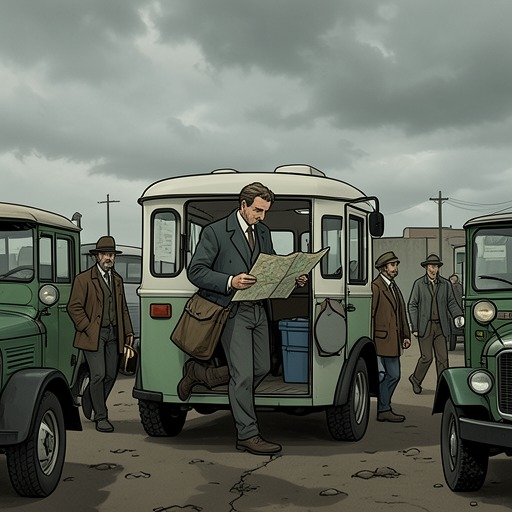
Vincent had left his mother’s home in Billings, Montana, two months before he met Swankie. Apartment rent seemed beyond reach, and he carried more than $25,000 in student loans from a degree he had not finished. After his parents divorced, he could not obtain the signature required to reapply for financial aid; he dropped out, moved back home, and took a low-paid job at a group home for autistic adults. To live on his own, he bought his mother’s 1995 Plymouth Grand Voyager LE, stripped its interior, and fitted it with linoleum flooring, curtains, shelves, and a sleeping bunk. He named the van Tillie, after the little engine that keeps insisting it can.
He set out for Quartzsite to meet Swankie, whom he had befriended in a Facebook group for nomads. She invited him to camp near her at the La Posa Long Term Visitor Area, south of town, but not to camp with her. Her offer carried both welcome and a boundary. Swankie cherished solitude enough to fly a skull-and-crossbones flag when she did not want visitors; Vincent, by contrast, described himself as having “LPS,” or Lost Puppy Syndrome. Their temperaments differed from the outset, making the arrangement a negotiated closeness: help and companionship were possible without surrendering the independence each needed.
Instruction made practical
When Vincent arrived the day before Halloween, he parked by an arroyo across from Swankie’s campsite. Her camp had the settled feel of an outdoor living room, with a rug, chairs, cargo trailer, and shade canopy; her van held a bed, computer desk, freezer, and microwave powered by an inverter while the engine ran. The contrast between their setups made the apprenticeship visible. Vincent was beginning with a converted minivan; Swankie had built up a more equipped mobile life and knew how its systems worked.
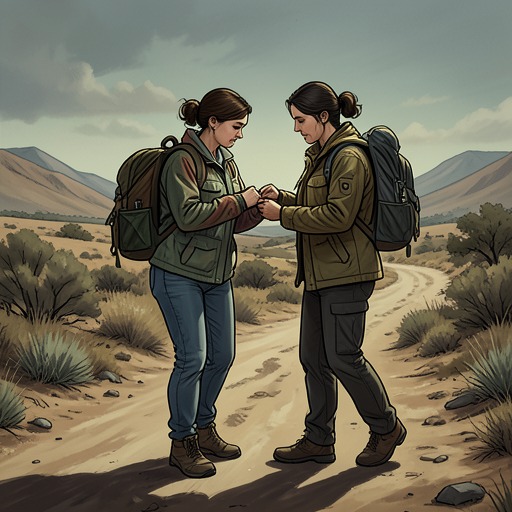
She lent him a spare tent for food and supplies, and he helped install a cabinet in her cargo trailer as a pantry. She coached him through setting up a solar panel. When he bolted it to Tillie’s roof, he used drilled-out pennies instead of washers to save money—a small, improvised solution characteristic of a life in which every purchase mattered. Swankie also let him use her rented post office box. Her own family, she said, would no longer accept her mail; for Vincent, a trans man receiving testosterone refills by post, a reliable address was crucial. His therapy required an injection in the thigh every two weeks, so the mailbox was not merely a convenience but part of the infrastructure that made independent life possible.
Mail also carried affection from elsewhere. A Christmas care package from Vincent’s mother arrived at the box with homemade snickerdoodles and a tiny red-brick fireplace made from a Saltines box, topped with a dollhouse-sized fir tree. Swankie’s practical welcome and the package from his mother were different kinds of support, brought together at the same mailbox. The relationship did not replace his family ties; it helped him manage the everyday needs of living away from home.
From apprentice to contributor
The exchange did not remain a simple transfer of knowledge from expert to novice. Around Christmas, Vincent found part-time work at Dollar General for $9 an hour. He also sewed aprons and reusable grocery bags on a machine converted to run by treadle rather than electricity. For Alex Valentino’s tenth birthday, Swankie held an ice-cream party, and Vincent gave him one of his aprons and a copy of The Lord of the Rings. Alex was delighted; the gift also made Vincent seem less like a child himself. He was beginning to contribute to the social world that had first received him, using skills and limited resources of his own.
The broader camp made such reciprocal participation possible. At the Rubber Tramp Rendezvous, Swankie demonstrated her solar oven by baking brownies, banana-nut bread, and blueberry muffins for others. Mechanics, carpenters, and other vandwellers shared practical knowledge and resources. This was the culture Vincent entered: learning could begin with a tent, a panel, or a mailing address, then develop into making something for someone else. Swankie’s mentoring took place within that wider economy of shared skills, rather than as an isolated teacher-pupil arrangement.
Belonging without possession
Swankie described the rapid intimacy of camp in familial terms: “Once you stay in Swankie’s camp for more than twelve hours,” she said, “you’re family.” Her hospitality did not erase her preference for solitude, but it could make a temporary gathering feel dependable. She led a group of nomads in their vans to see nearby petroglyphs; when a member of the party got stuck in a ditch, she used her own van and a strap of nylon webbing to pull the vehicle free. The outing and rescue show how her competence extended beyond advice to Vincent, and how mentorship was embedded in collective acts of assistance.
Other episodes reveal the same network under pressure. After Kat and Mike Valentino ran out of gas trying to keep warm in the cold, Vincent drove them to town to fill a fuel jug; they returned with food-bank supplies, including apples, sausages, and a large bag of spring mix. This was not a private favor between mentor and apprentice, but it shows Vincent participating in the camp’s practical care for one another. Elsewhere in the nomadic community, illness could prompt neighbors to bring food, and a fall could lead to friends organizing hands-on recovery help. Such support gives the relationship its social setting: belonging was made tangible through food, transport, equipment, and labor.
The evidence follows Swankie and Vincent through a season of shared desert life, but does not define the relationship’s later duration. What it does show is a progression from an invitation carefully limited by Swankie’s need for space to a working bond in which Vincent learned, helped, earned money, and gave gifts. His road journey began as an effort to stand on his own feet; the apprenticeship offered tools for doing so without making independence synonymous with isolation.