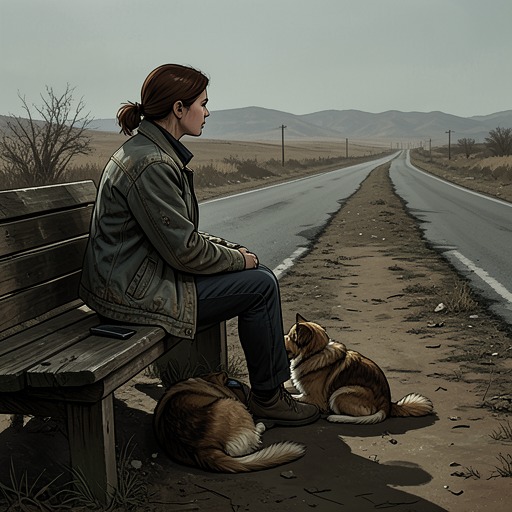
Linda May and Coco’s companionship
NomadlandLinda May and Coco’s companionship takes shape on the road, where care for the dog is part of Linda’s everyday life in a motorhome. During a journey to a new camp-hosting job, Coco suffered a sudden seizure while Linda was briefly away from the vehicle. Linda’s urgent response, and her watchfulness afterward, make their bond visible through action rather than explanation.
Life Together on the Road
Linda was traveling to Mammoth Lakes to begin work as a camp host when she stopped overnight at a Texaco in Tonopah, Nevada. After taking the dogs out for a walk, she returned to the RV and found Coco in crisis. Their home was also their transport, so the episode unfolded in the confined setting from which they would soon resume their journey.
The next morning Coco appeared normal. Still shaken, Linda drove the final 150 miles to Mammoth. The journey did not end their shared routine: Coco was with her when she settled into Sherwin Creek Campground in mid-April, where Linda would spend the spring and summer hosting campers.
The Tonopah Crisis
Linda responded immediately when Coco had a seizure and stopped breathing. She exhaled into the dog’s mouth, and Coco regained consciousness and began breathing again. Linda then pressed a bag of frozen vegetables against Coco’s back, drawing on something she had heard about easing canine seizures, and called her daughter, Audra, for advice.
Audra, who had studied essential oils, recommended frankincense. Linda dabbed it on Coco’s paws; the dog’s muscles relaxed, and she soon fell asleep. Linda remained awake for hours, monitoring Coco’s breathing. The scene presents companionship as close attention to another creature’s changing condition, with Linda combining what she had heard, her daughter’s suggestion, and sustained watchfulness.
Recovery and Continuity
Coco looked normal the following morning, but the episode had left Linda shaken. She nevertheless continued toward Mammoth, where the two endured a wintry arrival together. Within a week of Linda’s mid-April arrival at Sherwin Creek Campground, heavy snow covered the motorhome and footlong icicles hung from its cab. Inside, Linda was warm and dry, and Coco seemed healthy.
Later, while discussing her life and plans, Linda spoke about her dogs and her hope of refurbishing the RV. The conversation connects her animal companions with the vehicle that carried her between jobs and places. The book does not offer a separate account of Coco’s later life, but it records her recovery at Mammoth and Linda’s continued attention to the dogs who shared her mobile home.
Significance of the Bond
The relationship is most clearly defined by the contrast between travel’s forward motion and the pause demanded by Coco’s seizure. Linda was on a ten-hour first day of driving toward a job; when Coco’s condition suddenly required care, the schedule gave way to emergency attention and a night of monitoring. Only after Coco appeared well did Linda resume the remaining 150 miles.
That sequence makes their companionship concrete without presenting it as separate from Linda’s working life. Coco traveled with her into a new camp-hosting season, and Linda’s care continued within the practical limits of a life organized around a motorhome, seasonal work, and frequent moves.