Orientalist expertise
OrientalismOrientalist expertise is not simply specialized knowledge about the Orient; it is a form of authority built through the interaction of scholarship, representation, and power. Edward Said describes its transformation from academic study into political instrument: experts classified people and societies through reductive generalizations, helped shape events in the region, and then claimed the authority to interpret the consequences. Its force depended not only on what it said, but on who could speak, which institutions sustained its claims, and whose histories those claims displaced.
From scholarship to imperial instrument
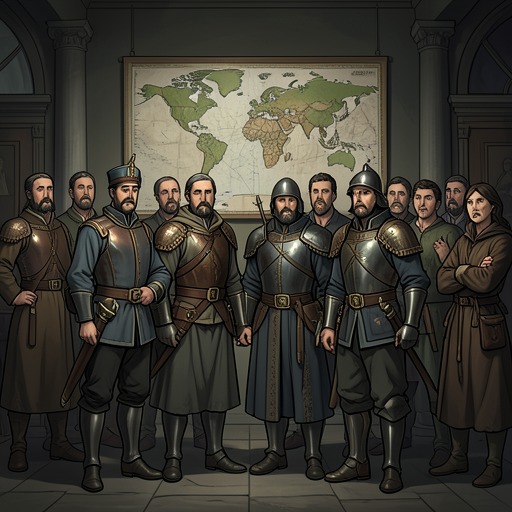
Said distinguishes an academic orientation toward the Orient from the increasingly instrumental role of expertise during and after the First World War. The expert was no longer primarily a member of a scholarly guild with inherited disciplines and rituals. He became a representative of Western culture, embodying the claim that Western consciousness and science could comprehend both the broadest reaches of the Orient and its smallest particulars. The ostensible union of East and West therefore reaffirmed Western technological, political, and cultural supremacy, while historical development was subordinated to fixed ideas about each side.
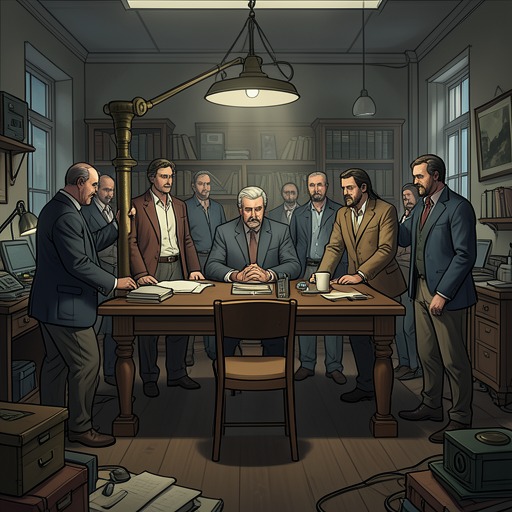
This change made expertise consequential beyond books and universities. Said describes a framework that bound contemporary people to general truths previously formulated about their supposed linguistic, anthropological, and doctrinal ancestors. Individual British and French experts brought private mythologies and personal encounters to their work, often regarding their views as self-created and distinct from official knowledge. Yet their accounts could reproduce academic Orientalism’s sweeping categories and authoritative generalizations. Their policy recommendations rested on those representations, while their professional involvement did not prevent some of them from expressing contempt for the region and its people. The political objective, in Said’s account, was to keep the Orient and Islam under Western control.
Expertise making contemporary history
The expert’s role changed again when knowledge was converted into action. The Orient was expected not merely to be understood but to perform in ways aligned with Western values, interests, and goals. Once expertise helped produce new political currents, their effects were treated as urgent contemporary realities that, the expert claimed, only he could adequately interpret. The Orientalist thus became both an actor in the region’s history and its authoritative Western narrator.
Said illustrates this circular movement through T. E. Lawrence’s account of British calculations during the war. Some Englishmen believed that an Arab rebellion against the Turks could help Britain fight Germany and defeat its ally, the Ottoman Empire. Their assumptions about Arabic-speaking peoples informed their expectations about the rebellion’s likely character and methods, and the British government formally promised support. The Sherif of Mecca’s rebellion nevertheless surprised many of the Allies, who were unprepared for it. Its competing interests and jealousies soon produced mixed consequences and disrupted its course. In Said’s reading of Lawrence’s synopsis, prior knowledge helped author a political movement; the movement’s complicated aftermath then became material for another expert account, one that presented the contemporary Orient through complexity, problem, and betrayed hope.
Authority, voice, and representation
The power of Orientalist expertise is visible in Said’s discussion of Gustave Flaubert’s encounter with Kuchuk Hanem, an Egyptian dancer and courtesan. Flaubert’s account helped establish an influential model of the Oriental woman, but she did not speak for herself in the representation he produced: he supplied her emotions, presence, and history for readers. His foreignness, comparative wealth, and gender were not incidental details. They were conditions of unequal power that enabled him to describe her as representative of an entire category. Said presents this encounter not as an isolated episode but as an instance of the broader disparity that made Western discourse about the Orient possible.
The process also operated through the management of difference. In his discussion of Edward William Lane, Said notes that the writer reorganized the Orient in European prose, turning unfamiliar calendars, spatial arrangements, languages, and social practices into ordered descriptive items. This act of representation was also editorial: what might unsettle European sensibilities could be removed or reframed. Orientalist expertise therefore did not merely collect facts from an untouched object. It selected, arranged, and interpreted what could count as knowledge, making the region more legible to Western readers while limiting what appeared in the account.
Durability and critical significance
Said cautions against treating Orientalism as a collection of simple lies that would disappear once corrected. Its significance lies partly in its coherence, durability, and close ties to social, economic, political, and educational institutions. From Ernest Renan’s period in the late 1840s into the contemporary United States discussed by Said, Orientalist ideas remained available as teachable wisdom in academies, books, congresses, universities, and foreign-service institutes. Repeated investment made the system an accepted filter through which Western consciousness encountered the Orient and helped its claims circulate beyond specialist scholarship into general culture.
The concept also clarifies the stakes of knowledge itself. Said distinguishes careful study undertaken for understanding, compassion, and coexistence from knowledge enlisted in self-affirmation, belligerence, and domination. His objection is not that societies cannot be studied, but that claims to understand them become imperial when their purpose is control and the enlargement of external power. Against accounts that dismiss contemporary Arab and Muslim societies as simply backward or deficient, he stresses the variety and historical depth that such judgments erase, as well as the capacity of their peoples to struggle for their own visions of what they are and wish to become. Orientalist expertise names the system that turns representation into authority—and authority into an intervention that can help make the reality it then claims to explain.