Goblina's Magi–goblin hierarchy
REGoblina's Magi–goblin hierarchy is the oppressive social and magical order at the heart of Tabitha Moore’s fantasy project. In its most consequential form, the hierarchy defines ability as social worth: the Magi possess magic and authority, while those unable to use it are physically deformed by that condition, labeled goblins, and denied any legitimate route out of dependence. The system therefore supplies both Goblina’s world-building and its central conflict, turning a fantasy caste structure into an allegory of growing beyond inherited power and standing independently as a person.
Definition and Social Order
In Goblina, everyone has magic, but not everyone can use it safely or effectively. Those who cannot use magic become deformed by it and are classified as goblins. The classification is not merely descriptive. Goblins are cast out of society to live as savages, or forced into slavery and domestic service, while the Magi remain the unquestioned superior group. The hierarchy presents goblin inferiority as permanent: a goblin has no recognized way to escape servitude, no accepted means of opposing the Magi, and no social identity outside the condition imposed on her.
This arrangement combines bodily difference, political exclusion, and economic exploitation. Deformation marks the goblin body, social banishment removes the possibility of ordinary citizenship, and enslavement converts the group’s supposed deficiency into a source of labor. The result is a complete order of domination rather than a simple conflict between two species or communities. The Magi control not only power but also the categories through which power is understood, while goblins are made to inhabit the judgment that they are naturally lesser.
The Protagonist and the Allegory of Resistance
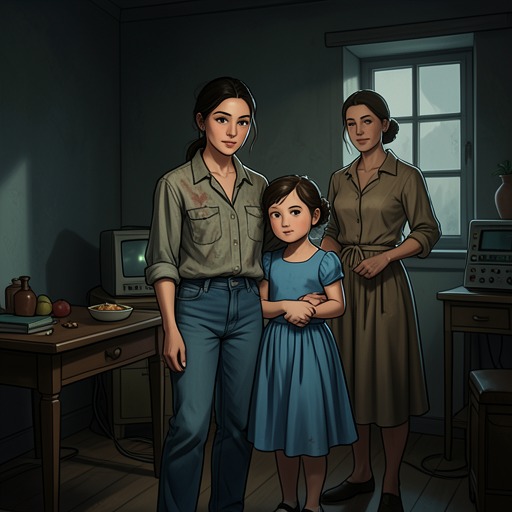
Tabitha Moore explains that Goblina’s protagonist begins “the lowest of the low”—beneath even the slaves—and that everyone calls her a goblin. She starts with nothing, and the reader learns the world’s rules gradually alongside her. This limited progression makes the hierarchy part of the protagonist’s education: understanding the structure is inseparable from discovering the conditions of her own existence.
The protagonist is also explicitly modeled on Tabitha Moore herself. Tabitha says that the goblin has always been her, identifying with the figure that the fictional society rejects and subordinates. The statement gives the hierarchy a personal and psychological charge. Goblin status is not an abstract social problem assigned to a distant character; it is the imaginative form through which Tabitha expresses a persistent experience of being placed at the bottom of an order defined by other people.
The intended plot is correspondingly resistant rather than merely survivable. Alicia Brooks immediately infers that a story about a goblin under Magi rule must involve someone opposing and overcoming the Magi, and Tabitha Moore confirms that reading. She describes the conflict as an allegory for taking the final step out of parental influence and becoming an independent person. The hierarchy thus works on two levels at once: within the fantasy, it is the Magi’s caste domination; beneath the fantasy, it represents the pressure of inherited authority and the struggle to define a self beyond it.
Institutions, Knowledge, and Magical Infrastructure
The hierarchy is supported by an elaborate system of rules. Tabitha Moore keeps pages of notes on how magic works and on the way Magi society and culture fit together, indicating that the caste order is embedded in institutions, customs, and a coherent account of the world rather than being a single villain’s prejudice. Yet she intends to withhold most of this exposition from the reader. The protagonist begins without status or explanatory power, and the narrative reveals the system in pieces as she encounters it.
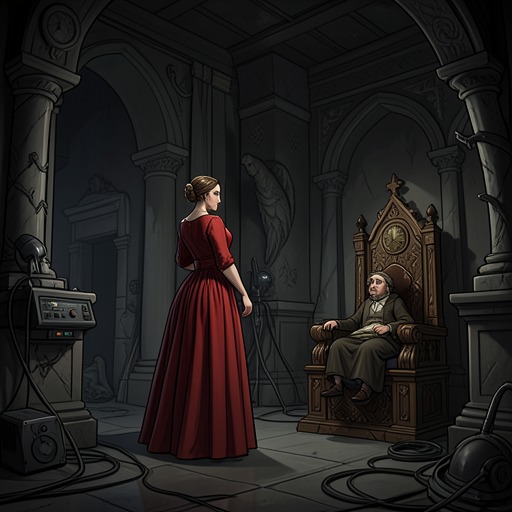
The second book expands the hierarchy through architecture and magical infrastructure. The Magi have goblins construct labyrinths around the leylines, arranging the structures so that energy from a mana spring is focused and channeled along one precise route. Goblin labor is therefore essential to the operation of Magi power, even though goblins are treated as inherently inferior and excluded from authority. The society’s grandeur depends on the people it refuses to recognize as equals.
Free goblins later alter this infrastructure by hiding in the labyrinths, breaking down some walls and building up others. Their intervention turns the intended system of channels into a huge, sprawling maze. The Magi are then forced to navigate an underground deathtrap inhabited by rebel goblins and determine which walls must be repaired or demolished to restore the proper flow of magic. Resistance consequently moves from argument into material disruption: the oppressed do not merely reject the Magi’s ideology but interfere with the physical network that makes Magi power function.
Narrative Function and Significance
Goblina's Magi–goblin hierarchy gives the project a layered conflict between power and dependence, visibility and exclusion, and imposed identity and self-definition. Its most striking irony is that the Magi’s order relies on goblin labor while declaring goblins incapable of meaningful participation. The labyrinths make that contradiction concrete: the ruling class needs the builders’ work, but the builders understand the structure well enough to transform it into a weapon against the rulers.
The hierarchy also shapes the story’s method. Because the protagonist is “the lowest of the low,” the fantasy world is approached from below rather than explained from the perspective of the ruling class. Readers discover the Magi’s rules, culture, and magical arrangements through the experience of someone denied knowledge and status. Tabitha Moore’s decision to let readers piece the system together mirrors the protagonist’s movement from imposed ignorance toward independent understanding.
Finally, the hierarchy is the condition that makes the protagonist’s victory meaningful. Tabitha Moore does not imagine growth as a private change detached from society; she gives personal independence an entire world of institutional resistance to confront. The goblin’s ascent would challenge the claim that social rank follows naturally from magical ability, bodily condition, or inherited authority. In that sense, the Magi–goblin order is both the machinery of Goblina’s oppression and the structure that the protagonist’s self-recognition is designed to break.