C.J. Townsend
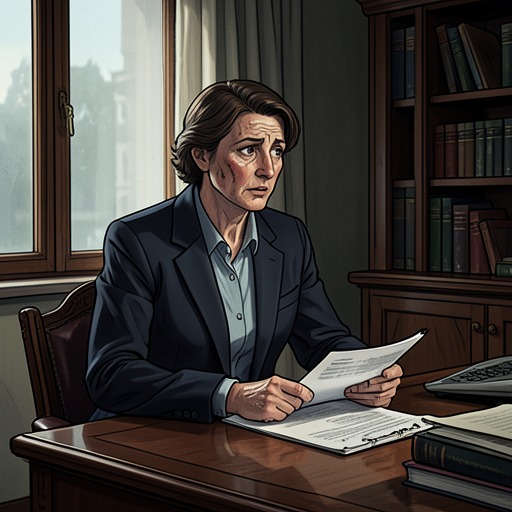
RetributionC.J. Townsend’s early life is marked by a sharp divide: the law student Chloe Joanna “C.J.” Townsend, making plans around her studies and relationship, and the woman whose assault forced her to reconstruct a life under a new name. The attack did not simply interrupt her ambitions; its consequences remained present in her health, her sense of safety, and the path that eventually brought her to Miami as a prosecutor.
Identity and Early Life
Before moving to Florida, she lived in New York and was preparing for the New York State Bar Exam. She had less than four weeks to study when she went to Manhattan for an evening with Michael Decker, her boyfriend and a high-profile trial attorney at White, Hughey & Lombard. They had met two summers earlier, when she was hired as a legal intern in the firm’s Commercial Litigation Department. Their relationship began while they worked together; after she found a new job, it developed into a romance.
The evening was meant to mark the second anniversary of their first real date. For the previous two weeks, she had asked Michael to postpone celebrating until after the bar exam, but he surprised her with tickets to Phantom of the Opera. She reluctantly agreed, missing a study-group meeting in Queens after her bar-review class. Her misgivings about setting aside study time were already strong, and the evening did not deliver the closeness she had hoped for. On the drive through Manhattan toward the Midtown Tunnel, she was anxious about the exam while Michael talked about his workday, apparently unaware of her distress or not responding to it.
The relationship had begun with attraction and professional proximity, but the episode also shows an imbalance in how the couple’s needs were addressed. Michael persuaded her to go out after she had repeatedly requested a later date, invoking their limited time together and his desire to celebrate. Her agreement came reluctantly, and the night left her feeling more troubled than reassured. This tension belongs to the life she had before the assault, when her immediate worries still concerned studying, work, and whether the relationship was meeting her needs.
That life changed when she was sexually assaulted in New York. She was found the next morning by a friend and taken to Jamaica Hospital in Queens. The assault required emergency surgery, including a hysterectomy, and treatment for other injuries. Doctors expected her to make a full recovery, but the operation carried a lasting consequence: she could no longer have children. The men present when she learned this, including Michael, avoided her gaze, leaving her to absorb life-altering news amid their uncomfortable silence.
Recovery and the Unresolved Past
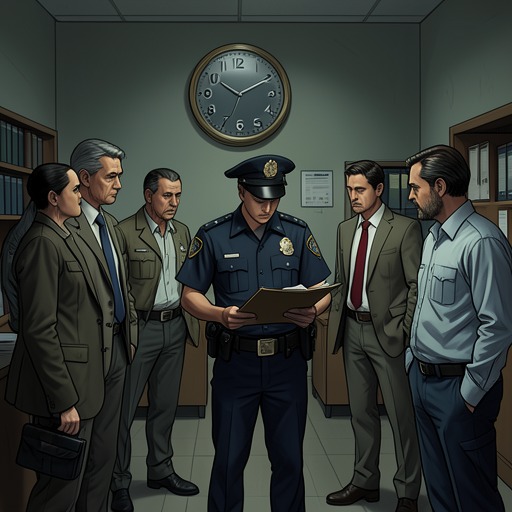
In the days after the assault, the attention around C.J. Townsend’s hospital room did not translate into a feeling of safety. The police guard who had watched her room for two days was reassigned after investigators decided she was no longer in imminent danger. Detective Harrison stopped visiting daily and began calling once a day instead. C.J. suspected that those calls, too, would soon diminish as the investigation made room for newer cases. The formal assurances that police were pursuing leads sat uneasily beside the visible withdrawal of protection.
Friends and associates sent so many flower baskets that they filled the room, yet she could not bring herself to answer the telephone or receive most visitors. She did not want people to see her bandages and speculate about what had happened; neither could she bear to discuss the assault or make casual conversation with curious callers. Apart from one friend, she kept others at a distance. She longed to return to the ordinary concerns of her former life, while recognizing that the assault had made that return impossible. Her anger settled on the attacker for taking away the life she had known, and on the uncertainty of how to reclaim it.
Michael Decker visited briefly during his lunch break, but his work continued while she remained in the hospital. C.J. understood that the medical setting and her treatment made him uncomfortable, and that the event frustrated and angered him. By then, however, his reactions mattered less to her than the contrast between his apparently continuing routine and the knowledge that neither of their lives could simply resume as before. When she was discharged on Tuesday, he was delayed by a deposition; her mother and a friend accompanied her to the lobby, where her father’s rental car was waiting. Although she could walk, hospital policy required her to use a wheelchair until she was in the car.
The crime’s unresolved status prolonged its hold on her. Years later, while reviewing the old police reports and witness statements as part of her work on Bantling, she found that the records could return her to the assault with startling force. A former neighbor’s account blamed her clothing and behavior for what had happened. Though she recognized the claims as the words of a disturbed and perverse person, reading them revived shame and the old habit of imagining what she might have done differently. Her therapy had required her to confront that self-blame; the file showed how readily an investigation could preserve a victim’s judgment of herself alongside the record of a crime.
Reinvention, Recognition, and the Case
After two years in New York, the fear of encountering her unidentified attacker wherever she went became one of the reasons C.J. Townsend stopped trying to live around that possibility. She changed her name, took the Florida Bar, and moved to Miami. The anonymity gave her some relief, though it did not erase the nightmares or guarantee sleep. She hoped prosecution might offer a measure of control in a world that had once left her powerless. In the years that followed, her private history remained unknown to almost everyone around her; only her therapist knew about the assault.
By the time William Rupert Bantling was arrested, C.J. had spent a year assigned by the State Attorney to assist the Cupid task force. Her work had brought her to crime scenes and autopsies and through warrants, medical-examiner briefings, police and laboratory reports, and witness statements. Now she was to prosecute the case. The assignment made her a public figure just as the arrest drew national and international media attention, but the notoriety she dreaded was also the setting in which her concealed past returned without warning.
The recognition came in court when Bantling stood up and protested his arrest. C.J. saw the jagged scar on his left arm above his watch and recognized his voice. In an instant, the unknown attacker she had spent twelve years fearing had a name: William Rupert Bantling. The discovery was bodily and immediate, but it also created a professional crisis. She had to decide whether to tell the State Attorney, contact the detectives from New York, or inform the task force; no one in Miami, apart from her therapist, knew her history. She tried to approach the problem as another case, even as the courtroom recognition left her shaken and unable to hear what was happening around her.
Her examination of Bantling’s history widened the investigation beyond the Cupid murders. Searching newspaper archives for reports of rapes involving masks, she found cases in California: a UCLA student attacked in 1991, a Hollywood bartender in 1993, and a Santa Barbara student later that year. A further case in San Luis Obispo involved an alien mask rather than a clown mask. She then searched cities where Bantling had previously lived and found similar reports in Chicago and San Diego. The six reported cases spanned several years and jurisdictions; comparisons with his former addresses placed him within ten miles of the Chicago and San Diego victims. The geographical and behavioral similarities raised a strong connection, but C.J. continued looking for corroboration rather than treating resemblance alone as proof.
Police reports supplied a more detailed pattern. The attacks took place at night in first-floor apartments while the women slept; the victims were restrained, and the assailant used either a clown or alien mask and a jagged knife. Accounts described different objects used in the assaults, while the women suffered serious injuries. Investigators had found no physical trace linking the assailant to the scenes. For C.J., the decisive connection was not only the recurring method. The perpetrator had known intimate particulars about each woman, including preferences, schedules, relationships, and personal milestones, and had used that knowledge to terrorize them. Those private details convinced her that the cases belonged to Bantling.
C.J. also asked an investigator at INTERPOL to check information against international wanted records. The response identified matching reports in Rio de Janeiro, Caracas, and Buenos Aires, as well as four cases in the Philippines between 1991 and 1994. The information was preliminary and had not yet been confirmed directly with the relevant consulates or police agencies, but it suggested that the known American cases might be only part of a much wider history. C.J. concluded that Bantling had raped more than seventeen women and killed at least ten, possibly eleven or more. Her work transformed the case from the prosecution of a notorious local serial killer into an investigation of a predator whose apparent reach extended across countries—and brought her own unresolved assault into the center of the prosecution.
Conflict, Disclosure, and Professional Judgment
C.J.’s recognition of Bantling turned a private history into a challenge to her authority as prosecutor. During a later meeting, Lourdes Rubio presented a motion to suppress the traffic stop and said the defense would ask Judge Chaskel to remove C.J. from the case, arguing that her judgment might be clouded. Bantling watched her as Lourdes raised the issue. C.J. felt panic, but the exchange made the conflict explicit: her connection to the defendant could be used to question the fairness of a prosecution she had helped build.
The question became public in court when Bantling accused C.J. of having been his victim. She stood before Judge Chaskel and disclosed that she had been violently raped while a law student in New York. She said Bantling had learned about the old assault through police reports and public-record searches and was claiming to be her attacker to cast doubt on the proceedings. C.J. told the court that he was not the man who had attacked her, adding that she had already told Lourdes as much in a prior meeting. The disclosure drew audible shock from the courtroom and immediate news attention, exposing the past she had kept private while forcing her to address the accusation in the very forum where she was prosecuting Bantling.