Chloe Joanna “C.J.” Townsend
RetributionChloe Joanna “C.J.” Townsend is a prosecutor whose work on the Cupid murders converges with a private history she has spent years trying to live beyond. The attacker who was never identified in her old New York case becomes central to the prosecution of William Rupert Bantling, while her trusted psychiatrist, Gregory Chambers, is revealed to have made her experience part of a concealed experiment. Her story joins the struggle to pursue justice with the risks of trauma, secrecy, and professional trust turned against her.
Identity and Background
C.J. is a lawyer in the State Attorney’s Office and a member of the Cupid task force. She has worked on the case for more than a year, learning its witnesses and evidence and revising her anticipated closing argument as new facts emerge. By the time Bantling is accused, she is prepared as a prosecutor—but the case also reaches into a past she has not made public in court.
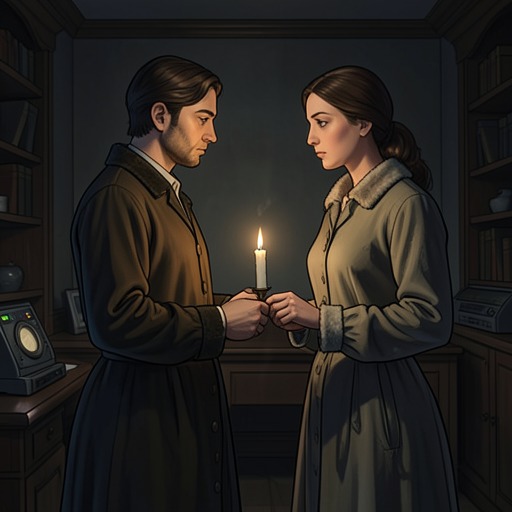
Years earlier, while a law student in New York, C.J. was raped and left unable to move after being drugged. She later told Detective Harrison that the attacker had known where to find her candles and lit them. Harrison reassured her that the assault was not her fault, but the case stalled: without an identification, fingerprints, or other physical evidence, the investigation seemed likely to become a cold case. C.J. nevertheless called Harrison every day for updates, refusing to let the lack of progress erase her insistence that the case mattered.
The assault also disrupted her immediate future. On the morning of the bar exam, Michael Decker drove her to the Jacob Javits Center in Manhattan. Overwhelmed shortly after the test began, C.J. became ill, left the convention center, and never returned to finish. Her determination to continue her legal career sits alongside this concrete reminder that the effects of the assault were not confined to the original crime.
Trauma, Memory, and Self-Blame
When C.J. later reads the old police, hospital, and laboratory records, the passage of more than a decade has not dulled the memories. She can recall the assault in detail even as ordinary days blur together. Reading the reports forces her to stop, move around her apartment, and distract herself; one former neighbor’s statement, which blamed her clothing and behavior for what happened, makes her vomit and revives shame she has struggled to overcome.
The neighbor’s account represents more than a cruel individual judgment: it repeats a form of victim-blaming that C.J. knows intellectually is unjust but still feels emotionally. Her recovery has involved learning not to treat the assault as something she caused or could have prevented. The distinction between knowing this and being able to feel it is central to her characterization. The old records are evidence for a legal investigation, but they are also a direct confrontation with memories and accusations that remain psychologically active.
The Prosecution and the Hidden Conflict
As Bantling’s trial approaches, C.J. recognizes that he may turn the accusation back on her. For six weeks, she waits for him to expose her history, imagining the secret emerging through a motion, a courtroom confrontation, or his own testimony. She understands that even from jail he can unsettle her by withholding what he knows. Her fear is not simply that the past will become public: it is that her authority as the prosecutor will be recast as evidence of personal revenge.
That threat becomes explicit in court. C.J. tells Judge Chaskel that she was raped years earlier as a law student and says Bantling has used old records to claim he was her attacker. She publicly denies that he was the man who assaulted her, while explaining that his allegation is an attempt to make the proceedings appear improper. Yet later revelations establish the deeper connection between C.J. and Bantling: Chambers describes them as a rape victim and her rapist, making the courtroom denial part of the dangerous contest over what the court and public will believe.
Before the trial reaches that point, Bantling’s lawyer, Lourdes Rubio, tells C.J. that the defense intends to seek her removal, arguing that her judgment is clouded. The challenge places her professional conduct under scrutiny just as her personal history threatens to become public. C.J. is left to face both the legal consequences of the case and the question of whether her undisclosed connection can be separated from her work.
Relationships and Betrayal
Gregory Chambers occupies several roles in C.J.’s life. For about ten years he has been her psychiatrist on and off, and he is also a respected forensic psychiatrist who regularly assists prosecutors and police departments. His calm manner and ability to explain violent behavior made him a trusted colleague as well as a friend. C.J. took care not to use him as an expert in her own trials, but had sought his informal professional opinions and worked alongside him at law-enforcement conferences. When she calls him about the Cupid case, she recognizes the problem: a conversation with her therapist could also concern a case in which he might be professionally involved. She addresses him formally as Dr. Chambers rather than as Greg.
Chambers later confirms that he treated Bantling. He explains that patient status and the content of treatment are confidential, that he did not know the connection to C.J. until she identified the man arrested in the Cupid investigation as her attacker, and that his professional relationship with Bantling ended with the arrest. He refuses to disclose anything said in their sessions and insists that he acted according to his ethical duties. His response exposes the collision between C.J.’s personal need for answers and the confidentiality owed to another patient; it also leaves her without access to information that might clarify the danger she faces.
The later revelation is more disturbing than a conflict of professional roles. Chambers says that he had listened to Bantling describe his crimes and conceived an experiment around the two men and women at its center: the rape victim who became a prosecutor and the man who had raped her. He presents C.J.’s case and Bantling’s prosecution as a study of how far she would go for retribution. His account transforms the apparent safety of therapy into a mechanism of control: the person C.J. trusted with her history had made that knowledge part of a design she did not know existed.
Identity and Control
C.J.’s initials conceal a name she rarely uses. In a private moment with Dominick Falconetti, she tells him that they stand for Chloe Joanna, but asks him not to call her Chloe. The exchange reveals a boundary around identity: she can disclose her full name without surrendering the right to decide how others address her.
Chambers’s later address to her as C.J. is an attempt to reclaim that knowledge and define her through his experiment. He describes her past treatment, her trauma, and her prosecution of Bantling as elements he has observed and used. As he prepares to harm her, he frames the case as a test of what she would do when the roles of persecuted person and prosecutor were reversed. C.J. is thus confronted not only with the exposure of her history but with the betrayal of the trust through which she had sought help. Her professional struggle over justice and revenge has become, in Chambers’s hands, a means of endangering her directly.