Hans’s Departure from Germany for America on His Eighteenth Birthday
ReunionHans Schwarz’s Departure from Germany for America on His Eighteenth Birthday is both a practical escape from mounting antisemitic exclusion and the rupture of a life Hans Schwarz had believed securely rooted in Germany. Sent away by his parents, who insist that their separation will be temporary and stay behind in their homeland, Hans Schwarz leaves Stuttgart at a moment when even his closest friendship has been remade by Nazi politics. The departure begins an American life, but the letters exchanged just before it expose the depth of the break: Konradin von Hohenfels believes in Adolf Hitler and imagines that Hans Schwarz may someday return to a Germany that has no place for him now.
A Home Believed Permanent
Before the departure, Hans Schwarz understands his Jewish family as German and, more particularly, Swabian. His family has lived in Stuttgart for at least two hundred years, though records cannot establish where its earlier generations came from. That uncertainty does not unsettle his sense of belonging: he regards the question of distant origins as beside the point and Jewish identity as less defining than being born with one color of hair rather than another. The family’s religious practice is limited; his mother attends synagogue on Yom Kippur, while his father abstains from smoking and travel that day to avoid hurting others’ feelings, not from religious conviction.
His father’s confidence in Germany makes the eventual decision to send his son away especially painful. A Zionist’s warning about Adolf Hitler does not shake the doctor’s faith. He dismisses Nazism as a temporary illness that will pass when economic conditions improve, and invokes the German cultural inheritance of Goethe, Schiller, Kant, and Beethoven. He also recalls the twelve thousand Jews who died for their country in the First World War. When challenged as an assimilant, he accepts the description with pride: he wants Jews identified with Germany, while arguing that their incomplete integration has enriched German culture.
That conviction rests on both identity and personal standing. Hans Schwarz’s father had been wounded twice in the First World War and was prepared to fight for Germany again. He was a popular doctor, respected by Jews and Gentiles; eminent citizens led by the Mayor had visited him on his forty-fifth birthday, his photograph had appeared in the Stuttgarter Zeitung, and Gentiles had serenaded him. Above his bed hung his Iron Cross, First Class, with his officer’s sword beside it. To him, those public honors and emblems of service confirmed that he belonged. Hans Schwarz later recognizes how completely his father trusted this protection, treating the Nazis as a skin disease on a healthy body that could be cured with a few injections.
Exclusion and the Decision to Leave
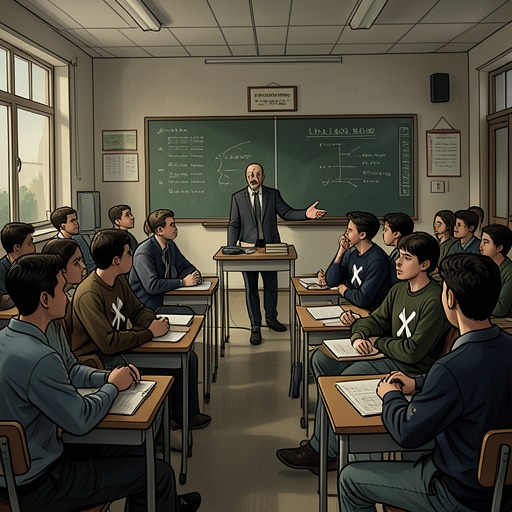
By the time the family acts, Hans Schwarz’s isolation at school has become unmistakable. After the confrontation there, he waits until everyone has gone, still hoping that Konradin von Hohenfels might stay to help or console him. The street is empty. Hans Schwarz then avoids him, believing that being seen together would embarrass Konradin and that Konradin would be grateful for the distance. Few people speak to Hans Schwarz; even teachers who had once mattered to him seem to have forgotten him. A boy who had worn a small silver swastika no longer asks Hans Schwarz to demonstrate his strength. Hans Schwarz describes this abandonment as the beginning of a long, cruel uprooting, with the lights that had guided him growing dim.
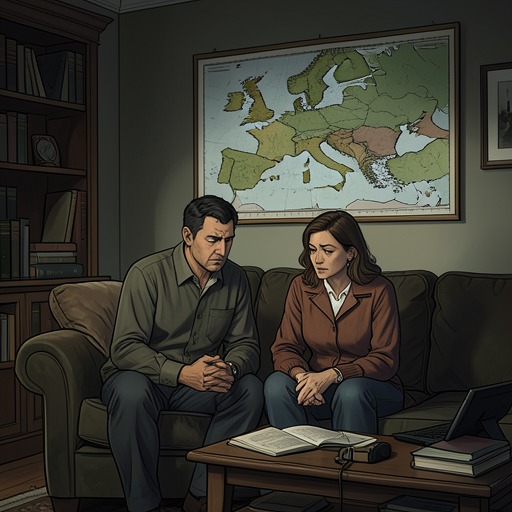
At the beginning of December, his father calls him into the surgery at home. The doctor has aged over the preceding six months and has difficulty breathing. He tells Hans Schwarz that he and his wife have decided to send him to America for the time being, until the political storm has passed. Relatives in New York City will look after him and arrange for him to attend university. His parents imagine that university will be harder for him than school has been, even though Hans Schwarz has not described what is happening there.
The father presents the separation as protection, not renunciation. He asks Hans Schwarz not to argue because doing so would make the decision harder for the family, and insists that he and his wife will stay: Germany is their fatherland and home, and they will not let an Austrian take it from them. He is too old to change his habits, he says, while his son is young and has a future ahead of him. His confidence that the German people will come to their senses in a few years gives the departure its provisional terms, even as the circumstances already show how much has changed.
The Farewell Letters
The decision is settled without further argument. Hans Schwarz leaves school at Christmas and departs for America on January 19, his birthday, almost exactly a year after Konradin von Hohenfels first entered his life. Two days before he leaves, he receives two letters. One, written in verse jointly by Bollacher and Schulz, sends him away with an antisemitic wish that he join Moses and Isaac in hell. Its brief cruelty stands against his father’s hopes of a temporary separation: the school’s hostility does not treat his departure as a pause in an otherwise secure belonging.
The second letter, from Konradin von Hohenfels, is longer and conflicted. He recognizes that leaving Germany must be bitter for Hans Schwarz, who loves the country, and describes America as a place with which the two friends have nothing in common. Yet he calls departure the wisest course. The Germany of the future, he writes, will be remade under the man who will determine the fate of Germany and the world for centuries. Konradin von Hohenfels admits that he believes in Adolf Hitler and prefers him to Stalin; after meeting Hitler in Munich with his mother, he was impressed by his conviction, will, intensity, and apparent prophetic insight. His mother left the meeting in tears, repeating that God had sent Hitler to them.
The letter makes the exclusion explicit. Konradin von Hohenfels believes that Hans Schwarz will have no place in the new Germany for a year or two, but expects he might return later. He supposes that Adolf Hitler can distinguish between acceptable and undesirable Jewish people, and assures Hans Schwarz that his parents will not be molested and can live and die in peace. The reassurance reproduces the father’s faith in Germany’s enduring safety, but now comes from a friend who has accepted the political order that makes Hans Schwarz’s departure necessary. Konradin von Hohenfels also says that Hans Schwarz taught him to think and doubt, and that doubt helped him find Jesus Christ. Affection and gratitude therefore survive in the letter, but they do not undo its political betrayal.
Exile and Afterlife of the Departure
Hans Schwarz’s departure becomes permanent in practice. He says that he has been in America for thirty years. He attends school there and then studies law at Harvard University, although he had wanted to become a poet. His father’s cousin dismisses poetry as an unreliable livelihood and insists that Hans Schwarz study law first, leaving writing for his spare time. Hans Schwarz becomes a lawyer at twenty-five, marries a woman from Boston, and has one child. He describes his professional life as a success, though it began in a direction he had not chosen.
The distance between his parents’ expectation and the life that follows gives the event its lasting shape. They send their son away believing the family will reunite when Germany recovers; Hans Schwarz instead builds a life in America while his parents remain committed to the country that has driven him out. The departure also seals the contrast between two kinds of faith in home: his father’s rooted trust in Germany, and the friend’s hope that a future Germany might admit Hans Schwarz again after first embracing Adolf Hitler. The birthday journey is thus not simply a change of country. It marks the point at which inherited belonging, school companionship, and imagined return become inseparable from the conditions of exile.