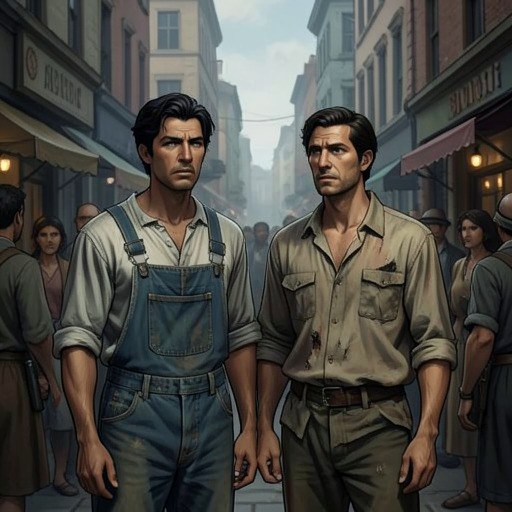
Crawford Market riot
ShantaramThe Crawford Market riot turns the search for Abdullah’s body into a confrontation between grieving crowds, the police, and the neglected poor. Lin reaches the market area expecting to find Abdullah at the police station, but encounters a crowd whose anger has spread well beyond mourning. He is drawn into the disorder, and Khaled Ansari gets him out. At the station, they learn that the crowd has taken the body and freed the prisoners; its whereabouts remain unknown.
Background and escalation
The riot follows the police’s attempt to take Abdullah’s body to a hospital in a van. The crowd attacks the vehicle and forces it off the road, after which the police take the body to the Crawford Market police station. People follow, shouting at the police. By the time Didier tells Lin what has happened, the crowd is still gathered there, and Lin decides he must go to the station and see Abdullah for himself. His hope that Abdullah might still be alive persists despite the report that the body has been taken there.
The gathering is not simply a funeral crowd. As Lin makes his way toward the station, he recognizes that many of those present are Muslim, but the slogans and chants he can make out point to a broader outpouring of discontent. Abdullah’s death has become a focus for grievances among poor people in the market area. Different men shout for different causes, and prayers sound from several places. The scene gives the riot a wider social dimension without suggesting that the crowd acts as a single, coordinated body: its complaints are diverse, and Lin experiences its movement as confused and difficult to navigate.
Lin enters the crowd
Lin abandons his bike near the market police station because the road is blocked by people. On foot, he is swept into the crowd, where progress toward the building requires pushing through waves of people moving in different directions. The police form a barrier across the station, standing several rows deep in helmets and carrying shields. The crush makes Lin vulnerable to being pushed or knocked down, and he has to keep struggling forward to remain on his feet.
A man grabs Lin’s shirt and attacks him. Lin cannot tell why the man has chosen him, and the attack becomes part of the surrounding disorder rather than a personal dispute he can understand. Lin fights back and draws the attention of others; more men join in, and he is surrounded. His own account makes clear that he is not acting from a plan to confront the police or lead the crowd. He is trying to reach the station, then caught in a street fight whose momentum threatens to overwhelm him. The crowd’s attention to the clash briefly holds others back, but Lin knows he cannot keep fighting indefinitely.
Khaled’s intervention
A group of eight or ten men breaks through the surrounding crowd, and Lin finds himself face to face with Khaled Ansari. Running on instinct, Lin nearly strikes him before recognizing him. Khaled signals him to stop, and his men force a path back through the crowd. When Lin turns toward the attackers again, Khaled and two companions restrain him and pull him away from the confrontation.
Khaled’s intervention changes the immediate stakes: Lin is no longer isolated in the crowd, but he has still not found Abdullah. At the bike, Khaled tells him that Abdullah’s body is not at the station. He explains that the crowd had stormed the building before they arrived. After the police drove the crowd out, people went to the cell where the body had been placed, found it empty, released the prisoners, and took Abdullah’s body with them. The riot therefore ends Lin’s immediate hope of seeing Abdullah there without resolving what has happened to the body.
Aftermath and significance
Lin has been struck during the struggle, but he registers little of that in the moment. His attention remains fixed on Abdullah and on the pain of believing him dead. Khaled wipes Lin’s face and offers a calm assurance that they will make inquiries and find both Abdullah and his body. The reassurance provides a next step, not a resolution: the crowd has removed the body, and its destination is unknown.
The riot links personal bereavement with public unrest. The attempted transfer of a body, the crowd’s confrontation with police, and the release of prisoners become part of one fast-moving sequence, while the shouted complaints reveal grievances extending beyond Abdullah’s death. Lin’s experience also gives the episode its narrow, urgent viewpoint: the wider disorder is visible, but the central question for him remains whether he can reach Abdullah. Instead, he is pulled out of the crowd and left with an absence that neither the police nor Khaled can immediately explain.