Our Lady of Sion Convent
ShrineOur Lady of Sion Convent is the Banfield residence where Alice Pagett stayed after her sudden recovery of hearing and speech, as public attention around the alleged miracles intensified. The convent offered a place to rest and a barrier against reporters, but that barrier could not keep the story outside: cameras watched from nearby, and questions about Alice’s condition and future reached the Church through the press. Within its walls, the house served as both shelter and a carefully managed point of contact with the public.
House and Grounds
Only twelve nuns lived at the convent, a large house acquired ten years earlier from a retired theatrical actor who had moved abroad. Its cream-painted walls, white doors and window frames, high enclosing brick wall, and heavy black gates gave the property a strongly private character. The grounds included a spacious yard where the nuns kept a Morris 1100 and a minibus. During the week, the minibus collected village children attending the Catholic school four miles away, linking the secluded residence to an ordinary local routine of teaching and transport.
The house stood at Banfield’s southern end, near a sharp bend where the main road continued toward Brighton or turned onto a smaller road into the Downs. A garage occupied the bend. During the press rush, its proprietor rented offices above the garage to camera crews and photographers, who used them to film over the convent wall. The setting therefore placed the nuns’ attempt at seclusion beside a practical vantage point for the very coverage they hoped to keep away from Alice.
Alice’s Refuge
After Alice’s recovery made her a focus of attention, she was kept at the convent for privacy and protection. The high gates and surrounding wall helped defend the residents against reporters who had descended on Banfield, but they did not make the house an undisclosed location. Bishop Caines later acknowledged that media representatives had gathered around it. He explained that Alice was resting after a physically and emotionally extraordinary experience, undergoing stringent medical tests, and needed quiet. Her parents agreed to the arrangement, and her own doctor supported the need for rest. She was not under a detention order: she could leave when her parents wanted her to and her doctor considered it in her interest.
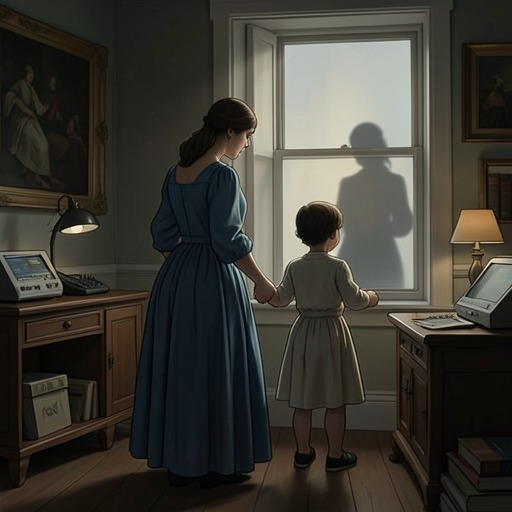
Alice’s room reflected the house’s restrained character. It contained a small bed, a chair, a straw rug, and a sink; a plain wooden crucifix hung on the wall. Two favorite dolls slept beside her, though Molly Pagett found them thrown into a far corner each morning. Molly slept in the adjoining room, close enough to listen for disturbances, and spent many nights awake and praying. Her vigilance made the convent a place of maternal care as well as institutional protection, although Alice herself disliked its sparseness and lack of comfort. She was frightened by the doctors’ examinations and weary of the questions put to her by doctors, priests, nuns, and others. She wanted to leave, return to the church, and see the tree.
Media Pressure and Church Access
The convent’s privacy was repeatedly tested by the press. Reporters and camera crews kept watch outside the gates, and the offices above the nearby garage allowed filming from beyond the wall. When Gerry Fenn returned to the house, he saw a policeman on duty at the entrance and a group of journalists waiting nearby. His brief impression of a small pale face at an upper window, which he could not be sure he had seen, captures how the building’s windows became part of the uncertain public gaze around Alice.
Church officials presented the stay as protective rather than restrictive. In explaining why Alice was there, Bishop Caines stressed her exhaustion and fragility and said that she was being questioned without pressure. He also recognized the danger that publicity and kindness alike could overwhelm her. The convent thus became a place where the Church could limit immediate exposure while still answering public questions about the girl, her medical examinations, and whether she might attend Mass at St. Joseph’s Church.
Chapel and Narrative Significance
The convent’s religious life also shaped its role in the story. Sliding doors opened onto a small chapel that appeared to have been created from a double garage attached to the house. Its simple altar was a rectangular table covered with a white cloth, with a crucifix standing on it; low benches provided seating for the nuns. During a Mass attended by a select group, Bishop Caines directed the guests to their places, with male journalists asked to stand at the back because there was not room for everyone to sit. The converted room made the convent not only Alice’s lodging but also a controlled setting for religious observance and limited media access.
The house stands in contrast to the public field where the reported cures drew crowds. At the convent, the defining pressures are enclosure, rest, examination, and the negotiation of who may approach Alice. Its walls offer real privacy but cannot remove her from public scrutiny; the camera crews’ elevated position makes that contradiction concrete. As the story’s events expand from a child’s recovery into a much larger religious and media spectacle, the convent marks the vulnerable interval in which Alice is kept apart from the crowd, while the Church tries to protect her without being able to make the attention disappear.