
The Ballad of the Last Dragon
Overview
The Ballad of the Last Dragon is a standalone epic romantasy novel by C. A. Farran. It combines a conventional fantasy quest with tavern comedy, romance, found-family dynamics, and the self-conscious question of how heroic stories are made. The available material identifies its release as taking place in April, but does not supply a year, so a precise first-publication date cannot be stated responsibly. It is presented as a complete standalone rather than as an installment in an unfinished series.
Plot
The central character is Sylvaine Abelan, an elf bard living in a world where there is supposedly no place for elves. Syl dreams of becoming famous: she wants to perform before distinguished audiences, carry her music across the land, and earn enough money to escape the narrow circumstances of her current life. For now, she performs in a remote tavern, where her opportunities for recognition are limited. Her most obvious gifts are her voice, her wit, and her remarkable ability to talk about everyone and everything. Those qualities make her entertaining, but they also make her an active force in the story rather than a passive chronicler.
Her opportunity arrives at the Rusty Nail tavern when a band of adventurers appears with an ambitious proposition. They intend to slay the last dragon of their age and recover its lost hoard. The expedition promises wealth, glory, and a story worth telling, even if the plan is misguided and the people carrying it out are far from flawless. Syl convinces them that they need a bard to spread news of their conquests. In return, she hopes for fame, a place in the spotlight, and enough coin to live on.
Aeron, described as a glorious and magnanimous dragon slayer, is the expedition’s other prominent figure. Sylvaine’s account of him is not necessarily identical to reality: the novel uses a semi-unreliable narrator, making her version of events part of the adventure. She translates Elvish notes connected with the route, entertains her blade-for-hire companions, and attempts to calm quarrels among the travelers. The journey includes the familiar ingredients of a quest—one horse, danger, creatures, treasure, and a dragon—but its emotional movement comes from the party’s gradual transformation into a chosen family. Companions who begin as mismatched or suspicious learn to rely on one another through argument, danger, humor, and shared hardship.
Themes and style
The book’s most distinctive concern is the relationship between heroism and storytelling. Aeron may be remembered as a magnificent slayer of dragons, but Sylvaine is the person who can turn events into a legend. For a bard, language is both art and livelihood: a well-shaped account can create a reputation, while a sharp observation can expose the gap between a public myth and a private person. By placing an elf bard at the center of a dragon-slaying narrative, Farran shifts attention away from the sword alone and toward the storyteller who gives the sword its meaning.
Belonging is equally important. Sylvaine’s ambitions are tied to visibility, yet her exclusion as an elf makes recognition difficult. The traveling group offers a different kind of acceptance. Found family here is not an absence of conflict; it is the decision to remain present after the members have seen one another’s weaknesses. The romance develops through contrast, particularly the grumpy-and-sunshine dynamic and the use of sarcasm as a form of affection. The book also makes room for grief. A quoted passage presents grief as quiet, persistent pain that enters conversations around a fire and settles into old memories, suggesting that the novel’s warmth does not erase sorrow.
Background and reception
Farran has said that she grew up by the sea surrounded by fairytales, renaissance faires, and mythology, and that she has long felt a profound connection to horror and darker material. Those details provide the clearest available context for the novel’s mixture of folkloric adventure, theatrical performance, danger, and shadowed emotional material. They do not establish a specific drafting process, location, or publishing history, so those matters remain undocumented in the available material.
The novel attracted attention for its memorable cover art and for the way it joins cozy atmosphere to a more substantial plot than readers might expect from that description. Reviews emphasize the tavern setting, the female elf bard’s expansive dreams and witty personality, the brooding but secretly kind counterpart, and the pleasure of traveling with the characters through creatures, music, and dragon lore. Its current status can therefore be described with precision as a distinctive contemporary independent romantasy that has drawn interest from fantasy readers and book-blog coverage. The available evidence does not justify calling it an established classic or claiming a measurable long-term influence. Its lasting appeal is instead found in its recognizable premise: a bard joins a dubious dragon quest not merely to survive it, but to decide how the world will remember it.
About the Author
Life and background
The publicly available biography of C. A. Farran is limited, but it provides a few clear points. Farran grew up by the sea and had a steady intake of fairytales, renaissance faires, and mythology. The sea is therefore the only confirmed setting of her childhood; the available material does not identify a birthplace, town, country, or exact origin. She has also been described as having a profound connection to horror and darker material. That interest is significant to her authorial identity, since her fantasy work can place folkloric wonder beside danger, grief, death, and unsettling supernatural forces.
Nothing in the supplied material establishes Farran’s formal education. Her schools, university or other training, subjects of study, and early occupations are not documented here. It would therefore be unwarranted to assign her a degree or professional background. The available author information presents her as a fantasy writer and gives representation details, but those facts do not amount to a full personal biography. The safest account of her formation is that a childhood surrounded by maritime life, fairy tales, mythology, and renaissance-faire culture helped cultivate her interest in imaginative storytelling, while her attraction to horror contributed a darker emotional register.
Major works
Farran’s identifiable bibliography includes The Ballad of the Last Dragon, Songs of the Wicked, Lament of the Wolf, and Dark. The supplied material does not provide publication years for these books, so their dates and exact order cannot be stated. The Ballad of the Last Dragon is presented as a standalone epic romantasy. It follows Sylvaine Abelan, an elf bard who joins a dubious expedition to slay the last dragon of its age and recover a lost hoard. Syl wants fame, a wider audience, and enough money to live on, and she believes that a bard is essential to turning an expedition into a legend. The novel combines tavern life, music, quest fantasy, romance, humor, found family, and a semi-unreliable narrative voice.
Songs of the Wicked reveals Farran’s interest in a more overtly dark supernatural framework. Its available premise describes a weakening veil between the mortal world and a Netherworld, monsters emerging into human life, and Reapers charged with maintaining balance by guiding souls to the afterlife. It also involves a character who longs to escape immortal obligations and is drawn to human freedom, passion, and suffering. These details connect the book to recurring concerns in Farran’s work: the tension between duty and self-determination, the cost of crossing boundaries, and the emotional consequences of refusing an assigned fate.
Lament of the Wolf and Dark are also listed among her books, but the retrieved material supplies no dependable plot summaries or dates for either title. They can be recognized as part of her published catalogue, while further claims about their characters, settings, or chronology would be speculation.
Reputation
Farran has gained attention through reader communities, reviews, blog coverage, and bookseller listings. The Ballad of the Last Dragon has been especially noted for its striking cover, its elf-bard protagonist, its tavern atmosphere, and its pairing of a talkative, witty heroine with a gruff but kind-hearted companion. Readers have also responded to the balance between cozy presentation and unexpectedly substantial plot. Her work’s emerging reputation rests on its combination of romance, mythic fantasy, humor, and darker emotional material rather than on a single narrowly defined mode.
The supplied evidence does not record Farran’s date or place of birth, education, private life, or death. It also does not establish a long-term canonical status or a measurable influence on the fantasy genre. What can be said is that she has developed a recognizable identity as a contemporary fantasy author whose stories revisit familiar folklore—dragons, death, monsters, quests, and bards—through emotionally intimate characters and questions about freedom, belonging, and the stories people choose to tell about themselves.
StoryFlow
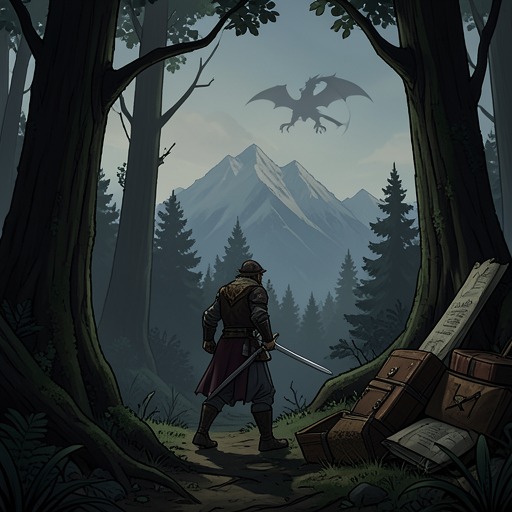
The Dragon Quest
This flow traces the expedition from Aeron Fowler’s impossible promise through lethal trials to the discovery that the dragon was an elaborate human fabrication.
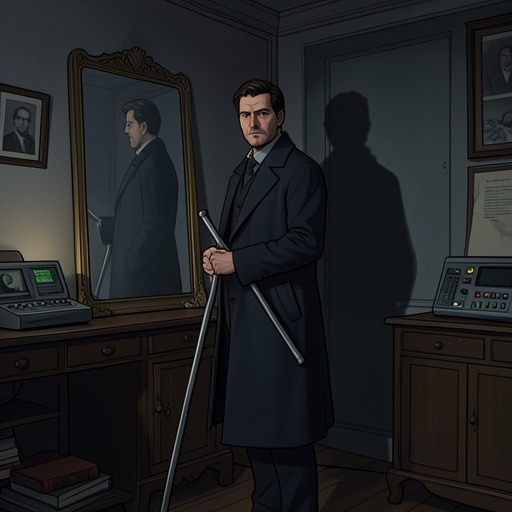
Aeron’s Manufactured Immortality
This flow follows Aeron Fowler’s desire to escape family insignificance and the posthumous legend Sylvaine Abelan constructs after his death.
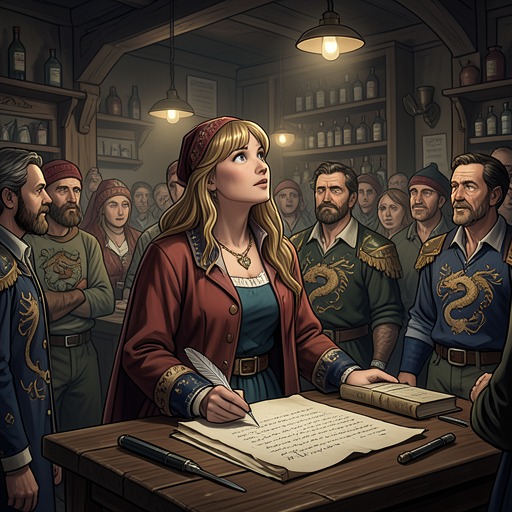
Sylvaine’s Search for a Voice
This flow traces Sylvaine Abelan’s movement from precarious tavern performer to confident author of a public legend and advocate for displaced Elves.
