Event 1
Great East Japan Earthquake
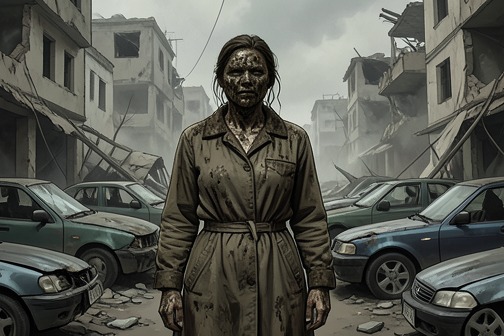
The [Great East Japan Earthquake](entity:event-recall-event-great-east-japan-earthq-8447e1ffe228) is a turning point in the novel’s account of loss and its aftermath. For [Yasuyo Miyamoto](entity:character-recall-character-yasuyo-miyamoto-95675336d078), the disaster brings the destruction of familiar communities and the end of her two establishments; for the later investigation, the broader passage of time and the precarious employment system around nuclear plants leave little documentary trace of workers’ identities.
## Disaster and Local Aftermath
More than a decade after Yasuyo’s earlier encounters with [Kyoichiro Kaga](entity:character-recall-character-kyoichiro-kaga-31e795457e2a), the earthquake and the accident at the Fukushima Daiichi Nuclear Power Plant stand out as the most consequential changes in her world. She recalls the devastation in her neighborhood and the deaths of coastal relatives caught in the tsunami. When she later goes to place commemorative wreaths, the scale of destruction overwhelms her: homes, cars, and fishing boats lie together beneath mud, while the fate of people who may remain undiscovered is uncertain. The disaster is thus remembered not only as a single rupture, but through the bereavement and ruined landscape that follow it.
## A Changed Life for Yasuyo
In the earthquake’s aftermath, Yasuyo closes both of her establishments. Electricity, gas, and water have been cut off, making it impossible to operate; she also expects that customers will not return for some time. Now over seventy, she treats the closure as an occasion to change course rather than attempt an immediate reopening. Savings accumulated during the boom years, together with her state pension, allow her to live comfortably. She meets old friends for drinks and takes occasional trips, regarding her circumstances as comparatively fortunate for someone who survived the earthquake.
## Effects on the Investigation
The novel links the disaster’s historical setting to a separate obstacle in the inquiry into an old nuclear-plant worker. Investigators learn that too much time has passed for relevant records to remain: companies are required to retain employee documents for three years, but the rule does not cover short-term workers. Nuclear-plant work is often routed through layers of contractors and subcontractors, and workers may use false names and forged residence cards. If Shunichi Watabe was working under an assumed identity, finding evidence of him is especially difficult. The earthquake is not presented as the sole cause of that archival problem; rather, the investigation encounters the combined effects of elapsed time, insecure contracting, and identities that may never have been properly recorded.
## Narrative Significance
The disaster joins private grief to broader changes in infrastructure, work, and memory. Yasuyo’s account centers on family and neighborhood loss, while the investigation’s search for a past worker runs up against the disappearance of records and the opacity of subcontracted labor. In this way, the earthquake and its aftermath form both a personal divide in Yasuyo’s life and part of the altered social landscape through which the novel’s later inquiry must proceed.
Event 2
Fukushima Daiichi nuclear disaster
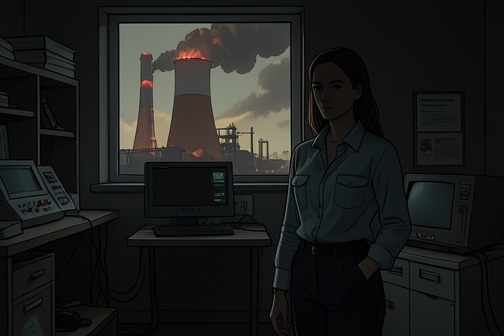
The [Fukushima Daiichi nuclear disaster](entity:event-recall-event-fukushima-daiichi-nucle-8feb7697cbae), recalled alongside the [Great East Japan Earthquake](entity:event-recall-event-great-east-japan-earthq-8447e1ffe228) and tsunami, marks both a personal rupture in [Yasuyo Miyamoto](entity:character-recall-character-yasuyo-miyamoto-95675336d078)’s life and a structural break in the investigation. It closes her businesses and transforms the conditions under which the police try to reconstruct the past: smaller contractors leave the nuclear industry, employment histories are difficult to recover, and identities used by itinerant workers remain uncertain.
## Disaster and local aftermath
More than a decade after [Kyoichiro Kaga](entity:character-recall-character-kyoichiro-kaga-31e795457e2a)’s visit, Yasuyo remembers the Great East Japan Earthquake and the Fukushima Daiichi nuclear disaster as the period’s most consequential events. The earthquake devastated her neighborhood, while many relatives living on the coast were killed in the tsunami. When Yasuyo later went to lay commemorative wreaths, the scale of destruction made the loss difficult to comprehend. Her recollection connects the disaster’s local consequences with the enduring work of mourning.
The disruption changed Yasuyo’s working life. In the aftermath of the earthquake, she closed both of her establishments: electricity, gas, and water had been cut off, making operation impossible, and she expected that customers would not return for some time even if she reopened. Now over seventy, she regarded the closure as an occasion to change course. Savings from the boom years and her state pension gave her enough financial security to meet old friends, travel occasionally, and consider herself fortunate to have made it through the disaster.
## Effects on the investigation
The disaster also altered the investigative landscape. The task force’s effort to identify Shunichi Watabe and [Mutsuo Koshikawa](entity:character-recall-character-mutsuo-koshikawa-fc450b9e0f1d) ran into the fragmented organization of nuclear-plant labor: workers were hired through long chains of contractors and subcontractors, many of them small firms. The companies directly employing workers might be far down that chain, complicating efforts to determine who had employed whom. After the 2011 earthquake and tsunami, many smaller firms withdrew from the business altogether, further narrowing the possibilities for tracing old employment.
The loss or absence of employment records compounds that problem. Investigators were told that companies had to retain employee documents for three years only for full-time staff, not short-term workers. In an industry where labor was routinely subcontracted, short-term workers could be hired under false names, making a supposed employment history particularly difficult to verify. The disaster therefore functions in the inquiry not as a complete explanation for missing evidence, but as a historical rupture that compounds pre-existing gaps in documentation and accountability.
## Nuclear labor and unstable identities
The novel’s account of nuclear work gives these investigative obstacles a human dimension. A former worker describes a life organized around mobility: subcontractors supplied dormitories at each destination, workers stayed for a few months, and then moved on to another power plant. He had spent four years moving in this way and described himself as someone without a settled home. Such work arrangements help explain how a person could pass through the industry while leaving a sparse or misleading paper trail.
The work itself is presented as maintenance under radiation-control conditions. The worker describes inspections and maintenance as a continuing effort to deal with radiation and says that his task involved scrubbing contaminated areas with cloths and brushes. His account places manual labor, radiation exposure, and layered subcontracting in the same system: the people doing the work move from site to site, while the organizational chain makes responsibility and identity difficult to follow. This context does not establish the disaster as the cause of any individual’s deception; it shows how the industry’s employment structure made concealment and retrospective identification harder.
## Narrative significance
The disaster binds intimate loss to institutional memory without reducing one to the other. For Yasuyo, it brings the closure of businesses and the deaths of relatives; for the investigators, its aftermath helps explain why some firms and employment records can no longer be reached. The novel places these consequences beside the longer history of precarious nuclear labor, where workers’ names and employers may be uncertain even before disaster further disrupts the industry.
In this way, the earthquake, tsunami, and nuclear disaster form a dividing line in both the community’s life and the investigation’s access to evidence. The past cannot be recovered simply by asking who worked where: the labor system dispersed responsibility, records were limited, and the disaster prompted some small companies to disappear from the business. What remains is a chain of recollections and partial traces that investigators must assemble against the loss of ordinary documentary certainty.
Event 3
Yuriko Tajima leaves her family
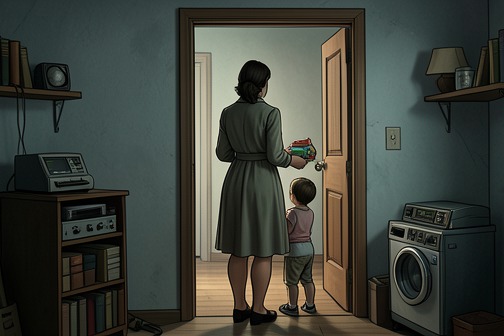
[Yuriko Tajima leaves her family](entity:event-recall-event-yuriko-tajima-leaves-he-38a7b6dd7982) for [Sendai](entity:location-recall-location-sendai-c2319f52a8f6) after walking out on her husband and their twelve-year-old son, an estrangement that shapes both her life afterward and [Kyoichiro Kaga](entity:character-recall-character-kyoichiro-kaga-31e795457e2a)’s belated search to understand her. The departure is first framed through [Yuriko](entity:character-recall-character-yuriko-550b4077f3be)’s own harsh judgment of herself; only later do accounts of her grief and depression reveal that separation did not mean she had ceased to care for her son.
## The Departure and Its Immediate Meaning
Yuriko eventually confided to [Yasuyo Miyamoto](entity:character-recall-character-yasuyo-miyamoto-95675336d078) that she had a son, something she had not previously disclosed. When she left her husband, the boy was twelve. She took responsibility for the family’s breakdown upon herself, describing her failure as both a wife and a mother. Her account was not an accusation against her husband: when Yasuyo wondered whether he had been unfaithful, Yuriko made clear that this was not the reason for their separation.
Yuriko said that she wanted to see her son but did not feel she deserved to. She tried not to think about him and described there as having been no emotional bond between herself and either her husband or her child. When Yasuyo asked whether she had a photograph of the boy, Yuriko had none. She explained that keeping such a reminder would make it impossible to forget him. The absence of a photograph thus gives tangible form to a separation maintained not by indifference alone, but by Yuriko’s effort to suppress painful attachment.
## A New Life in Sendai
Sixteen years after Yuriko began working in Sendai, Yasuyo recalled that she had started there in early September. Kyoichiro recognized the timing as shortly after his mother had left the family. Yuriko had told Yasuyo that she first took a liking to Sendai during an earlier holiday. Once she was on her own after leaving her husband, seeking work there was the first course that came to mind. Her move therefore joined an existing attraction to the city with the practical need to establish herself elsewhere.
Yuriko built a life in Sendai without telling Yasuyo the full story of her family. Their conversations covered many subjects, but Yasuyo sensed that Yuriko remained guarded. Yuriko’s later disclosure of her son did not resolve the mystery of her departure; it exposed how much of her past she had kept apart from her life in the city. The distance between those two lives persisted until after Yuriko’s death, when Kyoichiro began asking what had happened to his mother and what emotional state she had been in.
## What Yuriko Believed About Herself
Yasuyo could offer Kyoichiro no detailed explanation for the departure. She recalled only that Yuriko had called it her fault and said she had failed as a wife and mother. Kyoichiro reacted with dismay to the word “Failed.” His response signals the gap between the severe verdict Yuriko had passed on herself and the fuller account he was still trying to discover.
In a later family recollection, Kyoichiro connected his mother’s changed mental state to the death of his grandmother, who had been Yuriko’s closest source of emotional support. His father, [Takamasa Kaga](entity:character-recall-character-takamasa-kaga-01b105e70e00), later came to understand that losing this support had left Yuriko alone with her troubles; at the time, he had not recognized the change. Kyoichiro recalled an episode at the family dinner table when his mother unexpectedly began crying and called herself a failure as a person, wife, and mother. She said she would never make her husband or son happy, then returned to herself and apologized. Kyoichiro remembered the episode only dimly and allowed that the memory might be uncertain, but it echoes the self-condemnation Yasuyo would hear from Yuriko years later.
The novel also places the departure in the context of family abandonment and its effects on a child. A vice principal later described [Hiromi Asai](entity:character-recall-character-hiromi-asai-48e8e9fe4bea)’s mother leaving the family as neglect and her father’s suicide as an abandonment of his duty of care. Hiromi was placed in an understaffed orphanage, where she had little privacy, no sense of family, and faced bullying from other children. Support from [Seizo Naemura](entity:character-recall-character-seizo-naemura-66e44af22783) and Motoko Yoshino helped her endure, while her knowledge that her father had acted for her sake gave her strength. This account illuminates the consequences of parental absence without making Yuriko’s circumstances identical to Hiromi’s: the story repeatedly distinguishes an adult’s private suffering from the harm a child experiences when a family breaks apart.
## Separation, Love, and Late Understanding
Takamasa did not pursue Yuriko after she left. Kyoichiro believed his father thought that not chasing her might be better for both of them, and that he blamed himself for failing to help her through her mental-health difficulties. Takamasa insisted that Yuriko had done nothing wrong. He was also convinced that, before she died, she must have wanted to see her little boy, even briefly; imagining that possibility caused him acute pain. His response complicates the meaning of the separation: the family’s distance continued, but his understanding of Yuriko’s possible feelings endured.
Kyoichiro’s investigation into his mother’s emotional life remained important to him long after reunion was impossible. He told [Tokiko Kanamori](entity:character-recall-character-tokiko-kanamori-3ea5de84324e) that he wanted to learn whatever he could about the place his mother had been in emotionally, while joking that he might be too old to be such a devoted son. Tokiko answered that she knew Yuriko had been thinking of her only child when she died, drawing on something a patient had once told her about facing death. Her certainty offers Kyoichiro an interpretation of the bond Yuriko had denied to Yasuyo, but it does not erase the years of separation or turn her departure into a simple story of concealed affection.
That interpretation gains substantial support from a letter Shunichi Watabe wrote to Kyoichiro. Watabe identified himself as Yuriko’s long-term partner in Sendai and explained that she had not spoken of her family for more than a year after they met. When she finally told him the story, she described feeling like a burden to her husband from the beginning of the marriage, blaming herself for conflict with her in-laws and for her mother’s death despite her efforts to care for her. Watabe believed she had developed clinical depression, although he noted that depression was not understood in the same way at the time and that Yuriko instead persuaded herself she was a complete failure.
Watabe’s account also revises Yuriko’s claim that she felt no bond with her son. He wrote that she had for years become preoccupied with suicide, and that the sight of her only child asleep was what could bring her back from the brink: she worried about who would care for him if she were gone. The absence of a photograph and her insistence that she must not remember him are therefore set against evidence that thoughts of him had mattered profoundly. Yuriko’s departure remains a real and consequential break, but the later testimony reveals the anguish and attachment that her own self-condemnation had obscured.
Event 4
Death of Yuriko Tajima
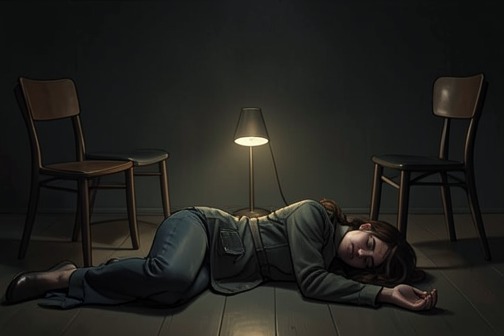
[Yuriko Tajima](entity:character-recall-character-yuriko-tajima-5ecbb02e47b6)’s death is both a personal loss and the belated opening of a family history that had remained largely unspoken. Found alone in her apartment, she is presumed to have died of heart failure, and no autopsy is performed. Yet the practical work that follows—telling those who knew her, arranging a funeral, and deciding what to do with her ashes—brings her estranged son, [Kyoichiro Kaga](entity:character-recall-character-kyoichiro-kaga-31e795457e2a), into contact with people who can help him understand the life she lived after leaving his family.
## Discovery and determination of cause
After receiving no answer from inside [Yuriko](entity:character-recall-character-yuriko-550b4077f3be)’s apartment, [Yasuyo Miyamoto](entity:character-recall-character-yasuyo-miyamoto-95675336d078) called the real estate company. About thirty minutes later, a representative let her in, and she found Yuriko on the kitchen floor. Yasuyo went to her friend and began to weep. The police took the body away, but the apartment showed no sign of disturbance; the detective considered both criminal involvement and suicide unlikely.
The police returned Yuriko’s body the following day without conducting an autopsy. They estimated that she had been dead for two days when she was found. Blood tests revealed nothing suspicious, and a hospital doctor considered heart failure the likeliest cause, possibly related to a preexisting condition. This remained a medical estimate rather than a conclusion established by an autopsy.
## The funeral and the burden of practical care
The account of Yuriko’s death quickly becomes an account of the responsibilities left to the living. Yasuyo felt remorse that she had not insisted Yuriko see a doctor, then took it upon herself to arrange a funeral. Yuriko’s phone offered a small, stark measure of her isolation: its contacts included Yasuyo, the restaurant and [Seven](entity:location-recall-location-seven-d90d6d0f01e9), Yuriko’s hairdresser, and about fifteen regular customers from the bar. Its call log showed no outgoing calls during the previous two weeks, and the only incoming calls had been from Yasuyo.
Yasuyo contacted Shunichi Watabe, Yuriko’s former partner, to tell him she had died and to ask for help with the arrangements. When he seemed ready to end the call, Yasuyo appealed to him not to hang up, explaining that she did not know what to do with Yuriko’s ashes. Watabe said he had an idea and promised to get in touch, but in the days that followed he did not answer her repeated calls. Yasuyo feared he had withdrawn from the responsibility.
The funeral was held the next day in the smallest room at the local funeral hall. A few of the regulars from Seven came, but the service was modest and sad. After the cremation, Yasuyo took Yuriko’s ashes home. As Yuriko’s guarantor, she was also responsible for clearing out the apartment, and she did not know whether she should discard Yuriko’s belongings. The urn and the unclaimed apartment left the practical question of what to do with the dead inseparable from the question of who would acknowledge her life.
## [Kaga](entity:character-recall-character-kaga-59f66483bbcb)’s arrival and the unfinished farewell
Yasuyo eventually reached Kaga. He identified himself as Yuriko Tajima’s son and thanked Yasuyo for what she had done for his mother. When he visited, he stood before the household altar, offered incense and a prayer, then bowed deeply to Yasuyo. The gesture gave him a place in the mourning that had initially been organized by his mother’s friend and bar customers, while making clear how much time had passed without a proper farewell.
The service remained an open question even after Kaga’s first visit. Later, he told [Shuhei Matsumiya](entity:character-recall-character-shuhei-matsumiya-6dd2d7cfbbae) that no one had ever organized a proper memorial service for Yuriko. Kaga was not naturally drawn to memorials, and he would consider arranging one only after making progress on the case. His hesitation does not erase the need for remembrance; it shows that his pursuit of the circumstances surrounding his mother’s life and death is bound up with the possibility of honoring her.
## The history disclosed through loss
Kaga’s questions turn Yuriko’s death into a search for the emotional conditions behind her long absence. His father had believed that, after Kaga’s grandmother died, Yuriko lost her strongest source of support and was left alone with a changed mental state. Kaga was still too young to offer meaningful help, and his father did not understand the change until much later. He remembered Yuriko breaking down at the dinner table, calling herself a failure as a person, wife, and mother, then recovering and asking the family to forget what she had said.
The family’s later understanding is shaped by guilt as well as grief. Kaga said his father believed he was to blame for not helping Yuriko through her mental health difficulties. He also believed that she might have wanted to see her son once, even briefly, before she died; that possibility caused him physical pain. Kaga’s own uncertainty remains visible when he hears the suggestion that he was in his mother’s thoughts at the end. He wants to know what emotional state she was in, but cannot claim certainty about what she thought as she died.
A letter from Watabe, delivered to Kaga through [Hiromi Asai](entity:character-recall-character-hiromi-asai-48e8e9fe4bea) and passed on by [Tokiko Kanamori](entity:character-recall-character-tokiko-kanamori-3ea5de84324e), offers a fuller account of Yuriko’s life in [Sendai](entity:location-recall-location-sendai-c2319f52a8f6). Watabe described himself as her long-term partner and explained that Yuriko had spoken of her family only after they had known one another for more than a year. In her telling, she had felt like a burden to her husband, blamed herself for conflict with her in-laws and for her mother’s death, and came to doubt her ability to raise a child. Watabe believed she had developed clinical depression, though at the time she understood her suffering as proof that she was a failure. He wrote that thoughts of suicide had become an unhealthy obsession, and that the sight of her sleeping son had once brought her back from the brink because she worried who would care for him.
The letter does not undo the years of separation or establish everything Yuriko felt at the end. Instead, it gives Kaga evidence of a life that had continued beyond the family’s reach, while showing how love, shame, and isolation could coexist in her account of herself. Her death first appears quiet and medically unexplained; its aftermath reveals the heavier question left to her son: how to mourn someone he loved but did not fully know.
## Narrative significance
The discovery and funeral form a chain of small acts of belated recognition: Yasuyo enters the silent apartment, calls Watabe, gathers the bar’s regulars, keeps the ashes, and eventually welcomes Kaga to the altar. Each action addresses an immediate obligation, but together they restore relationships that Yuriko’s death might otherwise have left dispersed and unacknowledged. The ashes become not only a practical responsibility but also the focus of Yasuyo’s appeal to Watabe and the reason the unfinished funeral troubles Kaga.
The event also changes the meaning of Kaga’s investigation. His mother’s absence is no longer merely a blank in family history; it becomes a question about the distress she concealed, the support she lost, and the son she may have continued to care about. The story does not resolve that question by claiming access to Yuriko’s final thoughts. It lets the medical estimate, Yasuyo’s remorse, Kaga’s father’s guilt, and Watabe’s delayed letter stand as partial accounts—each arriving after her death, when understanding can no longer become a conversation.
Event 5
Atsuko Asai abandons her family

[Atsuko Asai abandons her family](entity:event-recall-event-atsuko-asai-abandons-he-cf873b5327f8) through a departure that is both personal rupture and practical catastrophe: she leaves Tadao and Hiromi, removes money and valuables, and secretly borrows against Tadao’s registered seal. Her absence exposes Hiromi to danger and deprivation, and is later described by a school vice principal as neglect. The episode also helps frame the family history that Hiromi recounts as an adult, with its lasting consequences for her sense of safety and belonging.
## The Departure and Its Discovery
Hiromi first senses the family’s instability in the adults’ talk about her parents. She hopes that their difficulties will pass, but grows increasingly distressed as she hears suggestions that [Atsuko](entity:character-recall-character-atsuko-d58d5b1df9b5) may not want to remain married to Tadao. Not long afterward, Atsuko goes out for the evening dressed up and does not return. She eventually calls the family home; Tadao answers, and Hiromi hears her father’s desperation as he tries to establish whether Atsuko is coming back and where she is. Atsuko ends the call without giving him an answer he can use to find her.
Tadao is left holding the receiver, initially stunned. When he searches Atsuko’s dressing table and chest, he finds that her silver and gold jewelry is gone. Nearly all the money has been withdrawn from his savings account, and Atsuko has also cashed out his investments and taken the proceeds. The loss is therefore not simply her absence: the household’s financial resources have been depleted as she leaves.
Tadao contacts Atsuko’s parents, who already know she has left. They tell him that Atsuko had said she was tired of married life and intended to live as she wished. She has not told her mother where she is, and refuses to return to live with her parents. Tadao waits for a time, expecting Atsuko to come back, but has no knowledge of her whereabouts or associates and no practical lead to pursue.
The separation is formalized without Tadao’s knowledge. Suspecting that Atsuko may have changed her address, he goes to the city office to look for her through a change-of-address notification. Instead, he discovers that she has filed for divorce without consulting him and that the divorce is already official. He could have sought to invalidate the divorce, since it had been filed without his consent, but decides he has had enough and does not challenge it. He tells Hiromi that she will have to forget her mother and pretend she never existed, giving the child a stark instruction in place of an explanation or reconciliation.
## Debt and Danger to Hiromi
Atsuko’s departure is followed by another revelation: debt collectors arrive looking for Tadao. He insists the borrowing was not his, but learns that Atsuko had obtained his registered seal a few days before leaving and used it to take out a sizable loan. The debt is legally and practically directed at the household even though Tadao says he did not incur it, compounding the financial losses he has already discovered.
The collectors begin coming around daily. Their threat extends beyond Tadao: they say they will take Hiromi if the debt is not repaid. One day, as she walks home from school, a car pulls alongside her and a man invites her to get in. Hiromi recognizes that she is in danger and runs. The men do not pursue her, but the encounter makes the threat immediate to her rather than merely something overheard between adults.
The family’s attempt to manage the danger later leads to a different hardship. Hiromi is placed in an orphanage, where overcrowding and understaffing mean little individualized care or privacy. As a newcomer, she is bullied by other children. She bears this in part because she has support from [Seizo Naemura](entity:character-recall-character-seizo-naemura-66e44af22783) and Motoko Yoshino, and because she believes her father’s actions made her life possible. The departure is thus one link in a chain that carries Hiromi from her home into institutional care, without itself accounting for all that follows.
## A Family History Reconsidered
Years later, a vice principal characterizes Atsuko’s decision to leave as neglect, placing it alongside Tadao’s later suicide and his failure of care. Her judgment distinguishes the harm of abandonment from the subsequent harm of a parent’s death: Hiromi was left without the care she needed, though the vice principal notes that Tadao did not take her with him. The retrospective framing makes the departure more than a private marital break; it becomes part of the circumstances under which Hiromi grew up without her parents.
The episode also belongs to a wider pattern of family rupture in the novel. In a separate conversation, [Kyoichiro Kaga](entity:character-recall-character-kyoichiro-kaga-31e795457e2a) describes how his own mother’s emotional state worsened after losing her principal source of support, and recalls her calling herself a failure as a wife and mother. That account is not evidence about Atsuko’s motives, but it sets the departure beside another family’s unspoken distress and the damage that can follow when emotional suffering is not understood. The story does not establish that Atsuko left for the same reasons or under the same circumstances.
Atsuko’s later absence is felt in the practical aftermath as well as in Hiromi’s childhood recollections. When [Yuriko Tajima](entity:character-recall-character-yuriko-tajima-5ecbb02e47b6) dies, [Yasuyo Miyamoto](entity:character-recall-character-yasuyo-miyamoto-95675336d078) is left with the cremated remains and responsibility for clearing [Yuriko](entity:character-recall-character-yuriko-550b4077f3be)’s apartment; she also makes repeated calls to Shunichi Watabe, who does not answer. This is a distinct loss, not a consequence of Atsuko’s departure, but it echoes the novel’s recurring problem of what survivors are left to manage when a person is gone and communication fails.
## Significance and Limits of the Account
The departure’s decisive turn is from Hiromi’s hope that her parents will reconcile to the reality of a mother who does not return, followed by financial betrayal, debt, and threats to the child. Its effects accumulate: Tadao gives up on restoring the marriage, Hiromi loses her home life, and her childhood becomes bound to institutional care and vulnerability. The episode explains a concrete source of Hiromi’s abandonment without reducing her later life to a single cause.
The account also leaves important limits intact. It reports Atsuko’s actions and the family’s consequences, but does not provide her own later perspective or an explanation for every choice she made. Nor does it state that she was responsible for Tadao’s eventual suicide. The novel’s retrospective descriptions invite attention to neglect and parental responsibility while preserving the distinction between what is known about Atsuko’s departure and what remains unresolved about the family’s history.
Event 6
Suicide of Tadao Asai
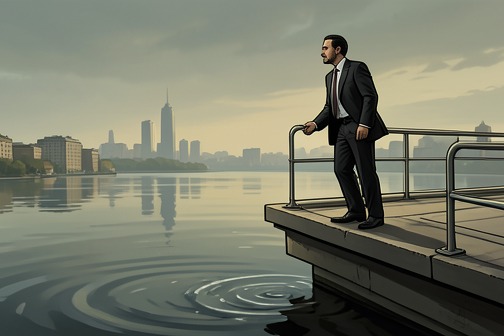
[Tadao Asai](entity:character-recall-character-tadao-asai-9a1a596ef2f8)’s suicide breaks apart his daughter Hiromi’s childhood and sets in motion a lasting chain of bereavement, separation, and secrecy. First recalled as the consequence of his wife’s departure and debt problems, his death also leaves Hiromi without a proper funeral or farewell to her friends; later testimony reframes it as an event whose damage extends well beyond its immediate cause.
## Background and Circumstances
Hiromi tells [Michiko Oshitani](entity:character-recall-character-michiko-oshitani-3eb00e173206) that her father died by suicide after her mother walked out on the family. She says he jumped from a building, then explains that there was no proper funeral and that she was sent straight to an orphanage, without the chance to say goodbye to her friends. Her account makes the death not only a family loss but the reason her childhood relationships and home life were abruptly severed.
The investigation reconstructs a broader sequence: Hiromi’s parents divorced while she was in her second year of junior high school, and Tadao took sole responsibility for her. He died soon afterward, reportedly driven to suicide by debt problems and jumping from one of the taller buildings in their town. Hiromi was then sent to an orphanage. The account presents debt as the stated pressure behind his death, while Hiromi’s own recollection places it in the wake of her mother’s departure; both descriptions locate the suicide within a family already undergoing a profound rupture.
## Hiromi’s Experience of the Loss
Before Tadao’s death, Hiromi encounters danger on her way home from school when men in a car offer her a lift. She runs away and, once safely home, tells her father what happened. Tadao sits silently for a long time, his expression gloomy. Hiromi assumes that he is thinking about how they might escape their difficulties and survive. She later recognizes that she misread him: what she saw in his eyes was a yearning for death. The contrast between her hopeful interpretation and her later understanding gives the event a delayed, painful revelation in her memory.
After Tadao dies, Hiromi is placed in an orphanage. A vice principal later describes her mother’s departure as neglect and Tadao’s suicide as an abandonment of his duty of care, while adding that the one consolation was that he did not take Hiromi with him. The institution’s care, as the story describes it, is limited: it is large, understaffed, offers little individual attention or privacy, and Hiromi faces bullying from other children. She often cries herself to sleep, but support from [Seizo Naemura](entity:character-recall-character-seizo-naemura-66e44af22783) and Motoko Yoshino helps her endure. She also understands that her father’s actions made it possible for her to have a life at all, even as his death leaves her grieving and separated from him.
## The Secret Aftermath
The separation is compounded by secrecy. Tadao’s first letter reaches Hiromi a month after she enters the orphanage, sent under the name Kyoko Kondo and from an address in [Fukushima Prefecture](entity:location-recall-location-aa710a2df286). In it, he presents a reassuring account of a new life and directs her to reply under the name [Kazutoshi Yokoyama](entity:character-recall-character-kazutoshi-yokoyama-8ea47a7619ca). Hiromi realizes that her father is living under the identity of the man she killed. His letter tells her that he is safe, but that reassurance rests on an assumed identity and does not undo the loss of their former home or their enforced separation.
Hiromi’s later account to Michiko likewise reveals how little the people around her knew at the time. Michiko is surprised to learn that Tadao died by suicide and that Hiromi was sent to an orphanage; she remembers only being told by a teacher, Mr. Naemura, that Hiromi had transferred schools. The absence of a proper funeral and the lack of explanation to Hiromi’s friends turn the death into a private rupture, hidden behind what others understood as a school transfer.
## Later Meaning and Narrative Role
The event also resonates with [Kyoichiro Kaga](entity:character-recall-character-kyoichiro-kaga-31e795457e2a)’s search to understand his mother, [Yuriko](entity:character-recall-character-yuriko-550b4077f3be). [Kaga](entity:character-recall-character-kaga-59f66483bbcb)’s father believed that his failure to help Yuriko through her mental-health difficulties made him responsible for her suffering, and that she might have wanted to see her only son before she died. In a separate account of Yuriko’s life, the loss of her own mother removes her strongest source of support; Kaga’s father only understands the effect much later. These parallels do not make the losses identical, but they place Tadao’s suicide within the novel’s wider attention to family distress that goes unseen until after a decisive separation.
For Hiromi, Tadao’s death is both the end of their shared life at home and the beginning of a long period in which care must continue at a distance and under a false name. For the narrative, the suicide first appears as a stark biographical fact explaining Hiromi’s transfer and orphanhood; later recollections add the circumstances around it, including the danger she reported, her mistaken reading of her father’s silence, and the concealed life that followed. Its significance lies not in a single explanation, but in the consequences that persist: grief, separation, an obscured family history, and Hiromi’s enduring awareness of what her father’s actions made possible.
Event 7
Nihonbashi Bridge Washing
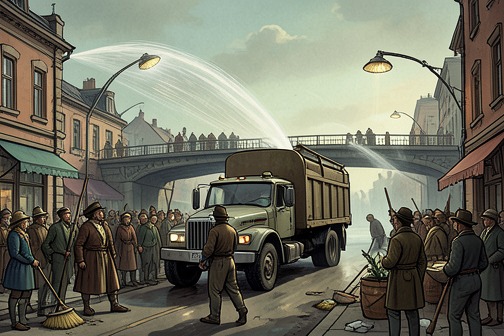
[Nihonbashi Bridge Washing](entity:event-recall-event-nihonbashi-bridge-washi-37a1e5fa1a64), or [Hashiarai](entity:time-recall-time-hashiarai-eef9c64bc45a), is an annual July ritual in which a water truck sprays [Nihonbashi Bridge](entity:location-recall-location-nihonbashi-bridge-4a37231332a2) as people clean it with scrub brushes. In the investigation, identifying this event separates it from an unrelated yukata festival and gives the bridge a specific public occasion; its meaning also resonates with a novel that repeatedly places performance, appearances, and concealed histories in tension.
## Definition and Setting
Hashiarai is described as a yearly bridge-cleaning ritual, not simply an ordinary maintenance operation. A water truck sprays the bridge while people use scrub brushes to wash it. The event draws crowds who gather on and around the bridge to watch, making the cleaning both a practical activity and a public spectacle.
Its timing is significant to the investigation: the ritual takes place in July. When asked whether the yukata festival and Nihonbashi Bridge were connected, the reply distinguishes the two and points instead to Hashiarai as a much larger July event. The detectives then search for images and find numerous photographs of crowds watching the bridge being sprayed, confirming the event’s scale.
## Role in the Investigation
The reference to Hashiarai helps clarify what kind of occasion might bring people to Nihonbashi Bridge. Rather than treating the bridge and a summer festival as an established connection, the conversation identifies a separate annual event specifically associated with the bridge. That distinction gives the investigators a more precise context for considering the bridge’s public gatherings.
The exchange also shows the detectives testing a possible connection through ordinary research. A description of the event prompts a quick phone search; the images provide visible confirmation that it attracts substantial crowds. The scene turns a general question about a bridge into a concrete lead about when and how people gather there, without itself establishing that the ritual is connected to the crime.
## Public Ritual and Thematic Resonance
Hashiarai combines a practical act of cleaning with the formal shape of a public ritual: a truck sprays the bridge, people scrub it, and spectators assemble to watch. The crowd makes the work visible, turning maintenance into a witnessed event. In the investigation, that public visibility matters because it offers a plausible occasion for people to be present at the bridge, while remaining distinct from the yukata festival initially under discussion.
The broader narrative places this kind of public presentation alongside theatrical performance and the detective’s effort to see beyond appearances. A play within the story reimagines the lovers’ joint suicide as a modern murder mystery, then unsettles the audience’s understanding with another version of events. Separately, [Kaga](entity:character-recall-character-kaga-59f66483bbcb) confronts Hiromi with his interpretation of her past; she responds with a confident, joking manner, while his scrutiny signals that he is not satisfied by the face she presents. Hashiarai is not shown to resolve those hidden histories, but its vivid, publicly observed ritual contributes to a narrative in which what can be seen is not necessarily the whole story.
Event 8
2011 Tōhoku earthquake and tsunami
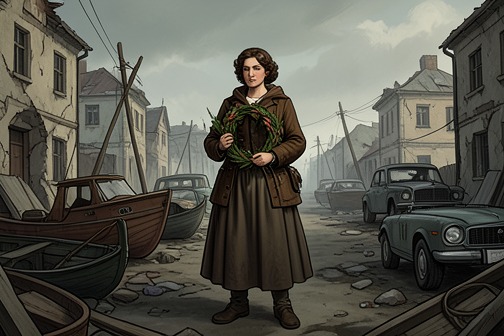
The [2011 Tōhoku earthquake and tsunami](entity:event-recall-event-2011-t-hoku-earthquake-213736607906) is both a personal catastrophe and a turning point in the novel’s investigative landscape. Remembered through Yasuyo’s losses and reflected in the weakened records and scattered companies surrounding nuclear-plant work, the disaster changes what can be rebuilt, what can be traced, and what remains beyond reach.
## Destruction and Personal Aftermath
More than a decade after [Kyoichiro Kaga](entity:character-recall-character-kyoichiro-kaga-31e795457e2a)’s visit, Yasuyo still shudders at the memory of the earthquake and the destruction in her neighborhood. She and her neighbors were among the fortunate, but many of her relatives lived on the coast and were killed in the tsunami. When she later went to lay commemorative wreaths, the scale of the devastation left her unable to take it in: the landscape had become ruins, with boats, cars, and houses jumbled together beneath mud. The disaster is thus recalled not as a distant national statistic but through the loss of relatives and the obliteration of familiar places.
The earthquake and the [Fukushima Daiichi nuclear disaster](entity:event-recall-event-fukushima-daiichi-nucle-8feb7697cbae) also brought an immediate end to Yasuyo’s working life. With electricity, gas, and water cut off, she closed both of her establishments; reopening would have been difficult even if the utilities returned, since she expected customers to be slow to come back. Already over seventy, she treated the disaster as the point at which it was time to change course. Savings from the boom years and her state pension allowed her a modestly comfortable retirement, with occasional drinks with old friends and short trips.
## Effects on the Investigation
The disaster’s consequences persist in the police inquiry into the identities and past employment of Shunichi Watabe and [Mutsuo Koshikawa](entity:character-recall-character-mutsuo-koshikawa-fc450b9e0f1d). The nuclear industry relied on long chains of contractors and subcontractors, making it hard to establish which small firms had employed particular workers. After the 2011 earthquake and tsunami, many of those smaller companies withdrew from the business altogether. Investigators consequently had to seek help from police stations around the country and gather recollections from former bosses, crew leaders, and workers.
The passage of time and the industry’s recordkeeping practices compounded that difficulty. Companies were required to retain employee documents for three years only for full-time workers; short-term contractors could leave little or no trace. Since workers were routinely hired through layers of intermediaries, sometimes under false names, the investigators could not assume that a missing record meant a person had never worked at a plant. The disaster therefore intersects with an older structural problem: an employment system in which responsibility and information were already dispersed, and in which the closure of smaller firms further narrowed the paths back to a worker’s identity.
## Labor, Risk, and Displacement
The investigation’s account of nuclear-plant labor gives this background a human dimension. Workers could move from plant to plant through subcontractors, staying for a few months at a time in company dormitories before moving on. One worker described having no settled home and spending four years in this cycle. His description presents a workforce organized around temporary employment and precarious residence, a condition that helps explain why tracing past workers is so difficult.
The work itself could involve cleaning contaminated areas during inspections and maintenance. A worker described radiation control as an ongoing task, with cleaning done by scrubbing surfaces with cloths and brushes. These details make clear that the inquiry concerns not only names in company files but workers whose labor took place in hazardous environments and whose employment could be mediated through multiple subcontractors. The earthquake’s disruption of small firms compounds an existing fragility in how such workers were hired and documented.
## Narrative Significance
The disaster operates on two connected scales. For Yasuyo, it is remembered through bereavement, the wrecking of the coastal landscape, and the practical impossibility of continuing her businesses. For the detectives, its aftermath is embedded in the conditions of the search: companies disappeared from the industry, and the old employment trail grew even harder to follow. The event is therefore not simply a backdrop to the murder investigation. It marks a break in local life while also deepening the uncertainty around a labor history already obscured by short-term contracts, subcontracting, and assumed identities.
Event 9
Hiromi Asai’s orphaning
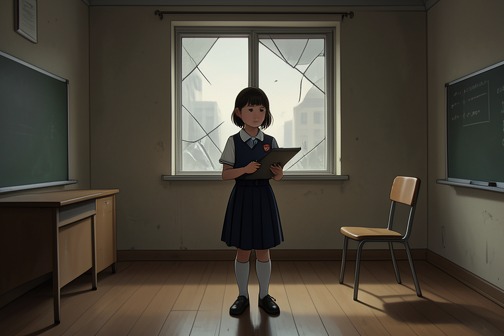
[Hiromi Asai’s orphaning](entity:event-recall-event-hiromi-asai-s-orphaning-ab4b7ba61fcc) came after her mother abandoned the family and her father died by suicide, leaving her without either parent while she was still a child. The novel treats this not as a single loss but as a rupture with lasting consequences: Hiromi entered institutional care, endured bullying and grief, and carried the knowledge that her father’s actions had been intended, in part, to preserve her future. Years later, her history also clarifies why classmates’ bullying and the family’s circumstances remained bound together in the memories of those who knew her.
## Causes and Family Circumstances
Hiromi’s family had already been under strain before she became an orphan. Recalling the bullying, former classmates linked it to events at home: her mother had walked out, and the family store was troubled by repeated visits from gangsters. The recollection connects the hostility Hiromi faced at school to a visible family crisis, though the classmates did not appear to understand the full extent of what had happened to her.
The novel later makes the adults’ responsibility more explicit. Motoko Yoshino, who worked at the orphanage, considered Hiromi a victim of abuse: in her view, her mother’s departure amounted to neglect, while her father abandoned his duty of care by taking his own life. Yoshino’s judgment distinguishes the parents’ different actions while recognizing their shared consequence for the child. She also noted the grim qualification that Hiromi’s father had not taken her with him.
## Bereavement and Institutional Life
After the deaths and abandonment, Hiromi was placed in an orphanage. The institution was large and chronically understaffed, with little opportunity for individual attention, no sense of family, and limited privacy. For a newly arrived child who had lost both parents in quick succession, its scale and impersonal routines compounded the absence at home.
Yoshino remembered Hiromi at first as miserable and withdrawn, barely speaking. That silence is presented in the context of her losses rather than as an inexplicable trait: she had been bereaved and abandoned in very short order. The orphanage was not only a setting for her care but also a place where the consequences of family collapse remained present in daily life.
## Bullying and Sources of Support
As a newcomer, Hiromi was subjected to bullying by other children. Former classmates later recalled bullying her because of her family’s situation, but their recollections were incomplete: when asked whether they knew she had been sent to an orphanage after her father’s death, one said she had not known. The gap between the harm remembered and the circumstances forgotten underscores how little Hiromi mattered to those classmates after she left their school.
The bullying did not define the entirety of Hiromi’s life in the orphanage. She endured it with support from adults including [Seizo Naemura](entity:character-recall-character-seizo-naemura-66e44af22783) and Motoko Yoshino. She often cried herself to sleep, but the thought that her father was having an even harder time gave her strength to continue. Her response held grief and loyalty together: she suffered from the separation while also understanding her father’s sacrifice as the condition that allowed her to go on living.
## Lasting Significance
The orphaning reverberates beyond Hiromi’s childhood. Its effects surface in accounts of her school years, in Yoshino’s recollection of her withdrawn arrival, and in the later recognition that the classmates who bullied her had little understanding of her circumstances. The event also exposes a painful tension between intention and consequence: her father’s decision left her alive, but it also left her to face bereavement, institutional life, and bullying without her parents.
The novel places this childhood loss alongside a broader inquiry into family bonds and unresolved separation. Hiromi’s father remained part of her emotional life even while absent, and her gratitude toward him coexisted with the hardship his death and the family’s collapse brought about. Her orphaning therefore marks both a devastating break in care and the beginning of a life sustained, imperfectly, by other people’s support and by the bond she continued to feel with her father.
Event 10
Seizo Naemura’s disappearance
[Seizo Naemura’s disappearance](entity:event-recall-event-seizo-naemura-s-disappe-c7d510e7734f) began with a sudden withdrawal from his former life and persisted for roughly two decades, leaving former pupils and relatives without reliable news of him. When investigators looked for him as a possible link between [Hiromi Asai](entity:character-recall-character-hiromi-asai-48e8e9fe4bea) and [Michiko Oshitani](entity:character-recall-character-michiko-oshitani-3eb00e173206), his absence became a major investigative lead—but the search also exposed how easily an unexplained disappearance could draw attention away from the truth about another missing man.
## Departure and the break with his former life
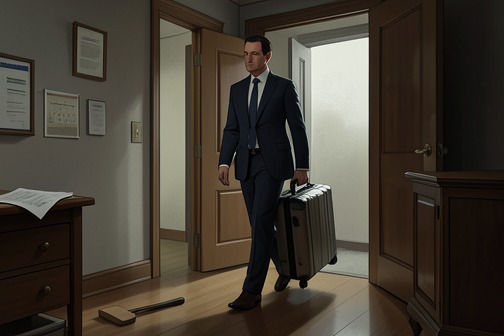
Naemura’s disappearance can be traced to the end of his career at a junior high school. He quit on March 31, at the close of the academic year, and his divorce followed immediately afterward. He left the apartment he had shared with his wife, without telling her in advance that he intended to leave his job. He left behind a short note and divorce notification; his wife eventually filed her own divorce papers and moved out. The sequence linked the end of his marriage to the end of his employment, although the evidence does not explain what prompted him to abandon both at once.
The departure did not produce a new, traceable address. Naemura did not update the address on his residence certificate after moving out. Local authorities therefore continued sending official mail to the old apartment, even after another person had moved in. When the new resident complained, the authorities canceled Naemura’s registration ex officio. By the time the police investigated, that cancellation had occurred fifteen years earlier, and the administrative record offered no destination to follow.
## A disappearance sustained by silence
Naemura’s absence extended beyond official paperwork. His former pupils had no current contact details for him, and Matsumiya concluded that he had not merely disappeared from view but had cut off contact with them. That severance became visible when Michiko Oshitani tried to organize a reunion. She asked a former classmate whether he knew how to reach their old homeroom teacher; he did not, and the reunion plan had to be abandoned because she could not contact Naemura. Another former pupil remembered being asked the same question, confirming that Oshitani had made a genuine effort to find him.
The former pupils still could not say where Naemura had gone. When Matsumiya asked whether they knew of any other older men from their school days whose whereabouts had become unknown, the question widened the inquiry beyond the missing teacher. His disappearance mattered not only because no one could locate him, but because the silence around him left open whether he had chosen to withdraw, been lost to the records, or was connected to someone else’s concealed identity.
## The search as an investigative lead
The [Tokyo](entity:location-recall-location-tokyo-0b4edfa3fe2f) investigators initially focused on Naemura because they needed to identify a missing man who could have been known to both Hiromi Asai and Michiko Oshitani. [Shiga Prefectural Police](entity:organization-recall-organization-bb9fbedbaf9d) found that he was the only missing person of a suitable age they could identify. With no known family available to explain his later life, Matsumiya and [Sakagami](entity:character-recall-character-sakagami-c1e29b75958d) were sent to Shiga to pursue the lead. At the orphanage where Hiromi had lived, Matsumiya also asked whether visitor records might show that Naemura had visited her, explaining that former pupils had described him delivering a letter to her in person.
The evidence did not establish that Naemura was the man the investigators sought. [Yasuyo Miyamoto](entity:character-recall-character-yasuyo-miyamoto-95675336d078)’s testimony eventually showed that he was not Shunichi Watabe, the missing person whose connection to Hiromi had become crucial. That distinction forced the task force to reconsider its assumptions: Naemura’s disappearance had pointed toward a possible link, but did not account for Watabe’s relationship with Hiromi or his absence.
## What the disappearance concealed—and what it did not explain
[Kaga](entity:character-recall-character-kaga-59f66483bbcb)’s re-examination of the case led him to propose that Watabe had been connected to Hiromi for at least ten years and may have received financial support from her. Given Watabe’s age, his disappearance, and his known connection to Michiko, Kaga concluded that he could be Hiromi’s father, [Tadao Asai](entity:character-recall-character-tadao-asai-9a1a596ef2f8). The novel thus places Naemura’s unexplained withdrawal beside a second, more consequential disappearance: the apparent death of Tadao, which Kaga came to suspect had been fabricated using another person’s death. Naemura’s absence supplied a plausible investigative route, but the resolution depended on separating that route from Watabe’s hidden identity.
Naemura’s story remains defined by what others could not learn: why he left his job and marriage together, where he went, and whether he ever resumed contact with anyone from his earlier life. In the investigation, the missing teacher becomes a measure of the limits of records and recollection. His old pupils remember the failed reunion and the unanswered search, while the authorities can establish a sequence of departures and administrative consequences without recovering the man himself.
Event 11
Hiromi Asai and Seizo Naemura’s affair
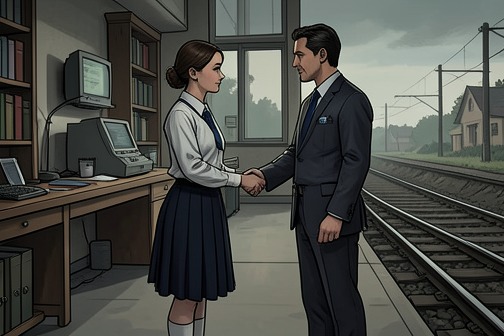
[Hiromi Asai and Seizo Naemura’s affair](entity:event-recall-event-hiromi-asai-and-seizo-n-5dcf2c27adeb) grew out of a long-standing teacher-pupil relationship, becoming physical shortly before Hiromi left for [Tokyo](entity:location-recall-location-tokyo-0b4edfa3fe2f) to pursue acting. Its decisive tension lay in the difference between emotional intimacy and a shared future: although Hiromi loved Naemura, she treated her own ambition and independence as the course she had to follow.
## From Teacher and Pupil to Intimacy
Naemura had continued visiting Hiromi and offering a sympathetic ear even after she transferred to another junior high school. At first, their bond remained that of a teacher and a prize pupil. As Hiromi moved through high school, however, her feelings changed. She came to anticipate his visits and to care about what she wore when she saw him; she also recognized that his manner toward her had changed, and that he seemed troubled by his feelings and considered withdrawing from the situation.
Hiromi decided to take the initiative rather than let the connection end. The affair was physical only shortly before her high-school graduation. That timing sets the relationship’s change against an impending departure: it became intimate just as Hiromi was preparing to leave the life in which it had taken shape.
## A Private Getaway and Diverging Futures
The pair’s time together included a two-day, one-night trip during a long weekend. Hiromi told the orphanage she was going away with a group of high-school friends; she did not know what explanation Naemura gave his wife and did not concern herself with it. They stayed at a resort on the shore of [Lake Kawaguchi](entity:location-recall-location-lake-kawaguchi-2c28fd7089ac), where Hiromi’s happiness at finally being alone with him mattered more to her than the surroundings.
Their relationship was consummated during that trip, but Hiromi was not seeking a future together. Acting was her priority. She had fallen in love with the stage after seeing her first show, auditioned for the [Balalaika troupe](entity:organization-recall-organization-d7e2309be0ca) in Tokyo, and won a place despite having no acting experience. The offer meant two years as an unpaid trainee, with a part-time job and shared accommodation arranged by the company. She was willing to make sacrifices for this course, even if it meant not seeing Naemura for some time, or never seeing him again.
## Departure and Secrecy
Shortly before graduation, Hiromi and Naemura met for a private celebration. The relationship’s intimacy thus coincided with her decision to leave for Tokyo in April, rather than redirecting her from that plan. Their connection remained private: during an earlier period when Hiromi and her father had disappeared from their usual lives, Naemura promised to keep details from people at school and to protect her secret.
The affair’s place in the story is therefore bound to concealment and separation. It joins a relationship formed through Naemura’s continuing support to the separate lives they maintained, while Hiromi’s choice to pursue acting makes clear that love did not amount to a promise of a shared future. The evidence establishes the relationship’s development and its limits, but does not describe a later resolution between them.
Event 12
Seizo Naemura’s departure from his wife and move to Tokyo
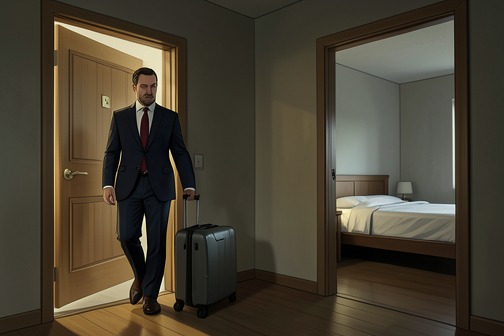
[Seizo Naemura’s departure from his wife and move to Tokyo](entity:event-recall-event-seizo-naemura-s-departu-e3fb4a134426) converts a concealed relationship into a rupture that neither of the people closest to it can make secure. He leaves his marriage without openly identifying the woman he loves, then quits his school job and relocates with one suitcase to a temporary apartment under an unregistered address. The move grants him distance from his former life, but the secrecy and emotional cost that accompany it leave his future with Hiromi unsettled.
## Causes and Background
Naemura’s marriage had entered a prolonged emotional freeze. As [Kayoko Imai](entity:character-recall-character-kayoko-imai-67b15cd477f8) later explained, her sister knew that her husband was serious about another woman, not merely involved in an affair, but he refused to identify her. He offered only the same formula: “I’m sorry, but we’ve got to separate.” The refusal left his wife without an explanation she could answer or a name to make the betrayal concrete.
Their domestic life made the separation visible well before it was formal. Naemura would not eat the food his wife prepared; he ate out each night, came home late, slept in a separate bedroom, and left early in the morning. His wife did not confide in Kayoko while she still believed there might be some chance of reconciliation. Only after the divorce did Kayoko learn how much had been happening, a silence that helps explain why Naemura’s eventual departure reached the family as a fait accompli rather than a decision discussed together.
## The Marriage Ends
The decisive break came after Naemura quit his job at the school without telling his wife. He moved out of their apartment, leaving a short note and a divorce notification behind. His wife finally concluded that she had no choice: she filed her own divorce papers and moved out as well. The sequence matters. Her departure was not the first move but the answer to his, made after the possibility of repairing the marriage had been narrowed by his unilateral actions.
A year or more earlier, Naemura had told Hiromi that he hoped they would live together. She loved him, but had already decided not to indulge in sentimental hopes; unable to say so directly, she thanked him for the idea instead. The subject then went unspoken for a long time. When he later announced that he intended to quit at the end of the school year, he said that the principal and vice principal had agreed. Hiromi’s question about his wife exposed the unresolved cost behind the plan: Naemura was moving toward the life he had once proposed, but not through a clean or mutual transition.
## Relocation and Concealment
Naemura moved to [Tokyo](entity:location-recall-location-tokyo-0b4edfa3fe2f) in April the next year, carrying only a single large suitcase. He quickly found a small, furnished apartment rented by the week, complete with appliances. The compact, ready-made room offered him somewhere to live without the ordinary permanence of a settled household.
He also chose not to update his residence certificate to show the new address because he did not want people to know where he was. He expected to stay in the apartment for a while, but his concealment made the move more than a change of city: he deliberately kept his whereabouts inaccessible. After surveying the tiny room, he smiled as though a heavy burden had lifted from him. The relief was real, but its terms were isolation and evasion rather than a publicly acknowledged new beginning.
## Consequences for Hiromi
For Hiromi, Naemura’s relocation shifts their relationship out of the fragile balance it had maintained. Their unusual attachment had endured while it remained partly separate from ordinary domestic life; now his move made their shared future more immediate. Although she cared for him and could imagine living together, she had long restrained herself from sentimental expectation, and she could not bring herself to tell him that she had done so.
When she was with him in the Tokyo apartment, Hiromi felt an inexpressible unease. She understood that the structure holding their relationship had begun to shake, without knowing what the upheaval would do to either of them. The image of the burden lifting from Naemura is therefore set against her uncertainty: his escape from the strain of his former life does not resolve the strain he has brought into their relationship. His relocation promises proximity while making its emotional consequences harder to control.
## Retrospective Significance
The departure is later reconstructed through other people’s accounts rather than presented as a fully explained, mutual decision. Kayoko can describe the marriage’s cold routines and the note that ended it, but she never knew the identity of the other woman while her sister was still hoping for reconciliation. Naemura’s life after leaving likewise begins in concealment: a furnished weekly room and an address he refuses to register. These details make the move legible as both an escape and a withdrawal from accountability.
The story’s later disclosures about [Yuriko Tajima](entity:character-recall-character-yuriko-tajima-5ecbb02e47b6) and her son [Kyoichiro Kaga](entity:character-recall-character-kyoichiro-kaga-31e795457e2a) place Naemura’s departure within a wider history of separation and belated understanding. Shunichi Watabe’s letter to [Kaga](entity:character-recall-character-kaga-59f66483bbcb) identifies Watabe as [Yuriko](entity:character-recall-character-yuriko-550b4077f3be)’s long-term partner and explains that she did not speak about her family until more than a year into their relationship. That later revelation does not make Naemura’s move a direct cause of Yuriko’s history; rather, it gives the novel another concealed relationship whose meaning is recovered only after the people involved can no longer explain it face to face. Naemura’s departure similarly leaves behind an account assembled from silence, domestic details, and delayed testimony.
Event 13
Yuriko Kaga’s death
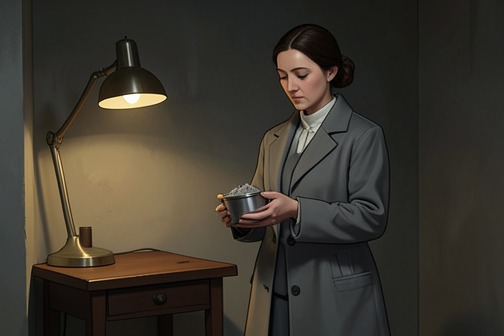
[Yuriko Kaga’s death](entity:event-recall-event-yuriko-kaga-s-death-c67bacf5df15) in [Sendai](entity:location-recall-location-sendai-c2319f52a8f6) is both a bereavement and an unresolved family history: her son, [Kyoichiro Kaga](entity:character-recall-character-kyoichiro-kaga-31e795457e2a), learns only years later how deeply depression and guilt shaped her life after she left him and his father. In the immediate aftermath, [Yasuyo Miyamoto](entity:character-recall-character-yasuyo-miyamoto-95675336d078) bears the practical work of funeral arrangements and custody of [Yuriko](entity:character-recall-character-yuriko-550b4077f3be)’s ashes; much later, a connection between Yuriko and a murder investigation gives Kyoichiro a reason to pursue what he still does not know about his mother. The distance between the modest funeral and the delayed search for understanding defines the event’s emotional and narrative force.
## Death and Immediate Aftermath
Yuriko’s death leaves Yasuyo, who had been asked to arrange a service, responsible for decisions that Kyoichiro and other family members have not yet taken up. After cremation, Yasuyo brings the urn containing Yuriko’s ashes home. She knows she cannot keep it indefinitely and, as Yuriko’s guarantor, also considers herself responsible for clearing the apartment. Her uncertainty over what to do with Yuriko’s possessions extends the practical burden of the death beyond the funeral itself.
The next day, Yasuyo holds a modest service in the smallest room at the local funeral hall. She contacts regulars from [Seven](entity:location-recall-location-seven-d90d6d0f01e9), and a few attend, but the ceremony remains sad and shabby. The scale of the service reflects how little organized support is available around Yuriko’s death: Yasuyo has assumed the work, while the ashes and belongings still await a more settled decision.
Yasuyo had hoped Watabe would help determine what should happen to the ashes. He tells her he has an idea and promises to be in touch, but after she gives him her mobile number, he ends the call. Yasuyo stares at the blank screen. In the days that follow, her repeated calls go unanswered, and she concludes that he has abandoned the matter. The promise therefore offers no immediate resolution; the funeral and the care of the remains fall back on Yasuyo.
## The Life Kyoichiro Had Not Known
The circumstances of Yuriko’s death reach Kyoichiro gradually, through people and evidence rather than through a single family account. More than ten years after her death, Kyoichiro discovers that the victim in the [Shinkoiwa](entity:location-recall-location-shinkoiwa-37438117950f) murder case had supplied the funeral arranger with his contact details. The fact puzzles him: he had moved repeatedly since leaving home, and his father, [Takamasa Kaga](entity:character-recall-character-takamasa-kaga-01b105e70e00), insists that no one asked him for Kyoichiro’s address. The connection turns a criminal investigation into a possible route toward information about his mother.
Kyoichiro tells [Tokiko Kanamori](entity:character-recall-character-tokiko-kanamori-3ea5de84324e) that the Shinkoiwa victim may be linked to his mother, who died in Sendai. He wants to learn what emotional state Yuriko was in, not simply to resolve the mystery of how his contact information reached the funeral arrangements. The case thus reopens a personal question that had remained separate from his professional life: what Yuriko experienced after leaving her family, and what her departure meant to her.
An account from Watabe, who had a long-term relationship with Yuriko in Sendai, supplies what Kyoichiro had lacked. Watabe says Yuriko did not speak about her family for more than a year after they met. When she finally told him her story, she described herself as a burden to her husband, felt guilty about conflict with her in-laws and her mother’s death, and doubted her ability to raise a child. Watabe believed she had developed clinical depression, though depression was little understood at the time; Yuriko instead came to regard herself as a failure.
Watabe’s account also changes the meaning of Yuriko’s separation from her son. He says that when thoughts of suicide threatened to overwhelm her, the image of Kyoichiro asleep could draw her back: she worried about who would care for him if she were gone. Tokiko likewise tells Kyoichiro that she believes her patient’s final thoughts were of her only child. These accounts do not erase the years of separation, but they reveal the attachment and anguish that coexisted with it.
## Family Grief and the Meaning of Departure
Takamasa’s response to Yuriko’s death was shaped by a belief that she had done nothing wrong and might have wanted to see her son once before she died. Kyoichiro recounts that his father thought he had failed to help Yuriko through her mental-health difficulties and did not pursue her because he believed that would be better for both of them. The thought that Yuriko may have wished to see Kyoichiro caused Takamasa physical pain. His decision not to search for her is presented not as indifference, but as an act constrained by guilt and by his interpretation of her wishes.
Takamasa’s own death echoes that painful restraint. He had decided to die alone, and Kyoichiro honored an agreement not to visit even when his father was critically ill. Kyoichiro was absent from the room when Takamasa died. The parallel gives Yuriko’s death an afterlife in the family: separation becomes a pattern of respecting a loved one’s presumed wishes, even when that respect means foregoing a final encounter.
[Katsuko Matsumiya](entity:character-recall-character-katsuko-matsumiya-125dce127c9b) offers Kyoichiro a different emphasis. Although she and Yuriko were not close, she remembers her as kind and responsible, and believes she must have agonized over leaving her son. She urges Kyoichiro to forgive and forget. His response is subdued; the advice does not settle the past, but it articulates the possibility that Yuriko’s departure and his grief might be understood without reducing her to the person who left.
## Memorial and Narrative Significance
For years, no one has organized a proper memorial service for Yuriko. When the subject arises within the family, Kyoichiro says he will consider arranging one after making progress on the case. His answer links commemoration to the search for knowledge: before he can decide how to memorialize his mother, he wants to understand the life and emotional circumstances that remained hidden from him.
The funeral, urn, and proposed memorial give grief concrete forms without making it simple. Yasuyo’s service provides a farewell attended by a few people from Seven, but it leaves her holding the ashes and considering the apartment. Kyoichiro’s later visit to the household altar, where he offers incense and thanks Yasuyo for what she has done, acknowledges the care that had been carried out in his absence. Yet his question about the word Yuriko used for herself—“failed”—shows that ritual alone cannot resolve his uncertainty about her inner life.
The death therefore becomes a story of belated knowledge as well as loss. Its facts arrive through scattered testimony: Yasuyo’s account of the funeral and ashes, Takamasa’s guilt as recalled by Kyoichiro, Tokiko’s conviction about a mother’s final thoughts, and Watabe’s letter describing Yuriko’s depression and enduring concern for her son. Their accounts do not restore the years Kyoichiro and Yuriko spent apart. They make visible, instead, the attachment that persisted within that separation and the unfinished work of mourning that followed her death.
Event 14
Tadao and Hiromi Asai’s flight from home
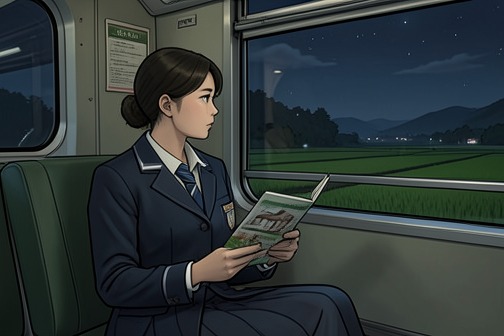
[Tadao and Hiromi Asai’s flight from home](entity:event-recall-event-tadao-and-hiromi-asai-s-b4059b6abf1e) is the desperate nighttime departure that breaks the daughter’s familiar life and places her in the care of a father who says there is no other way. Recalled from the perspective of Hiromi decades later, it is both a physical escape and a severing of ordinary ties: she leaves her house, school, and known surroundings without knowing what her father’s promise to make things work out will mean.
## Background and Recollection
The episode returns while Hiromi is on a train, looking out at rice fields that seem unchanged. She has a brochure for an old-age home, originally given to her by [Michiko Oshitani](entity:character-recall-character-michiko-oshitani-3eb00e173206), and its presence accompanies the return of memories from thirty years earlier. The shift from the still landscape outside the carriage to the urgent domestic scene gives the departure its retrospective shape: a moment once lived in confusion is now recalled as a defining break.
At night, Hiromi is asleep in her futon when someone shakes her awake. She sees her father’s drawn, anxious face. Tadao tells her to get ready to leave immediately; after taking a deep breath and putting a hand on her shoulder, he says they are getting out because there is no other way. Hiromi notices that his eyes are red. His alarm is visible, but the reason for the urgency is not explained in the recalled scene, and she has to act without a full account of what is happening.
## The Escape
Hiromi thinks of school and her future, but recognizes that staying in the house offers nothing. She packs the clothes and toiletries she can fit into her largest backpack. It is not a cold time of year, a practical detail that matters when she is carrying what she can take with her. The hurried packing makes the departure concrete: a household life is reduced to a bag, assembled before she has time to understand what lies ahead.
At around two in the morning, Tadao and Hiromi climb out through a second-floor window. Tadao fears that someone may be watching the front door, so they cross the roofs of neighboring houses with their heavy bags. Hiromi remembers that an elementary-school classmate used to climb over those same rooftops for fun; a familiar route of childhood play is transformed into a means of getting away unseen.
Once they reach street level, they trot toward the next railway station rather than their local one, where they might encounter someone they know. The alternative is five kilometers away and takes them an hour and a half to reach. They then spend a couple of sleepless hours in a small park before boarding the first train, bound for Hokuriku. The long walk and wait carry the risk of discovery into the journey itself: escape is not a single act at the window but a sequence of evasions, exhaustion, and movement away from familiar faces.
## School, Secrecy, and Dependence
The train offers a destination because Tadao knows someone in Hokuriku whom he once helped through financial trouble. That person had said they would be welcome at any time, and Tadao believes he will help when told what has happened. His plan rests on an old act of assistance and a promised welcome; for Hiromi, however, it does not answer the question she asks most immediately: what will happen to her schooling?
Tadao frowns and tells her she cannot attend school for a while. If he transfers their residence registration, people will be able to track them down. He promises that she need not worry because he will work something out. Hiromi does not know what he means by that promise and keeps her doubts to herself, judging that this is not the time to ask many questions. The flight thus makes her dependent on his decisions while also showing the cost of those decisions: her education must be interrupted to keep their whereabouts from being traced.
## Aftermath and Narrative Significance
The remembered flight belongs to a wider history of family separation, but the scene itself stays close to the child’s partial knowledge. Hiromi sees the red eyes, the heavy bags, the roofs, and the empty hours before the first train; she does not yet know how to interpret her father’s plan. That gap between what Tadao knows and what he tells her gives the memory its tension. His assurance is an act of care, but it cannot make the future intelligible to the girl being asked to leave it behind.
The episode also acquires added weight through the novel’s later account of [Yuriko Tajima](entity:character-recall-character-yuriko-tajima-5ecbb02e47b6)’s life after leaving her family. In a letter to [Kyoichiro Kaga](entity:character-recall-character-kyoichiro-kaga-31e795457e2a), Shunichi Watabe explains that [Yuriko](entity:character-recall-character-yuriko-550b4077f3be) saw herself as a burden, felt guilty over her mother’s death, and became seriously depressed, doubting her capacity to raise a child. Watabe says that the sleeping face of her only son was what could bring her back from the brink of suicide. These revelations do not explain the immediate circumstances of Tadao and Hiromi’s nighttime departure, but they connect the remembered escape to the book’s larger pattern of love expressed through separation, and of family histories understood only belatedly.
The contrast between Hiromi’s silence on the train and the later arrival of Watabe’s letter is central to that structure. During the escape, she withholds her questions because there is no room for them; years later, other people’s testimony helps make a parent’s emotional life more legible. The departure is therefore more than a change of place. It is an early rupture whose meaning remains incomplete until later memories and disclosures begin to supply what the child could not know.