Event 1
Clyde Rangor's killing and Candi Cane's disappearance
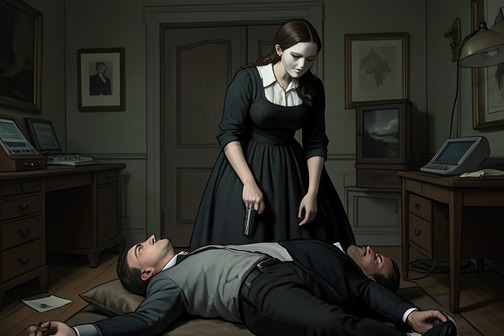
[Clyde Rangor's killing and Candi Cane's disappearance](entity:event-recall-event-468f9b34bd34) are joined by a deliberate substitution: [Emma Lemay](entity:character-recall-character-emma-lemay-4b4dccdb9143) kills Clyde Rangor while protecting [Olivia Hunter](entity:character-recall-character-olivia-hunter-8ea10aadf763), then the women conceal his death and arrange for [Cassandra Meadows](entity:character-recall-character-cassandra-meadows-d72b1a059010)'s body to be identified as [Olivia's assumed identity](entity:state-recall-state-olivia-s-assumed-identi-71ee59c30b78), Candi Cane. What begins as an immediate struggle for survival becomes a calculated escape, built on a hidden body, a borrowed identity, and the expectation that nobody will question the story they present.
## The Killing and Its Immediate Stakes
Olivia recounts that she had found the gun beneath the top bunk's mattress after Clyde went down, knowing the brief opportunity would not last. Clyde recovered and threatened her; Olivia understood that if she failed to get the weapon, he would kill her. The threat came as she was losing strength and could no longer fend him off. This is the moment that makes the gun a means of survival rather than a planned instrument of attack.
Emma entered the confrontation with the gun and shot Clyde. After he released Olivia, Emma fired again, then once more, killing him. Olivia recalls Emma standing over Clyde while she recovered. The change is immediate and stark: Clyde's control ends, but his death does not resolve the danger. Emma's first response is to tell Olivia that they must hide his body, turning the scene from self-defense toward concealment.
## From Self-Defense to Concealment
Olivia says she proposed calling the police and explaining that the shooting was self-defense. She could point to the marks on her neck and to Cassandra Meadows, whose death also implicated Clyde Rangor. Emma rejected that course with apparent calm, keeping the gun in her hand without aiming it at Olivia. Her response redirected the women from seeking official help toward a plan in which they would control what authorities saw.
The plan drew on the money Clyde had hidden at the house: Emma proposed taking the hundred thousand dollars, splitting it, and beginning separate lives elsewhere. She also used Olivia’s wallet and identification to prepare the identity substitution. Because [Nevada](entity:location-recall-location-nevada-0642d85e5071) identification cards at the time did not require photographs, Emma could place Olivia’s ID in [Cassandra](entity:character-recall-character-cassandra-64055e2aac8a)’s pocket, making the dead woman appear to be Olivia’s assumed identity. When Emma asked when [Kimmy Dale](entity:character-recall-character-kimmy-dale-9ce1b2f297a2) would return, Olivia said it would be in three days, leaving the women time to carry out their plan before Kimmy came back.
## The Disappearance and Its Aftermath
The women carried out the plan by rolling Clyde’s body in a blanket, putting it in the car, and padlocking The Pen. Emma knew a remote desert location where Clyde had left at least two other bodies; they buried him in a shallow grave there. To prevent the girls from returning to the camp while the burial was being handled, Emma arranged for everyone at the club to work overtime. The concealment depended not only on removing Clyde but on controlling who might notice his absence.
They then used Cassandra Meadows’s death to make Olivia’s disappearance appear to be Candi Cane’s. Emma, acting as employer and near-guardian, reported that one of her girls had been murdered and showed police Cassandra’s body. Olivia’s identification was already in Cassandra’s pocket, and Emma identified the body as [Candace Potter](entity:character-recall-character-candace-potter-f5ec63863264), known at the club as Candi Cane. With no next of kin and no one questioning the identification, the substitution passed as fact: Cassandra was recorded as Candi, while Olivia could leave under a different identity.
The escape was materially enabled by Clyde’s hidden money. Olivia says that she and Emma split it and that she received more than fifty thousand dollars. The other girls’ use of false identification also made it easier for Olivia to obtain a new one. In combination, the shallow grave, the planted ID, the police report, and the cash transformed a violent crisis into a disappearance that could endure beyond the immediate scene.
The event’s later meaning is sharpened by the contrast between the women’s proposed self-defense account and the story they chose to manufacture. Olivia believed the evidence of her injuries and Cassandra’s death could support going to the police; Emma instead treated escape and silence as their chance to begin again. The false identification did more than obscure a death: it erased Candi Cane from the official account and gave Olivia room to survive under another name, while leaving the consequences of Clyde’s killing hidden in the desert.
The escape was materially enabled by Clyde Rangor’s hidden money. Olivia Hunter says that she and Emma Lemay split it and that she received more than fifty thousand dollars. The other girls’ use of false identification also made it easier for Olivia to obtain a new one. Together, the shallow grave, planted identification, police report, and cash turned an immediate crisis into a disappearance that could endure beyond the scene.
The event’s later meaning lies in the contrast between the self-defense account Olivia wanted to offer and the false story Emma chose to build. Olivia believed that her injuries and Cassandra Meadows’s death could support going to the police; Emma instead treated escape and silence as their chance to begin again. The false identification did more than obscure a death: it removed Candi Cane from the official account and gave Olivia room to survive under another name, while Clyde’s killing remained concealed in the desert.
Event 2
Murder of Emma Lemay
[Murder of Emma Lemay](entity:event-recall-event-60459aa2dc94) is a past event whose significance in the available passages lies in its unresolved place within a wider investigation and in the lasting grief and blame surrounding other deaths. The evidence does not recount Emma’s killing itself; instead, it links questions about her concealed identity to [Max Darrow](entity:character-recall-character-max-darrow-53c31f049e3e)’s investigation and sets that mystery alongside continuing attempts to explain Stephen McGrath’s death.
## The Investigation Reaches Emma’s Past
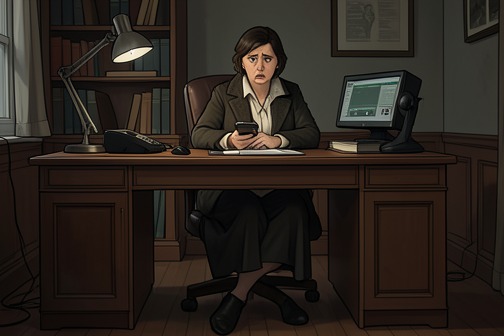
While pursuing the case, [Loren Muse](entity:character-recall-character-loren-muse-5c463b30f942) sat with her feet on her desk and decided to call Max Darrow’s widow. The scene presents the inquiry as deliberate follow-up: Loren turns to someone who may clarify what Max had learned, rather than treating his connection to Emma as settled.
The questions Loren’s investigation raises are specific but unanswered in the cited passage. What had Max noticed after all those years, and what had taken him to [Newark](entity:location-recall-location-newark-894909e0ba1f) to find [Emma Lemay](entity:character-recall-character-emma-lemay-4b4dccdb9143), who was then living as [Sister Mary Rose](entity:character-recall-character-sister-mary-rose-bf5ade6f7721)? That shift between Emma’s name and her adopted identity makes the search for her past central to the mystery, but the evidence here does not establish what Max discovered or explain Emma’s death.
## Grief and Blame in the Surrounding Story
The account of Emma’s murder sits within a narrative where the consequences of death endure beyond the event itself. Six months into his incarceration, [Matt Hunter](entity:character-recall-character-matt-hunter-b911d1421f34) learned that his father had died of a heart attack. He held himself responsible and could not cry. This episode concerns his father, not Emma, but it underscores how loss becomes entangled with self-blame in the surrounding story.
Stephen McGrath’s death likewise remains a point of conflict. [Sonya McGrath](entity:character-recall-character-sonya-mcgrath-788c0deaa20e) asked Matt whether he knew Stephen had not known any of the boys in the fight. Later, she told [Clark McGrath](entity:character-recall-character-clark-mcgrath-d8b64a32e9f4) that what happened to Stephen had been an accident. The difference between asking what Matt knew and insisting to Clark that Stephen’s death was accidental keeps uncertainty, responsibility, and grief in active tension; these passages do not resolve Emma’s case.
## Delayed Recognition and Unresolved Circumstances
The narrative approaches Emma’s death through later inquiry rather than a direct account of the killing. Loren’s call to Max’s widow and her questions about his journey to Newark bring the hidden history back into view, while the later recollection that Sister Mary Rose had lived a good and pious life after changing identities complicates any simple picture of her past. It is presented as a possibility that she, too, may have seen a post seeking help, not as a confirmed explanation of her actions.
The evidence therefore supports a limited but important account: Emma’s death is part of a story in which concealed identities, old discoveries, and bereavement continue to prompt questions. It does not identify who killed Emma, specify when or how she died, or establish a direct cause for her murder. The event’s narrative weight here comes from what remains to be understood about the life she had been living as Sister Mary Rose and what Max Darrow had found before his own death.
Event 3
Murder of Max Darrow
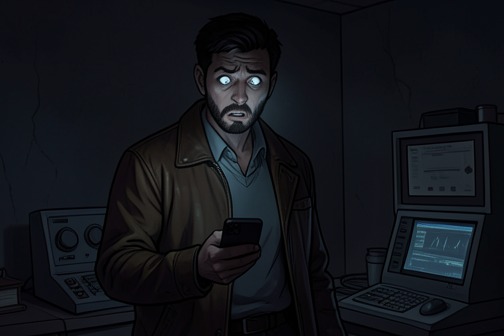
The [Murder of Max Darrow](entity:event-recall-event-ccb41360a281) is a turning point in the novel’s investigation: Max is found shot dead in [Newark](entity:location-recall-location-newark-894909e0ba1f), and the news reaches Matt alongside the discovery of Charles Talley’s body and evidence that threatens to implicate him. Max’s death also leaves an unresolved question about why he had returned to Newark after so many years. His widow’s later discovery of an autopsy file on [Candace Potter](entity:character-recall-character-candace-potter-f5ec63863264) gives [Loren Muse](entity:character-recall-character-loren-muse-5c463b30f942) a new route into that past, making the murder both a present danger and a delayed clue in a larger chain of concealed identities and deaths.
## Causes and Background
The available account does not show who killed Max or the circumstances of the shooting. Instead, the murder enters the story through a report to Matt: Max has been found shot dead in Newark. The news follows Matt’s questions about Max and arrives amid other evidence that rapidly changes the stakes, rather than as a fully narrated crime scene.
Before Max’s death is explained, the novel has already made the handling of images uncertain. Matt sees a man on a cell-phone screen, a dark-haired stranger in a red shirt, but does not know him. Matt later realizes that the footage came from [Olivia Hunter](entity:character-recall-character-olivia-hunter-8ea10aadf763)’s phone without her apparently knowing the camera was recording her. He considers whether the unknown man sent it, but the sender and the creation of the images remain questions at that point. This unresolved chain matters to the murder’s surrounding investigation: images may be evidence, but their presence on someone’s phone does not establish who made or controlled them.
Another investigative clue is material rather than visual. Examining a surgical implant with Loren, Eldon Teak points out its serial number, a feature common to such devices. The number offers a way of connecting an object to a record, extending the novel’s contrast between clues that can be traced and appearances that can mislead. The evidence does not establish that the implant explains Max’s murder; it belongs to the wider inquiry in which his death becomes significant.
## The Report and Its Immediate Stakes
Matt learns of Max’s death during a phone conversation with Midlife. Max had been murdered, Midlife says, and his body was found in Newark. The same call brings worse news for Matt: Charles Talley is dead, his body has been found at the Howard Johnson’s, and police have recovered bloody brass knuckles that they are testing for DNA. Midlife adds that photographs from Matt’s cell phone will be retrieved within the hour.
The report binds the two deaths to Matt’s immediate predicament without proving that he caused either one. The juxtaposition of Max’s shooting, Talley’s death, the brass knuckles, and the imminent recovery of Matt’s phone images turns an investigation into a threat of accusation. Matt looks at Olivia, who asks what is happening, but he says nothing. The silence marks the moment’s pressure: the facts are arriving faster than he can explain them, and the phone that has already supplied ambiguous images is about to become part of the police inquiry.
## What Max’s Death Leaves Behind
Max’s widow, Gertie Darrow, later calls Loren back with a discovery. In Max’s office she has found what appears to be an autopsy file on Candace Potter, signed by the former medical examiner. Gertie recalls him as a very nice man, but the document’s significance lies in what it records: Candace’s cause of death is given as strangulation, with a severe beating and head trauma also noted.
The file fits evidence Loren and others already possess, but it sharpens the mystery rather than resolving it. Loren wonders what Max had noticed after all those years, and what had sent him to Newark and to [Emma Lemay](entity:character-recall-character-emma-lemay-4b4dccdb9143), who was living as [Sister Mary Rose](entity:character-recall-character-sister-mary-rose-bf5ade6f7721). She asks Gertie whether Max’s office has a fax machine so that the document can be sent to her. The sequence gives Max’s death a posthumous investigative consequence: his work survives in a file that can redirect Loren’s inquiry, even though the available account does not disclose exactly what he learned or who killed him.
## Narrative Function and Aftermath
The murder is presented through separated pieces of information rather than a witnessed killing: a call reports the shooting, and a later call from Gertie reveals a document associated with Max’s research. This delayed disclosure keeps the reader’s attention on the gap between a death’s immediate public meaning and the private trail the dead person leaves behind. Max’s case is not isolated from the other deaths; the report arrives beside the news of Talley’s murder, while the autopsy file reaches Loren as she pursues the older case of Candace Potter.
The wider consequences continue beyond the initial investigation. [Adam Yates](entity:character-recall-character-adam-yates-89e1387984e9) later kills himself, and the novel distinguishes the fear surrounding a videotape from what will ultimately haunt his children: they will know the truth of their father’s death, not the tape. That later reckoning underscores the book’s recurring concern with what evidence can and cannot explain. In Max’s case, the autopsy file makes part of the past legible, but the murder itself remains an open question in the evidence presented here.
Event 4
Olivia's response to a plea for help finding her daughter and the ensuing blackmail

[Olivia's response to a plea for help finding her daughter and the ensuing blackmail](entity:event-recall-event-38a84631b62b) transforms an online search for a blood relative into a trap built around Olivia’s concealed identity. A message seeking a kidney donor for the seriously ill daughter of adoptive parents identifies the birth mother as [Candace Potter](entity:character-recall-character-candace-potter-f5ec63863264)—Olivia’s former identity—and leads Olivia from a cautious inquiry to a meeting arranged by [Max Darrow](entity:character-recall-character-max-darrow-53c31f049e3e), a demand for money, and a threat against the daughter.
## The appeal and the identity it exposes
Olivia brings Matt a wrinkled sheet of paper and asks whether he knows anything about online adoption support groups. The message, already four weeks old, says that a daughter adopted eighteen years earlier is gravely ill and urgently needs a kidney donation from a blood relative. It identifies the adoption as having taken place through Dr. Eric Tequesta’s office in Meridian, Idaho, on February 12th, and names the deceased birth mother as Candace Potter. The parents have no information about the father and ask relatives of Candace to contact them.
That name makes the appeal more than a general request for help. Olivia recognizes a connection between herself and the woman described as dead: the message addresses her through Candace Potter, the identity she has left behind. At the center of the episode is therefore a painful double exposure. The search concerns a sick daughter who may need her biological relatives, while the information that could establish Olivia’s link to her also makes her vulnerable to someone who knows who she is.
## Olivia makes contact
Olivia tells Matt that she first wrote to the adoptive parents while presenting herself as an old friend of Candace Potter. They would not give her information. She then wrote again, this time claiming to be a blood relative. The change in what she disclosed was a response to the parents’ refusal, but it also opened a path for someone else to exploit the request and her identity.
The contrast between the two messages Olivia describes matters: as a supposed friend, she could not get access; as a claimed relative, she became involved in events arranged around her. The daughter’s illness and need for a donor give the search its urgent purpose. At the same time, the request for confidentiality and the revelation that Candace is deceased make the correspondence an unusually sensitive channel through which Olivia’s past can be found.
## The arranged meeting and the demand
Olivia recounts that a man booked a room for her and told her to check in and wait. After she arrived, he called and directed her to Room 508. There, he searched her bag and took her phone. He instructed her to change into a wig and dress, explaining that he did not want either of them recognized when they went out. Olivia says she was afraid not to comply.
The meeting then shifts from the promised purpose of finding her daughter to a demand for money. According to Olivia, the man told her that he knew who she was and that she would have to transfer money to save her daughter’s life. He initially demanded $50,000. When he said he would need another $50,000, Olivia told him she did not have that much. They argued, and she said he would receive more only when she saw her daughter. The disguise and the change of location do not provide reassurance; in her account, they belong to the setup that lets the man control the meeting and make his demand.
## Threats, leverage, and the next meeting
Olivia insists on seeing her daughter, and the man arranges another meeting at which she is expected to bring the remaining money. She gives Matt the address, 488 Center Lane Drive, and says she has a plane ticket. She also reports that Darrow told her not to tell anyone and that she fears the daughter will be hurt if she does not go. The threatened harm is the leverage behind the demand: money is tied to access to the daughter, while secrecy is meant to prevent Olivia from seeking help.
The account marks a reversal in the meaning of the original appeal. What began as a request from parents seeking a possible blood donor becomes, in Olivia’s understanding, a means of coercing her through the daughter’s medical crisis. Her insistence on seeing the girl is a condition she sets against further payment, but it does not end the danger; instead, it leads to the promised second meeting and the prospect of carrying the remaining money.
## Consequences and narrative significance
Olivia tells Matt what has happened, including the sum demanded, the planned meeting, the address, and the warning against disclosure. That disclosure makes Matt a recipient of details that Olivia had been ordered to keep secret and places her predicament before someone who can respond to it. The episode’s immediate stakes remain personal and unresolved in this account: a seriously ill daughter may need a relative’s help, but Olivia has been threatened and is being directed toward a meeting under financial pressure.
The episode also makes information itself a source of danger. The message’s specific account of the adoption and its identification of Candace Potter enable Olivia to recognize a possible family connection; the man’s knowledge of that identity enables the blackmail. The same search that could bring a mother and daughter together is thus turned against Olivia. Its central reversal is not that the appeal’s need is necessarily false, but that a genuine-seeming request for help becomes entangled with deception, secrecy, and a demand for money.
Event 5
Matt Hunter's flight to Reno
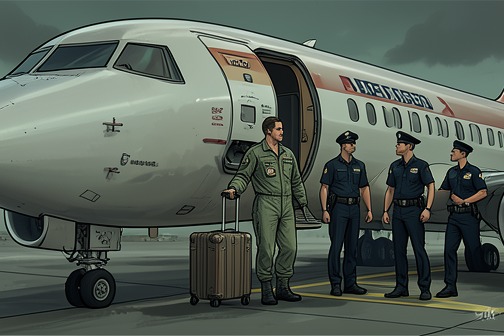
[Matt Hunter's flight to Reno](entity:event-recall-event-539bd9b7178d) begins when two deaths make him an immediate suspect and ends with him landing in [Nevada](entity:location-recall-location-nevada-0642d85e5071) after evading police, stealing a car, and manipulating air-travel checks. The escape is both a change in his circumstances and a reversal in his conduct: a man who had spent years avoiding anything unlawful now uses prison-acquired skills to keep moving while the case against him catches up.
## The arrest threat and escape
Matt hears a woman scream and tells [Olivia Hunter](entity:character-recall-character-olivia-hunter-8ea10aadf763) that Charles Talley and [Max Darrow](entity:character-recall-character-max-darrow-53c31f049e3e) are dead. He believes the officers arriving at the house intend to arrest him for their murders. When he says he has to leave, Olivia insists that they should leave together. Matt refuses, taking her twenty dollars as the two watch [Lance Banner](entity:character-recall-character-lance-banner-f03534546e65) approach the front door with two police officers.
Olivia proposes a division of risk: Matt should slip out the back while she wakes [Marsha Hunter](entity:character-recall-character-marsha-hunter-52443a48c573) and tries to delay the officers. Before he goes, Matt tells Olivia he loves her. Her words about their life being worth fighting for stay with him as he leaves, turning the escape from a purely tactical retreat into an effort to preserve a shared future, even though he does not bring her with him.
In the backyard, Matt sees [Kyra](entity:character-recall-character-kyra-33694762c76d) watching. Their eyes meet, and he reads a small smile in her expression. When Kyra screams, the officers turn away from the house and rush toward her. Matt uses the opening to run in the opposite direction, toward the woods, and does not look back until he is deep among the trees. Her intervention gives him the crucial first break in a flight that will depend on a succession of improvised opportunities.
## From the woods to the road
Matt spends more than an hour on foot, first crossing the woods and then keeping away from main roads. At [Livingston](entity:location-recall-location-livingston-fd4179fde26a) Avenue he catches a bus to Bergen Community College in Paramus, sleeping through the roughly hour-long ride. The commuter campus offers a chance to disappear among parked cars, and the limited security makes it possible to search without drawing immediate attention.
Matt has learned car theft from Saul, a prison inmate whose repeated joyriding arrests eventually led to a life sentence after a fatal crash. Following Saul’s method, Matt looks for a car with its keys hidden in a magnetic box rather than trying to force a lock. After nearly an hour, he finds a white Isuzu with a quarter tank of gas and keys above one of its tires. He drives toward Route 17, choosing the familiar route across the George Washington Bridge rather than the less familiar route north over the Tappan Zee. His intended destination at this point is Westport, Connecticut.
At the bridge toll, Matt worries that he may be recognized. He removes the bandage from his head and replaces it with a New York Rangers cap he finds in the back seat, but the toll crossing passes without incident. He listens to two radio stations for reports about himself, the dead men, or a fleeing suspect and hears none. The absence of a bulletin does not make him safe; it leaves him to navigate the escape without knowing how widely the police are searching.
## Reaching [Reno](entity:location-recall-location-reno-4b008eafa488)
The route changes when Matt decides he has to reach Reno and concludes that he must fly. He stops at a Great Western off Route 80 and uses another lesson from prison: he wants a license plate bearing the letter P, then covers part of the letter with black electrical tape to make it read as a B. He buys the tape at Home Depot and chooses a car in an employee lot, reasoning that its owner is likely to be inside at midmorning. The alteration is crude under close inspection, but he hopes it will suffice for the journey to Harrisburg, Pennsylvania.
Air travel poses a different problem. Matt knows the evasion advice he has learned dates from before September 11, when airport security was less stringent, so he treats the plan as a risk requiring speed and luck. From a pay phone near the [New Jersey](entity:location-recall-location-new-jersey-25586b9a9d1c) border, he first books a flight from [Newark](entity:location-recall-location-newark-894909e0ba1f) to Toronto, creating a misleading reservation, then uses another phone to make the reservation he actually needs. He writes down the booking number and proceeds to the airport.
At the counter, Matt presents his driver’s license. The agent enters his name but cannot find him in the system; when she asks for the booking number, the reservation supplies the route through the check-in process. He boards under the name Huntler, a one-letter alteration of Hunter. The security guard checks his photograph and face but does not catch the mismatch between the license and boarding pass, a discrepancy that can pass amid the volume of passengers and printed passes. Matt reaches the gate just as it is about to close, takes an aisle seat, and sleeps until the pilot announces the descent into Reno.
## Consequences and significance
The escape depends less on a single master plan than on a chain of small advantages: Kyra’s scream diverts the officers; a hidden key makes the Isuzu accessible; an unremarkable toll crossing leaves Matt unrecognized; and a booking number and near-identical surname carry him through the airport. Each step buys distance without resolving the accusation that set him running. His flight is therefore a temporary evasion, not a clearing of his name.
The episode also marks a concrete break with Matt’s self-imposed rule of avoiding unlawful activity. After years of keeping away from crime, he applies Saul’s car-theft advice, takes a vehicle and another car’s plate, alters the plate with electrical tape, and uses false travel details to avoid detection. The methods that once belonged to prison stories become tools of his present survival. The contrast is central to the escape: Matt seeks freedom from an arrest he considers unjust, yet pursuing it draws him further into conduct that can compound his legal danger.
The flight also sits within a story driven by misleading evidence and uncertain interpretation. Earlier, Matt has seen a man on a phone screen whom he cannot identify, and later realizes that Olivia did not send the video even though it came from her phone. Elsewhere, an implant’s serial number offers a concrete trace to investigate, while sunlight through a window helps establish that a photograph and video were taken at different times. These clues underscore the difference between what an image or record appears to show and what it can actually establish. Matt’s escape unfolds in that same unstable evidentiary world: he is pursued in connection with two deaths, while the means of identifying and judging him are themselves vulnerable to deception and error.
The destination is Reno, reached not through a clean break but through accumulated improvisations. By the time Matt lands, the attempt to outrun the immediate arrest threat has required him to act against the law he once tried to keep clear of. The journey’s decisive outcome is thus double: he gets away from the officers at the house and reaches Nevada, but his passage there transforms avoidance into active evasion.
Event 6
Discovery that Olivia Hunter is Candace Potter
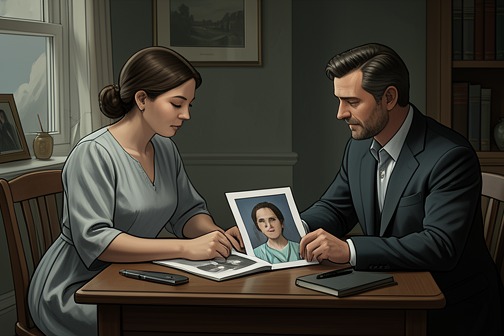
The discovery that [Olivia Hunter](entity:character-recall-character-olivia-hunter-8ea10aadf763) is [Candace Potter](entity:character-recall-character-candace-potter-f5ec63863264) turns an apparent murder identification into a revelation of survival and assumed identity. When [Loren Muse](entity:character-recall-character-loren-muse-5c463b30f942) recognizes the woman in a photograph, the name attached to the supposed victim—Candace Potter—leads not to a confirmed death but to Olivia Hunter, alive in [Irvington, New Jersey](entity:location-recall-location-irvington-new-jersey-62995debb8d3), with her husband [Matt Hunter](entity:character-recall-character-matt-hunter-b911d1421f34). The revelation connects Loren’s investigation to Olivia’s hidden past in Las Vegas, where vulnerable young performers were controlled and exploited by Clyde Rangor.
## The report and the photograph
During an investigation, [Adam Yates](entity:character-recall-character-adam-yates-89e1387984e9) points Loren to an entry in a report. Loren reads the finding aloud: “No ovaries, testes hidden, probable AIS.” The report concerns Candace Potter and records a probable diagnosis of androgen insensitivity syndrome. Yates explains that the report indicates Candace was genetically male, with testes and XY chromosomes. That medical information is a concrete identifying detail in the investigation, but it does not by itself establish that the person in the case file is dead or resolve the identity question.
The next turn comes through a photograph. A man places it on the table, and Yates looks at it before noticing Loren’s expression. Loren does not speak in front of the others. As she studies the photograph, she recognizes the person identified in the investigation as the late Candace Potter, also known as Candi Cane and Brianna Piccolo, and labeled the murder victim. The sequence matters: a report supplies a piece of bodily and documentary evidence, while Loren’s recognition of the image makes the names converge.
## From supposed victim to Olivia Hunter
Loren’s recognition changes the case’s central premise. If the person pictured really is Candace Potter, then Candace is not a murder victim and is not dead. She is alive and living in Irvington, New Jersey, with her ex-con husband, Matt. The narrative then identifies her as Olivia Hunter. What had appeared to be a settled victim identity becomes evidence of a concealed life, and the investigation’s question shifts from identifying a dead woman to understanding how Candace became Olivia.
The revelation joins several aliases rather than reducing them to a single uncomplicated label. The photograph is associated with Candace Potter, Candi Cane, and Brianna Piccolo; the woman Loren recognizes is now Olivia Hunter. Those names belong to different phases and records of the same person’s life. The discovery therefore unsettles both the official account and the apparent certainty of the case file: a label such as murder victim can be wrong even when supported by investigative paperwork and a photograph.
## The Las Vegas history behind the hidden identity
The background Loren’s discovery opens onto begins when Olivia, then using the name Candi, recalls arriving in Las Vegas at eighteen after already spending two years there. She describes girls living in old trailers belonging to the club manager, Clyde Rangor. He had set up several dilapidated trailers in a fenced desert property about a mile from the club. One trailer housed Candi, the newly arrived [Cassandra Meadows](entity:character-recall-character-cassandra-meadows-d72b1a059010), who was perhaps sixteen or seventeen, and [Kimmy Dale](entity:character-recall-character-kimmy-dale-9ce1b2f297a2), who was away that day.
The work was organized around road trips: Rangor sent the performers to strip in small towns, where they might perform three shows a day. The girls could earn tips, but Rangor kept most of that money. Candi also says he had connections through which girls in difficult circumstances were found in Idaho foster homes. This account places the concealed identity within a system of recruitment, restricted earnings, and control over where the performers lived and worked, rather than presenting the aliases as an isolated act of personal reinvention.
The room’s objects and routines show how the performers navigated danger. Kimmy kept two guns and carried a small .22 mini-revolver in her boot, even while onstage. Candi says she disliked the weapon but understood that Kimmy had it worse and stayed armed. In the incident she recounts, Clyde attacked [Cassandra](entity:character-recall-character-cassandra-64055e2aac8a) and then turned on [Emma Lemay](entity:character-recall-character-emma-lemay-4b4dccdb9143). Emma’s intervention distracted him long enough for Candi to get away and reach the room where Kimmy kept her gun. The account connects the later discovery of Olivia’s identity to a past in which survival depended on the women’s improvised protections and alliances.
## Performance, vulnerability, and recognition
A separate glimpse of Olivia’s later working life shows her at the Eager Beaver, where a book of matches identifies her current place of employment. She had once headlined in Las Vegas under the stage name Black Magic, but the narration says she did not long for those days—or, in truth, for any days. The stage name and the present job mark different points in a continuing history of performance work, while her lack of nostalgia resists the idea that an earlier public identity was a life she wished to recover.
The account of the club also distinguishes the performers’ individual circumstances. Candi says young women onstage were using drugs, while Kimmy, whose two brothers had died of overdoses, would not tolerate drug use. Candi drank instead; when her drinking began to affect her performance, Clyde made her stop and took the role of a rehabilitation counselor. The episode complicates his position as manager: intervention in one behavior does not undo the larger system of control and exploitation described in Candi’s recollections.
## Consequences and narrative significance
Loren’s recognition is consequential because it replaces presumed death with concealed survival and links a current investigation to the histories behind several names. The photograph does not merely illustrate a file; in Loren’s reading, it contradicts the file’s account of its subject. Candace Potter is not simply a past identity attached to a victim: she is the woman living as Olivia Hunter, alongside Matt in [Irvington](entity:location-recall-location-irvington-43e6051ea3b4).
The disclosure also changes how the reader understands the evidence. Medical findings, aliases, a photograph, and Loren’s recognition each carry different kinds of authority, but their meanings become clear only when considered together. The shift from a supposedly dead Candace to a living Olivia makes identity both the subject of the investigation and the means by which its apparent conclusion is overturned. The concealed past is not a detached prelude: the circumstances in Las Vegas explain the precarious history behind the name Loren uncovers.
Event 7
Yates and Dollinger's attack on Olivia Hunter
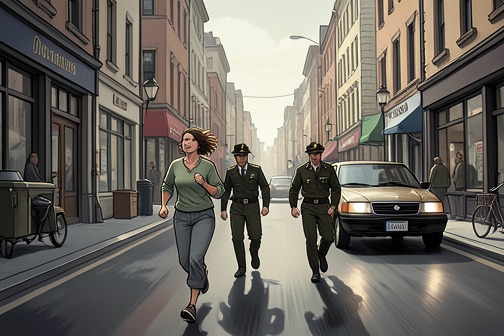
[Yates and Dollinger's attack on Olivia Hunter](entity:event-recall-event-c1950f9d9ecb) is a turning point in which federal authority becomes a direct threat: the agents present themselves as investigators, but their encounter with Olivia ends in an attempted escape and the bartender’s death. Olivia survives by acting quickly, while the killing makes clear that the danger extends beyond her alone.
## The agents identify Olivia
The episode begins with two FBI agents approaching Olivia. One identifies them as FBI, and [Adam Yates](entity:character-recall-character-adam-yates-89e1387984e9) introduces himself as the Special Agent in Charge of the Las Vegas office, naming [Cal Dollinger](entity:character-recall-character-cal-dollinger-b4c4bf431584) as his colleague. Yates says they want to speak with [Olivia Hunter](entity:character-recall-character-olivia-hunter-8ea10aadf763), or, if she prefers, they can arrest [Candace Potter](entity:character-recall-character-candace-potter-f5ec63863264). The formulation joins two identities in a single demand: Olivia is being addressed as the person she has become, but the agents also know the name she has left behind.
The exchange is not presented as a routine interview that proceeds into formal questioning. The agents take Olivia outside, with Yates leading and Dollinger staying beside her. Olivia checks the street while Yates unlocks and starts a car. As he turns back toward her, Olivia realizes what is happening. The scene’s shift from an announced conversation to immediate peril is registered through her recognition and decision to act, rather than through an explanation of the agents’ intentions.
## A street encounter becomes an escape
A man named Lawrence asks for a dollar. When Dollinger grabs him by the front of his shirt, Olivia hesitates only briefly, then starts to run. Lawrence jumps onto Dollinger’s back, but Dollinger throws him off. Lawrence strikes Dollinger with the brown bag he is carrying; the beer bottle inside makes the impact audible to Olivia. Dollinger turns on him, and Olivia continues to flee as bullets pass by her.
Lawrence’s intervention briefly interrupts Dollinger’s pursuit, but it does not stop the attack. The moment makes Olivia’s escape depend partly on an unexpected encounter with a stranger, while also showing the danger Lawrence faces for stepping in. Olivia’s choice is immediate: rather than remain beside the agents or wait for the encounter to clarify itself, she uses the opening to get away.
## The bartender is killed
Olivia reaches a bar and finds a bartender cleaning glasses behind the counter. He looks up in surprise as she enters, and she quickly bolts the door. Dollinger reaches the bar and shoots the bartender twice. The episode thus turns a place of temporary refuge into another scene of danger, and the bartender becomes a fatal witness to the pursuit.
Olivia moves toward a heavy metal back door. A key is in its lock; she pulls the door open and twists the key so forcefully that it breaks in the knob. She gets outside, and the door closes and locks automatically behind her. These practical details mark the narrowness of her escape: the key is left broken, the door seals itself, and Olivia is separated from the scene in which the bartender has been shot. The account establishes his death and Dollinger’s role in it, but does not describe the aftermath inside the bar.
## Flight and the wider pattern
Once outside, Olivia tries to catch her breath and asks for a ride to [Newark](entity:location-recall-location-newark-894909e0ba1f) Airport. Her escape therefore ends not with safety established, but with a concrete next step away from the scene. The airport request carries the pursuit forward: she must leave quickly, and the attack has made remaining in place untenable.
The agents’ attempt to reach Olivia is framed by the identity the FBI explicitly invokes. Yates offers to speak with Olivia Hunter or arrest Candace Potter, making clear that they connect the two names. In this encounter, their knowledge does not produce an orderly resolution; instead, Olivia’s flight and the bartender’s killing establish the immediate cost of the confrontation. The episode’s central reversal is that the men who announce themselves as federal agents become the source of the danger from which Olivia must escape.
Event 8
Discovery of Clyde Rangor's blackmail tape
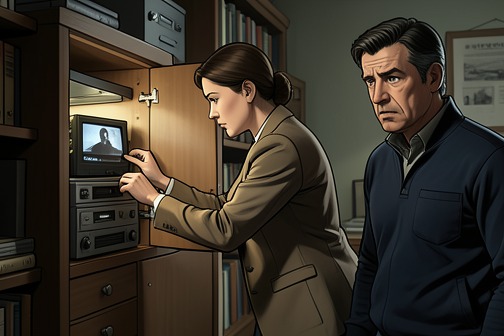
The discovery of Clyde Rangor’s blackmail tape is a turning point in which a concealed recording makes the scheme behind Clyde’s leverage visible. [Kimmy Dale](entity:character-recall-character-kimmy-dale-9ce1b2f297a2) knows why Clyde wanted the tape and where he hid it; when she retrieves it and Olivia watches, the footage supplies proof that his operation involved underage girls and exposes a connection to federal officer [Adam Yates](entity:character-recall-character-adam-yates-89e1387984e9).
## Finding the Tape
Olivia’s old friend walks to a cabinet and says she knows both why Clyde wanted the recording and where it is. Kimmy then puts the videotape into a player. Her words, “I should have known,” register recognition, though the scene does not specify what she had previously suspected. Her certainty about the tape’s location turns the cabinet from an ordinary piece of furniture into the point where the concealed evidence becomes accessible.
The discovery follows a history in which images and their transmission have been difficult to interpret. Earlier, Matt sees a phone message that a photograph is incoming, although Olivia has not learned to use the camera feature; a man appears on the screen, followed later by a video, and Matt eventually realizes Olivia did not send it. Those earlier uncertainties establish that a digital image may arrive without being what its recipient assumes. The videotape has a different evidentiary force: Kimmy finds it, and Olivia watches its contents directly.
## What the Recording Establishes
The footage first returns Olivia to the circumstances in which Clyde’s operation took shape. In her account, she was eighteen and had already spent two years in Las Vegas, living in one of several dilapidated trailers Clyde had placed behind a chain-link fence in the desert. Her roommate [Cassandra Meadows](entity:character-recall-character-cassandra-meadows-d72b1a059010) was only about sixteen or seventeen; Kimmy Dale, their other roommate, was away. Clyde sent the women on road trips to perform in small towns, keeping most of the money while they retained tips. Olivia also says he was connected to people who found vulnerable girls through foster homes in Idaho. This background makes the tape more than an isolated record: it gives material form to an exploitative arrangement built around the girls’ housing, work, and dependence.
## The Recording as Evidence
The tape turns Olivia’s earlier account into something that can be tested against a recorded scene. It shows [Cassandra](entity:character-recall-character-cassandra-64055e2aac8a) identifying herself as fifteen and holding her birth certificate before the camera long enough for her birthplace in Nampa, Idaho, her parents’ names, and the visible dates to be read. The document makes her age explicit within the recording, rather than leaving it as a recollection or an estimate. Olivia concludes that Clyde arranged encounters with underage girls and kept their birth certificates as proof, giving him leverage over the men involved. She explains that the men could face serious criminal consequences even if they claimed to have believed the girls were adults. The footage therefore reveals a scheme that extended beyond blackmail involving adult prostitutes: the girls’ documented ages were part of what made the arrangement dangerous to its participants.
## The Federal Connection
After the footage of Cassandra, the static gives way to another man. Olivia recognizes him as Adam Yates, appearing under the name Mr. Douglas, and sees Cassandra enter the room and help him undress. The recognition connects Clyde’s hidden recording to a federal officer: Olivia infers that Clyde had recorded someone in a position to be seriously compromised, explaining why he was so desperate to recover the tape and why his attempt to use it for blackmail had gone wrong. The discovery thus changes the recording from evidence of an exploitative scheme into evidence linking that scheme to Yates, while leaving open how much Clyde himself understood about the man’s identity.
Event 9
Kimmy Dale steals Clyde's videotape
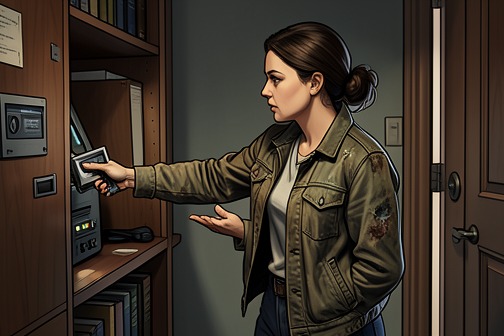
[Kimmy Dale](entity:character-recall-character-kimmy-dale-9ce1b2f297a2)’s theft of Clyde Rangor’s videotape is revealed retrospectively as the act that set a chain of violence in motion: the tape became connected to [Cassandra Meadows](entity:character-recall-character-cassandra-meadows-d72b1a059010)’s murder and to the escape Kimmy had planned with [Olivia Hunter](entity:character-recall-character-olivia-hunter-8ea10aadf763). When Kimmy finally explains the theft, it emerges not merely as a concealed crime but as the source of years of misplaced guilt: she believed Olivia had died and blamed herself for it.
## The Tape and the Plan
Kimmy’s account identifies her, not [Cassandra](entity:character-recall-character-cassandra-64055e2aac8a), as the person who took the tape from Clyde. The distinction matters because the tape had been part of a shared plan. Kimmy says she and Olivia intended to use it to obtain a large sum of money, then run away together. What Kimmy had treated as their possible route out became the object around which danger and loss gathered.
The plan’s emotional force lies in its promise of a future they could claim for themselves. Kimmy describes it as their turn to leave, linking the tape not only to money but to the escape they had discussed. That hoped-for departure never came to pass; instead, the tape’s theft was followed by Cassandra’s death, and Kimmy returned home to find someone had murdered the Olivia she thought she knew.
## Revelation and Misplaced Guilt
The truth surfaces during Kimmy’s armed confrontation with Olivia. As Olivia tries to reach her, Kimmy says that the tape was what had started everything. Olivia recognizes the implication and tells her Cassandra was not the thief: Kimmy was. This disclosure changes the meaning of Kimmy’s grief. She had carried the belief that Cassandra’s death and the apparent loss of Olivia were bound up with the stolen tape, while concealing her own role in taking it.
Kimmy then explains that the plan had been for both of them to escape with the money. She had come home to find Olivia apparently murdered, and, as Olivia realizes, Kimmy had spent all those years blaming herself for Olivia’s death. The confession makes the theft inseparable from a mistaken understanding of the past: Kimmy’s guilt endured because she believed the person for whom she had planned an escape was gone.
## Narrative Function
The revelation turns an earlier hidden action into a retrospective key to the deaths and choices associated with the tape. Its disclosure does not erase the consequences; it exposes how secrecy and incomplete knowledge shaped Kimmy’s interpretation of them. The tape was at once a means to imagined freedom and the concealed object through which the plan became entangled with Cassandra’s murder and Kimmy’s lasting self-blame.
Event 10
Cassandra Potter is murdered
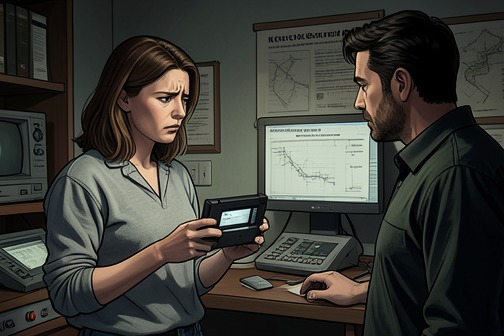
[Cassandra](entity:character-recall-character-cassandra-64055e2aac8a) Potter’s murder becomes newly legible when [Kimmy Dale](entity:character-recall-character-kimmy-dale-9ce1b2f297a2) tells Olivia that the stolen videotape—not Cassandra’s actions—set the tragedy in motion. Kimmy admits she took the tape from Clyde Rangor and had intended to use it with Olivia to secure money and escape; Cassandra was wrongly associated with the theft, while Kimmy carried the guilt of believing that her own choice led to Cassandra’s death.
## The Tape and the Murder
Kimmy identifies the videotape as the cause of Cassandra’s death and says that it was what started everything. Olivia then recognizes the crucial distinction: Cassandra had not stolen the tape from Clyde; Kimmy had. The admission relocates responsibility for the theft and changes the meaning of Cassandra’s place in the sequence of events. The evidence establishes Kimmy’s understanding of the causal connection, though it does not describe the circumstances of the murder itself.
## A Plan to Escape
Kimmy explains that she stole the tape for herself and Olivia. They had imagined turning it into a substantial sum of money and running away together, making the tape, in Kimmy’s account, their chance to leave. The plan gives the object a double significance: it was both a possible route out of their circumstances and the source of the danger that followed. Cassandra’s death marks the collapse of the future Kimmy and Olivia had discussed.
## Guilt and Belated Recognition
After returning home and finding Olivia apparently murdered, Kimmy believed she had lost her friend and blamed herself. Olivia’s response reveals how long Kimmy had carried that belief: she recognizes that Kimmy had held herself responsible for Olivia’s supposed death. In their conversation, the two women connect Cassandra’s murder, the stolen tape, and Kimmy’s guilt, replacing a mistaken account of who took it with Kimmy’s confession.
## Narrative Consequence
The murder is recalled through a later disclosure rather than presented here as a fully described scene. Its significance lies in the belated reconstruction: a hidden object links the theft to Cassandra’s death, while Kimmy’s account exposes the shared escape plan behind her decision. The revelation also separates what Kimmy intended—an escape with Olivia—from what she believes her action caused: Cassandra’s death and years of self-blame.
Event 11
Charles Talley's death and the framing of Matt
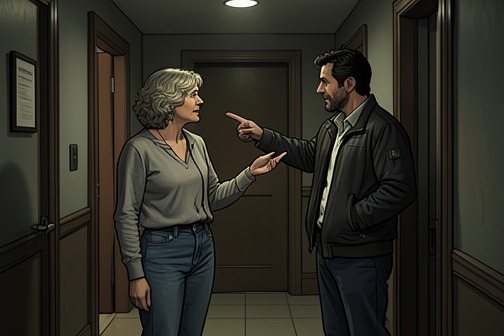
Charles Talley’s death and the framing of Matt is recalled by [Kimmy Dale](entity:character-recall-character-kimmy-dale-9ce1b2f297a2) as the point where [Max Darrow](entity:character-recall-character-max-darrow-53c31f049e3e)’s plan to incriminate both Talley and Matt became action. Talley, already on parole, sought Kimmy’s help after a fight with Matt; she directed him to wait in a stairwell, then went along with Max’s plan to make Matt appear responsible for Talley’s death. The episode reveals the scheme behind the accusation and marks a rupture between Kimmy and [Olivia Hunter](entity:character-recall-character-olivia-hunter-8ea10aadf763): Olivia says she had thought about her old friend, but Kimmy answers that this had not been enough.
## Background and Participants
Kimmy recounts that Matt had tracked Talley down and that the two men fought, after which Talley ran away. The account does not supply further details about the confrontation or specify where or when Talley died. It does establish the immediate chain leading to the framing: Talley contacted Kimmy while in a panic about the police, and she knew he was on parole.
Talley feared that one more offense would result in a life sentence and, Kimmy says, would do anything to avoid that outcome. She told him to wait in the stairwell. Her instruction placed Talley within reach of the plan that followed, while his fear of renewed imprisonment made him vulnerable to the choices Kimmy and Max had already set in motion.
## The Framing Plan
Olivia identifies the consequence plainly: the events had been arranged to look as though Matt killed Talley. Kimmy confirms that this outcome followed Max’s design. Max had wanted to set up both Talley and Matt; after Talley fled the fight and called her, Kimmy decided to stick with the plan. Her account links the apparent accusation against Matt to a larger effort that also targeted Talley, rather than presenting the framing as an isolated response to the fight.
The distinction between Talley’s actual involvement and the appearance of Matt’s guilt is central to the episode. The evidence establishes that Talley fought with Matt, fled, and then waited in the stairwell at Kimmy’s direction; it does not describe the mechanics of Talley’s death. What Kimmy does confirm is that the scene was made to implicate Matt, fulfilling the plan Max had intended.
## Retrospective Revelation and Consequences
The event reaches the reader through a later conversation between Kimmy and Olivia. Olivia asks about Talley, and Kimmy supplies the account of his call, his fear of the police, and the stairwell. Olivia then names the framing, prompting Kimmy to explain Max’s original objective. This retrospective disclosure changes the meaning of the apparent case against Matt: the accusation was not simply an inference from his fight with Talley, but the intended result of a plan Kimmy chose to continue.
The revelation also carries a personal consequence. Olivia steps closer to Kimmy, her old friend, and says that she had thought about her. Kimmy acknowledges this but responds that it was not enough. The exchange does not undo the disclosed betrayal; instead, it sets Olivia’s continuing attachment beside Kimmy’s insistence that remembrance alone could not repair what had happened. The framing therefore operates on two levels: it distorted responsibility for Talley’s death and deepened the distance between the women discussing it.
## Narrative Significance
Kimmy’s account makes the event a story of deliberate misdirection built from a real confrontation. Matt did track Talley down, and the two did fight, but Max’s plan turned those facts into a false appearance of murder. Talley’s parole and fear of life imprisonment supply the pressure that brought him to Kimmy; Kimmy’s decision to follow the plan supplies the link between that pressure and the accusation against Matt.
Because the truth emerges in a strained reunion rather than in a contemporaneous scene, the disclosure also exposes the cost of the conspiracy among people who once knew one another. Kimmy’s brief admission clarifies how the framing worked, while Olivia’s appeal to their old friendship shows what factual revelation cannot immediately restore. The event’s decisive significance lies both in its manipulation of the murder narrative and in its confirmation that Kimmy knowingly helped make Matt appear guilty.
Event 12
Kimmy Dale kills Max Darrow
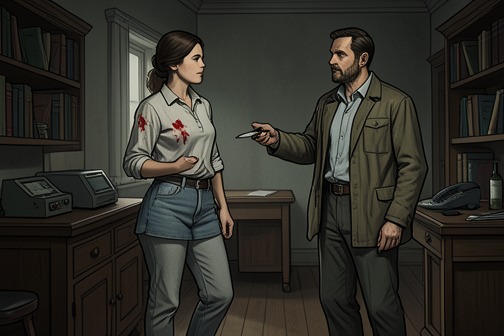
[Kimmy Dale](entity:character-recall-character-kimmy-dale-9ce1b2f297a2)’s admission that she killed [Max Darrow](entity:character-recall-character-max-darrow-53c31f049e3e) turns their criminal partnership into a conflict of survival: she says she acted to stop his separate scheme and strike before he could silence her. Her explanation identifies fear and a struggle over money and control as the stakes, but withholds the scheme’s specifics and the killing’s circumstances.
## The Admission
In a conversation with [Olivia Hunter](entity:character-recall-character-olivia-hunter-8ea10aadf763), Kimmy first counters Olivia’s assumption that Darrow and Charles Talley would not have let her live. She says Darrow had no say in what happened, and, when Olivia asks whether that is because Kimmy killed him, answers yes. The exchange establishes the central fact plainly: Kimmy was responsible for Darrow’s death.
Olivia then asks whether Kimmy killed him because of his repeated sexual exploitation of her. Kimmy rejects that explanation. The distinction matters: she acknowledges the history of his behavior, but says it was not the immediate reason for the murder. Instead, she presents the killing as an attempt to halt a broader threat.
## A Partnership Turns Dangerous
Kimmy says she needed to stop the situation and strike first. She believed Darrow might kill her because so much money was involved, and describes her response to discovering his conduct as shock. She had thought he was involved in the operation with her; she then learned that he had begun running a separate game of his own. In her account, that breach transformed a shared criminal enterprise into a danger she could no longer tolerate.
Her explanation makes the conflict more than a personal rupture. Darrow’s independent operation threatened Kimmy’s position and, she feared, her life. She describes a preemptive decision made under that fear, though the evidence does not specify what the separate scheme involved, how she killed him, or precisely when it happened.
## Witnesses, Risk, and What Remains Unsaid
Kimmy’s final reasoning returns to the danger of witnesses. She says Darrow did not like witnesses and believed that he would take the risk of killing someone he regarded as unreliable. The remark connects her fear of being silenced to the earlier discovery that Darrow was pursuing his own game: if he could protect the money by eliminating witnesses, Kimmy had reason to expect that she might become one of them.
Yet Kimmy does not elaborate on what she discovered or how it connected to the scheme. Her account breaks off into exhaustion and dismissal rather than a full explanation. The scene therefore confirms her responsibility and supplies her stated motive, while preserving uncertainty about the events around the killing. The murder marks the decisive end of her partnership with Darrow, but the reasons she gives remain an incomplete account shaped by fear, betrayal, and the threat of exposure.
Event 13
Emma Lemay kills Clyde Rangor and hides his body
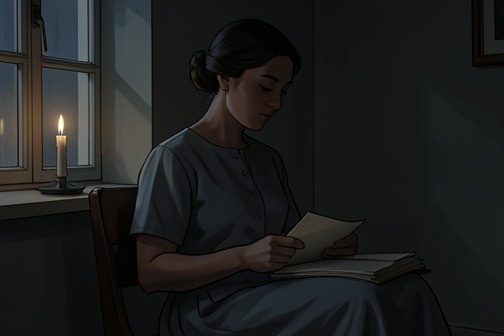
[Emma Lemay](entity:character-recall-character-emma-lemay-4b4dccdb9143)’s killing of Clyde Rangor and concealment of his body enter this passage not through a firsthand scene but through a letter from Emma, delivered to [Matt Hunter](entity:character-recall-character-matt-hunter-b911d1421f34) by [Loren Muse](entity:character-recall-character-loren-muse-5c463b30f942). Loren summarizes the letter as an account in which Emma assumes sole responsibility for the killing, hiding the body, and misleading authorities about the victim’s identity. Her account also excludes [Candace Potter](entity:character-recall-character-candace-potter-f5ec63863264) from knowledge of the crime, making the letter both a confession and an attempt to define who else should bear blame.
## The Letter and Its Delivery
Loren takes an envelope from her pocket and identifies it as a letter from [Sister Mary Rose](entity:character-recall-character-sister-mary-rose-bf5ade6f7721), formerly Emma Lemay, given to her by [Mother Katherine](entity:character-recall-character-mother-katherine-53fced3db12f). She hands it to Matt, who sits up and begins to read. The document reaches him through a chain of custodians rather than directly from Emma: Mother Katherine gave it to Loren, and Loren brings it to Matt. That route frames the confession as a newly delivered account of past events, rather than a scene of the killing itself.
## The Acts Emma Claims
Before Matt has finished reading, Loren gives him the gist of the letter. Emma says that she alone killed Clyde Rangor and alone hid his body. She also accepts sole responsibility for lying to the authorities about the identity of the murder victim. These are distinct admissions: the killing, the concealment, and the deception that followed. Taken together, they present Emma as claiming not only the central violent act but also the subsequent effort to obscure what had happened.
## Candace Potter and the Allocation of Blame
The letter’s account goes beyond Emma’s own actions. Loren reports that Emma claimed Candace Potter knew nothing about the crime. This assertion separates Candace from the sequence of concealment and deception, while concentrating responsibility on Emma. The passage provides no independent confirmation of the claim; it presents it as what Emma said in her letter. The distinction matters because the confession is also a statement about another person’s involvement—or, according to Emma, lack of involvement.
## Matt and Loren Assess the Confession
Matt asks whether Emma’s account will be accepted. Loren responds with a shrug and asks who could say otherwise. Her answer leaves the letter’s practical force uncertain: the passage establishes what Emma claimed, not whether authorities or anyone else will accept it as true. Matt thanks Loren, and she nods before turning to a different matter, asking him about the phone records. The confession therefore closes one exchange while the conversation moves on, without resolving its credibility or consequences.
## Narrative Significance
The killing and concealment are reconstructed retrospectively through a written confession summarized in conversation. Rather than dramatizing the acts, the passage foregrounds how responsibility is narrated afterward: Emma’s repeated claim that she acted alone places the murder, the hidden body, and the false identification under one person’s account, while her claim about Candace draws a boundary around that responsibility. Because the reader receives the confession through Loren’s summary and Matt’s response, the scene establishes the contents of Emma’s account but leaves its acceptance open.
Event 14
Adam Yates's suicide
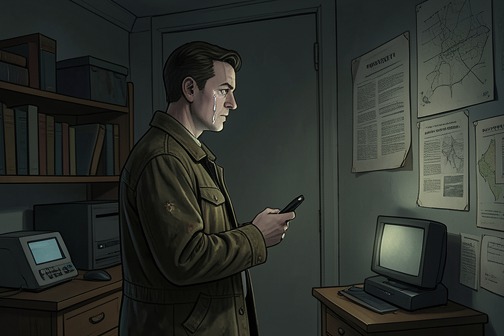
[Adam Yates](entity:character-recall-character-adam-yates-89e1387984e9)’s suicide is the end of his plan to turn a foreseeable police confrontation into his own death and a source of financial protection for his family. His last call to [Loren Muse](entity:character-recall-character-loren-muse-5c463b30f942) makes the choice explicit: he expects himself and Cal to die in the line of fire, asks Loren to keep silent, and hangs up before she can change his mind. The later confirmation of his death shifts the consequence from the immediate crisis to the lives of his children, who will know the truth of their father’s fate but not the videotape he feared would haunt them.
## The plan and its stakes
Yates tells Loren that Grimes will arrange events so that he and Cal die in the line of fire. His reasoning is bound to the people he expects to leave behind: he tells Loren he is thinking of his children and says their families will receive full benefits. The plan thus presents his death not simply as an escape from danger but as a deliberate, final calculation about what his family would have afterward.
The expected deaths of both men are part of Yates’s account of the plan, not a description of what has already happened. He speaks of the outcome as something Grimes will set up, and of the benefits as its consequence. The distinction matters: his words reveal his intention and his understanding of the stakes, while the call itself does not show the confrontation or establish exactly how the deaths occur.
## Loren’s appeal and the final call
Loren recognizes what Yates is about to do and tries to stop him. She warns that she and Cal will die in the line of fire, then repeats that Grimes will engineer that outcome. When she invokes Yates’s children, he answers that he is thinking of them already. His reasoning leaves little room for her plea: what Loren presents as a reason to reconsider, Yates treats as the reason he must proceed.
Loren then tells him that her father killed himself and pleads with him to understand what his decision could do. The disclosure links her appeal to an earlier family loss, but it does not persuade Yates to abandon his plan. He asks her to keep what she knows to herself and appeals to her competence as an investigator, asking her to do it for his children. The request makes silence part of his final arrangement: he is asking Loren not only to accept that he will act, but also to withhold what she knows afterward.
The call ends abruptly. Yates says goodbye and hangs up while Loren is still trying to reach him. The separation leaves her without a chance to continue the conversation or verify his next action. His final words to her are therefore both a farewell and a request that she become a keeper of the secret.
## The reported death and its aftermath
After the call, Loren puts the car in park and gets out, crying and shouting toward the sky. She is sure she hears a distant gun blast. At this point, the sound is presented through Loren’s perception; it signals what she fears has happened without giving her direct confirmation. The scene holds the event at the edge of hearing rather than depicting the death itself.
Later, the narration states plainly that Yates killed himself and that Grimes would not be able to cover it up. This confirmation resolves the uncertainty left by the phone call and the sound Loren believes she hears. It also establishes a consequence beyond the immediate failure of the cover-up: Yates’s children—Ella, Anne, and Sam—will know the truth. Sam is specifically recalled as the boy Yates had held in the hospital while trying to ward off death, a detail that places his decision against the intimate family life he had been trying to protect.
The children will not, however, know about the videotape. Yates had feared that the images would be what haunted them late at night, but the narration distinguishes that fear from what they will actually learn: the truth of his death will reach them, while the videotape will not. His suicide therefore leaves a divided legacy, with the fact of his death made public and a separate source of shame or distress kept from his children.
## Secrecy, responsibility, and the ending
Loren’s role in the event is defined by a request she cannot undo: Yates asks her to keep his plan to herself, then ends the call. The later confirmation that Grimes cannot conceal the suicide means the requested silence cannot erase the death or its truth. It can only bear on what is disclosed, especially the videotape that Yates feared his children would see.
The event also turns Yates’s stated concern for his family into a painful contradiction. He understands his planned death in terms of benefits for the families, yet his choice leaves his children to confront his death and Loren with the burden of his final appeal. The book does not present the call as a successful rescue or reconciliation; it closes with Yates’s goodbye, Loren’s distress, and the subsequent confirmation that he has died. His children’s knowledge of the truth, alongside their ignorance of the videotape, gives the ending its sharply divided aftermath.
Event 15
Loren talks with her mother about her father's suicide
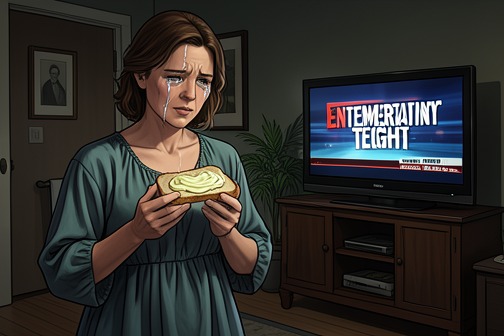
Two days after the events surrounding [Matt Hunter’s imprisonment](entity:state-recall-state-matt-hunter-s-imprisonm-a4fce28781cb), [Loren Muse](entity:character-recall-character-loren-muse-5c463b30f942)’s conversation with her mother, [Carmen](entity:character-recall-character-carmen-20f84f7362f5), brings years of blame over her father’s suicide into the open. Loren learns that Carmen had accepted her accusation to shield her from a more painful question about her father’s death; their exchange turns private guilt into something shared, acknowledged, and briefly held between them.
## The ordinary setting and the return of grief
The scene begins in Loren’s garden apartment, where she is making a ham-and-cheese sandwich while Carmen sits in the next room watching *Entertainment Tonight*. The familiar theme music accompanies an ordinary domestic moment, but Loren begins to cry as she spreads mayonnaise on the bread. That small interruption gives the scene its structure: grief has not disappeared into the past, and it can return in the midst of routine without warning.
The timing links the conversation to the novel’s wider aftermath. Two days have passed since the events immediately preceding it, but the emotional wound at its center is older: Loren’s father died by suicide, and the family’s understanding of that loss has been shaped by blame and silence. The scene does not stage the death itself; it focuses on how its consequences have persisted between mother and daughter.
## Blame as protection
Loren tells Carmen that she had always blamed her. When she tries to explain why, she falters before completing the thought. The unfinished explanation makes visible how blame has served as a defense: Loren had directed her pain toward her mother because facing the alternative was harder. She eventually asks why her father had not loved her enough to want to live, expressing the fear that his death was a judgment on her worth.
Carmen rejects that interpretation without diminishing the reality of his suffering. She explains that he was in great pain, that no one could save him, and that Loren had been the best thing in his life. Her response separates the father’s death from his daughter’s value: his despair was not proof that he did not love Loren. The exchange gives Loren an answer to the self-accusation beneath her blame, while leaving the loss itself intact.
## Carmen’s silence and Loren’s recognition
Loren understands that Carmen had been carrying the accusation in order to protect her. She tells her mother that she had been trying to protect her, then recognizes that Carmen had taken the blame upon herself. The disclosure changes the meaning of their long-standing conflict: what Loren experienced as a reason to accuse her mother was also part of Carmen’s effort to spare her daughter from the belief that her father’s death reflected a lack of love.
That protection had a cost. Carmen’s silence left Loren with a mistaken account of both her mother’s role and her father’s feelings. The conversation does not make either woman’s pain simple or interchangeable; instead, it shows how one person’s attempt to protect another can preserve a damaging misunderstanding. Loren’s recognition gives the two women a moment of mutual understanding without claiming that the years of blame are instantly undone.
## Comfort without closure
After the conversation, Carmen places an afghan over Loren, and Loren leans against her mother’s shoulder. Carmen strokes Loren’s hair; Loren closes her eyes, while Carmen later turns her attention back to the television remote. The ordinary gestures do not settle the questions raised by the suicide, but they mark a change in how mother and daughter face them: Loren is no longer alone with the belief that her father’s death meant he did not love her, and Carmen’s care is no longer hidden behind an unexplained willingness to accept blame.
The episode’s significance lies in this modest movement from accusation toward recognition. Its domestic frame and unforced ending resist a dramatic cure for grief. Instead, the conversation allows a painful family history to be spoken, distinguishes a father’s suffering from his daughter’s worth, and makes room for comfort while the loss remains.
Event 16
Matt apologizes to the McGraths for Stephen's death
Matt’s apology to the McGraths for Stephen’s death is a face-to-face reckoning in which remorse is offered without being mistaken for repair. Returning with Olivia to the McGrath home, Matt names his own part in what happened, acknowledges that he could have acted differently, and asks for the conflict to end. Clark refuses to let the apology stand as absolution, leaving the encounter poised between accountability and the possibility of moving forward.
## Return to the McGrath home
Matt and Olivia fly home on the same day. Matt uses a cane and limps, though the narration indicates that this will not last much longer. As they leave the plane, he suggests going alone; Olivia refuses, insisting they face the visit together. He does not argue. Their decision establishes the visit as both Matt’s responsibility and a moment of support between the spouses.
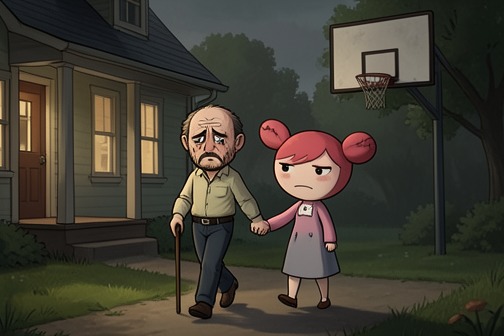
They take the Westport exit and drive down the familiar street to the McGrath home. Two cars are in the driveway. Matt looks toward the basketball hoop, but Stephen is not there. The absence matters: the visit is not a return to the old household scene but an approach to the loss that has altered it. Matt and Olivia go to the door together, and Olivia holds his hand while Matt rings the bell.
Clark opens the door and reacts angrily, asking what Matt is doing there. Sonya, behind him, asks who has arrived; when she sees Matt, she stops short and recognizes him. The threshold brings the people affected by Stephen’s death into the same space, but recognition does not make the encounter easy or resolve the hostility already present.
## Naming responsibility
Matt begins with a specific admission: he says that he squeezed too hard. He then explains that he could have let go, that he was frightened, and that he had thought Stephen was part of it. He also describes a change in his understanding after they landed: he no longer knows how he might have acted differently in the moment, but now believes he could have done better and held on too long. His apology is thus not a denial of fear or confusion; it is an acknowledgment that those circumstances do not exhaust his responsibility.
The scene does not present the apology as a clean exchange in which words settle the past. Clark’s face reddens as he bites down on his reaction, then challenges Matt directly: does he think saying this makes everything all right? Matt answers no. He recognizes the limits of an apology rather than claiming that remorse can restore what was lost.
## A request to end the conflict
Matt says that his wife is pregnant and that this has helped him understand better. He does not present the pregnancy as a reason the McGraths owe him forgiveness. Instead, he connects it to his changed perspective before asking that the matter end there and then. The request shifts the encounter from a confession about the past toward a boundary for what comes next, though it does not establish that Clark or Sonya accepts that boundary.
Sonya asks what Matt means. In response, he holds up a sheet of paper. The scene stops on this concrete gesture, without disclosing in the supplied passage what the paper contains or what the McGraths do with it. The unresolved reveal keeps the request from becoming a completed reconciliation: Matt has spoken, Clark has challenged him, and Sonya is still seeking an explanation.
## The encounter’s significance
The visit makes accountability distinct from absolution. Matt does not ask the McGraths to agree that his actions were harmless; he admits that he could have done better and acknowledges that saying so cannot make everything right. Clark’s challenge preserves the consequence of Stephen’s death within the scene, preventing the apology from closing over the bereavement it addresses.
Olivia’s presence gives the return a shared shape, but Matt is the one who speaks and takes responsibility. The familiar road and home bring the past into the present, while Stephen’s absence marks what cannot be restored. The scene ends not with forgiveness or a stated settlement, but with Matt’s appeal to stop the conflict and the unexplained paper held up before the McGraths.
Event 17
Matt exposes Clark McGrath's contact with Darrow
Matt exposes [Clark McGrath](entity:character-recall-character-clark-mcgrath-d8b64a32e9f4)’s contact with [Max Darrow](entity:character-recall-character-max-darrow-53c31f049e3e) in a confrontation that converts a lingering suspicion into a direct accusation. Phone records connect Darrow, a police officer who investigated Olivia, to eight calls to Clark’s line in one week. Matt’s charge is that Clark used Darrow’s inquiry into Olivia’s identity to target both her and Matt; after apologizing once more for Stephen’s death, Matt warns Clark not to approach his family again. Olivia’s decision to take Matt’s hand and leave with him gives the accusation a personal consequence: the threat to their family is answered by a visible show of solidarity.
## The records and the suspicion
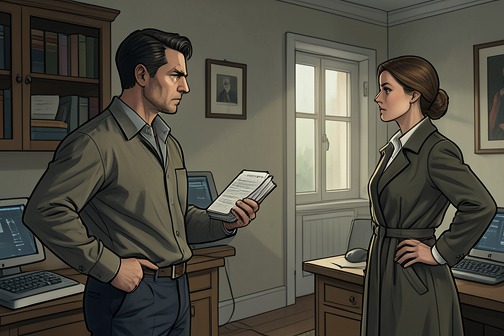
The scene turns on a sheet of phone records that Matt holds up to Sonya and Clark. Matt says he had asked Loren to obtain them when he first woke in the hospital. At that point, he had only an inkling of suspicion: Kimmy’s revenge scheme seemed unusually directed not only against Olivia but against Matt as well, and he doubted Kimmy could have carried out such a focused plan entirely on her own.
The records supply a specific connection. Matt identifies them as Max Darrow’s phone records and says that Darrow, who lived in [Reno](entity:location-recall-location-reno-4b008eafa488), [Nevada](entity:location-recall-location-nevada-0642d85e5071), called Clark’s line eight times during the previous week. Clark closes his eyes as Matt lays out the evidence. The calls do not, by themselves, establish every detail of what passed between the men, but they give Matt grounds to turn his suspicion toward Clark in front of Sonya.
## Matt’s accusation
Matt’s explanation joins Darrow’s official position to the threat against Olivia. Once Darrow discovered who Olivia was, Matt reasons, the officer would have investigated her and learned that her husband was a notorious ex-con. Matt alleges that Darrow then contacted Clark, suggesting Clark had enlisted the officer in a plan that could hurt both spouses at once. He frames the arrangement as a double attack rather than as an isolated inquiry into Olivia.
Matt also invokes what Darrow’s partner had told his wife: Darrow was playing his own game, including with Clark. This qualification complicates the accusation. Matt does not present Darrow as a neutral instrument obediently carrying out Clark’s wishes; he suggests that Darrow had independent purposes even while involving Clark. Sonya’s repeated appeal to Clark draws attention to the gap between Matt’s account and her husband’s response. Clark does not offer an explanation in this exchange, leaving the phone calls and Matt’s interpretation to dominate the confrontation.
## Apology, warning, and departure
The encounter is not only an accusation about the present scheme. Matt steps closer to Clark and apologizes again for what happened to Stephen, acknowledging that Clark will not accept the apology. The apology does not erase the old loss or reconcile the men; it is followed by a boundary stated as a threat. Matt tells Clark that if he comes near Matt’s family again, Matt will kill him.
Matt walks away after delivering the warning. Olivia stays briefly, looks first at Clark and then at Sonya, and follows her husband. She takes Matt’s hand, and the two leave together without looking back. That gesture completes the scene’s movement from uncertain suspicion to open confrontation: the records expose a connection, Matt names the danger as one directed at his family, and Olivia publicly aligns herself with him as they depart.
## Significance in the larger plot
The phone records make an invisible relationship legible through a pattern of calls, but their meaning depends on interpretation: Matt connects Darrow’s investigation of Olivia with Clark’s apparent hostility toward the couple. The scene therefore brings together documentary evidence and personal inference rather than treating records as a complete explanation on their own. Clark’s silence and Matt’s account leave the exact terms of the contact unstated, even as the confrontation makes its perceived stakes unmistakable.
The ending also links Matt’s unresolved guilt over Stephen to his determination to protect the family he now has. He offers an apology that he knows Clark will reject, then draws a hard limit around further contact. Olivia’s hand in Matt’s closes the scene not with a settlement between the men, but with the couple’s departure together and their refusal to leave the threat unanswered.