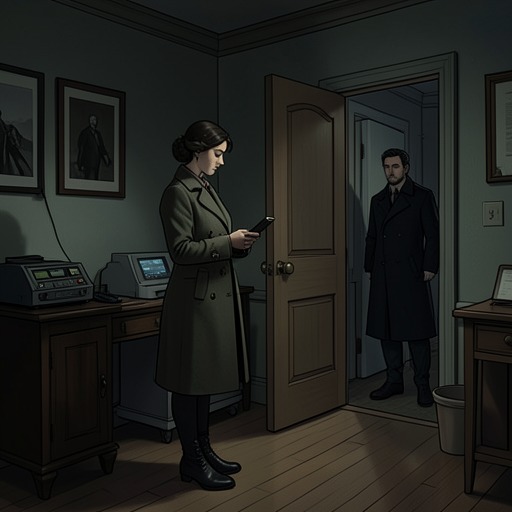
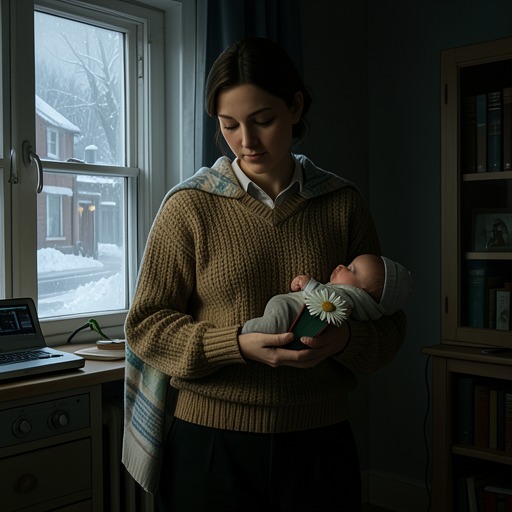
the morning of Elizabeth Bohlinger's funeral
The Hidden Champagne
After the funeral, [Brett Bohlinger](entity:character-recall-character-brett-bohlinger-653072e56791) retreats to her mother's bedroom in [Elizabeth Bohlinger's Brownstone on Astor Street](entity:location-recall-location-elizabeth-bohlinger-3a3f5fc834fa). She finds the expensive champagne Elizabeth had saved to celebrate surviving cancer treatment, along with [Elizabeth Bohlinger's red leather journal](entity:object-recall-object-elizabeth-bohlinger-s-739e5ea13200), left with a note asking her to wait until she feels stronger before reading it.
Overcome by grief, Brett opens the champagne instead. The journal stays unread, but its presence becomes a promise of one more conversation with the mother she has just lost.
the afternoon of Elizabeth Bohlinger's funeral
The Funeral Luncheon Fall
Brett drinks too much champagne alone in her mother's room, then tries to return to the funeral luncheon. Disoriented and unable to manage her shoes, she staggers down the stairs in front of the assembled guests and falls in the foyer.
[Catherine Humphries-Bohlinger](entity:character-recall-character-catherine-humphries-a9919c16bb19) takes charge, later telling the family she had been exhausted. The humiliation deepens Brett's grief, while the scene also establishes how far she is from the poised, confident successor she hoped to become.
the evening of the funeral
The Last Guests Leave
After waking from her nap, Brett apologizes to [Jay Bohlinger](entity:character-recall-character-jay-bohlinger-886e299cd5ae), [Joad Bohlinger](entity:character-recall-character-joad-bohlinger-f7f3352c7d85), and their families for the luncheon spectacle. [Joad](entity:character-recall-character-joad-743e9e22d9ca) acknowledges the close bond she shared with Elizabeth and the work she did caring for her mother through cancer treatment.
When the others leave, Brett remains alone in the brownstone, facing the coming division of Elizabeth's estate. She expects to inherit the family cosmetics business and fears that [Catherine](entity:character-recall-character-catherine-48275454cf20), already its powerful vice president, will resent her promotion.
the morning after the funeral
Catherine Takes the Company
At [Aon Center](entity:location-recall-location-aon-center-cd3280b4c686), the family gathers for the reading of [Elizabeth Bohlinger's will](entity:object-recall-object-elizabeth-bohlinger-s-7e74b73b4520). Brett learns that the brownstone must remain intact for a year, while the business shares and the chief executive position go not to her but to [Catherine Humphries-Bohlinger](entity:character-recall-character-catherine-humphries-a9919c16bb19).
The unexpected decision strips away Brett's imagined future at [Bohlinger Cosmetics](entity:organization-recall-organization-bohlinger-cosmet-6dce219cc5b1). She feels publicly rejected and cannot understand why her mother entrusted the company to her sister-in-law instead of the daughter who had worked beside her.
the same morning as the will reading
The Life List Inheritance
After the family leaves, attorney [Brad Midar](entity:character-recall-character-brad-midar-dac56e91f245) shows Brett the crumpled list she wrote at fourteen. Elizabeth had kept it and marked the goals she believed Brett had abandoned: having a child, getting a dog, helping poor people, owning a house and horse, falling in love, performing, reconciling with her father, teaching, and preserving a friendship.
Brad explains that Elizabeth made completion of the ten remaining goals a condition of Brett receiving her inheritance. She must finish them within a year and complete at least one before the end of the month; the pink envelopes contain Elizabeth's explanations and instructions.
during the private meeting after the will reading
Elizabeth's Letter
Brad reads Elizabeth's letter aloud. She apologizes for leaving Brett, affirms that her daughter will endure, and explains that she kept Brett's childhood list because she believed it reflected the girl's real aspirations. Elizabeth calls Brett a born teacher and warns that a comfortable job and fear of change have kept her from her own life.
Brett protests that she has changed and does not want the old goals. But the letter's intimate understanding of her makes the assignment harder to dismiss: Elizabeth believes the list can lead Brett back to a self she has lost.
the next morning
The Company Job Disappears
Brett returns to [Bohlinger Cosmetics](entity:organization-recall-organization-bohlinger-cosmet-6dce219cc5b1) expecting [Catherine](entity:character-recall-character-catherine-48275454cf20) to offer her a subordinate position. Instead, Catherine explains that she had assumed Brett would inherit the company and had trained her accordingly, but that Elizabeth left a separate instruction: Brett is fired.
The news leaves Brett without the job she had expected to carry her through the next stage of life. She is too devastated to tell [Andrew](entity:character-recall-character-andrew-531aa0f64cfb) the truth and begins avoiding both work and the future she thought she had secured.
the days after Catherine fires her
Brett Hides the Truth
[Andrew](entity:character-recall-character-andrew-531aa0f64cfb) urges Brett to return to work, assuming she is overwhelmed by her promotion to company president. She cannot bring herself to correct him, especially after he praises her prospects and speaks as though she will soon be running [Bohlinger Cosmetics](entity:organization-recall-organization-bohlinger-cosmet-6dce219cc5b1).
Brett begins to recognize how much Andrew values status and how often she has hidden parts of herself to keep his approval. Still afraid of being alone, she postpones the truth and clings to the relationship she has built with him.
later that week
Friends Weigh the Goals
Brett confides in Shelley and [Megan Weatherby](entity:character-recall-character-megan-weatherby-bee6b2127ad0) at [The Bourgeois Pig Café](entity:location-recall-location-the-bourgeois-pig-ca-0b1055feb27a). [Megan](entity:character-recall-character-megan-8f9752391e17) mocks the more impractical goals, while Shelley points out that Brett could reconnect with [Carrie Newsome](entity:character-recall-character-carrie-newsome-ae2c65cbb7e5), visit her father's grave, and try substitute teaching without committing to a full-time classroom.
Their conversation gives Brett a way to begin, but it also exposes how much she has organized her choices around [Andrew](entity:character-recall-character-andrew-531aa0f64cfb)'s preferences. She agrees to pursue the easier goals first, hoping to earn an envelope or two before the deadline tightens.
the following Monday
A Conditional Love Goal
Brett visits Brad and claims she has already completed the goal of falling in love because she loves [Andrew](entity:character-recall-character-andrew-531aa0f64cfb). Brad opens the corresponding pink envelope and reads Elizabeth's condition: Brett should share the list with Andrew, and count the goal only if he is willing to be her partner in pursuing it.
Elizabeth also warns that Andrew resembles Brett's emotionally withholding father and urges her not to compromise on love. The letter redirects Brett toward the frightening performance goal, revealing that her mother intended the list to test more than her willingness to follow instructions.
the end of the month after the will reading
The Comedy Club Debut
At [Third Coast Comedy](entity:location-recall-location-third-coast-comedy-bc05655caf23), Brett takes the stage for her first stand-up performance. Her jokes about her name and Catholic school fail to win over the crowd; one drunk audience member heckles her, and the room grows restless. Brad stays near the stage and urges her to finish.
Brett survives the humiliating seven minutes without fleeing. Afterwards, Brad gives her the envelope for the goal, and Elizabeth's letter reframes the performance as proof of courage rather than a measure of comic talent. Brett has recovered a piece of the fearless girl she once was.
early in October
The Graveyard Visit
[Brett visits her father's grave](entity:event-recall-event-a544daa3d4dd) at [Saint Boniface Cemetery](entity:location-recall-location-14f7823a5c20) for the first time in years. She speaks directly to the headstone, asking why she could never earn his warmth and telling him how hard she tried to make him love her.
The visit does not bring the peace she hoped for, but it lets Brett express anger and grief rather than bury them. She leaves with the suspicion that making peace with her father may require more than a visit to his grave.
later in October
The Missing Journal Returns
At a family dinner, Brett spots [Elizabeth Bohlinger's red leather journal](entity:object-recall-object-elizabeth-bohlinger-s-739e5ea13200) on [Joad](entity:character-recall-character-joad-743e9e22d9ca)'s desk. She takes it and reads the first pages before Joad can stop her. The entries describe Elizabeth's passionate relationship with a musician named [Johnny Manns](entity:character-recall-character-johnny-manns-80df78abecad) during the summer before Brett was born.
Joad admits he found the journal years earlier and concealed it, fearing the revelation would hurt Brett and damage Elizabeth's public reputation. Brett concludes that Johnny may be her biological father and decides to find him, while learning that her brother's concern was partly shaped by the company's image.
the night Brett reads the journal
Carrie Answers
Brett finds a message from [Carrie Newsome](entity:character-recall-character-carrie-newsome-ae2c65cbb7e5), who is delighted that her old friend has contacted her and proposes meeting during a [Chicago](entity:location-recall-location-chicago-eb77a855d5aa) conference. The old nickname “Bretel” revives memories of their closeness and the painful day Brett rejected Carrie after learning she was a lesbian.
Brett replies with an apology and accepts the invitation. The reconnection begins as a task on her list, but her longing to repair the friendship quickly becomes personal and sincere.
late October
The Search for Johnny Begins
Brett tells Brad about the journal and asks for help finding [Johnny Manns](entity:character-recall-character-johnny-manns-80df78abecad). Brad recommends private investigator [Steve Pohlonski](entity:character-recall-character-steve-pohlonski-bbc477e9f8d9), who begins searching records for men with possible versions of the name and a North Dakota background.
The search gives Brett a concrete way to pursue her father's identity, though its early leads are sparse. Around the same time, [Chicago Public Schools](entity:organization-recall-organization-0898bdcec0db) tells her she is eligible to substitute teach, placing another of Elizabeth's challenges within reach.
the day after she accepts a substitute assignment
Brett's First Classroom Failure
At [Douglas J. Keyes Elementary](entity:location-recall-location-douglas-j-keyes-elem-b1860a85d207), Brett's first day as a substitute spirals into disorder. She cannot find the lesson plan, a student fight escalates before the principal intervenes, and another child hits her head while retrieving a paper from under a desk.
At the end of the day, Principal Bailey refuses to let Brett return. Brett had hoped the assignment would satisfy the teaching goal, but the failure forces her to confront how painful her earlier classroom experience remains.
after the failed substitute-teaching day
Brad Pushes Her Forward
Rain-soaked and discouraged, Brett goes to Brad, calling herself a loser who cannot teach or complete the list. He reminds her that she is not destitute and challenges her to stop treating fear as proof that her life cannot change.
Brad's directness helps Brett see that giving up would return her to a life she does not want, not protect her from disappointment. She begins to consider another route into teaching rather than letting the substitute-classroom disaster end the goal.
late October
Brett Tells Andrew
Brett finally tells [Andrew](entity:character-recall-character-andrew-531aa0f64cfb) about Elizabeth's list and the inheritance condition. Andrew calls the arrangement absurd but says he will help her, including having a child, if that is what it takes to keep their relationship.
His agreement offers Brett temporary relief, but he also links his support to her bringing him into the family business. Brett is not ready to confront the bargain, so she accepts his promise while sensing that his motives may not be as selfless as she wants to believe.
the next day
The Homebound Teaching Offer
Brett receives an offer to teach homebound students, working one-on-one in their homes or in hospital settings. Although the work will take her into unfamiliar neighborhoods and she fears the risks, she accepts the position after a difficult day at [Douglas J. Keyes Elementary](entity:location-recall-location-douglas-j-keyes-elem-b1860a85d207).
The job gives Brett a second chance to test her childhood ambition in a setting better suited to her patience and sensitivity. It also begins drawing her into the lives of students whose needs will alter her understanding of family, hardship, and service.
Brett's first day of homebound teaching
Amina and Sanquita
Brett's first visits are to [Amina Adawe](entity:character-recall-character-amina-adawe-0a23d610f426), a young student recuperating at home, and [Sanquita Bell](entity:character-recall-character-sanquita-bell-c28854375a67), a pregnant high-school senior living at [Joshua House](entity:location-recall-location-joshua-house-fd42e2f7bf12). Amina and her family welcome Brett warmly, and teaching her brings back Brett's own vision of a small, attentive classroom.
Sanquita is guarded but determined to earn her diploma so her baby will know she was smart. Brett recognizes the young woman's vulnerability beneath her hard exterior and begins to care about her beyond the minimum requirements of the job.
the first week of homebound teaching
Brett Meets Peter and Garrett
Brett meets [Peter Madison](entity:character-recall-character-peter-madison-ca48627dc0b2), a hostile sixth-grader whose psychiatrist, [Garrett Taylor](entity:character-recall-character-garrett-taylor-857fd47afe00), warns that the boy is bright, manipulative, and prone to hurting others. [Peter](entity:character-recall-character-peter-22e18a2305ec)'s mother dominates the first session, and Brett leaves uncertain whether she can reach him.
In their follow-up call, Garrett listens not only to her account of Peter but to her story of failing as a substitute. Their easy conversation gives Brett an unexpected ally and a growing personal connection, even as she understands that Garrett is her student's doctor.
November 14
Brett Misses Carrie
A snowstorm and a demanding day of teaching delay Brett until she realizes she has missed her planned dinner with [Carrie Newsome](entity:character-recall-character-carrie-newsome-ae2c65cbb7e5). She calls Carrie, expecting anger, but Carrie is gracious and worries only that Brett may have had an accident.
Brett apologizes for her teenage betrayal and admits that Elizabeth's list prompted her to reach out. Carrie says she forgave her long ago and invites her to the Newsome family's [Christmas](entity:time-recall-time-0cffe7da2c4d) gathering in Madison. The call lifts a burden Brett has carried for years.
the week before Thanksgiving
Andrew's Terms
At home, [Andrew](entity:character-recall-character-andrew-531aa0f64cfb) grows impatient with Brett's absences and still assumes she runs [Bohlinger Cosmetics](entity:organization-recall-organization-bohlinger-cosmet-6dce219cc5b1). He asks her to bring him into the company, despite Elizabeth's earlier judgment that he would not suit the business.
Brett begins to see how their imagined future is organized around Andrew's career and preferences. His request deepens the distance between them and makes it harder for her to keep pretending that his support for her goals is unconditional.
Thanksgiving
Thanksgiving at Joshua House
After learning that [Joad](entity:character-recall-character-joad-743e9e22d9ca) and [Catherine](entity:character-recall-character-catherine-48275454cf20) are traveling and Shelley is spending [Thanksgiving](entity:time-recall-time-f7dc04eb44a0) with her family, Brett prepares Elizabeth's traditional meal alone. Rather than eat by herself, she brings the food to [Joshua House](entity:location-recall-location-joshua-house-fd42e2f7bf12), where Sanquita and the other residents welcome it.
When Brett hears that [Jean Anderson](entity:character-recall-character-jean-anderson-31591cd1a57c) has left her own family to cover a staff absence, Brett turns back and offers to stay overnight. Jean is suspicious of her motives, but allows her to remain. Brett's choice turns the goal of helping others from an abstract task into a relationship with people she now knows.
late November
Andrew and Megan
While collecting her belongings from [Andrew](entity:character-recall-character-andrew-531aa0f64cfb)'s loft, Brett hides in the kitchen and hears Andrew arrive with [Megan](entity:character-recall-character-megan-8f9752391e17). He takes her upstairs, and the intimate scene confirms that Megan has crossed a line with Brett's former partner.
The discovery ends Brett's remaining trust in Megan and sharpens her resolve to leave the life she had built around Andrew. The next day she returns with movers, removes her belongings, and gives the furniture to [Joshua House](entity:location-recall-location-joshua-house-fd42e2f7bf12) rather than letting it anchor her to the old home.
December 11
The Newsome Christmas Reunion
Brett drives to the Newsome family home in Madison for the [Christmas](entity:time-recall-time-0cffe7da2c4d) gathering and is embraced by Carrie, [Stella Myers](entity:character-recall-character-stella-myers-db2715d7d171), and Carrie's parents, Mary and [David Newsome](entity:character-recall-character-david-newsome-c5785dd031da). She apologizes to Carrie in person, and the warmth of the family's welcome makes the visit feel like a homecoming.
David shows old family recordings from the neighborhood where the Newsomes once lived with Elizabeth. The footage includes Elizabeth pregnant with Brett and playing in the same circle as a young musician Brett has been trying to identify.
during the Madison Christmas gathering
Johnny's Real Name
David recognizes the musician from the old footage and remembers him performing at [Justine's](entity:location-recall-location-justine-s-37daf3b335f6). He reveals that [Johnny Manns](entity:character-recall-character-johnny-manns-80df78abecad) was a stage name; the man's real surname was Manson, chosen to avoid the stigma attached to the name in the 1970s.
The correction gives [Steve Pohlonski](entity:character-recall-character-steve-pohlonski-bbc477e9f8d9) a crucial new lead and ends months of searching under the wrong name. Brett watches the performance repeatedly, recognizing her own eyes in the singer's face and feeling that she has finally found a path to her biological father.
the evening after the Madison gathering
Brad's Almost-Kiss
Brett tells Brad about the discovery and asks him to redirect the investigation toward [John Manson](entity:character-recall-character-john-manson-4c61657bfda7). She also learns that Brad and [Jenna](entity:character-recall-character-jenna-65f88e27192a) have separated and encourages him to make a bold commitment if he truly loves Jenna.
When Brad admits that Jenna rejected his proposal, the two share a tender moment. He gives Brett the envelope for reconnecting with Carrie, but their closeness does not become a romance; Brett's growing attachment to Brad remains complicated by his feelings for Jenna and by the friendship they have built.
mid-December
Rudy Comes Home
Brett rejects [Megan](entity:character-recall-character-megan-8f9752391e17)'s offer of a high-maintenance show dog and visits [Chicago Animal Rescue Shelter](entity:organization-recall-organization-chicago-animal-r-683e6f7b8cf9) with Brad. She chooses [Rudy](entity:character-recall-character-rudy-11c8e5dc4292), a friendly mixed-breed dog whose former owner gave him up before a marriage to someone who did not want a pet.
Rudy's arrival gives Brett companionship and completes the dog goal. At the shelter, Brad also draws her attention to an adoptable horse, Lady Lulu, but Brett cannot yet imagine caring for a horse in the city or paying the costs of boarding one.
the evening Rudy arrives
A House with a Thirty-Day Limit
At [Elizabeth Bohlinger's Brownstone on Astor Street](entity:location-recall-location-elizabeth-bohlinger-3a3f5fc834fa), Brad reminds Brett that the will allows her children to occupy the house for no more than thirty consecutive days. Brett has been treating brief nights away as a way to reset the clock, and she insists that the arrangement lets her stay indefinitely.
Brad points out that she may be relying on a doubtful interpretation, but Brett is reluctant to leave the only place that feels like home. Her housing insecurity grows as she tries to balance the will's restrictions, her new dog, and her limited income.
Christmas morning
The Christmas Pregnancy Scare
Brett suspects she may be pregnant and shares her hope with Brad, though she has not yet taken a test. On [Christmas](entity:time-recall-time-0cffe7da2c4d) morning she finds blood on the sheets and realizes the pregnancy was a false alarm; the grief of the loss collides with the first Christmas without Elizabeth.
Brett still hosts her family gathering, but moves through the day numbly. When a phone call arrives, she expects Brad. Instead, the caller identifies himself as [John Manson](entity:character-recall-character-john-manson-4c61657bfda7), the father she has spent months searching for.
Christmas afternoon
John's First Call
Brett speaks with [John Manson](entity:character-recall-character-john-manson-4c61657bfda7) for the first time. He lives in [Seattle](entity:location-recall-location-seattle-ec620f372076), runs a music store, and has a twelve-year-old daughter, [Zoë](entity:character-recall-character-zo-4329e1cc1b09), whose illness makes travel difficult. Brett offers to come to them, but [John](entity:character-recall-character-john-6bc68dc682c3) says the timing is not right and keeps the conversation brief.
Although he says he is glad to know her and hopes to meet later, Brett hears another rejection. The revelation that she has a half-sister intensifies her longing to belong, while her family urges her to prepare for the complications of meeting a father after thirty-four years.
Christmas evening
The Brownstone Dispute
After the family celebration, [Joad](entity:character-recall-character-joad-743e9e22d9ca) questions how long Brett intends to stay in Elizabeth's house and mocks her interpretation of the thirty-day clause. Brett has no affordable alternative, having given away her furniture and lost her executive job.
The confrontation leaves her feeling judged by the brother who had withheld the journal. She searches rental listings and discovers that the neighborhoods she knows are beyond her teacher's salary, forcing her to consider living south of the Loop.
late December
Sanquita's Medical Crisis
Brett takes Sanquita to [University of Chicago Medical Center](entity:location-recall-location-university-of-chicag-dd1cbe716bae), where a nephrologist explains that her kidney disease and pregnancy put her life at serious risk. The doctor recommends ending the pregnancy, warning that both Sanquita and the baby face grave danger if she continues.
Sanquita refuses, telling Brett that her child matters more to her than her own survival. Her determination unsettles Brett, who is still grieving the pregnancy she thought she had lost, and makes the stakes of Sanquita's condition impossible to ignore.
late December
Brett Finds a Home in Pilsen
While looking for affordable rentals, Brett discovers a small apartment above a red-brick house in [Pilsen](entity:location-recall-location-pilsen-b72efc9afa3a). Selina Ruiz and her mother, Blanca, show her the renovated space, which is modest but welcoming and allows dogs.
Brett signs the lease and moves in with a few pieces of furniture from her mother's house. The new neighborhood is unfamiliar, but the apartment becomes a home she can afford and a sign that she is learning to build a life outside the wealthy North Side world she once took for granted.
the following winter
Shelley Returns to Work
Brett visits [Jay](entity:character-recall-character-jay-254ab4914272) and Shelley and finds Shelley dressed for work again. A weekend in New Orleans helped Shelley admit that full-time motherhood was making her unhappy; Jay supported her decision to return to speech pathology and arranged to take a leave from his university job to care for the children.
Their reversal gives Shelley room to recover her professional identity and strengthens her marriage. It also reflects the larger change taking place around Brett: the women in her life are reassessing roles they accepted without asking whether they fit.
late winter
An Invitation to Seattle
[John](entity:character-recall-character-john-6bc68dc682c3) calls Brett with news that [Zoë](entity:character-recall-character-zo-4329e1cc1b09) is well enough to return home and invites Brett to visit [Seattle](entity:location-recall-location-seattle-ec620f372076). He offers to pay her airfare, making clear that he now wants her to come meet both him and her half-sister.
The invitation answers months of uncertainty and gives Brett a chance to meet the family she has only imagined. She plans to use personal days from her teaching job and begins preparing for a reunion that could either heal or reopen old wounds.
late winter
Herbert's Blind Date
[Jay](entity:character-recall-character-jay-254ab4914272) and Shelley arrange a dinner with [Herbert Moyer](entity:character-recall-character-herbert-moyer-1fafaa84e3f9), a visiting history professor, hoping to introduce Brett to a promising single man. Brett approaches the date as an item on the life list, but Herbert's intelligence, warmth, and self-deprecating humor surprise her.
They begin dating, and over several weeks Brett appreciates his care and reliability. Yet his attentiveness can feel strangely suffocating, and she worries that she is choosing a good man because he fits the list rather than because her heart has chosen him.
early spring
Peter's Transfer
After [Peter](entity:character-recall-character-peter-22e18a2305ec) destroys the books Brett bought him and his behavior grows more dangerous at home, Garrett arranges for him to enter [New Pathways](entity:organization-recall-organization-new-pathways-cb082a6304ac), a specialized program for troubled adolescents. Brett is disappointed that their work together will end without a more hopeful resolution.
Garrett tells her that she cannot save every student and assures her that she did what she could. The case teaches Brett a painful limit of her new profession, while bringing her closer to Garrett through the trust they have developed in their conversations.
March
The Reunion in Seattle
Brett arrives at [Seattle](entity:location-recall-location-seattle-ec620f372076)'s airport expecting to be met by [John](entity:character-recall-character-john-6bc68dc682c3) and [Zoë](entity:character-recall-character-zo-4329e1cc1b09). John appears, now silver-haired and clean-shaven, and embraces her with the warmth she has longed for from a father. Their conversation quickly becomes easy and intimate.
At [Franklin L. Nelson Center](entity:location-recall-location-franklin-l-nelson-ce-81239d103805), Zoë runs to Brett and calls her sister. Brett learns that Zoë has [Down syndrome](entity:state-recall-state-down-syndrome-6e5a6d44dfb0) and immediately loves the girl whose health and joyful welcome had once stirred her jealousy. John takes them around the school grounds, where Zoë's old therapeutic riding program gives Brett a new way to think about the horse goal.
during Brett's Seattle visit
A Sister's Welcome
Brett spends time with [Zoë](entity:character-recall-character-zo-4329e1cc1b09) at home, helping her make dinner and reading her a bedtime story. The ease of caring for her sister makes Brett feel cherished and included in a family she feared would have no place for her.
She and [John](entity:character-recall-character-john-6bc68dc682c3) talk late into the night, filling in the years they missed. John's affection and interest reassure Brett that their relationship can become real, though they cannot recover the childhood intimacy that was never possible.
the night of Brett's Seattle visit
John Explains the Separation
[John](entity:character-recall-character-john-6bc68dc682c3) tells Brett that he wanted to marry Elizabeth, but Charles threatened to use her affair against her and deny her access to her sons if she left. John lied that he did not want a permanent relationship so Elizabeth would stay with [Joad](entity:character-recall-character-joad-743e9e22d9ca) and [Jay](entity:character-recall-character-jay-254ab4914272).
He later lost contact with her and assumed she had moved on. Brett realizes that her mother and John had shared a profound love shaped by sacrifice and silence, rather than the simple abandonment described by the diary's incomplete account.
the end of the Seattle visit
Brett's New Family
Before Brett leaves, she gives [John](entity:character-recall-character-john-6bc68dc682c3) [Elizabeth Bohlinger](entity:character-recall-character-elizabeth-bohlinger-26eccaf7d50f)'s leather journal so he can read the story of their shared past. John welcomes her as his daughter, and Brett leaves [Seattle](entity:location-recall-location-seattle-ec620f372076) feeling connected to him and to [Zoë](entity:character-recall-character-zo-4329e1cc1b09).
Back in [Chicago](entity:location-recall-location-chicago-eb77a855d5aa), Herbert meets her at the airport and tells her he wants children. Brett appreciates his devotion, but the contrast between his goodness and the love she feels for her new family does not settle her uncertainty about whether he is the right partner.
early April
Sanquita Goes Into Labor
Brett's day with Herbert is interrupted by word that Sanquita is in labor. She rushes to [Cook County Memorial Hospital](entity:location-recall-location-cook-county-memorial-033e71bad0d9), where doctors perform an emergency Caesarean section because Sanquita's potassium level and heart condition have become dangerous.
Sanquita delivers a severely premature baby girl, but her own condition remains critical. Before going to the neonatal unit, Brett hears from Jean that Sanquita had asked her to take the child if she died.
the night of the birth
Brett Promises Sanquita
Brett visits the premature baby in the NICU, where the child lies connected to monitors and breathing support. She gives her the name Austin, after Sanquita's brother, and recognizes that the baby has already been left without the visible signs of a family waiting for her.
Back in Sanquita's room, Brett holds her as she wakes briefly. Sanquita asks Brett to raise her daughter. Brett promises that Austin will have a safe and loving life and that she will always know how much her mother loved her.
three days after Austin's birth
Sanquita Dies
Sanquita dies from complications of her kidney disease and heart failure. Brett attends the burial at [Oak Woods Cemetery](entity:location-recall-location-oak-woods-cemetery-36d2da8ce472) with Herbert and the women from [Joshua House](entity:location-recall-location-joshua-house-fd42e2f7bf12), grieving the young woman whose courage and trust have reshaped her life.
At the hospital, Brett begins spending hours with Austin and learns how to care for a fragile premature newborn. [Nurse LaDonna](entity:character-recall-character-ladonna-985befc46b7e) introduces [Kangaroo Care](entity:concept-recall-concept-4eb11cd52523), skin-to-skin contact that helps regulate Austin's breathing and temperature and gives Brett the first bodily experience of becoming her mother.
the weeks after Sanquita's death
Tia Claims the Baby
Austin improves under Brett's daily [Kangaroo Care](entity:concept-recall-concept-4eb11cd52523), but the fragile routine is disrupted when [Tia Robinson](entity:character-recall-character-tia-robinson-ffeeb9f56174) arrives at the hospital demanding to see her grandchild. The staff removes Tia while she is intoxicated, and Brett learns that a relative may receive priority in a child-placement case.
The threat frightens Brett: she is only a teacher who knew Sanquita for a few months, while Tia is the baby's grandmother. Brett resolves to seek custody and discovers that love and Sanquita's spoken wish may not be enough under the law.
during the custody dispute
Joad Questions the Adoption
[Joad](entity:character-recall-character-joad-743e9e22d9ca) visits Brett at the hospital and questions whether she should adopt Austin, suggesting that Brett will eventually have a child of her own and raising concerns about money and the baby's race. Brett rejects each argument, insisting that she loves Austin and will not abandon the promise she made to Sanquita.
The dispute exposes how deeply Joad's assumptions about family resemble those of the man who raised Brett. Brett's resolve is no longer driven by the inheritance or the life list; she wants to protect the child because Austin is already her daughter in her heart.
the morning after the custody notice
The Custody Hearing
At [Cook County Courthouse](entity:location-recall-location-cook-county-courthou-8b7c7c22f093), Brett testifies that Sanquita named her as the person who should raise the baby. Tia's attorney challenges Brett's account and portrays Sanquita as a reckless young woman who had rejected her mother's efforts to protect her.
The case appears to be slipping away until Jean arrives during the recess with a notarized statement Sanquita signed weeks before her death. The document explicitly names Brett as the person Sanquita wants to receive custody, and the judge grants Brett temporary custody while adoption proceedings continue.
immediately after the custody hearing
Herbert Supports the New Family
Brett returns to the hospital and finds Herbert holding Austin. He has come as soon as he heard the ruling and treats Brett's new custodial role as a shared responsibility, offering help rather than asking her to step away from the child.
Herbert tells Brett he loves her and would like them to consider marriage. Brett agrees to think about it, grateful for his kindness but still unsure whether she can return the same depth of feeling he offers.
the day before Austin comes home
Elizabeth's Motherhood Letter
Brad reads Brett the envelope for the motherhood goal. Elizabeth celebrates the nurturing person Brett has become and says motherhood will be the most demanding and meaningful role of her life. She also promises, in her imagined afterlife, to watch over Brett's daughter.
The letter moves Brett deeply because it recognizes a capacity she once feared she lacked. Yet as Austin comes home, Brett still feels overwhelmed by Herbert's eagerness to manage every detail and wonders whether she can accept being cared for without feeling crowded.
May
Austin Comes Home
After weeks in the NICU, Austin leaves the hospital weighing nearly five pounds and comes home with Brett. Herbert helps with the car seat and offers to move Brett and the baby to the brownstone, but Brett chooses to remain in her small [Pilsen](entity:location-recall-location-pilsen-b72efc9afa3a) apartment, where neighbors Selina and Blanca have become part of her support system.
As she settles Austin into the apartment, Brett feels her mother's presence and recognizes that she is already a mother. She kisses Herbert passionately and tries to will her heart to love the attentive man who adores both her and her daughter.
May through July
Austin's First Months
Brett adapts to motherhood, recording in a journal what she remembers about Sanquita and watching Austin grow. The baby thrives, and Brett brings her back to the NICU on her three-month birthday to thank the nurses who cared for them.
Brett tells LaDonna that Austin is the best thing that has happened to her. Her confidence as a mother is growing, but she remains uncertain about marrying Herbert and wonders whether she is settling for a relationship that looks right without feeling completely right.
two months before the life-list deadline
The Love Envelope
Brad brings Brett the envelope for falling in love, but she hesitates to open it. She admits that she cannot summon the intensity she believes Elizabeth meant, despite Herbert's devotion and his love for Austin.
Brad tells her love is not an endurance test and challenges her to stop pretending that gratitude is the same as being in love. He falsely reads a message from Elizabeth saying Herbert is not the right man; Brett realizes Brad has invented the words, but the deception forces her to acknowledge what she already knows.
later that evening
Brett Ends Things with Herbert
Brett tells Herbert she cannot keep seeing him because she does not know whether she loves him. Herbert is hurt and angry, asking what she is still looking for when he has offered her and Austin a future.
He leaves after warning that she may regret her decision. Brett cries, unsure whether she has rejected the right man in pursuit of an ideal, but she cannot make herself promise a love she does not feel.
August 7, the day of Elizabeth's birthday celebration
Garrett Is the Burberry Man
Brett runs to the dry cleaner to retrieve the embroidered linens for her mother's birthday gathering and encounters the familiar man in the [Burberry trench coat](entity:object-recall-object-burberry-a010d05d5f36). He recognizes her from their brief meetings, then introduces himself as [Garrett Taylor](entity:character-recall-character-garrett-taylor-857fd47afe00), the psychiatrist she had spoken with by phone.
The revelation transforms Brett's memory of their missed encounters: the handsome stranger she had repeatedly noticed was the same man whose kindness and humor had supported her through [Peter](entity:character-recall-character-peter-22e18a2305ec)'s case and her grief. Garrett assumes she is happy with her new family and starts to leave.
the same afternoon
Elizabeth's Final Letter
Brett invites Garrett to the gathering, but he declines because a blonde woman and a dog are waiting outside. Brett assumes she has missed another chance and returns to the house, where the family is preparing a birthday celebration for Elizabeth.
Brad tells Brett that an anonymous donor has funded the return of the therapeutic riding program at [Nelson Center](entity:organization-recall-organization-nelson-center-e61f452981f3), where [Zoë](entity:character-recall-character-zo-4329e1cc1b09) loved riding. Brett admits she supplied the money from her retirement account, turning her resources toward a goal that will help children rather than buying a horse for herself.
during the birthday gathering preparations
The Horse Goal's Unexpected Path
Brad points out that the riding program restores an opportunity Brett's sister had lost, and he counts the contribution toward Brett's horse goal. He also learns that Lady Lulu has already been adopted, relieving Brett of the fear that the aging horse would be neglected.
The solution is not the childhood fantasy of owning a horse. Instead, Brett's money helps other children regain access to therapeutic riding, while her concern for Lulu confirms that she can care about an animal without needing to possess it.
the evening of Elizabeth's birthday
Brett Refuses a Substitute Love
As the family gathers for dinner, Brad suggests that Brett could count her love for Austin as the heart-stopping love Elizabeth described. That would complete the list and secure the inheritance, but Brett remembers her mother's warning never to compromise on love.
She refuses to call motherhood a substitute for romantic love or to rush the final goal for financial security. Brett accepts that the list may take longer than the year, because completing it honestly matters more than winning the inheritance on schedule.
the night of Elizabeth's birthday
Garrett Returns in the Storm
During the birthday dinner, Trevor announces that a visitor has arrived. Brett steps outside into a storm and sees Garrett crossing the street with wildflowers and his Burberry coat. He says he has permanently ended the relationship that kept him from pursuing her and confesses that he has long been drawn to the woman he repeatedly encountered around the city.
Brett tells him she had hoped to catch his train, not the train itself. They kiss and enter the house together beneath his umbrella, beginning a relationship grounded in the affection and recognition Brett had been unable to find with [Andrew](entity:character-recall-character-andrew-531aa0f64cfb) or Herbert.
the following Friday
The Letter Reveals the Secret
[John](entity:character-recall-character-john-6bc68dc682c3) and [Zoë](entity:character-recall-character-zo-4329e1cc1b09) visit [Chicago](entity:location-recall-location-chicago-eb77a855d5aa) for the celebration, and John asks Brett whether Austin can call him Grandpa. He also tells Brett she may call him Dad. The new family gathers at Brad's office, where Brad gives Brett and John a final letter from Elizabeth to read privately.
Elizabeth explains that she had promised Charles she would never reveal the truth of Brett's conception. She says she kept the secret to protect her sons and to preserve Charles's dignity, while acknowledging that his coldness wounded Brett. She confirms that she loved John deeply and believes Brett will find him, revealing the full reason for her silence.
Saturday, the day after John's arrival
The Family Birthday Table
At [Elizabeth Bohlinger's Brownstone on Astor Street](entity:location-recall-location-elizabeth-bohlinger-3a3f5fc834fa), Brett hosts a gathering of relatives and old friends for Elizabeth's birthday. Carrie and Stella arrive with their children, Mary and David join [John](entity:character-recall-character-john-6bc68dc682c3), and the family members who once existed in separate parts of Brett's life share one table.
Brett leads John to the head of the table and offers a toast to Elizabeth. Each person names a different role she played in their life: mother, friend, lover, boss, and grandmother. The toast makes visible the far-reaching ties that Elizabeth's choices and Brett's journey have brought back together.
nearly two years after the story begins
The Epilogue Celebration
Brett prepares in her mother's former bedroom while Austin laughs nearby and Garrett gets them ready to leave. Her life has become a family of her own, and she no longer needs the brownstone's comfort as often, though its memories remain part of her.
Before leaving, Brett retrieves the programs she forgot and sees her mother's photograph. The pink program announces the opening of [Sanquita House](entity:location-recall-location-sanquita-house-96e0ec599a90), a new shelter for women with children, on [August 7](entity:time-recall-time-august-7-80015f5f74a0). Brett's future is not secured by the inheritance alone: she has turned what she learned about love and generosity into a lasting home for others.