Before and during the early years of World War II
A Childless Forest Household
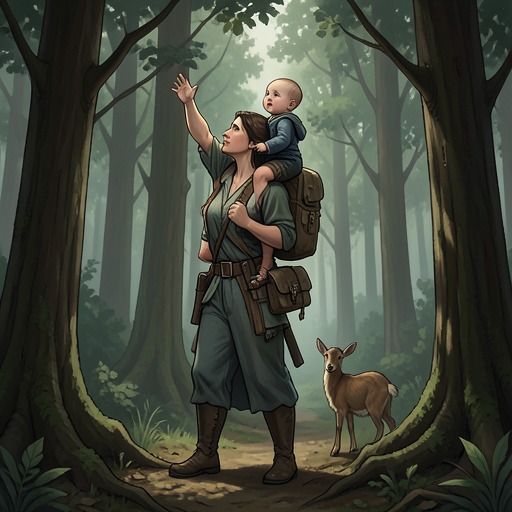
In a forest under German occupation, the [Poor Woodcutter](entity:character-recall-character-poor-woodcutter-7c6a599b4743) and [Poor Woodcutter’s Wife](entity:character-recall-character-poor-woodcutter-s-w-143d16070547) endure cold, hunger, and the woodcutter’s forced labor on military construction. They have no children: he counts this as a blessing in hard times, while she grieves privately for the child she longs to love.
Her prayers reach toward heaven, nature, and any power that might answer. Their poverty makes the absence of a child seem both a mercy and an ache, establishing the need that will shape the story.
During the occupation, before the winter of 1943
The Railway Through the Forest
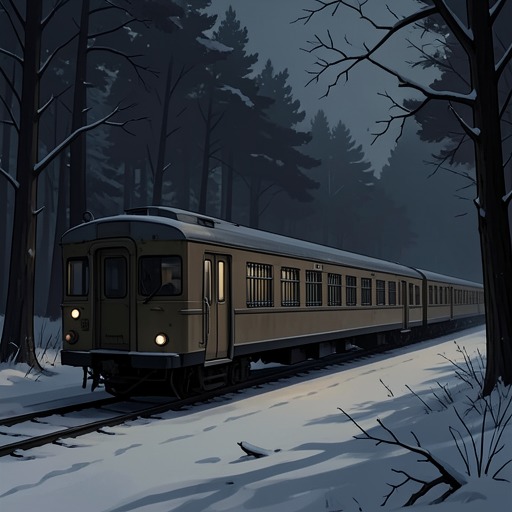
Forced laborers cut a railway through the forest, and a single train begins passing the [Poor Woodcutter’s Wife](entity:character-recall-character-poor-woodcutter-s-w-143d16070547)’s glade. She builds her daily routine around watching it, imagining that its cargo might carry food, clothing, or a way out of her lonely life.
She calls and waves to the barred wagons. Sometimes a hand waves back or tosses down a scrap of paper, which she treasures as a possible promise of a gift.
Spring 1942 through Christmas 1942
The Twins in Drancy
[Dinah](entity:character-recall-character-dinah-b8a1923e6610) and her husband are imprisoned in [Drancy internment camp](entity:location-recall-location-drancy-internment-ca-7cc278bdf4a1) with their infant twins, [Henri](entity:character-recall-character-henri-adb6da84571e) and [Rose](entity:character-recall-character-rose-154df6dd1d30). The children’s birth under persecution brings fear as well as joy; their father wonders whether bringing Jewish children into the world was right, but the family stays together through the camp’s Christmas season.
The father, who had nearly completed medical studies, finds work cutting hair because the camp already has many doctors. His skill at the shears helps him serve fellow prisoners and gives him a role as he tries to protect his family.
After the German guards take control of Drancy
The Barber’s False Reassurances
When German guards replace the [French National Gendarmerie](entity:organization-recall-organization-49acd1aad969), the father’s barbering work is reduced to serving a small and desperate clientele. He repeatedly reassures people that things will be all right, though he knows he has no grounds for such promises.
The family’s brief period together becomes more precarious. The twins’ presence has seemed to help keep their parents from being separated, but the father cannot stop the deportations around them.
March 2, 1943
The Departure on Convoy 49
[Dinah](entity:character-recall-character-dinah-b8a1923e6610), her husband, and the twins are forced aboard [Convoy 49](entity:object-recall-object-convoy-49-f3a739cb01b7), departing from [Bobigny-Gare](entity:location-recall-location-bobigny-gare-5d49e6b4d986). Dinah has little milk left after the privations of Drancy, and the family is crowded into a cattle wagon where thirst, cold, filth, and panic make caring for two babies almost impossible.
The father scans the other passengers and recognizes that the old, sick, blind, and very young are unlikely to be sent to ordinary labor. The journey becomes a terrifying question of where the deportees are being taken and whether any of them will survive.
During the first days of the journey
A Warning from Iaşi
A Romanian passenger tells the father about the [Iași pogrom](entity:event-recall-event-449189bb1354), in which Jews were driven through the countryside in sealed trains until many died of heat, thirst, or hunger. At stations, corpses were unloaded and the trains continued, sometimes in reverse, with no destination beyond further deaths.
The father begins to dread every pause in the train’s movement, fearing that his family will meet the same fate. When the wagon slows in snow, he sees a chance to act, though he has no safe choice before him.
During a snowy halt on the journey
The Father’s Impossible Choice
Believing [Dinah](entity:character-recall-character-dinah-b8a1923e6610) cannot feed both infants, the father takes the child nearest him and wraps the baby in his prayer shawl. An elderly asthmatic passenger warns him not to do it, but the father pretends not to understand and pushes the infant through the bars of the wagon window.
Outside, the [Poor Woodcutter’s Wife](entity:character-recall-character-poor-woodcutter-s-w-143d16070547) is running through the snow after the train. The father sees her, waves, and lets the bundled child fall to her; the act may give one baby a chance to live, but it separates the family in a moment that will haunt him.
The morning after the infant is thrown from the train
The Woodcutter’s Wife Adopts the Baby
The [Poor Woodcutter’s Wife](entity:character-recall-character-poor-woodcutter-s-w-143d16070547) finds the small bundle in the snow and discovers a hungry baby inside. She carries the child home, feels herself become a mother, and tries to feed her with cooking water and buckwheat porridge when the baby cannot nurse from her.
The baby finally settles, and the woman sings to her as her own little cargo. The richly embroidered prayer shawl seems to her a divine wrapping for the child, though the infant’s immediate needs make clear that love alone cannot keep her alive.
The first night after the adoption
The Woodcutter Rejects the Child
The [Poor Woodcutter](entity:character-recall-character-poor-woodcutter-7c6a599b4743) returns to the cabin and reacts to the crying baby with anger and alarm. He insists that the child belongs to a persecuted group he has been taught to despise, and claims that her parents threw her away because they were cruel.
The [Poor Woodcutter’s Wife](entity:character-recall-character-poor-woodcutter-s-w-143d16070547) refuses to surrender her, answering that the train’s gods entrusted the child to her and that the girl might become the woodcutter’s beloved daughter too. His hatred is reinforced by the threat of death for sheltering a Jewish child, but her resolve makes the household’s old balance impossible to restore.
That same night
The Child’s Sex Is Revealed
The [Poor Woodcutter](entity:character-recall-character-poor-woodcutter-7c6a599b4743) tries to take the child back to the railway, insisting that she is marked and cannot be made part of their family. As he unwraps the baby, he sees that the child is a girl, and the [Poor Woodcutter’s Wife](entity:character-recall-character-poor-woodcutter-s-w-143d16070547) points out that the infant is physically like her.
When the woodcutter moves toward the door, his wife blocks him and threatens to be thrown under the train with the baby rather than let him abandon her. He finally returns the child, but leaves his wife and the baby to sleep in the woodshed and warns them to keep quiet.
March 6, 1943
The Family Reaches Auschwitz
[Convoy 49](entity:object-recall-object-convoy-49-f3a739cb01b7) reaches the extermination camp in [Poland](entity:location-recall-location-8e143713a3f3), where the arrivals are subjected to selection. Only a small fraction are retained for labor; the elderly, many women and children, the sick, and others deemed unfit are sent to their deaths.
[Dinah](entity:character-recall-character-dinah-b8a1923e6610) and her son [Henri](entity:character-recall-character-henri-adb6da84571e) are murdered, along with countless other deportees. The father survives the selection, but he has been separated from his wife and children, and he does not know what has happened to the baby he threw from the train.
The days after the baby arrives
A Bargain for Goat’s Milk
Knowing the [Little cargo](entity:expression-recall-expression-little-cargo-785d4b3174c1) cannot live on porridge, the [Poor Woodcutter’s Wife](entity:character-recall-character-poor-woodcutter-s-w-143d16070547) carries her to a secluded grove where the [Man with the Goat and Shattered Face](entity:character-recall-character-man-with-the-goat-a-9258787b633e) lives. He initially questions why the woman expects his help, and his battered face bears the marks of war.
She offers to bring firewood in exchange for milk. The man accepts the bargain, instructs her to dilute the goat’s milk with boiled water, and tells her to add porridge and later fruit and vegetables. She begins returning each morning with wood, and the infant survives.
After the family’s arrival at the extermination camp
The Father Becomes a Shaver
At the camp, [Dinah](entity:character-recall-character-dinah-b8a1923e6610)’s husband is forced to shave the heads of newly arrived deportees with shears. He gathers the hair into bales for shipment, watching human beings turned into material for the machinery that is destroying them.
The work keeps him alive, but he cannot stop imagining the family he lost. A small, unwanted seed of hope nevertheless grows in him, even as he reproaches himself for the decision he made on the train.
During the Little cargo’s infancy
The Woodcutter’s Threats
The [Poor Woodcutter](entity:character-recall-character-poor-woodcutter-7c6a599b4743) resents the baby’s cries and threatens to throw her to the swine. The [Poor Woodcutter’s Wife](entity:character-recall-character-poor-woodcutter-s-w-143d16070547) hides the child’s distress as best she can, grateful that the woods no longer have pigs for him to use against her.
His threats expose how little protection the child has in the cabin, even as the woman’s persistence keeps her there. The adoption remains an act of defiance sustained by daily care rather than any assurance of safety.
Several months after the adoption
A Hand Feels the Beating Heart
One night, the crying [Little cargo](entity:expression-recall-expression-little-cargo-785d4b3174c1) drives the [Poor Woodcutter](entity:character-recall-character-poor-woodcutter-7c6a599b4743) to raise his hand against her. The [Poor Woodcutter’s Wife](entity:character-recall-character-poor-woodcutter-s-w-143d16070547) catches his arm and presses his palm gently against the child’s chest, asking him to feel the small heart beating beneath her skin.
He recoils and repeats the slogans that have taught him to regard Jewish people as less than human. Yet the warmth of the infant’s body awakens a tenderness in him that he cannot dismiss, and the frightened child reaches toward him.
The day after he feels the child’s heartbeat
The Woodcutter Accepts His Daughter
The [Poor Woodcutter](entity:character-recall-character-poor-woodcutter-7c6a599b4743) finds that the [Little cargo](entity:expression-recall-expression-little-cargo-785d4b3174c1)’s heartbeat stays with him. He begins offering her a finger to grasp when they are alone, and her grip brings him a joy he has never allowed himself to expect.
When she pulls herself upright by his trousers and tries to clap, he cries out for his wife to come and see. The child falls onto her bottom, laughing, and the woodcutter lifts her triumphantly, shouting with happiness; she has become his daughter in action as well as in name.
As the Little cargo begins to walk and talk
A Family’s First Words
The [Little cargo](entity:expression-recall-expression-little-cargo-785d4b3174c1) takes her first steps, follows the [Poor Woodcutter’s Wife](entity:character-recall-character-poor-woodcutter-s-w-143d16070547) through the day, and runs to greet the [Poor Woodcutter](entity:character-recall-character-poor-woodcutter-7c6a599b4743) at night. She calls them by the words for father and mother in her language, and the three share embraces, laughter, and songs.
For a time, their happiness makes hunger, cold, and poverty seem less dominant. Their chosen family gives the girl a place to belong, even while the danger around them remains unchanged.
Some time after the Little cargo begins walking
The Distiller Finds the Child
While the [Poor Woodcutter’s Wife](entity:character-recall-character-poor-woodcutter-s-w-143d16070547) is gathering firewood with the child, she encounters the [Wood-Alcohol Distiller](entity:character-recall-character-wood-alcohol-distil-22d966a1d185), one of the [Poor Woodcutter](entity:character-recall-character-poor-woodcutter-7c6a599b4743)’s workmates. He asks where the girl came from, and the woman says she is her daughter.
The distiller studies both of them but does not challenge the answer. His courteous farewell conceals a decision that will soon endanger the family.
During the Little cargo’s early childhood
Hate Takes the Form of a Toast
The [Poor Woodcutter](entity:character-recall-character-poor-woodcutter-7c6a599b4743)’s growing affection for the child brings him more often into the company of his laboring companions, who drink homemade wood alcohol together. Their talk turns to persecution, and they repeat claims that Jews caused the war and should be exterminated.
The Poor Woodcutter listens in silence until he can no longer join their certainty. When the men toast the death of the people they despise, he finally speaks against the words that have kept him compliant.
Later in the same drinking gathering
The Woodcutter Speaks Against Hate
The [Poor Woodcutter](entity:character-recall-character-poor-woodcutter-7c6a599b4743) slams down his cup and declares that the people called heartless have hearts. The statement surprises the men around him and himself; he leaves for home, frightened by the consequences but relieved to have spoken the truth aloud.
His companions dismiss him as drunk and return to songs calling for murder. The woodcutter, by contrast, walks home singing, newly conscious of the love that has made him reject the language of his former comrades.
During the years of mass deportations
The Father’s Trauma Deepens
The former barber continues shaving the heads of prisoners brought to the camp, while the hair is sorted, packed, and shipped away. He longs for death, but the persistent thought that his daughter might have survived keeps him going.
He is haunted by the moment he tore one twin from [Dinah](entity:character-recall-character-dinah-b8a1923e6610)’s arms and dropped the child through the train window. When the deportations and the camp’s killings continue, his hope and guilt grow together, leaving him unable to escape the memory of the choice.
When the Little cargo is still a young child
A Betrayal at the Cabin
The [Wood-Alcohol Distiller](entity:character-recall-character-wood-alcohol-distil-22d966a1d185) returns before dawn with two militiamen to seize the adopted girl. The [Poor Woodcutter](entity:character-recall-character-poor-woodcutter-7c6a599b4743) first denies the accusation, then pretends to cooperate, calling to his wife to prepare the child and offer the visitors a drink.
Instead, when his wife appears with the [Little cargo](entity:expression-recall-expression-little-cargo-785d4b3174c1), he snatches up his ax and attacks the distiller, then strikes down one militiaman. The second militiaman shoots the Poor Woodcutter as his wife flees with the child, and the dying man urges them to run and prays that the Little cargo will live.
Immediately after the attack on the cabin
Flight into the Secret Grove
The [Poor Woodcutter’s Wife](entity:character-recall-character-poor-woodcutter-s-w-143d16070547) runs through the forest with the [Little cargo](entity:expression-recall-expression-little-cargo-785d4b3174c1) pressed to her chest, guided through the undergrowth by the [Foxes](entity:creature-recall-creature-foxes-3477e644ed08) that know the way to the hidden grove. She hears pursuit in her imagination and resists the urge to stop or look back at her husband’s cabin.
At the grove’s edge, she calls for sanctuary. The [Man with the Goat and Shattered Face](entity:character-recall-character-man-with-the-goat-a-9258787b633e) hears her account, understands that the [Poor Woodcutter](entity:character-recall-character-poor-woodcutter-7c6a599b4743) fought to protect them, and takes the child into his arms.
The first days after the escape
The Goat Becomes a Wet Nurse
The [Man with the Goat and Shattered Face](entity:character-recall-character-man-with-the-goat-a-9258787b633e) leads the [Poor Woodcutter’s Wife](entity:character-recall-character-poor-woodcutter-s-w-143d16070547) and the [Little cargo](entity:expression-recall-expression-little-cargo-785d4b3174c1) to a sheltered garden and a grotto. There, a small goat with swollen udders welcomes the child, and the man introduces the animal as the girl’s wet nurse and third mother.
The child embraces the goat, and the woman realizes that she will have enough milk without continuing to gather firewood. The man’s generosity also gives the mother and daughter sanctuary after the [Poor Woodcutter](entity:character-recall-character-poor-woodcutter-7c6a599b4743)’s death.
As the war nears its end
The Trains Stop
Deportation trains cease to arrive, and the camp’s captors force prisoners to burn the accumulated corpses and destroy evidence of their crimes. The father is gravely weakened by hunger and illness, while the remaining prisoners hear distant artillery and hope the war is ending.
He collapses in the snow and is dragged into a shack rather than left to be burned alive. In delirium, he relives the train, the forest, the prayer shawl, and the decision that separated him from his family.
Spring 1945
Liberation by the Reds
A young soldier with a red star discovers that the father is still alive and gives him water and biscuits before carrying him out of the shack. In the open air, the father hears a nightingale and weeps, recognizing that he is still a living person.
He follows the advancing Reds westward, driven by the possibility that his daughter survived. A priest helps him when he collapses outside a church, and he continues toward a camp for refugees and displaced people.
After the Reds enter the region
The Forest Man Is Killed
The [Man with the Goat and Shattered Face](entity:character-recall-character-man-with-the-goat-a-9258787b633e) keeps watch over his forest as the Reds advance, fearing new soldiers even as the old persecutors retreat. Two Red soldiers enter his territory and shoot him, then dismiss him as an ugly old man and move on.
The [Poor Woodcutter’s Wife](entity:character-recall-character-poor-woodcutter-s-w-143d16070547) finds his body the next morning and mourns him with the [Little cargo](entity:expression-recall-expression-little-cargo-785d4b3174c1) and the goat. She covers him with flowering branches, prays for the peace denied him in life, and recognizes that the child survived through the kindness of human hands, not through any certainty of divine protection.
After the forest man’s death
The Mother Heads East
The [Poor Woodcutter’s Wife](entity:character-recall-character-poor-woodcutter-s-w-143d16070547) gathers their few belongings, cheese-making tools, and the prayer shawl. With the [Little cargo](entity:expression-recall-expression-little-cargo-785d4b3174c1) by her side and the goat following like a pack animal, she walks east without knowing where she will settle.
She eventually chooses a ruined village square, lays the shawl across a remaining section of wall, and sells the cheeses made from the goat’s milk. The girl sits safely on her lap, and the family begins again amid the wreckage left by the war.
After liberation and before the reunion
The Father Leaves the Camp
At a reunification camp, former prisoners and former perpetrators mingle among displaced people. The father cannot decide where to go or what life could mean, but he cannot leave the region without learning whether his daughter survived.
He sets out with the small amount of money provided by the camp authorities and follows abandoned railway lines through forests and villages. Celebration fills the places he passes, but he experiences the end of the war as a continuing solitude among the dead he mourns.
After the war, during his search through the villages
The Father Finds the Cheese Seller
Hungry and exhausted, the father notices small cheeses displayed on a cloth woven with gold and silver threads. Touching the familiar prayer shawl awakens his memory, and he looks up to see the [Poor Woodcutter’s Wife](entity:character-recall-character-poor-woodcutter-s-w-143d16070547) with a young girl on her lap and the goat beside them.
The girl gestures toward the cheese and the goat, and the father understands that she is the infant he threw from the train. She is alive, happy, and loved; the recognition brings joy and grief together so powerfully that he cannot speak.
Moments after recognizing his daughter
The Father Chooses Silence
The father reached out to grasp the girl. The girl held his hand and pressed it to her lips, then smiled. He pulled his hand back, understanding that she lived comfortably with the wife of a poor woodcutter and had no idea of his existence. He considered approaching them, but decided he
Years after the reunion
Two Possible Futures
The narrator gives an uncertain account of the father's later life: he may have returned to the country he was expelled from, completed his medical studies, and become a pediatric doctor devoted to caring for other people's children. The story never confirms whether he and his daughter reunited again
At the close of the story
The Fable Denies Its Own Events
The narrator insists that the train, camp, death, and rescuer in the story do not exist, even denying the existence of the poor woodcutter's wife and her husband. Subsequently, this denial takes a turn: the core truth of the story is that a child was thrown off the