1955 framing preface
The Preface’s Retrospect
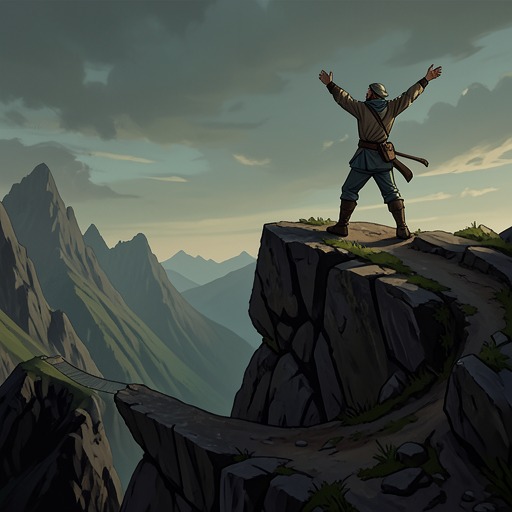
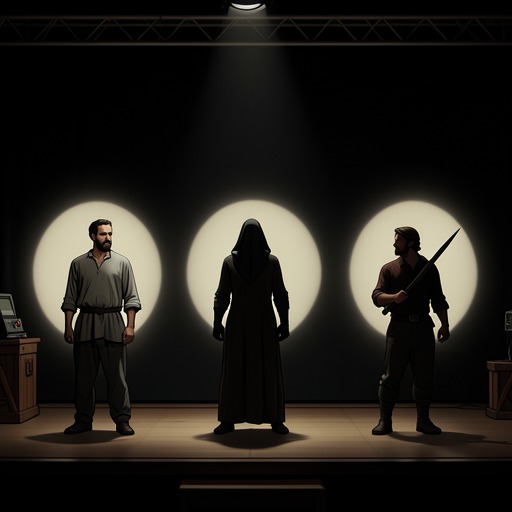
Albert Camus presents The Myth of [Sisyphus](entity:character-recall-character-baaaf9841ffe) as the beginning of an inquiry later continued in The Rebel. He says the earlier book confronts suicide without appealing to eternal values and argues that even within nihilism life can be affirmed.
He frames the accompanying essays as more lyrical reflections on the artist’s reasons for living and creating. Their unity lies in the tension between assent and refusal, a tension he still accepts despite having moved beyond some of the book’s earlier positions.
early in the philosophical argument
The Question of Suicide
Camus declares that suicide is the only truly serious philosophical problem because judging whether life is worth living precedes every other intellectual question. Scientific or metaphysical controversies matter less to him than the actions people are willing to die for.
He therefore turns from abstract philosophy to the relation between individual thought and self-destruction. Suicide appears as a confession that life has become incomprehensible or not worth the trouble, while its causes often arise from a barely visible collapse within ordinary existence.
before the formal definition of The absurd
The Feeling of Absurdity
Routine life proceeds through work, meals, sleep, and repeated days until weariness raises the question of why. That weariness can return a person to habit, but it can also awaken consciousness and force a choice between recovery and death.
Time, aging, the strangeness of nature, the mechanical gestures of other people, and the mathematical finality of death all disclose the same rupture. The world becomes unfamiliar because inherited meanings fall away, leaving the individual exiled from both a lost home and any promised future.
after the first encounter with absurdity
The Limits Of Knowledge
Camus examines the mind’s hunger for unity and clarity and finds that thought repeatedly undermines its own claims. Science can enumerate phenomena and construct hypotheses, but it cannot provide the final human apprehension of the world that consciousness desires.
The self likewise remains elusive: its experiences and qualities can be listed but never fused into a definitive essence. Knowledge offers truths but no single truth, and the gap between the desire to understand and the world’s resistance becomes the intellectual face of [The absurd](entity:expression-recall-expression-the-absurd-9803ec899f27).
at the close of the opening analysis
The Definition Of The Absurd
Camus corrects himself: the world is not simply absurd, since it is merely unreasonable, and the human being is not absurd in isolation. [The absurd](entity:expression-recall-expression-the-absurd-9803ec899f27) arises from their confrontation—the human longing for clarity meeting the world’s impenetrable silence.
He establishes this confrontation as the first certainty of his inquiry. Any solution that removes either human longing or worldly irrationality destroys the phenomenon it claims to explain, so the absurd must remain an unceasing struggle rather than a conclusion.
after defining The absurd
The Existential Thinkers’ Desert
Camus surveys the intellectual desert described by [Martin Heidegger](entity:character-recall-character-55df438eff85), [Karl Jaspers](entity:character-recall-character-865005414cbc), [Lev Shestov](entity:character-recall-character-3a0a8ae009ff), [Søren Kierkegaard](entity:character-recall-character-112467b252b7), and [Edmund Husserl](entity:character-recall-character-339c0cb5b009). Their systems differ, but they share anxiety, the collapse of explanatory certainty, and the discovery that reason reaches limits.
These thinkers demonstrate the climate from which Camus’s question emerges: whether a lucid mind must die or can remain in the desert. Their initial discoveries are valuable, but their later conclusions must be tested against the demand to preserve the absurd.
during the critique of existential philosophy
Jaspers’ Leap
[Karl Jaspers](entity:character-recall-character-865005414cbc) begins by recognizing the impossibility of a complete ontology and the failure of systems to transcend appearances. Yet he then interprets failure as evidence for transcendence, turning the limits of explanation into proof of an inaccessible unity.
Camus calls this a leap because nothing in the acknowledged failure logically establishes transcendence. The gesture transforms the absurd into a gateway toward hope and therefore abandons the very confrontation that produced the insight.
following the discussion of Jaspers
Shestov’s Irrational God
[Lev Shestov](entity:character-recall-character-3a0a8ae009ff) attacks rationalism by showing how every universal system eventually encounters contradiction, exception, or irrational human experience. But when he reaches the absurdity of existence, he names it God and urges the individual to leap into the impossible.
Camus regards this as an emotional evasion. Shestov begins from the absurd but proves it only to dispel it, replacing human lucidity with an incomprehensible eternity and destroying the balance between reason and the irrational.
after Shestov’s argument
Kierkegaard’s Sacrifice
[Søren Kierkegaard](entity:character-recall-character-112467b252b7) recognizes that no truth can make existence rationally satisfactory and intensifies the contradictions of faith rather than resolving them. He ultimately turns paradox and scandal into religious criteria, demanding the sacrifice of the intellect.
Camus argues that Kierkegaard makes [The absurd](entity:expression-recall-expression-the-absurd-9803ec899f27) a sign of another world. The irrational becomes divine, despair becomes sin, and the longing that produced the absurd is suppressed by a frantic adherence to transcendence.
after the religious leap
Husserl’s Phenomenological World
[Edmund Husserl](entity:character-recall-character-339c0cb5b009) rejects the old ambition to unify reality under one governing principle and instead directs consciousness toward the detailed diversity of experience. A rose petal, a milestone, a hand, an emotion, and a law each receive focused attention without immediate explanation.
Camus initially sees this as compatible with [The absurd](entity:expression-recall-expression-the-absurd-9803ec899f27) because it describes rather than consoles. But when Husserl turns psychological descriptions into eternal essences and timeless laws, the concrete world acquires a hidden metaphysical depth.
end of the first philosophical movement
Philosophical Suicide
Camus names the existential leap philosophical suicide: a thought begins by exposing the collapse of reason, then negates itself by finding transcendence, God, or eternal rationality in that collapse. The leap may be religious or abstract, but its essential movement is escape.
He distinguishes this from ordinary suicide, which remains the practical problem of the essay. [The absurd](entity:expression-recall-expression-the-absurd-9803ec899f27) mind must not disguise the evidence or leap beyond it; integrity consists in remaining on the dizzying crest where reason knows its limits.
after rejecting philosophical suicide
The Rule Of Revolt
Camus insists that the absurd has meaning only while it is not accepted as a final reconciliation. It requires the absence of hope, continual rejection, and conscious dissatisfaction, all held together in an unceasing confrontation between human demand and worldly opacity.
From this he derives revolt. Living is keeping [The absurd](entity:expression-recall-expression-the-absurd-9803ec899f27) alive by contemplating it, refusing to turn away, and rejecting death without pretending that death can be defeated. Suicide settles the absurd in the same death it seeks to escape.
following the rule of revolt
The Discovery Of Absurd Freedom
Once eternal meaning and eternal freedom are abandoned, the individual becomes free within the limits of mortal action. Future plans and ultimate purposes had confined life by making it serve an imagined destination; death exposes those ambitions as barriers.
This freedom is neither metaphysical nor eternal. It is the condemned person’s release from everything except the present flame of life, a temporary independence grounded in lucid awareness rather than transcendence.
after the discovery of absurd freedom
The Most Living
Camus argues that belief in [The absurd](entity:expression-recall-expression-the-absurd-9803ec899f27) substitutes quantity of experience for a hierarchy of ultimate values. What matters is not living the best life according to an imagined standard, but living as fully and consciously as the limits of one’s fate permit.
The quantity of experience depends less on external circumstances than on awareness. Premature death remains the irreparable obstacle, because no intensity can equal the additional years of conscious life that mortality removes.
conclusion of the absurd reasoning
Revolt Freedom And Passion
Camus summarizes the three consequences of [The absurd](entity:expression-recall-expression-the-absurd-9803ec899f27) as revolt, freedom, and passion. [Consciousness](entity:state-recall-state-consciousness-09c67ebe03e9) transforms what might have been an invitation to death into a discipline of living, while the individual refuses both resignation and metaphysical consolation.
The absurd person does not deny the world or claim that every act is morally equivalent in an ordinary sense. He accepts responsibility for consequences without pretending that a cosmic tribunal will validate or cancel them.
early in the portraits of the Absurd Man
Don Juan’s Repeated Loves
[Don Juan](entity:character-recall-character-62f515427794) moves from woman to woman not because he lacks love, but because each encounter is experienced with his whole self and cannot be converted into an eternal possession. Every woman hopes to give him what no one has given before; he answers with the demand for one more living encounter.
His repetition expresses an ethic of quantity rather than a search for total love. He rejects regret and posterity, remaining within time and treating mortality as the condition that makes each passion vivid.
after Don Juan’s seductions are characterized
Don Juan’s Mortal Love
[Don Juan](entity:character-recall-character-62f515427794)’s love is not merely selfish conquest. Because he refuses to reduce love to one eternal face, he experiences desire, affection, and intelligence as distinct compounds rather than disguising every attachment under one sacred name.
His openness is liberating but temporary, since it recognizes that every passion is short-lived. He accepts aging, ridicule, and punishment as rules of the game, while denying that fate itself can be a moral punishment.
near the end of Don Juan’s portrait
The Stone Commander’s Challenge
[The Stone Commander](entity:object-recall-object-the-stone-commander-3349ffb86859) embodies eternal reason, universal morality, and a wrathful God summoned to punish [Don Juan](entity:character-recall-character-62f515427794)’s defiance. Yet Camus imagines that the Commander may never arrive, leaving Don Juan with the bitter knowledge of having been right without any divine confirmation.
Don Juan’s possible retreat to a monastery is not treated as religious conversion but as the grim endpoint of sensual excess. Whether facing the stone statue or a silent heaven, he remains trapped in a mortal body awaiting an end he never desired.
after Don Juan’s portrait
The Actor’s Fleeting Lives
The actor embodies multiple lives within the brief duration of a performance. He becomes [Iago](entity:character-recall-character-d4fc98c59534), [Alceste](entity:character-recall-character-d0051b018a37), Phedre, Gloucester, or [Hamlet](entity:character-recall-character-1ea6a2768b49), then loses each identity when the curtain falls, making theatrical fame the most visibly ephemeral form of human existence.
His art illustrates the absurd because he lives many complete destinies without pretending that any will endure. His body turns appearances into knowledge, and his vocation is to be several or nothing rather than to secure a permanent essence.
end of the actor’s portrait
The Actor Against Eternity
[The Church](entity:organization-recall-organization-the-church-273199dfe5a6) condemns actors because their multiplication of souls and preference for the present contradict the promise of eternity. Adrienne Lecouvreur refuses to renounce her profession even while dying, and [Molière](entity:character-recall-character-1320bb97154a) remains associated with a life devoted to theatrical dispersion.
For the actor, premature death is irreparable because it ends the procession of characters still waiting to be lived. Time sweeps him onward, but the temporary nature of his art becomes its truth rather than its defect.
after the actor’s portrait
The Conqueror Chooses History
The conqueror rejects contemplation of the eternal and chooses history because it is the force visibly crushing human beings. He accepts that there are no permanently victorious causes and therefore joins lost causes, where a person’s worth lies in remaining uncontaminated even in defeat.
Action becomes a way of entering the flesh of the world rather than discovering a final meaning. The conqueror seeks no supernatural victory; he exalts human dignity precisely within an ineffectual struggle against time and death.
middle of the conqueror’s portrait
The Conqueror’s Human Solidarity
The conqueror finds his only luxury in human relations: threatened fraternity, intense friendship, and the vivid significance of bodies that will perish. The mind becomes magnificent when it knows both its powers and its limits, and that knowledge gives it freedom.
He rejects churches, political or divine, whenever they claim the eternal and demand submission to a doctrine. His cemeteries and monuments reveal death as the supreme abuse, not a gateway that can redeem the injustices of life.
conclusion of the portraits
The Absurd Men’s Code
Camus stresses that [Don Juan](entity:character-recall-character-62f515427794), the actor, and the conqueror are not moral models but illustrations of possible styles of living without appeal. Their common requirement is consciousness: the individual must know what he is doing and conceal nothing from himself.
[The absurd](entity:expression-recall-expression-the-absurd-9803ec899f27) world contains no kingdom of final wisdom, only temporary nobility in consistency. Its inhabitants possess no higher destiny, but they can refuse hope as resignation and remain faithful to the mortal world.
beginning of the discussion of Absurd Creation
Creation As Double Living
Camus identifies creation as the supreme absurd joy because it allows a person to live twice. The artist observes, enlarges, and repeats the ephemeral world, fixing in a work the same consciousness that animates the actor, conqueror, and lover.
Creation does not explain reality or offer refuge from [The absurd](entity:expression-recall-expression-the-absurd-9803ec899f27). It is itself an absurd phenomenon, a disciplined repetition of bodily forms, colors, grief, and diversity that reveals rather than cures the intellectual ailment.
after creation is defined as repetition
The Absurd Work Of Art
An absurd work of art emerges when lucid thought refuses to impose an illegitimate deeper meaning on concrete appearances. Intelligence regulates the work but does not dominate it with a thesis; the carnal world remains visible as itself.
The true work is smaller than the total experience from which it is cut, preserving an implied richness without claiming eternity. If the world were completely clear, art would have no reason to exist.
middle of the creation discussion
Fiction And Philosophical Vision
Camus argues that the opposition between philosophy and fiction is artificial. Great novelists create worlds governed by postulates, logic, and a vision of existence, while philosophers also construct characters, symbols, plots, and embodied confessions.
Fictional creation becomes a form of relative and inexhaustible knowledge. It does not refine reality into a final explanation; it pauses to mimic the world, allowing thought to return to flesh, passion, and the appearances it cannot transcend.
during the analysis of fictional creation
Dostoevsky’s Logical Suicide
[Fyodor Dostoevsky](entity:character-recall-character-36ac5365669b) imagines a person who concludes that existence is intolerable without immortality. Since nature has brought him into being to suffer, he condemns nature and himself to annihilation, turning suicide into a metaphysical judgment.
The argument matters because it dramatizes [The absurd](entity:expression-recall-expression-the-absurd-9803ec899f27) rather than merely naming it. Yet Camus must determine whether Dostoevsky’s fiction remains faithful to that insight or eventually escapes into religious consolation.
after Dostoevsky’s logical-suicide argument
Kirilov’s Divine Independence
[Kirilov](entity:character-recall-character-261af9ee7b43) declares that God is necessary but does not and cannot exist, making suicide his idea. If God does not exist, Kirilov reasons, he becomes god by achieving absolute independence; his death will assert insubordination and a new freedom.
His divinity is earthly rather than supernatural. He exercises, cares about Chatov’s domestic happiness, and remains childish and passionate, so his claim is not mere madness but a demand to draw every consequence from human independence.
near the end of Kirilov’s story
Kirilov’s Sacrificial Suicide
[Kirilov](entity:character-recall-character-261af9ee7b43) believes ordinary people cannot feel their own freedom, so he must die to teach them. His suicide becomes pedagogical: he sacrifices himself so that humanity may become a race of earthly tsars, liberated from God and illuminated by human glory.
The act combines revolt, love of one’s neighbor, and a fatal contradiction. He seeks to prove that freedom is possible, but his death abandons the world where that freedom might have been lived.
after Kirilov’s suicide
Stavrogin And Ivan’s Experiment
[Stavrogin](entity:character-recall-character-3ea2c91a2db9) and [Ivan Karamazov](entity:character-recall-character-28ed248a22a8) inherit the consequences of [Kirilov](entity:character-recall-character-261af9ee7b43)’s ideas and test them in practical life. Stavrogin lives ironically through indifference, while Ivan preserves the sovereignty of the intellect and repeats the claim that everything is permitted.
Their trajectories lead toward madness rather than liberation. Camus treats this not as a refutation of [The absurd](entity:expression-recall-expression-the-absurd-9803ec899f27) but as evidence that the experiment carries risks which the lucid mind must face without pretending they prove anything beyond themselves.
at the conclusion of the Dostoevsky analysis
Dostoevsky’s Religious Reversal
Dostoevsky finally answers the despair of his characters with faith in immortality. He argues that humanity’s need for immortality proves its existence, and [Alyosha Karamazov](entity:character-recall-character-7c987e1d93bd) assures children that the dead will rise and meet again joyfully.
This answer defeats [Kirilov](entity:character-recall-character-261af9ee7b43), [Stavrogin](entity:character-recall-character-3ea2c91a2db9), and Ivan as embodiments of the problem. Camus admires the emotional power of the novels but concludes that they propound [The absurd](entity:expression-recall-expression-the-absurd-9803ec899f27) without remaining within it, because they announce a future life.
after the Dostoevsky example
The Discipline Of Ephemeral Creation
Camus concludes that absurd creation must work for nothing, knowing that its product has no guaranteed future and may be destroyed as easily as a structure built for centuries. Its discipline lies in repeating and marking time while giving the void colors.
A creator’s complete work is not a single triumphant statement but a succession of attempts that correct, contradict, and illuminate one another. Creation becomes an ascesis—a daily exercise in patience, self-mastery, measure, and lucid revolt.
mythic antiquity
Sisyphus Defies The Gods
[Sisyphus](entity:character-recall-character-baaaf9841ffe) steals the secrets of the gods and trades divine knowledge for water for [Corinth](entity:location-recall-location-corinth-78dc2d581855). He also chains Death, depriving the [Underworld](entity:location-recall-location-underworld-fe4730304a89) of its subjects, and later deceives death by ordering his wife to leave his body unburied in the public square.
These acts establish his defiance of divine authority and mortality. His intelligence and passion for earthly life eventually provoke the gods to impose a punishment designed to convert human energy into perpetual futility.
after his first death
Sisyphus Escapes The Underworld
[Sisyphus](entity:character-recall-character-baaaf9841ffe) awakens in the [Underworld](entity:location-recall-location-underworld-fe4730304a89) and persuades Pluto to let him return to earth to punish his wife. Once restored to sunlight, water, warm stones, and the sea, he refuses to return to infernal darkness despite summons and warnings.
The gods finally send Mercury to seize him and drag him back. His escape reveals the depth of his attachment to mortal sensations and explains why his punishment is not merely labor but the permanent denial of the world he loves.
after Sisyphus’s return to the Underworld
The Rolling Rock Punishment
The gods condemn [Sisyphus](entity:character-recall-character-baaaf9841ffe) to roll a massive rock to the top of a mountain, where it falls back under its own weight. He must repeat the task without end, expending his entire body toward an achievement that immediately disappears.
The punishment is dreadful because it joins ceaseless effort to hopeless futility. Sisyphus becomes the archetypal absurd hero: his passions for life, hatred of death, and scorn of the gods are transformed into a labor that can never produce a lasting result.
during each return from the summit
Sisyphus’s Conscious Descent
Camus focuses on the interval after the rock falls, when [Sisyphus](entity:character-recall-character-baaaf9841ffe) descends toward the plain to begin again. During this breathing-space he becomes conscious of the full extent of his fate, and that lucid awareness makes him superior to the destiny imposed upon him.
His condition resembles modern repetitive labor, but it becomes tragic only when recognized. [Consciousness](entity:state-recall-state-consciousness-09c67ebe03e9) is both his torture and his victory, because no fate can fully dominate a person who sees it clearly and meets it without hope.
near the end of the mythic essay
Sisyphus Claims His Fate
[Sisyphus](entity:character-recall-character-baaaf9841ffe) can descend in melancholy when memories of earthly happiness press upon him, yet he can also descend in joy. Once he understands his punishment, the fate that seemed imposed from above becomes his own rock and his own struggle.
Like [Oedipus](entity:character-recall-character-c3f19a761464), he concludes that all is well—not because suffering disappears, but because fate becomes a human matter settled among human beings. His silent joy comes from possessing the task through consciousness rather than expecting it to be redeemed.
final image of The Myth of Sisyphus
The Happy Absurd Hero
[Sisyphus](entity:character-recall-character-baaaf9841ffe) returns to the foot of the mountain and finds his burden again, but the universe without a master no longer appears sterile or futile. Each atom of the stone and each mineral flake of the mountain forms a world within the total struggle.
Camus leaves him moving onward, sustained not by hope but by fidelity to revolt. [The struggle itself toward the heights is enough to fill a man’s heart](entity:expression-recall-expression-the-struggle-itsel-97fd355b0a79), so the reader must imagine Sisyphus happy.
opening of the Kafka appendix
Joseph K.’s Arrest
In The Trial, [Joseph K.](entity:character-recall-character-k-d8ee66433c91) is accused without being told of what. He attempts to defend himself, encounters lawyers and obscure courts, and continues ordinary activities such as eating, loving, and reading while the unexplained accusation governs his existence.
The ordinary texture of his behavior makes the impossible seem natural. Kafka’s method embodies [The absurd](entity:expression-recall-expression-the-absurd-9803ec899f27) by placing an undefined spiritual condemnation inside the administrative routines of everyday life.
near the ending of The Trial
Joseph K.’s Execution
Eventually two polite, well-dressed men lead [Joseph K.](entity:character-recall-character-k-d8ee66433c91) to a poor suburb and place his head on a stone. They slit his throat, and his last words—“Like a dog”—express both humiliation and the failure to discover the crime for which he was condemned.
The execution provides no explanation and no progress. Its terrible naturalness makes the novel a successful absurd work: revolt, mute despair, and freedom of manner persist until death without receiving a consoling answer.
in Kafka’s Metamorphosis example
Gregor’s Transformation
[Gregor Samsa](entity:character-recall-character-336be7387574) awakens transformed into a vermin-like creature, yet his first concern is that his employer will be angry because he has missed work. His body changes grotesquely while his mind remains caught in the ordinary obligations of employment.
The disproportion between supernatural horror and practical annoyance expresses Kafka’s fusion of tragedy with the everyday. [Consciousness](entity:state-recall-state-consciousness-09c67ebe03e9) sees the beast within human life, but the surrounding world continues to behave according to bureaucratic logic.
opening of The Castle
K. Arrives At The Castle
The [Land Surveyor K.](entity:character-recall-character-k-5856e641516c) arrives in the village after being appointed to work for the Castle. Yet communication between the village and the Castle proves nearly impossible, and every effort to approach authority produces another obstacle rather than a clear directive.
His journey is an adventure of a soul seeking grace through administrative channels. [The Castle](entity:location-recall-location-the-castle-3a5216df5e30)’s remoteness turns ordinary employment, lodging, and belonging into symbols of a transcendence that never becomes accessible.
throughout the middle of The Castle
K.’s Endless Quest
K. persists for hundreds of pages, using intermediaries, telephone calls, tricks, and good will to assume the duties he believes the Castle has assigned him. Every advance becomes a fresh frustration, yet each frustration also begins the process again.
The consistency of his method creates the novel’s tragic power. Vague voices over the telephone and uncertain signs sustain his hope, making him continue toward an authority whose distance gives his life its structure.
after K.’s early failures in the village
K. Takes Frieda
K. takes [Frieda](entity:character-recall-character-18295bf95b7f) as his mistress because she has known one of the Castle’s officials. Through her connection he hopes to gain access to a higher realm while also seeking the ordinary security of occupation, home, and village acceptance.
Their relationship reveals how earthly love becomes entangled with the longing for grace. Frieda’s attachment to K. turns the anxiety into a shared dependence, making the void itself seem desirable because it is the only world they can inhabit together.
late in The Castle
K. Turns Toward Amalia
K. breaks with [Frieda](entity:character-recall-character-18295bf95b7f) and moves toward the Barnabas family, whose members are rejected by both the Castle and the village. [Amalia](entity:character-recall-character-ec7b33dee725) has refused a shameful proposition from a Castle official, and the resulting curse has marked her as permanently outside divine favor.
K.’s movement from Frieda to Amalia symbolizes a turn from trusting love toward the deification of an absurd and unjust authority. He abandons morality, logic, and ordinary intellectual truth in the hope that rejection itself may reveal the path to grace.
conclusion of the Kafka appendix
Kafka’s Hopeful Evasion
Camus argues that [The Castle](entity:location-recall-location-the-castle-3a5216df5e30) introduces hope into the closed universe of The Trial. Its treatment does not cure the malady but teaches the characters to cherish and accept it, turning anxiety into a possible route toward supernatural reality.
Kafka’s work therefore stands between absurd lucidity and religious escape. It possesses nobility and universality because it renders the passage from hope to grief with extraordinary force, but Camus concludes that the search for what is true need not coincide with what is universal.
1936 essay opening
Algiers Opens To The Sea
Camus turns from philosophical argument to [Algiers](entity:location-recall-location-algiers-badef4fe514b), a city that opens toward the sky and sea rather than enclosing itself within the accumulated past of old European capitals. Its common pleasures are sunlight, water, bodies, and the visible abundance of the Mediterranean world.
The city offers no doctrine promising education or improvement. Its gifts are immediate, sensual, and without hope, demanding the same lucidity that an act of faith would demand from a person who lives without consolation.
during the summer in Algiers
Summer’s Youthful Abundance
Young people in [Algiers](entity:location-recall-location-algiers-badef4fe514b) swim in the harbor, sun themselves, dance, and marry early. Their pleasures are direct and physical, and their lives burn through experience rapidly rather than building toward a distant ideal.
Their code is practical rather than doctrinal: respect one’s mother and wife, protect the vulnerable, and do not behave dishonorably in the street. Camus sees in this rough code a disinterested dignity that rejects both shopkeeper morality and abstract virtue.
later in the Algiers summer essay
The City’s Deathly Contrast
The city’s sensual abundance is set against boredom, poverty, old age, and an ugly cemetery decorated with false promises of memory and permanence. Death appears especially horrifying in a country whose landscape and customs invite people to live intensely.
Yet life and death remain physically intertwined: young lovers meet near the cemetery, and undertakers joke with women in the streets. The contrast confirms that the city’s beauty carries its own bitterness, because no earthly richness can protect its inhabitants from mortality.
end of the Algiers essay
The Lesson Of Algerian Summer
Camus identifies the central lesson of [Algiers](entity:location-recall-location-algiers-badef4fe514b) in its refusal to cheat. Its people possess their lives on earth without constructing elaborate myths of another life, even though they remain terrified of death.
[Hope](entity:state-recall-state-hope-16c9b2458b59) appears as the most dreadful escape because it resembles resignation. The summer therefore teaches that life’s grandeur lies in inhabiting its ephemeral pleasures and pains without replacing them with a promised eternity.
1939 essay setting
Oran’s Walled Boredom
[Oran](entity:location-recall-location-oran-3b0e9ecab2e8) is introduced as a city deliberately turned away from its magnificent sea. Dust, ugly construction, commercial excess, and repetitive streets produce a desert within the crowded city, where the [Minotaur](entity:character-recall-character-6ad456fd5369) is not a monster but boredom.
The city’s value lies precisely in its lack of poetic consolation. Stripped of historical grandeur and intellectual distraction, Oran forces attention back toward the human creature and the difficult solitude found among others.
during daily life in Oran
Oran’s Street Parades
The streets display cafes, photographers, funeral establishments, extravagant advertising, and young people who imitate American film stars. The Clarques and Marlenes parade along the boulevards, exchanging looks and enjoying the intoxication of being alive.
Their frivolity is not philosophical, yet it creates a temporary parliament of youth without concern for perfection or being. The city’s innocence consists in its flapping, singing, and display, all of which vanish with night.
during the Oran essay
The Oran Boxing Rite
At the [Central Sporting Club](entity:location-recall-location-central-sporting-clu-f3c70a2bc97f), an overcrowded audience watches inexperienced fighters and then the major bouts. The match between Amar of [Oran](entity:location-recall-location-oran-3b0e9ecab2e8) and Perez of [Algiers](entity:location-recall-location-algiers-badef4fe514b) becomes a proxy war between rival cities, each boxer carrying a provincial pride larger than the contest itself.
Violence produces a temporary religion of clear opposites: winner and loser, good and evil. Yet when the fighters embrace after a draw, the crowd reverses itself and applauds, discovering fraternity beneath the need for Manichean certainty.
later in the Oran essay
The Stones Of Oran
[Oran](entity:location-recall-location-oran-3b0e9ecab2e8)’s monuments include the extravagant [Maison du Colon](entity:location-recall-location-maison-du-colon-fbbb1ada8cef), the lions of Place d’Armes, and the enormous coastal works that move stone into the sea. These structures embody commercial pride, bad taste, perseverance, and the human urge to leave something lasting.
Camus sees no true conquest of matter in the construction. Stone will outlast the workers, and the sea will eventually erase their arrangements, but the labor still bears witness to human action. Choosing to move things rather than do nothing becomes the city’s modest monument.
end of the Oran essay
Oran’s Ariadne Stone
Beyond the city lie [Santa-Cruz](entity:location-recall-location-santa-cruz-b2e34c060ac8), [Canastel](entity:location-recall-location-canastel-8d9e95d26682), deserted beaches, dunes, flowers, storms, and a sea that continually renews itself. These landscapes confront [Oran](entity:location-recall-location-oran-3b0e9ecab2e8)’s boredom with innocence and beauty, offering temporary invitations to become as still and impassive as stone.
The little stone picked up from the cliff becomes an Ariadne’s thread: a modest object through which the traveler receives a moment of freedom. The city’s wisdom lies in balancing human boredom against the mineral permanence surrounding it.
1948 essay opening
Greek Limits Against Europe
Camus contrasts Greek thought with modern [Europe](entity:location-recall-location-europe-90be8cc79c46). The Greeks sought limits, balancing reason with the sacred, shadow with light, and beauty with justice; modern Europe pursues totality and treats history, power, or future reason as absolute.
This disproportion produces tyranny because values are postponed until the end of history. The Greeks’ warning that whatever exceeds its measure will be punished becomes a challenge to modern political and intellectual ambition.
middle of Helen’s Exile
Europe Exiles Beauty
Modern [Europe](entity:location-recall-location-europe-90be8cc79c46) turns away from nature, the sea, landscapes, and contemplative beauty, locating consciousness only in cities and history. Its tragedies resemble offices, and its blood has the color of printer’s ink rather than mythic sacrifice.
The loss of beauty is not an aesthetic inconvenience but a political danger. A society that wants to remake the world before understanding it loses the limits that once restrained justice, reason, and power.
end of Helen’s Exile
The Artist Chooses Freedom
Camus argues that the historical spirit and the artist both seek to remake the world, but the artist knows limits while history tends toward tyranny. Those who struggle for freedom ultimately struggle for beauty, not as ornament but as a human necessity.
He invokes the choice of [Ulysses](entity:character-recall-character-fec58210e1cf), who prefers his homeland and mortality to immortality. Admission of ignorance, rejection of fanaticism, fidelity to limits, and love of beauty become the virtues by which the modern age may recover its humanity.
before the final return in 1952
Return To Rainy Tipasa
After five days of relentless rain in [Algiers](entity:location-recall-location-algiers-badef4fe514b), Camus waits to return to [Tipasa](entity:location-recall-location-tipasa-0d93bdd1039e), remembering the ruins and freedom of his youth. A previous visit had shown him barbed wire, official guardians, and a landscape darkened by war, tyranny, and the loss of innocence.
The ruined site becomes a measure of his own history. Beauty and youth remain associated with abundance, but the era of revolt has made him guilty without intention and unable to recover the innocence that once allowed him to love the world without moral anxiety.
the next clear morning
Tipasa’s Renewed Light
The rain suddenly stops, and a crystalline morning restores sharp outlines to the houses, trees, sea, and mountains. Camus travels the familiar road toward [Tipasa](entity:location-recall-location-tipasa-0d93bdd1039e), carrying memories of childhood, adolescent desire, beaches, and the unchanging Algerian sky.
When he enters the ruins, the silence, birds, wormwood, columns, and sea dissolve years of war and night. His heart seems to begin beating again, and the world’s morning becomes a temporary harbor beyond historical violence.
at noon in the renewed Tipasa
The Invincible Summer
At noon, amid heliotropes and the exhausted sea, Camus satisfies the two needs that cannot be neglected: loving and admiring. He recognizes that justice alone can dry into bitterness, while love without justice becomes isolation, so the struggle must preserve a living source of joy.
[Tipasa](entity:location-recall-location-tipasa-0d93bdd1039e) restores the memory of beauty that had protected him from despair. In the middle of winter he discovers an invincible summer within himself, a durable inner light that can return him to combat without surrendering to injustice.
after leaving Tipasa
The Double Memory
Camus returns to [Europe](entity:location-recall-location-europe-90be8cc79c46) and its struggles, determined to braid together beauty and the humiliation of the oppressed rather than betray either. He rejects both retreat into beauty and submission to crime, insisting that a person must live and love without acting by proxy.
His desired virtue is to be equal to the best and the worst of the age. The memory of [Tipasa](entity:location-recall-location-tipasa-0d93bdd1039e) becomes a resource for remaining faithful to light while accepting the servitudes and responsibilities of the historical present.
1953 interview opening
The Artist Rejects Neutrality
Camus rejects the role of detached witness and says that modern tyrannies no longer permit silence or neutrality. Since individuals are forced to take sides, he places himself against tyranny while refusing the authority of a judge’s bench.
His position is not a claim to moral superiority but an acceptance of the time in which he lives. He points toward trade-union action and other relative forms of solidarity rather than grand historical absolutes.
during the 1953 interview
Against Historical Myth
Camus argues that romanticism lies in worshiping perpetual historical motion and awaiting a miraculous event at the end of time. He instead defends ordinary existence, the struggle against degradation, and a realism that refuses to treat the future as known history.
He accepts the need for rule and order but rejects rules supplied either by a disordered society or by doctrinaires claiming liberation from every scruple. The future cannot serve as an unquestionable moral authority.
middle of the 1953 interview
The Marxist Accusation
Camus criticizes [Marxists](entity:organization-recall-organization-marxists-e841bc2315a3) who defer human nature to a future classless society. By rejecting people as they exist now in the name of a future humanity, they reproduce the structure of religious faith and risk turning history into a new mystification.
He refuses the idea that oppression becomes justifiable because it supposedly follows history’s direction. No revolutionary destination can sanctify privileged executioners, and all executioners must be judged by the same human standard.
late in the 1953 interview
The Artist Serves The Humiliated
Camus says artists may not need to interfere in worldly affairs as artists, but as human beings they must communicate the silence of miners, prisoners, colonized peoples, and the persecuted. His writing has repeatedly returned to the humiliated because he cannot accept their being denied hope.
This commitment need not become social preaching. A militant life changes an artist’s tone, while authentic creation preserves the tension between human suffering and the values of beauty, imagination, and form.
closing pages of the book
Art And Human Renascence
Camus rejects both the ivory tower and the social church as forms of resignation. The artist must serve suffering and beauty together, remain among ordinary people, and accept the risks of an era in which detached artistry is no longer possible.
Art alone cannot create justice and liberty, but without art their renewal would have no form. Authentic creation therefore becomes a gift to the future, preserving human freedom and culture without claiming an eternal solution.