
The Picture of Dorian Gray
Introduction to the Book
The Picture of Dorian Gray is the only novel written by the Irish playwright and author Oscar Wilde. First published in the July 1890 issue of the American periodical Lippincott's Monthly Magazine as a novella, it was expanded and released as a single-volume novel in 1891. The work blends elements of philosophical fiction, Gothic horror, and decadent literature, and is widely regarded as a cornerstone of the Aesthetic movement. Its ornate prose, witty epigrams, and profound moral questions have secured its place as a classic of English literature.
Plot Summary
Set in late Victorian London, the story follows Dorian Gray, a strikingly handsome young man of aristocratic birth. The artist Basil Hallward, captivated by Dorian's beauty, paints a life-sized portrait of him. While Dorian sits for the portrait, he meets Basil's friend Lord Henry Wotton, a cynical hedonist who preaches that youth and beauty are the only things worth pursuing in life. Influenced by Lord Henry's words, Dorian makes a desperate wish: that he might remain forever young and that the portrait would age and bear the marks of his sins instead. The wish is mysteriously granted. Dorian then embarks on a life of unrestrained pleasure and moral corruption, breaking the heart of his fiancée, the actress Sibyl Vane, who commits suicide; later, he murders Basil Hallward after showing him the hideously transformed portrait. Despite his vicious deeds, Dorian's face never shows any sign of aging or guilt, while the hidden portrait grows increasingly grotesque, reflecting the decay of his soul. Tormented by the portrait's ugliness and his own guilt, Dorian finally stabs it in a fit of rage. In doing so, he kills himself, and when servants arrive, they find the body of a withered, old man next to the portrait, which has returned to its original youthful beauty.
Core Themes
The novel explores the tension between aestheticism and morality, the relationship between art and life, and the consequences of a life devoted entirely to pleasure. Through Dorian's journey, Wilde critiques the hypocrisy of Victorian society while also examining the dangers of the Aesthetic movement's credo of "art for art's sake." The story raises questions about whether beauty can exist independently of goodness, and it ultimately suggests that a life without moral responsibility leads to spiritual and physical destruction. Other themes include the duality of human nature, the corrupting influence of power, and the price of vanity.
Writing Background
Wilde began writing the novel in 1888 at the request of J. M. Stoddart, an American publisher of Lippincott's Monthly Magazine. The late 19th century was a period of rapid industrialization and rigid social conventions in Britain, which often stifled artistic expression. Wilde, as a leading figure of the Aesthetic movement, sought to create a work that championed artistic freedom and individualism. The novel's decadent tone and frank treatment of taboo subjects reflected his own rebellious spirit. Upon its initial publication, the book was denounced by many critics as immoral and degenerate, prompting Wilde to add several chapters and soften some passages for the 1891 book edition. Despite the controversy, the novel has endured as a powerful exploration of beauty, sin, and the human soul.
Lasting Influence and Legacy
Over a century after its publication, The Picture of Dorian Gray remains a widely read and studied work. It has inspired countless adaptations in film, television, theater, and even music, from early silent movies to modern streaming series. The central concept of a portrait that ages while the subject remains young has become a classic trope in popular culture. The character of Dorian Gray has become an archetype of the beautiful, corrupt individual who sells his soul for eternal youth. The novel is also a key text in the "Dark Academia" aesthetic movement and continues to provoke discussions about the ethics of art, the nature of beauty, and the consequences of moral decay. Its enduring relevance is a testament to Wilde's genius and the timelessness of its themes.
The novel's origins can be traced to a real-life encounter. In 1882, Wilde met the Canadian painter Frances Richards in Ottawa and later visited her studio. When Richards moved to London in 1887, she renewed their acquaintance and painted Wilde's portrait. Wilde himself cited this incident as the direct inspiration for the story, noting that the idea of a portrait that ages while its subject remains young first occurred to him while sitting for Richards.
About the Author
Biography
Oscar Fingal O'Flahertie Wills Wilde was born on October 16, 1854, in Dublin, Ireland, into a distinguished and intellectually vibrant family. His father, Sir William Wilde, was a leading ear and eye surgeon, and his mother, Jane Wilde, was a poet and a prominent Irish nationalist. Wilde was educated at home before attending Portora Royal School in Enniskillen, where he developed a love for classical literature. In 1871, he won a scholarship to Trinity College Dublin, where he studied under the influential professor John Pentland Mahaffy. In 1874, he received a full scholarship to Magdalen College, Oxford, where he excelled academically and was deeply influenced by the aesthetic theories of Walter Pater and John Ruskin. He also engaged with Neo-Hegelian philosophy and the Pre-Raphaelite Brotherhood, shaping his future as a leading figure of the Aesthetic movement.
Literary Career and Major Works
After graduating from Oxford with double first-class honors, Wilde moved to London and began his literary career. He first gained attention as a poet with the publication of Poems in 1881. He then became a prominent lecturer on aestheticism, traveling to the United States and Canada in 1882. His first major success in the theater came with Lady Windermere's Fan (1892), followed by A Woman of No Importance (1893), An Ideal Husband (1895), and The Importance of Being Earnest (1895), which is widely considered his masterpiece. His only novel, The Picture of Dorian Gray, was published in 1890 in serial form and revised in 1891. He also wrote acclaimed fairy tales such as those in The Happy Prince and Other Tales (1888) and the radical essay The Decay of Lying (1889). Wilde's work is characterized by its brilliant wit, incisive social satire, and unwavering commitment to the principles of aestheticism—art for art's sake.
Personal Life and Downfall
In 1884, Wilde married Constance Lloyd, with whom he had two sons. However, he became involved in a passionate and ultimately destructive relationship with Lord Alfred Douglas, the son of the Marquess of Queensberry. In 1895, Wilde unwisely sued the Marquess for criminal libel after being accused of homosexuality. The case collapsed, and Wilde was arrested and tried for gross indecency. He was convicted and sentenced to two years of hard labor, a punishment that destroyed his health, reputation, and finances. The ordeal was dramatized in his long, powerful letter De Profundis, written in prison.
Death and Legacy
After his release in 1897, Wilde lived in exile in France, impoverished and broken in spirit. He died of meningitis on November 30, 1900, in Paris at the age of 46. He was buried in the Père Lachaise Cemetery, where his tomb has become a pilgrimage site. Despite his tragic end, Wilde's reputation revived in the 20th century. He is now celebrated as one of the greatest playwrights and wits in the English language, a martyr for civil rights, and a central figure in the history of the Aesthetic movement. His works continue to be performed, studied, and adapted, and his epigrams remain among the most quoted lines in literary history.
StoryFlow
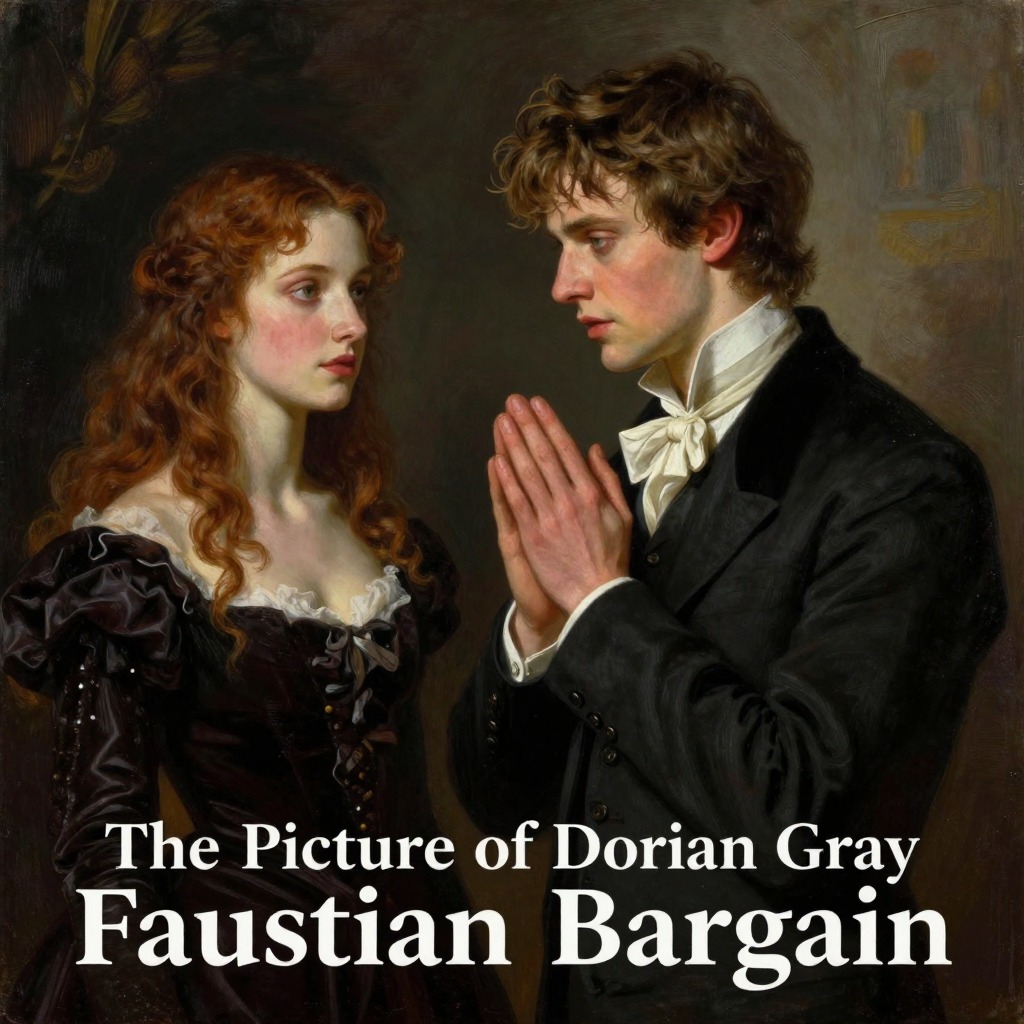
Dorian Gray's Faustian Bargain
Dorian Gray makes a wish for eternal youth and beauty at the expense of his portrait, which ages and bears the marks of his sins.
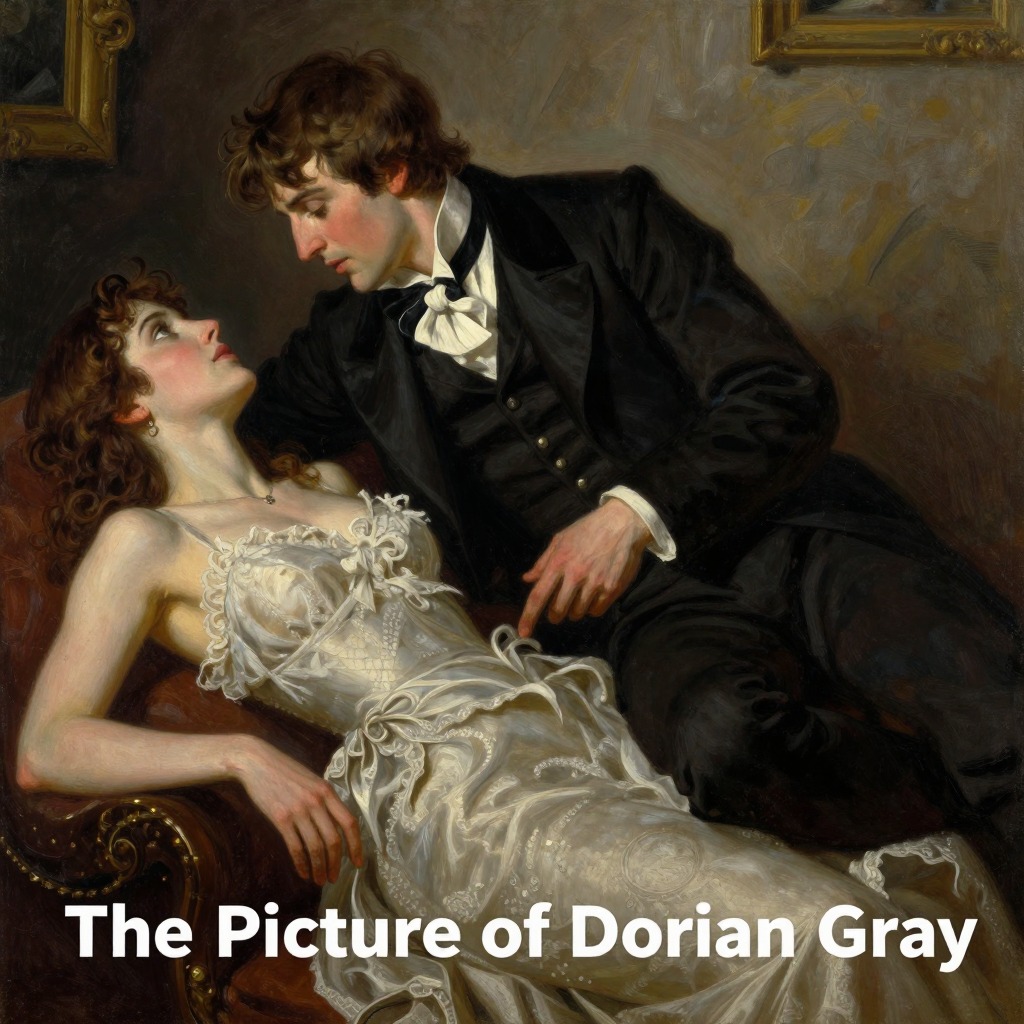
Lord Henry's Corrupting Influence
Lord Henry Wotton introduces Dorian Gray to a philosophy of hedonism and moral relativism, shaping his descent into decadence.
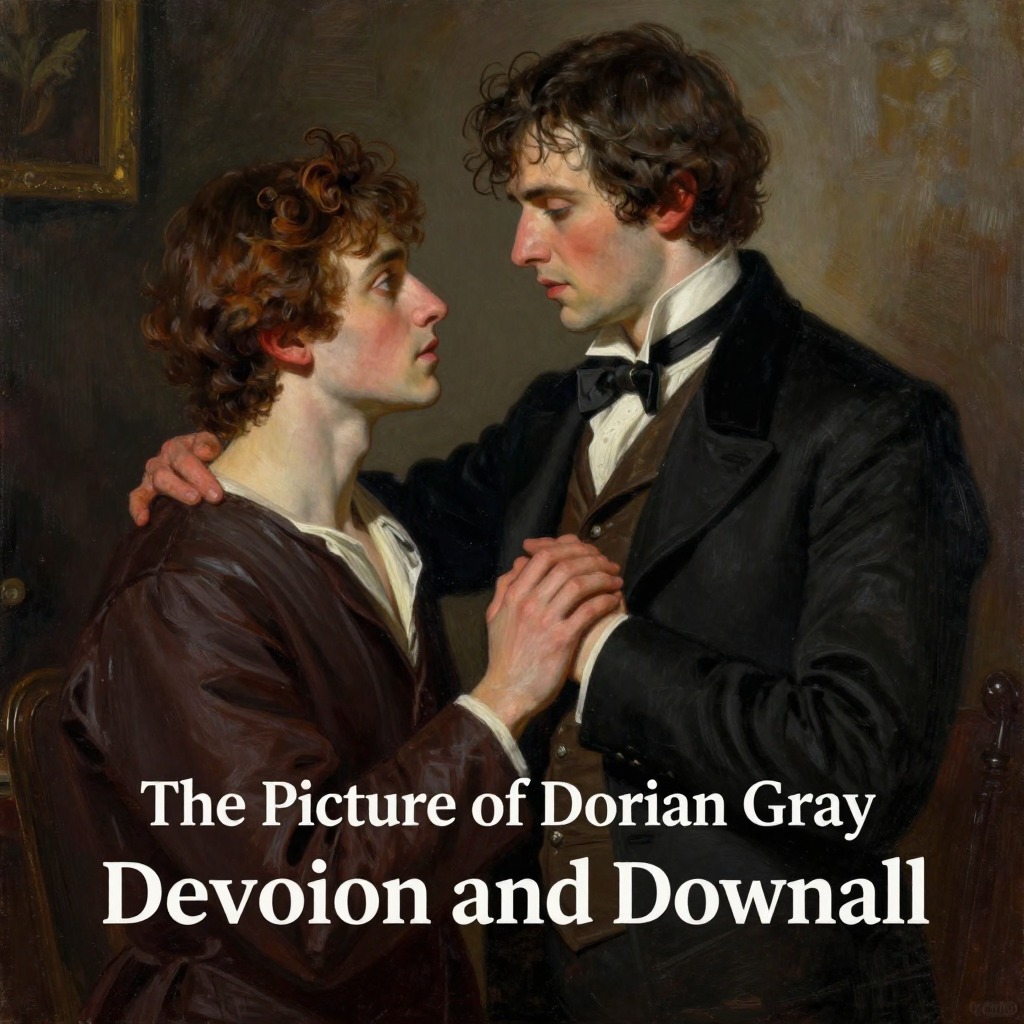
Basil Hallward's Devotion and Downfall
Basil Hallward's romantic friendship with Dorian Gray leads to his artistic inspiration and ultimately his murder at Dorian's hands.
