RUC surveillance and investigation of Michael Agnew and Cushla Lavery
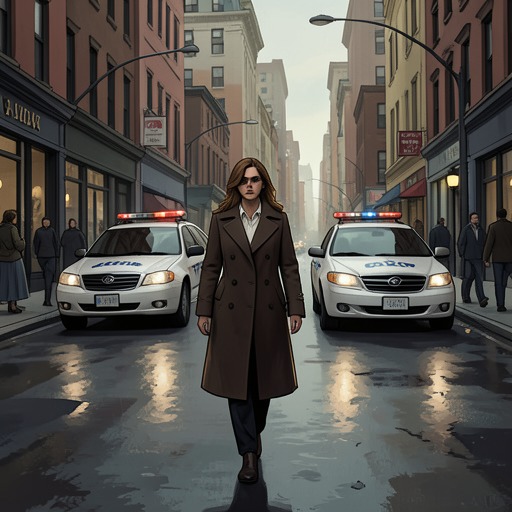
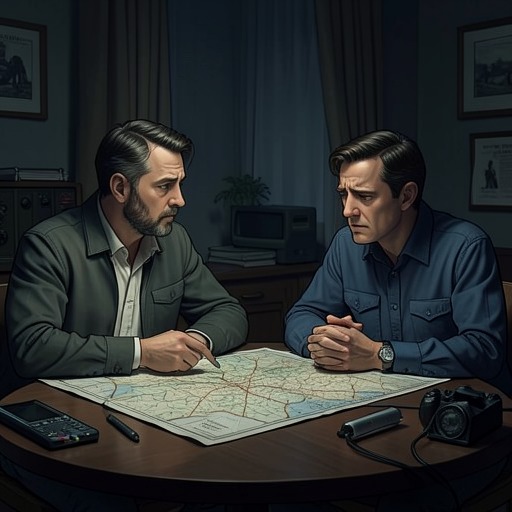
TrespassesRUC surveillance and investigation of Michael Agnew and Cushla Lavery makes their relationship visible through photographs, police questioning, and the records Michael kept of custody abuses. The novel presents surveillance not as a single revelation but as an accumulating pressure: private meetings become evidence, Cushla is questioned after Michael’s death, and the police account of her connections sits uneasily beside what she knows of Michael’s legal work and their life together.
Political and Legal Context
The monitoring unfolds against a public landscape saturated with political violence. On television, a familiar news montage moves from a riot and a child approaching a military vehicle to a march on Stormont, then to a parked car exploding in an empty street. The sequence ends with Mary Peters holding the Olympic medal she had won three years earlier. Its return to the medal offers a brief image of shared pride amid news increasingly defined by conflict.
A year later, the news recalls the strike that brought down the power-sharing government. A poster announcing that Dublin is only a Sunningdale away precedes footage of a Dublin pavement strewn with the aftermath of bombings. Businesses close, and pubs that initially stay open are ordered to shut. These broadcasts establish the public crisis surrounding the characters, but the surveillance’s force lies in its movement from that public world into private spaces and relationships.
Michael’s legal work gives that movement a specific institutional context. At a dinner, he objects to Diplock courts, where cases proceed without juries, and says that the system is not one he had agreed to serve. In a separate discussion, he argues that Republican prisoners are treated unfairly and that the system would not be accepted elsewhere in the United Kingdom. His position is presented through argument and professional commitment, not as proof that the police are responsible for every danger around him.
Michael’s Records and the Evidence of Abuse
Cushla encounters the scale of Michael’s work when she is alone in his flat and looks through a stack of documents. One file bears the names Kelly, McAleavey, and Coyle. It contains statements the men had refused to sign, police photographs, and their accounts of arrest and custody. The material documents reported mistreatment and gives physical evidence to a case Michael was pursuing; the files make clear that his criticism of the justice system is connected to painstaking legal work.
The discovery changes how the room’s ordinary contents read. Stacks of papers, whiskey, and Michael’s other possessions become inseparable from the casework. Cushla understands that he has been confronting evidence of police abuse, and the discovery gives weight to the risks he faced. Later, Victor tells her that pressure had been put on Michael to abandon a police-brutality case and that he had tried to warn him. This supplies a direct link between Michael’s legal challenge and pressure brought to bear on him, while stopping short of establishing who killed him or why.
Photographs and the Exposure of the Relationship
The investigation’s photographs disclose Cushla and Michael’s connection in stages. During questioning, an officer produces an image of them together on a footpath near the perimeter of a barracks. Michael is carrying a bottle of brandy, and his expression is described as laughter. The image is evidence of their being together, but it also preserves a moment of ease that the interview setting turns into an object of scrutiny.
A second photograph shows Cushla speaking while Michael looks toward her. The officer’s display makes their relationship something she must confront in the form of an official record; for Cushla, Michael’s expression confirms the love she had shared with him. Their private history is thus presented through two competing frames: the police use the images to establish contact, while Cushla reads in them the emotional meaning that the investigation cannot contain.
The officer also tells Cushla that her car was seen outside a house on the night of 25 May. She explains that she had been upset because she could not see Michael and had driven out to check whether he had gone home. The questioning then establishes that Michael was shot dead in his family home. The juxtaposition is consequential: an act of anxious checking becomes part of the inquiry, while Cushla challenges the police for following Michael and still failing to prevent his death.
Interrogation and the Expansion of Suspicion
Cushla later tells Gina Lavery that the RUC had been following Michael and had taken photographs of her in his car and in his flat. She describes being interviewed by an officer who also worked as a disc jockey at a school disco, a detail that collapses the distance between official authority and an ordinary social setting. She says the interview included a coercive threat of seven days’ detention. The episode presents her exposure to state power as personal and gendered, without treating her private relationship as evidence of wrongdoing.
The questioning also turns toward Tommy McGeown. An officer asks whether Cushla discussed Michael with Tommy and presents Tommy’s small black notebook, asking whether she had given him her number. Cushla says she had, so he could call if the family needed shopping. She rejects the suggestion that she had a relationship with Tommy, explaining that his younger brother was her pupil and that Tommy himself was a teenager who hardly spoke. The notebook therefore becomes a point where care for the McGeown family can be recast as suspicious contact.
After Michael’s death, the police continue to question Cushla about where she met him, whether she visited his family home, and what their relationship had been. Their photographs and observations supply the interview’s framework, while Cushla’s answers retain distinctions that the inquiry threatens to blur: between a meeting and a sexual relationship, between visiting a man’s home and checking whether he had returned, and between giving a pupil’s brother her number and being connected to his actions.
Narrative Significance
The surveillance changes the status of ordinary gestures. A photograph of two people talking becomes an investigative exhibit; a car outside a house becomes a question about the night of a killing; a telephone number given to facilitate help with shopping becomes a possible link to a suspect. The records preserve facts, but their selection and use shape what can be asked and how Cushla must answer.
At the same time, the novel sets official observation against evidence Michael assembled on behalf of people in custody. His files preserve accounts and images that challenge the authority of the police record, while the photographs of Cushla and Michael are used to direct suspicion toward her. The contrast does not erase the evidentiary value of either kind of document; it draws attention to who gathers evidence, whose account it supports, and what remains outside its frame. The investigation thus binds intimacy, legal dissent, and state power together without resolving the questions surrounding Michael’s murder.