The McGeown family’s displacement
TrespassesThe McGeown family’s displacement begins when their home is attacked and burned, turning an already precarious family life into an urgent search for safety. The flight from the estate, their temporary refuge with Cushla Lavery, and the later separation of Davy McGeown and Mandy show displacement as more than the loss of a house: it breaks the children’s sense of home and leaves the family’s future unresolved.
The attack and flight
The family’s home is set alight when a bottle smashes on the hearth and flames spread across the carpet and up the side of the settee, where Davy and Mandy had been sitting. Betty McGeown recalls the silence before the attack and the cheers afterward. Seamie McGeown, whose injuries have left him unable to get himself out of danger, has to be hauled from his chair as the family escapes the fire. The danger is immediate, but so is the rupture: the home that held the family’s ordinary life is no longer habitable.
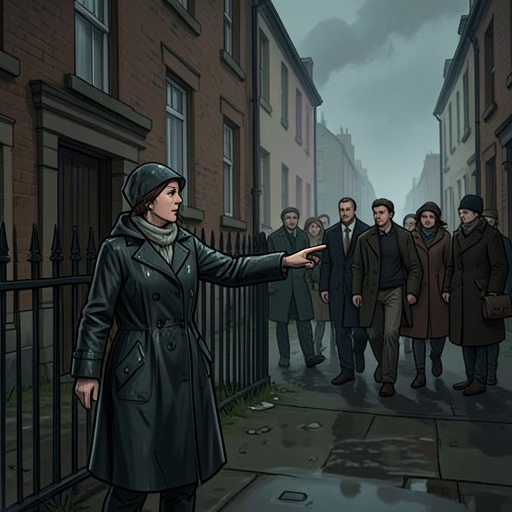
Cushla drives the family away from the estate. An RUC Land Rover pulls alongside her car; officers go toward the house while another questions her about who the passengers are and where they are going. Cushla identifies them as the McGeowns, says they have just been burned out, and challenges the officer’s scrutiny. He takes her name and address and allows them to continue. Mandy begins to weep softly once they are clear of the estate. In the car, Davy rummages in his satchel and produces a rattling paper bag of tablets for his father, a small act of care amid the family’s forced departure.
Temporary shelter and uncertainty
At Cushla’s home, Gina Lavery makes sandwiches and tea, while Cushla pours orangeade for Davy and Mandy. Seamie sits opposite the children with his palms turned upward, an imploring gesture that contrasts with the practical bustle around the kitchen. Betty recounts the fire: the breaking window, the burning settee, and the effort required to get Seamie out. She also tells them that the police came for Tommy McGeown at teatime. Refuge offers the family immediate safety, but it cannot restore what has been lost or settle what comes next.
The children give that uncertainty its plainest expression. Davy asks where they are going to live; Mandy wonders whether they will be able to recover any of their belongings from the house. Cushla promises that something will be sorted out soon, but the reassurance is not a solution. After the children return to bed, she remains at the table, troubled by the arrest of Tommy and by the possibility that he might somehow have been connected to Michael Agnew’s killing. The family’s displacement is entangled with a wider crisis of violence and suspicion, while their immediate questions—where to live, what can be retrieved—remain unanswered.
A precarious destination
Later, Cushla drives the family through a town whose familiar shops and street life seem sharply separate from the devastation they have just left. The McGeowns press their faces to the windows, looking out as if they were seeing the place for the last time. On the route, Cushla passes the waste ground where Seamie had been left for dead. He does not flinch, but Betty’s face in the mirror registers despair. The journey carries the family through places marked by the violence that has already shaped their lives; it does not offer a settled homecoming.
They reach the perimeter of the Catholic enclave where Seamie’s brother lives. An RUC Land Rover is parked across the road. Betty gets out and helps Seamie from the passenger seat, leading him across the pavement. He presses his wounded hand against a wall and looks about him blankly. The scene establishes a possible family connection nearby, but not a secure new home. The narrative leaves the family at the threshold of a place where they may seek help, with their housing situation still uncertain.
Separation and lasting consequences
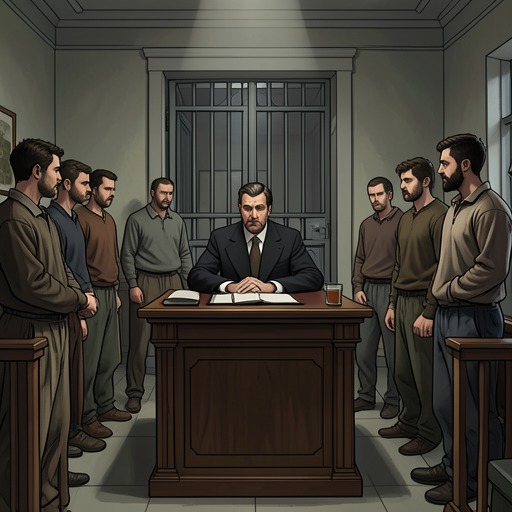
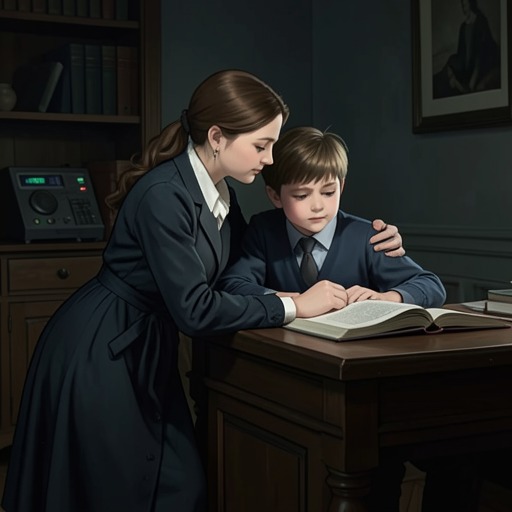
The uncertainty persists. In a letter to Cushla, Davy writes in the formal school style she taught him, beginning with a courteous greeting. The familiar form gives the news a painfully composed surface: the McGeowns have not found a new house, and Davy has been placed with a foster family, while Mandy is somewhere else. The siblings’ separation turns the loss of their home into a further division of family life. The letter offers Cushla a way to learn what has happened, but it confirms that her earlier promise of a quick resolution has not come true.
The consequences also extend beyond the family’s address. The McGeowns’ dependence on shelter after the fire exposes them to scrutiny and leaves them reliant on other people’s decisions and resources. Their temporary stay with Cushla cannot prevent the later dispersal of the children, and the evidence does not establish that the family reunites or secures a permanent home. Displacement remains an open condition: the house is gone, possessions are inaccessible, and the children’s lives continue in separate places.