A gaoler and not a king
Utopia“A gaoler and not a king” is a political maxim in Utopia that measures royal authority by the condition of the people it governs. Attributed to Fabricius in Raphael Hythloday’s argument, it turns the image of a wealthy ruler amid public misery into a judgment on failed kingship: possession of power is not the same as deserving the name of king.
Form and Attribution
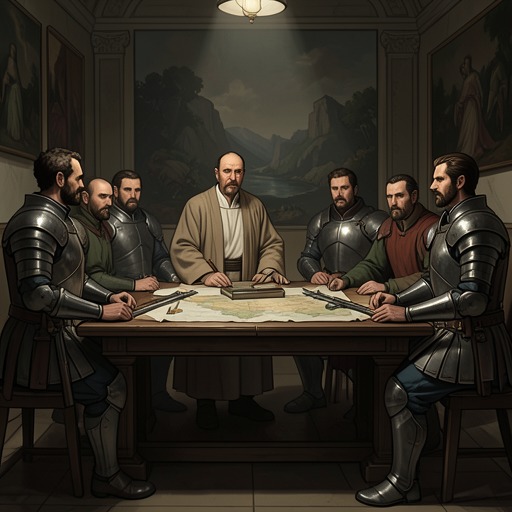
The expression appears in Raphael’s account of the counsel he might offer a prince who treats impoverishing his subjects as a means of securing obedience. He counters that policy by arguing that a king is chosen for the people’s sake, to make them safe and at ease, rather than to enrich himself at their expense. As support, Raphael recalls Fabricius, who would rather govern rich men than be rich himself; for one person to enjoy wealth and pleasure while those around him mourn is, in the phrase’s sharp conclusion, “is to be a gaoler and not a king.”
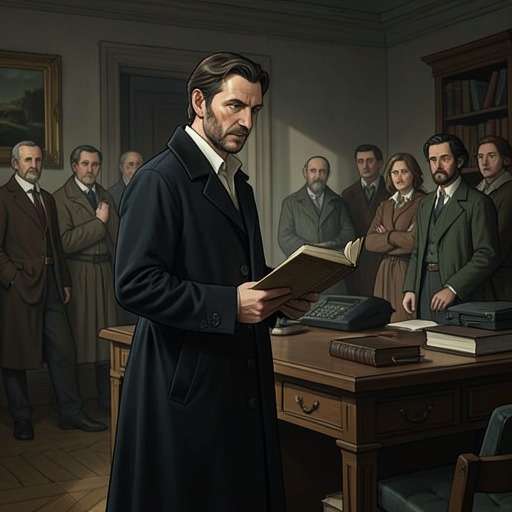
The maxim is therefore presented as reported speech within a philosophical conversation, not as an isolated decree from the narrator. Raphael is a traveler whose observations of different peoples lead him to discuss their customs and governments with Thomas More and Peter Giles. That frame matters: the phrase arrives as part of a debate about political counsel, where a striking formulation gives moral force to a practical argument.
The Measure of Kingship
The contrast rests on the ruler’s relation to the people. A king who keeps his subjects poor and miserable may retain the outward title of authority, but Raphael argues that oppression forfeits the dignity that should accompany it. Public wealth and security, rather than the ruler’s private accumulation, are the proper tests of government. The expression condenses that reversal into two opposed roles: a gaoler confines and controls; a king is meant to govern for the well-being of those under his care.
The surrounding argument explains why deliberate impoverishment is also politically shortsighted. Raphael asks who is more likely to long for change or rush into disorder than people with nothing to lose. Poverty, on this account, does not reliably make subjects submissive; it can make them desperate and ready to rebel. The maxim thus joins an ethical criticism of cruelty to a warning about its consequences for the ruler’s own security.
Political and Rhetorical Force
The phrase answers a model of rule that treats subjects’ wealth and liberty as dangers because they might make them harder to subdue. Against that logic, Raphael insists that a ruler should prevent crimes through wise conduct, punish them without turning deprivation into a governing method, and live within his own means. The image of the gaoler makes the cost of the opposing model legible: government has become custody when it preserves authority by keeping people miserable.
Its force also depends on the contrast between private abundance and shared suffering. The ruler’s prosperity does not redeem the state of the people around him; in Raphael’s formulation, it sharpens the indictment. The expression is memorable because it replaces an abstract debate about royal policy with a test of political identity: what kind of authority is exercised, and for whose benefit?
Place in Utopia’s Larger Argument
Utopia mixes playful fiction with earnest political criticism, and Raphael’s reported maxim belongs to that serious argument while retaining the dialogue’s indirect, disputational form. The book’s ending preserves a measure of distance from Raphael’s proposals: its narrator commends the Utopian constitution in general but says that he cannot agree with everything related, especially the common life without money. The maxim’s criticism of oppressive rule is forceful, but it should not be mistaken for an unqualified endorsement of every institution Raphael describes.