Witness Protection Program Computer Database
VinelandThe Witness Protection Program Computer Database is the electronic face of a promise that has kept Frenesi and Flash sheltered for years. When names of people connected to the program disappear from its records, the database becomes more than an administrative tool: it is a threshold between protected life and exposure. The people who once relied on federal custody discover that their safety may depend on entries they cannot see and on decisions made somewhere beyond their reach.
Administration and the promise of protection
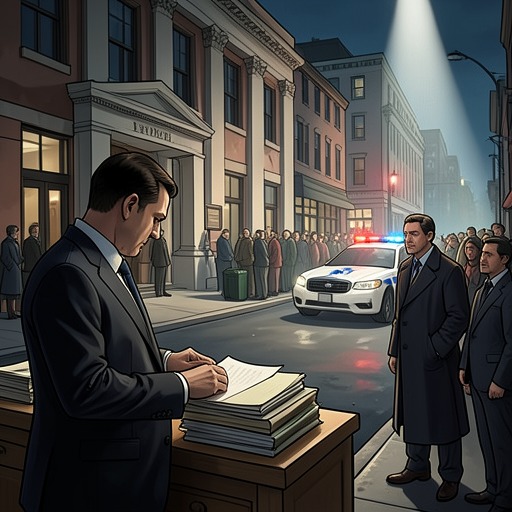
The database belongs to a protection system administered by the United States Marshals Service. Frenesi’s experience makes that system concrete: over the years, during the various assignments entrusted to her, she has usually paid courtesy visits to the local sheriff, much as a traveler abroad might visit her country’s consulate. The routine gives federal protection a visible, local point of contact, while also revealing that Frenesi’s life has been organized around official oversight and a managed identity.
The security the program offers has lasted long enough to feel almost like a separate condition of existence. Frenesi and Flash have spent years in what she understands as a refuge from ordinary cause and effect, protected from the unsettled business that might otherwise catch up with them. Yet protection is not the same as independence: it rests on institutions, records, and continued recognition by the authorities responsible for maintaining it.
The missing names
The database’s danger comes into view through an informal discovery. A woman named Grace shows Flash something that at first seems amusing: many people they know have vanished from the computer. Flash brings home a hastily assembled list of these external collaborators, and he reads it while Frenesi prepares food from what the house provides—pepperoni pizzas that are only partly thawed and a salad. The ordinary domestic scene sits beside an extraordinary inventory of people whose safety may have depended on federal protection.
The list gathers people with sharply different pasts and reasons for seeking shelter: former inmates of Long Bihn, veterans of grand juries, debt collectors, high-priced prostitutes persuaded to help entrap clients, informants with photographic memories, people who had never committed a violent crime, bad-check writers, cocaine users, and sexual predators. Some, the narration notes, had found refuge under federal law, at least for a time. Their varied histories resist any simple category of deservingness; what unites them is their reliance on the same protective apparatus, and their sudden absence from its records.
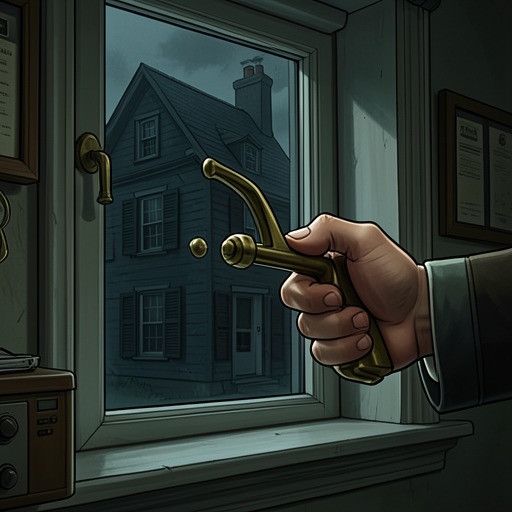
Frenesi does not accept the news on Flash’s word alone. She presses him to establish whether the disappearance is a confirmed fact and whether Grace checked carefully. Flash says he made the checks himself: he typed names into the system and received a response that they were not on file. His certainty does not explain who removed the records, why they disappeared, or what has happened to the people concerned. It does establish that the change is legible at the keyboard—and that the database offers no account of what lies behind its answer.
A system that never sleeps
The database’s reach becomes personal through a separate but related administrative failure: Frenesi’s expected paycheck is stopped. She has been waiting a week for the check, which is eventually handed to her by a law-enforcement official rather than sent through the post. When she tries to cash it, the first attempts fail; at another supermarket, a manager returns to tell her that the check has been blocked. The episode places financial access alongside protection as something governed by records and remote decisions, not simply by the person standing at a counter.
The manager explains that the computer remains active around the clock. The machine does not sleep, rest, or pause; a decision recorded in its systems can therefore take effect even when the banks are closed. Frenesi’s immediate problem is one refused check, but the episode’s larger implication is that institutional power need not appear as a person confronting her. It can arrive as an electronic result, delivered through a clerk who treats the machine’s answer as an explanation of reality.
What disappearance means
Watching the dark reflections in the shop windows, Frenesi experiences a rare, unmistakable moment of foresight. She understands the economic retrenchment associated with Reaganomics as a force closing in on every side, and fears that she and Flash are no longer protected—that they may be abandoned to the ordinary world, where old unresolved matters can begin again. Her interpretation connects the disappearing names and the blocked check to a broader contraction of public provision, but the records themselves do not prove the cause of the deletions. What they make undeniable is the vulnerability of people whose security depends on systems they cannot control.
The database also gives the scene its governing image. Frenesi imagines that human beings are figures in God’s computer: lives and deaths reduced to patterns of ones and zeros, while the struggles that consume people remain invisible to the vast intelligence doing the counting. The metaphor enlarges the bureaucratic problem without making it less specific. In the immediate world, a typed name returns no recognition, a paycheck is blocked, and a life once sheltered by official arrangements may be exposed again. The database’s apparent precision is therefore double-edged: it can preserve a protected identity, but it can also make that identity disappear into an absence that offers no explanation.