Brister's Hill
WaldenBrister's Hill is a rise near the narrator’s field where a spring issues from beneath the slope and old roads, orchards, and homesteads register generations of human use. The place brings the layered history of the landscape into view: enslaved residents and poor neighbors once lived along its roads, while woodcutting and other changes erased much of the forest that had made the hill a refuge for wandering and observation.
Setting and natural features
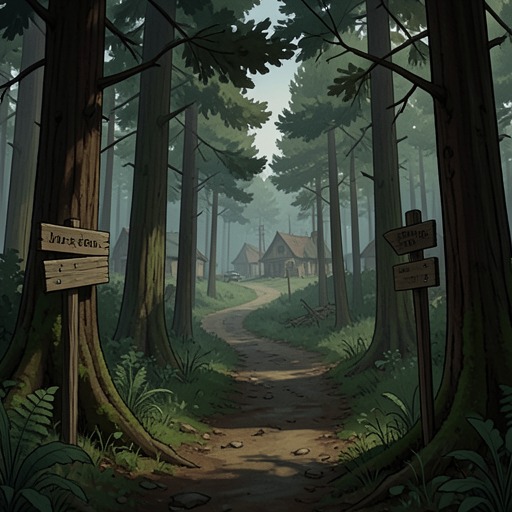
The narrator’s midday walk from his bean-field led to a spring beneath Brister's Hill, half a mile away. It was the source of both a swamp and a brook, reached through descending grassy hollows thick with young pitch pines. The hill thus appears not simply as a landmark but as part of a living water system, where slope, spring, wetland, and stream connect.
Even in midwinter, the surrounding woods held warm, springlike swamps in which skunk-cabbage remained green. This perennial growth offers a counterpoint to the visible traces of human occupation: while houses and orchards disappear, the wet ground continues to sustain life through the cold season.
Roads, homes, and remembered inhabitants
The road near the narrator’s house had, within the memory of older townspeople, once carried the laughter and conversation of residents. The narrator evokes a settled community where the woods now border a dusty highway. A stretch of the older road ran from the Stratton property, later called the Alms-House Farm, toward Brister's Hill, placing the hill within a network of former households rather than outside human history.
East of the narrator’s bean-field, across the road, Cato Ingraham had lived as the enslaved man of Duncan Ingraham, a gentleman from Concord village. Duncan built him a house and permitted him to live there. Farther down the road on Brister's Hill lived Brister Freeman, described as a handy Black man and formerly enslaved by Squire Cummings. Apple trees that Brister planted still grew there, making cultivation a surviving mark of his presence after the circumstances of his life had passed from the landscape.
Still farther down the hill, an old road through the woods bore signs of a Stratton family homestead. Their orchard had once covered the slope, but had long since disappeared. The remains of these homes and plantings make the hill a place where ownership, forced labor, domestic life, and later abandonment overlap; the landscape preserves traces of people whom the present-day road and woods might otherwise obscure.
Loss and ecological change
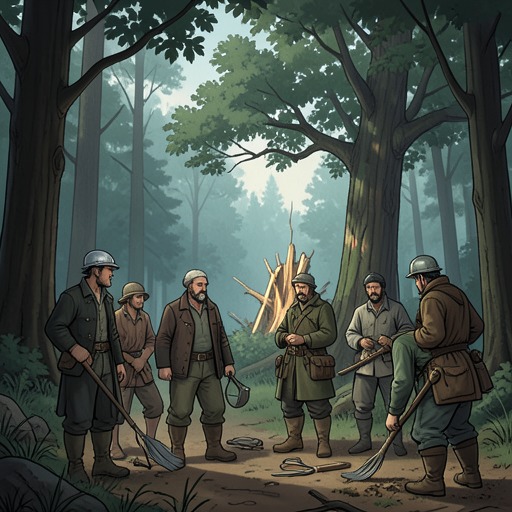
The narrator contrasts the remembered woods with the damage wrought by woodcutters. Since his departure, they had cut further into the forest, and he expected that for many years there would be no rambling through its wooded aisles with occasional views of the water. He links this loss to the silencing of his own poetic response: without the groves, the birds’ song and the conditions that fed his Muse would also be diminished.
The change is material as well as aesthetic. Tree trunks on the pond bottom, an old log canoe, and the dark woods around the water are all gone. The village residents, the narrator says, scarcely know where the pond lies. His recollection of Brister's Hill and its surrounding woods therefore belongs to a broader account of how altered land can estrange a community from places that once formed part of its daily life.
Narrative significance
Brister's Hill holds together two kinds of evidence: the recurring life of the spring-fed swamp and the fragile remains of human habitation. Its surviving apple trees and old roads point to lives shaped by slavery and poverty; its vanished orchard and felled woods show how quickly settlement and extraction can erase their settings. By setting local memory against continuing ecological renewal, the hill becomes a record of both historical dispossession and landscape change.