Cato Ingraham
WaldenCato Ingraham, an enslaved man in Concord, appears in the narrator’s account of people who once lived in the woods near his home. His story survives not through his own testimony but through the location of his house and the traces left after it vanished: a half-obliterated cellar-hole, hidden by pines and filled with sumac and goldenrod. That small remnant makes the landscape a record of lives shaped by slavery, property, and displacement.
Identity and Background
Cato lived east of the narrator’s bean-field, across the road, and was enslaved by Duncan Ingraham, whom the narrator identifies as an Esquire and a gentleman of Concord village. Duncan built Cato a house and permitted him to live in it. The account thus locates Cato within a relationship in which shelter and residence were provided at the discretion of an enslaver, rather than secured through independent ownership.
The passage names Cato as one of the former occupants of the woods, a community the narrator conjures when reflecting on the human history beneath the present road. He does not provide Cato’s words, describe his daily life, or explain what became of him. The limits of the record are part of its meaning: Cato is present through a remembered address and the material trace of a home, while his own voice is absent.
Home and Landscape
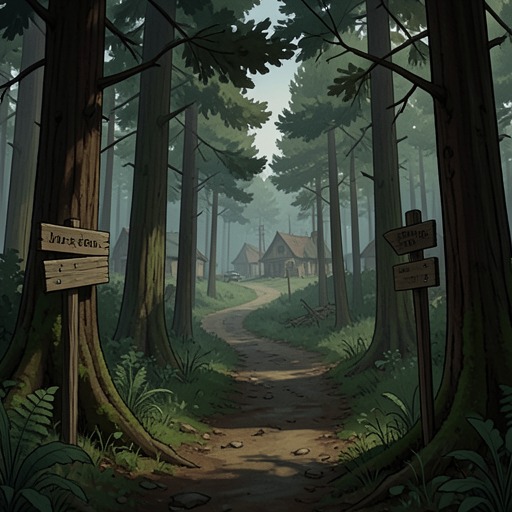
Cato’s cellar-hole remains, but it is half obliterated and concealed from travelers by a fringe of pines. The narrator describes the site not as an intact dwelling but as a depression in the ground, its former domestic purpose legible only to those who know where to look. The concealment makes the old settlement easy to pass without notice, even as its physical trace has not entirely disappeared.
Vegetation now occupies the site. Smooth sumac fills the cellar-hole, and an early species of goldenrod grows luxuriantly there. The contrast is precise: a structure made for human residence has given way to plants, yet the place retains its history as a habitation. The growth does not restore Cato’s home, but it marks the persistence of the site within a changing landscape.
Memory and Significance
The narrator sets Cato’s former home within a broader meditation on the inhabitants who preceded the present landscape. The road near the narrator’s house, now quiet in his recollection, had once resounded with the laughter and gossip of residents; the woods and paths hold traces of households that have disappeared. Cato’s cellar-hole is one such trace, carrying the past into a landscape that might otherwise seem empty or untouched.
Cato’s brief appearance also gives local specificity to the narrator’s account of social inequality. He is identified not simply as someone who lived near the bean-field, but as a man held in slavery by a named resident of Concord village. The surviving ruin makes that unequal relation visible without resolving its silences: the house was built for him, yet the text records no independent title, no testimony, and no account of his later life. What remains is the site itself, half hidden, where vegetation grows over the material evidence of a life lived under another person’s control.