Zilpha
WaldenZilpha is a Black woman who lived in a small house beside the narrator’s field in Walden Woods, where she spun linen for townspeople and sang with a voice that rang through the woods. Her brief portrait joins the work and sound of an individual life to the historical record of enslavement, hardship, and a home destroyed by fire; afterward, even the bricks of her dwelling remained as traces of the settlement that had once occupied the woods.
Identity and Work
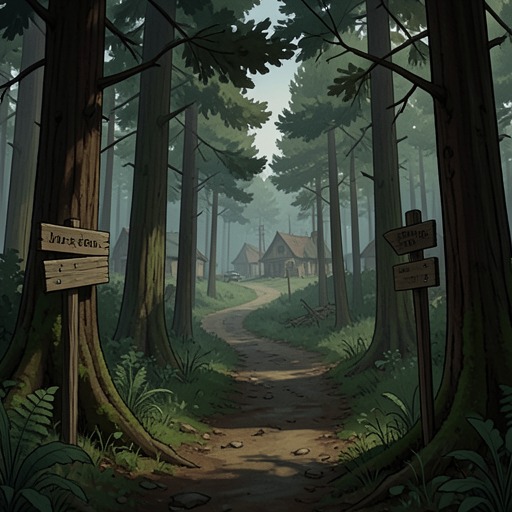
Zilpha lived close to town, at the very corner of the narrator’s field. Her small house stood among the remembered homes and livelihoods of Walden Woods, rather than in an isolated wilderness. She spun linen for the townsfolk, a specific form of labor that connected her domestic life to the local community and its needs.
The narrator remembers her singing as strikingly loud: it made Walden Woods ring. That sound gives her presence a reach beyond the small house where she worked. Yet the account offers little of her own speech or perspective; her voice is chiefly preserved through the narrator’s description of its volume and through one remembered phrase reported by another person.
Fire and Loss
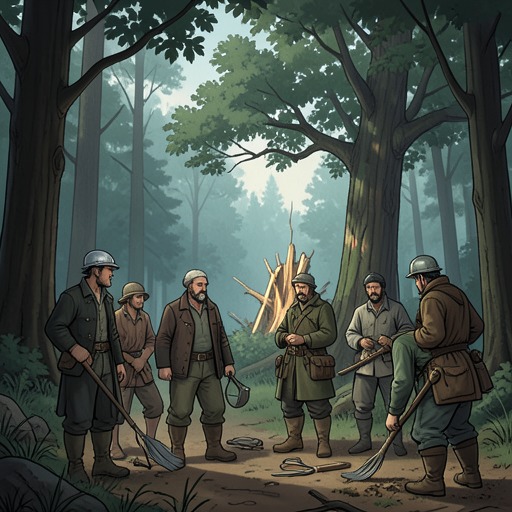
During the War of 1812, English soldiers who were prisoners on parole set Zilpha’s dwelling on fire while she was away. Her cat, dog, and hens were all burned with it. The account gives no further details about the circumstances or aftermath, but its blunt inventory of a destroyed home and dead animals makes the loss concrete and domestic: the fire took both shelter and the creatures kept there.
The narrator says that Zilpha led a hard and somewhat inhumane life. An old frequenter of the woods recalled passing her house at noon and hearing her mutter over a gurgling pot, “Ye are all bones, bones!” The phrase conveys privation through the stark image of bones, but the text does not explain what was in the pot or what prompted her words. It remains a fragment of remembered speech, not a full account of her circumstances.
Place in Walden Woods’ History
Zilpha appears in the narrator’s reconstruction of people who had lived in the woods before its remembered quiet and altered landscape. Her house was one of several dwellings associated with the road and nearby field: the passage also recalls Cato Ingraham’s home east of the bean-field and Brister Freeman’s life on Brister’s Hill. These neighboring histories place Zilpha within a landscape shaped by Black lives and unequal conditions, not merely by trees and paths.
After the fire, bricks were still visible amid the oak copse where her house had stood. Those remains make the history of habitation legible in a landscape that might otherwise seem empty. Zilpha’s brief appearance thus carries a double significance: she is remembered through her skilled work and forceful singing, while the destruction of her home and the surviving bricks register how easily a life and its dwelling can be reduced to a fragment in someone else’s account.